
Explore our collection of science books. Discover key insights and summaries from the best titles in this genre.
Showing 24 of 199 books
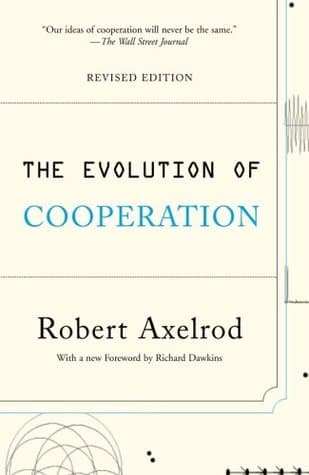
by Robert Axelrod
4.2(1,649)
Axelrod shows how cooperation can emerge and last, even among self-interested groups without a central authority, through the surprising success of 'Tit for Tat' in game theory.
by Alfred Adler
4.0(1,533)
Adler's 1927 guide explores the roots of our daily actions, helping us understand ourselves better and live more cooperatively.
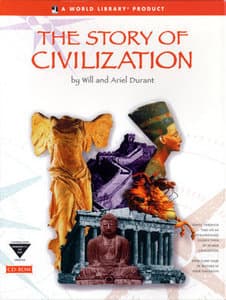
by Will Durant
4.4(1,506)
Durant’s "Story of Civilization" is an eleven-volume series that covers human history from ancient Mesopotamia to the Napoleonic era, detailing the rise and fall of empires, philosophies, and the evolution of art and science.

by Michael H. Stone
4.0(1,476)
Dr. Michael Stone explores the minds of notorious killers, dissecting the range of human evil, mapping its psychological roots, and proposing a hierarchical understanding beyond religious dogma.
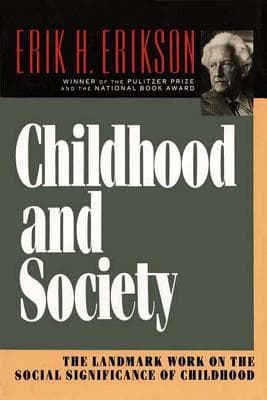
by Erik H. Erikson
4.1(1,420)
Erik Erikson's important work links individual psychological development with cultural and historical forces, showing how childhood shapes personal identity and society's evolution.

by Jack Olsen
4.1(1,402)
In Glacier National Park, August 1967, two campers died in separate grizzly bear attacks, changing the park's approach to its predators.
by Plato
3.9(1,357)
Plato's Timaeus and Critias explores the creation of the cosmos, the divine origin of humans, and the advanced civilization of Atlantis through ancient Greek philosophical dialogues.
by Pierre Teilhard de Chardin
4.1(1,356)
In "The Phenomenon of Man," Teilhard de Chardin explores how Christian theology and scientific evolution can align, showing a universe always moving toward a divine Omega Point.
by Robert Burton
4.2(1,338)
Robert Burton's 17th-century work is a vast, elegant exploration of human melancholy, dissecting every aspect of the condition and offering a timeless journey through psychology, history, and philosophy.

by Frances A. Yates
4.2(1,280)
Frances Yates explores how ancient orators and Renaissance mages mastered vast knowledge before printing, using forgotten memory palace techniques that shaped Western thought.
by Zecharia Sitchin
4.1(1,200)
Follow the Anunnaki leader Enki as he shares the extraterrestrial origins of humanity, a story of celestial politics, ancient rivalries, and scientific discoveries that challenge what we know about our past and future.

by David Bohm
4.2(1,150)
David Bohm's "Wholeness and the Implicate Order" introduces a quantum theory where the universe, consciousness, and reality emerge from an indivisible, flowing whole, changing how we see existence.
by Elsie Lincoln Benedict
3.3(1,070)
Understand human nature by quickly assessing character, revealing talents and career paths through observable physical traits.

by Charles Darwin
4.0(1,051)
Darwin explores the shared evolutionary origins of human morality and intellect by tracing how emotions are expressed across species, showing the connection between humans and animals.
by Galileo Galilei
4.1(1,037)
Galileo, through a lively discussion among three characters, shows the ancient, Earth-centered view of the universe is wrong, proving that our world orbits the sun, despite great personal risk.
by John Muir
4.1(1,022)
John Muir's ecstatic writing shows the Sierra Nevada's beauty, from Yosemite to ancient sequoia groves, revealing the heart of California's 'Range of Light'.
by Ernest Thompson Seton
4.1(995)
Ernest Thompson Seton explores the lives of a cunning wolf, a clever crow, and a loyal dog, revealing the adventure, humor, and sorrow of their existence in the wild.
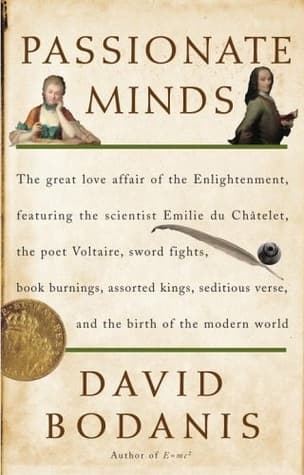
by David Bodanis
4.1(961)
In an era of intellectual change, "Passionate Minds" tells the story of Voltaire and Émilie du Châtelet's romance and scientific work, showing how her genius helped lead to Einstein's E=mc².

by Edward T. Hall
3.7(643)
Edward T. Hall's influential book explains how culture shapes our perception of time, space, and communication.

by Mary Baker Eddy
4.3(615)
by Christopher W. Alexander
4.0(578)
Alexander explains how traditional, un-self-conscious cultures naturally create well-adapted forms, then offers a radical, set-theory-based method for modern designers to overcome arbitrary ideas and create truly harmonious designs by breaking down problems into their inherent, context-driven subsystems.

by Diane E. Papalia
3.9(430)
This guide explores human growth from conception through old age, using research, cultural perspectives, and real-world examples.
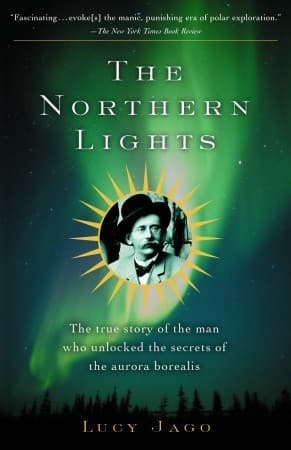
by Lucy Jago
3.8(405)
Troubled genius Kristian Birkeland braved arctic wilderness, scientific doubt, and his own struggles to explain the aurora borealis, changing our understanding of the cosmos even as his brilliance went unrecognized.
by Henry George
4.3(367)
Henry George's 1879 book explores why poverty deepens as wealth grows, proposing a solution to industrial slumps and inequality that influenced figures like Einstein and Tolstoy.