BookBrief
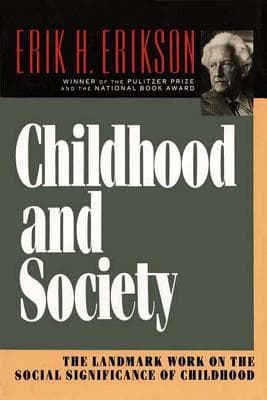
Childhood and Society cover
Archivist's Choice

Childhood and Society

Erik H. Erikson (1950)

Genre

Psychology / Children's / Science / Relationships / Philosophy

Reading Time

900 min

Key Themes

See below

Track Your Reading

Sign in to track this book

Erik Erikson's important work links individual psychological development with cultural and historical forces, showing how childhood shapes personal identity and society's evolution.

Core Idea

Erikson says human development happens in eight psychosocial stages. Each stage has a conflict an individual must resolve for healthy ego development. He argues identity is not fixed but a lifelong process, always shaped by a person's biological drives and cultural and societal expectations. Successfully getting through these stages, from basic trust in infancy to integrity in old age, depends on developing specific virtues and combining past experiences into a clear self-narrative. Each stage builds on the success (or failure) of the ones before it. Erikson notes that societal structures, cultural rituals, and family dynamics either help or hinder this developmental process. He looks past just a pathological view, showing the strengths and virtues that come from solving a crisis and how play helps development. The book gives a way to understand how people build their identities within society, showing the ongoing, active link between personal and social aspects throughout life.
Reading time
900 min
Difficulty
Hard
✓ Read this if...
You are interested in a foundational theory of psychological development that extends beyond childhood, integrating societal and cultural influences into a lifecycle framework. You want to understand the origins of identity and the progression of human virtues.
✗ Skip this if...
You are looking for a quick, light read on child psychology or self-help. The detailed theoretical exposition and historical context might be too dense if you prefer more practical, immediate applications.

Core idea

The central argument and framework that powers the entire book.

Erikson says human development happens in eight psychosocial stages. Each stage has a conflict an individual must resolve for healthy ego development. He argues identity is not fixed but a lifelong process, always shaped by a person's biological drives and cultural and societal expectations. Successfully getting through these stages, from basic trust in infancy to integrity in old age, depends on developing specific virtues and combining past experiences into a clear self-narrative. Each stage builds on the success (or failure) of the ones before it.

Erikson notes that societal structures, cultural rituals, and family dynamics either help or hinder this developmental process. He looks past just a pathological view, showing the strengths and virtues that come from solving a crisis and how play helps development. The book gives a way to understand how people build their identities within society, showing the ongoing, active link between personal and social aspects throughout life.

At a glance

Reading time

900 min

Difficulty

Hard

Read this if...

You are interested in a foundational theory of psychological development that extends beyond childhood, integrating societal and cultural influences into a lifecycle framework. You want to understand the origins of identity and the progression of human virtues.

Skip this if...

You are looking for a quick, light read on child psychology or self-help. The detailed theoretical exposition and historical context might be too dense if you prefer more practical, immediate applications.

Key Takeaways

1

The Eight Ages of Man

Development isn't linear; it's a series of psychosocial crises.

Quote

Each stage is characterized by a psychosocial crisis which is based on physiological maturation but also on the demands and expectations of society.

Erikson's main idea is his theory of psychosocial development, which has eight stages from infancy to old age. Unlike Freud's psychosexual stages, Erikson focused on the social and cultural parts of development. Each stage has a 'crisis' or challenge that must be resolved. Solving it well leads to a specific virtue (e.g., hope, will, fidelity); not solving it can lead to problems. This framework shows that development lasts a lifetime, not just childhood, and each stage builds on the last, affecting a person's self-image and how they ...

Supporting evidence

The detailed outlining of the eight stages: Trust vs. Mistrust, Autonomy vs. Shame and Doubt, Initiative vs. Guilt, Industry vs. Inferiority, Identity vs. Role Confusion, Intimacy vs. Isolation, Generativity vs. Stagnation, and Integrity vs. Despair.

Apply this

Reflect on your own life stages and identify which virtues you feel you've developed strongly and which areas might still present unresolved conflicts. When interacting with others, consider their likely developmental stage to better understand their behaviors and needs.


psychosocial-stagesidentity-crisislifespan-development
2

Identity as a Core Quest

Adolescence is a critical period for forging a coherent self.

Quote

The adolescent is a person who is in the process of finding out who he is, what he is, and where he is going.

Erikson created the term 'identity crisis' for the fifth stage, Identity vs. Role Confusion, which happens mostly during adolescence. This time is a search for a clear sense of self, combining past experiences, current roles, and future goals. Teenagers try different roles, beliefs, and values as they build their identity. Not successfully getting through this crisis can lead to role confusion, a broken sense of self, and trouble committing to personal or career paths. This idea changed psychology, showing that identity formation is n...

Supporting evidence

Erikson's extensive observations of adolescent behavior, including his work with veterans and Native American children, where he noted the struggles of individuals to integrate their personal history with societal expectations.

Apply this

Support adolescents by providing opportunities for exploration and self-discovery without excessive pressure to conform. For adults, periodically re-evaluate your own identity to ensure it aligns with your evolving values and goals.

identity-crisisadolescenceself-concept
3

Culture Shapes the Individual

Childhood training practices are deeply intertwined with cultural values.

Quote

The culture itself becomes a part of the individual's personality, and in turn, the individual's personality contributes to the character of the culture.

A key part of 'Childhood and Society' is the idea that childhood experiences and cultural practices are connected and affect each other. Erikson carefully looks at how specific child-rearing practices – like feeding, toilet training, and discipline – are not random but are part of a society's values, economic structures, and history. He shows that these practices teach certain character traits needed to function in that culture. For example, he compares child-rearing among the Sioux Indians and the Yurok, showing how their different p...

Supporting evidence

His detailed ethnographic studies of the Sioux and Yurok tribes, where he analyzes their unique child-rearing practices (e.g., Sioux's permissive feeding vs. Yurok's strict training) and links them to the adult personality traits and societal functions (e.g., Sioux's generosity vs. Yurok's industriousness).

Apply this

When observing child-rearing practices, consider the cultural context and the values those practices are intended to instill. Avoid judging practices solely through the lens of your own cultural norms. Recognize that your own upbringing was shaped by specific cultural assumptions.

cultural-anthropologychild-rearingsocietal-values
4

The Epigenetic Principle

Development unfolds in a predetermined sequence, but with environmental influence.

Quote

Anything that grows has a ground plan, and that out of this ground plan the parts arise, each part having its time of special ascendancy, until all parts have arisen to form a functioning whole.

Erikson used the 'epigenetic principle' to describe how his psychosocial stages unfold. This principle says development follows a set, biological plan, much like an embryo develops. Each stage appears in a fixed order, building on the one before it, and has a specific 'time' when it is most important to resolve. But while the order is fixed, the outcome of each stage is not. Environmental and social interactions greatly affect how well each crisis is resolved. This concept balances nature and nurture, recognizing both the biological p...

Supporting evidence

The metaphor of embryonic development, where organs develop sequentially according to a genetic blueprint, yet their healthy formation depends on the uterine environment. This is applied to the psychosocial stages.

Apply this

Understand that children (and adults) are working on specific developmental tasks at different ages. Provide appropriate support and challenges aligned with their current stage, rather than forcing development or expecting tasks too early or too late. Be patient with the natural unfolding of growth.

epigenesisdevelopmental-stagesnature-nurture
5

Beyond Pathology: Strengths and Virtues

Psychological health isn't just the absence of illness, but the presence of virtues.

Quote

Healthy children will not fear life if their elders have integrity enough not to fear death.

Unlike many psychoanalytic theories that focused on mental illness and the start of neurosis, Erikson emphasized the positive results of successful psychosocial development. For each stage, he described a 'virtue' that comes from successfully resolving the crisis – hope, will, purpose, competence, fidelity, love, care, and wisdom. This focus on strengths, coping abilities, and potential for growth throughout life was new. It offered a more positive and complete view of human nature, suggesting that people are not just driven by instin...

Supporting evidence

The explicit naming of virtues associated with each stage, such as 'hope' for Trust vs. Mistrust, 'will' for Autonomy vs. Shame and Doubt, and 'wisdom' for Integrity vs. Despair.

Apply this

Actively cultivate and recognize the virtues in yourself and others. Instead of solely focusing on deficits or problems, identify and nurture the positive psychological strengths that have developed or are developing.

positive-psychologyvirtuespsychological-health
6

The Intergenerational Cycle

Parental development influences children's development, and vice-versa.

Quote

In the course of his life, man must learn to develop a sense of identity that is both unique to him and yet connected to his family and community.

Erikson shows an important intergenerational link. Parents' own resolution (or lack of resolution) of their psychosocial crises directly affects the environment they create for their children, which then affects their children's development. For example, parents who successfully went through the Generativity vs. Stagnation stage (mid-adulthood) are better at nurturing and guiding, helping their children feel trust and autonomy. On the other hand, parents struggling with their own identity or intimacy issues might unintentionally creat...

Supporting evidence

While not explicitly stated as a separate principle, the interconnectedness of the stages and the societal context implies that parents' capacities (e.g., for care, love, wisdom) are products of their own developmental history and directly impact their ability to foster these in their children.

Apply this

Recognize that your own personal growth and well-being are not isolated; they profoundly affect those around you, especially children. Seek to resolve your own developmental challenges to become a more effective parent, mentor, or community member.

intergenerational-traumaparenting-stylesfamily-systems
7

Ritualization and Ritualism

Societal rituals guide development, but can become rigid.

Quote

Every society, by the way it is structured, offers a series of ritualizations which guide the developing individual through the various stages of his life.

Erikson used 'ritualization' and 'ritualism' to explain social processes that help or hinder psychosocial development. Ritualizations are culturally approved, repeated ways of interacting (e.g., infant-caregiver greetings, school ceremonies, religious rites) that provide structure, meaning, and a sense of belonging, helping people get through developmental stages. They are healthy and helpful. But when these patterns become empty, forced, or rigid, they become 'ritualisms,' which can stop growth, isolate people, and lead to problems. ...

Supporting evidence

Examples of ritualizations like 'numinous' (mother-infant bonding), 'judicious' (parental discipline), 'formal' (schooling), and 'ideological' (adolescent group formation), contrasted with their negative counterparts like 'idolism' or 'legalism'.

Apply this

Evaluate the rituals in your own life and community. Are they meaningful and supportive, or have they become empty and rigid? Seek to create or participate in positive ritualizations that foster connection, meaning, and growth.

social-ritualscultural-normssocialization
8

The Danger of 'Totalism'

Extreme ideologies can offer false certainty, hindering true identity formation.

Quote

Totalism is the urge to make an absolute whole out of a relative one, and to find a final solution to a problem which has only relative answers.

Erikson warned against 'totalism,' an idea especially important during the Identity vs. Role Confusion stage. Totalism is the human tendency to seek absolute certainty and to adopt simple, all-encompassing ideas or groups that promise clear answers and remove doubt. While this can give a temporary sense of belonging and identity, it often comes at the cost of true self-discovery and critical thinking. Teenagers, vulnerable while searching for identity, can be open to totalistic movements, which offer a ready-made identity and a clear ...

Supporting evidence

Erikson's observations of political movements and cults, and how they appeal to individuals (especially youth) seeking clear-cut identities and answers in complex times.

Apply this

Foster critical thinking and intellectual curiosity, especially in young people. Encourage exposure to diverse perspectives and challenge simplistic explanations. Be wary of groups or ideologies that demand absolute loyalty or demonize those who hold different views.

ideologyconformitycritical-thinking
9

Play as a Developmental Tool

Play isn't just fun; it's crucial for mastering reality and developing identity.

Quote

Play is the royal road to the understanding of the child's ego.

Erikson saw play not just as fun but as a basic and essential way for psychosocial development, especially in childhood. Through play, children try out roles, handle worries, process experiences, and build a sense of competence and ability. It lets them show inner conflicts, practice social interactions, and develop a 'sense of industry' without the full effects of real-world failures. Play is how a child 'works through' their world, getting ready for future challenges and greatly helping form their ego identity. It is a key place for...

Supporting evidence

His clinical work with children, where observing their play allowed him to understand their internal conflicts and developmental progress. He distinguishes between 'autocosmic' (body-centered), 'microspheric' (toy-world), and 'macrospheric' (shared-world) play.

Apply this

Provide ample opportunities for unstructured, imaginative play for children. Understand that play is productive and crucial for learning, not just a distraction. For adults, recognize the value of 'playful' approaches to problem-solving and stress reduction.

child-developmentimaginative-playemotional-regulation
10

Integrity in Old Age

A life review culminates in wisdom or despair.

Quote

Integrity is the fruit of these seven stages; it is the acceptance of one's one and only life cycle as something that had to be and that, by necessity, permitted no substitutions.

The last stage of psychosocial development, Integrity vs. Despair, happens in old age. Here, people look back on their lives, reviewing achievements, failures, and choices. Successfully getting through this leads to integrity, a feeling of completeness and satisfaction with the life lived, even with its flaws. This acceptance leads to 'wisdom,' a calm but active interest in life itself when facing death. On the other hand, not getting through it leads to despair, marked by regret, bitterness, and a fear of death, feeling that life was...

Supporting evidence

The description of the 'life review' process in old age, where individuals reflect on their past and come to terms with it, leading to either a sense of completeness or regret.

Apply this

Engage in regular self-reflection and life reviews, not just in old age, to integrate experiences and learn from them. Support elderly individuals in processing their life stories, fostering a sense of dignity and purpose.

gerontologylife-reviewwisdom

Critical analysis

Notable Quotes

Healthy children will not fear life if their elders have integrity enough not to fear death.

Reflecting on the impact of adult integrity on children's development and fear.

The more thoroughly we understand the vicissitudes of the human ego, the more clearly we see its strength and flexibility.

Discussing the resilience and adaptability of the human ego through various life stages.

Hope is the enduring belief in the attainability of fervent wishes, in spite of the dark urges and rages which lie within us.

Defining hope as a fundamental human virtue that persists despite internal conflicts.

The playing child is a practising child.

Emphasizing the importance of play in children's development as a form of learning and rehearsal for life.

A man must be able to make things and to make them well, in order to feel himself a man.

Highlighting the role of industry and competence in the development of a sense of self and male identity.

It is not the trauma that makes us ill, but the inability to integrate the trauma into our lives.

Distinguishing between the event of trauma and the individual's capacity to process and integrate it.

In the social jungle of human existence, there is no feeling of being alive without a sense of identity.

Stressing the critical role of identity formation for psychological well-being and a sense of vitality.

The human personality, in its growth, follows a pre-ordained path of unfolding, stage by stage.

Introducing the concept of psychosocial stages of development, a core idea in his theory.

The future of the world is in the hands of the children.

A general statement underscoring the profound importance of child-rearing and education for societal future.

Each child, to be sure, is a new edition of man.

Emphasizing the uniqueness of each individual child while acknowledging their connection to humanity.

The sense of identity, then, is the accrued confidence that one's inner sameness and continuity are matched by the sameness and continuity of one's meaning for others.

A more detailed definition of identity, highlighting the interplay between internal self-perception and external recognition.

Where id was, there ego shall be.

A reinterpretation of Freud's famous dictum, emphasizing the ego's role in organizing and integrating impulses.

For the young adult, the problem of intimacy takes precedence over other developmental tasks.

Discussing the developmental task of intimacy vs. isolation in early adulthood.

Man's ability to live is based on his capacity to trust.

Highlighting the fundamental importance of basic trust as the first psychosocial stage and foundation for all subsequent development.

Quiz

Test Your Knowledge

Ready to see how well you understood this book? Take our interactive quiz with 10 questions.

10
Questions
~5
Minutes
?
Best Score

Key Questions (FAQ)

Erikson's 'Childhood and Society' explores the intricate relationship between individual psychological development and cultural influences. It proposes that human growth is a series of psychosocial stages, each marked by a specific crisis that must be resolved, and that these stages are deeply intertwined with societal expectations and historical change.

About the author