
BookBrief
Understanding Human Nature cover
Archivist's Choice

Understanding Human Nature

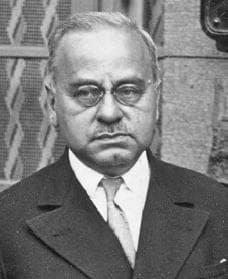
Alfred Adler (1927)

Genre

Psychology / Science / Philosophy / Self-Help

Reading Time

240 min

Key Themes

See below

Track Your Reading

Sign in to track this book

Adler's 1927 guide explores the roots of our daily actions, helping us understand ourselves better and live more cooperatively.

Core Idea

Alfred Adler's "Understanding Human Nature" proposes that behavior stems from a drive for significance and superiority, often as a way to make up for feelings of inferiority. This drive is healthy only when it contributes to the common good, rather than just seeking personal power. The book stresses that individuals are whole; thoughts, feelings, and actions all point toward an often unconscious life goal, shaped by early experiences and family. Mental health depends on one's social interest and willingness to cooperate.
Reading time
240 min
Difficulty
Medium
✓ Read this if...
You're interested in the foundational concepts of Individual Psychology, want to understand the psychological roots of striving for superiority, or seek insight into how early life experiences shape personality and behavior.
✗ Skip this if...
You prefer modern psychological texts with empirical data, or are looking for a quick self-help guide without delving into theoretical depth and historical context.

Core idea

The central argument and framework that powers the entire book.

Alfred Adler's "Understanding Human Nature" proposes that behavior stems from a drive for significance and superiority, often as a way to make up for feelings of inferiority. This drive is healthy only when it contributes to the common good, rather than just seeking personal power. The book stresses that individuals are whole; thoughts, feelings, and actions all point toward an often unconscious life goal, shaped by early experiences and family. Mental health depends on one's social interest and willingness to cooperate.

At a glance

Reading time

240 min

Difficulty

Medium

Read this if...

You're interested in the foundational concepts of Individual Psychology, want to understand the psychological roots of striving for superiority, or seek insight into how early life experiences shape personality and behavior.

Skip this if...

You prefer modern psychological texts with empirical data, or are looking for a quick self-help guide without delving into theoretical depth and historical context.

Key Takeaways

1

The Fiction of Superiority

Our innate striving for significance often manifests as a compensatory drive to overcome perceived inferiority.

Quote

Every individual acts and suffers in accordance with his peculiar view of life, which has for him the force of an incontrovertible truth.

Adler suggests that a basic human drive is the need for significance, often as a desire for superiority. This is not necessarily bad, but a natural response to the feeling of inferiority we all have as children. This 'inferiority feeling' is not a weakness; it pushes us to grow. But when this striving becomes too strong or misdirected, it can lead to a 'fictional goal of superiority'—an unrealistic, often unconscious, aim to be perfect or dominant. This distorts our view of reality and prevents true social connection. Understanding th...

Supporting evidence

Adler frequently cites the observation of children's development, noting how early experiences of helplessness and dependence naturally foster a sense of inferiority, which then fuels their efforts to master skills and gain competence. He contrasts healthy striving with neurotic overcompensation.

Apply this

Reflect on situations where you feel the need to prove yourself or dominate. Is this a healthy pursuit of competence, or a compensatory reaction to a perceived inadequacy? Challenge your 'fictional goals' by focusing on contribution and cooperation rather than individualistic triumph.

inferiority-complexstriving-for-superiorityfictional-finalism
2

The Unity of the Individual

We are indivisible wholes, and all behavior is purposeful, serving a single, unified life plan.

Quote

The individual is an indivisible unity, a whole, and all his actions and expressions are permeated by a single, unified life style.

Adler's 'Individual Psychology' emphasizes that humans are whole. Unlike other psychological schools that might divide the mind, Adler says every thought, feeling, and action is part of a consistent 'life plan' or 'lifestyle.' This lifestyle, mostly formed in early childhood, is a unique pattern of behavior, thoughts, and feelings through which a person aims for their chosen (often unconscious) goal. There is no 'good' or 'bad' part of a person acting alone; instead, all expressions are connected and serve the person's overall directi...

Supporting evidence

Adler illustrates this with examples of neurotic symptoms, showing how anxiety, phobias, or physical ailments are not random occurrences but purposeful expressions within an individual's lifestyle, often serving to avoid responsibility or gain attention, however unconsciously.

Apply this

Instead of judging individual behaviors in isolation, try to understand the larger context of a person's (or your own) 'life plan.' What is the underlying purpose of a recurring habit or emotional reaction? This perspective fosters empathy and self-awareness.

individual-psychologylifestyleholism
3

Social Interest: The Measure of Mental Health

True psychological well-being is reflected in one's capacity for genuine connection and contribution to the community.

Quote

The measure of a person's mental health is his social interest.

For Adler, 'social interest' (Gemeinschaftsgefühl) is the basis of mental health. It is more than just being sociable; it is a deep, inborn human ability to belong, cooperate, and help others and the community. This feeling of connection is essential. When it is not well-developed, people tend to focus too much on personal power, prestige, or safety, often at others' expense. Misguided behaviors, neuroses, and even crime are seen as signs of insufficient social interest, as people struggle to find a meaningful place in the world witho...

Supporting evidence

Adler contrasts healthy individuals, who actively engage in work, friendship, and love with a sense of contribution, against neurotics or criminals, whose actions often demonstrate a lack of concern for others and a preoccupation with their own safety or aggrandizement.

Apply this

Actively seek opportunities to contribute to your community, family, or workplace without expecting immediate personal gain. Engage in volunteer work, offer help to neighbors, or simply practice active listening. Reflect on how your actions impact those around you.

social-interestcommunity-feelingcooperation
4

The Importance of Early Childhood

Our foundational 'lifestyle' and worldview are largely established in the first five years of life.

Quote

The pattern of the individual's life is laid down in the first four or five years of childhood.

Adler places great importance on early childhood experiences, not as a fixed destiny, but as the time when our basic 'lifestyle' is formed. During these early years, children develop their understanding of themselves, others, and the world. They establish their unique way of seeking significance. The family structure (birth order, parental relationships), early physical experiences, and the general home atmosphere all contribute to this development. While this early blueprint is powerful, Adler maintains that people are not passive; t...

Supporting evidence

Adler's extensive case studies often trace adult neuroses and character traits back to specific childhood dynamics, such as the pampered child's expectation of constant service or the neglected child's distrust of others.

Apply this

Reflect on your own earliest memories and family dynamics. How might these have shaped your core beliefs about yourself and your place in the world? Consider how you might be unconsciously repeating patterns from your childhood and identify areas for conscious re-evaluation.

early-recollectionsfamily-constellationbirth-order
5

Private Logic vs. Common Sense

Maladjustment arises when an individual's subjective interpretation of life clashes with objective reality and social norms.

Quote

The neurotic lives according to a private logic, a private interpretation of the world, which is often in conflict with common sense.

Adler distinguishes between 'private logic' and 'common sense.' Private logic refers to a person's unique, subjective interpretations and conclusions about life, often based on early childhood experiences and their personal pursuit of significance. This logic makes perfect sense to the individual, even if it seems irrational to others. 'Common sense,' in contrast, represents objective reality and shared understanding of social norms, cooperation, and community demands. When a person's private logic differs significantly from common se...

Supporting evidence

Adler describes neurotics who, for example, might believe that 'no one can be trusted' (private logic) and therefore avoid all social interaction, despite the common sense understanding that human connection is vital.

Apply this

When facing a difficult situation, pause and consider if your interpretation is based on objective facts and social understanding (common sense) or on deeply ingrained personal beliefs and fears (private logic). Seek feedback from trusted individuals to gain an external perspective.

private-logiccommon-sensemistaken-goals
6

The Three Life Tasks

Our psychological health is tested by our capacity to successfully engage with work, friendship, and love.

Quote

The problems of human life always arrange themselves under three headings: social relations, occupation, and love.

Adler simplifies human existence into three basic 'life tasks' that everyone faces: work, friendship, and love. These tasks are universal and require a certain level of social interest and cooperation to handle successfully. Our approach to these tasks reveals our lifestyle, our private logic, and our social interest. Difficulties in one area often affect others, as they all need the same basic abilities for cooperation and contribution. A healthy person approaches these tasks with courage, a sense of belonging, and a willingness to c...

Supporting evidence

Adler uses these three tasks as a diagnostic framework, observing how individuals with various neuroses or character flaws consistently fail or struggle in one or more of these areas, often exhibiting a lack of social interest.

Apply this

Evaluate your own engagement with the three life tasks. Are you actively contributing in your work? Do you cultivate genuine friendships? Are you capable of giving and receiving love in intimate relationships? Identify areas where you might be avoiding responsibility or seeking superiority.

life-tasksworkfriendshiplove
7

Discouragement as the Root of Maladjustment

Problematic behaviors stem not from inherent badness, but from a feeling of being inadequate or unable to cope.

Quote

All failures, neuroses, and criminality are due to discouragement.

Adler argues that people do not choose to be 'bad' or 'neurotic' out of malice, but out of deep discouragement. When people feel unable to handle life's demands, or believe they cannot achieve their (often fictional) goals of superiority through constructive social means, they become discouraged. This discouragement appears in various ways: withdrawal, aggression, exaggerated inferiority feelings, or developing neurotic symptoms as an excuse to avoid responsibility. The core insight is that problematic behaviors are not inherent chara...

Supporting evidence

Adler describes how criminals often feel they cannot succeed through conventional means and resort to illegal acts out of a deep-seated feeling of inadequacy and a misguided attempt to gain power or respect.

Apply this

When you or someone you know is struggling, try to look beyond the problematic behavior to identify the underlying discouragement. Instead of judgment, offer support and encouragement for small, constructive steps. Focus on building confidence and competence, not just correcting errors.

discouragementre-encouragementmistaken-behavior
8

The Creative Self

Humans are not merely products of their environment but active agents who interpret and shape their experiences.

Quote

Man is not merely a creature, but a creator.

Adler's concept of the 'creative self' is a key difference from views that see human nature as predetermined. While early experiences and environment certainly influence us, Adler insists that we are not just passive recipients. Instead, each person actively interprets their experiences, forms their own unique meaning from them, and ultimately creates their own lifestyle and goals. This 'creative self' is the dynamic, self-determining part of personality that chooses how to respond to life's challenges. It highlights our ability for a...

Supporting evidence

Adler points out that siblings raised in the same family often develop vastly different personalities and lifestyles, demonstrating that it's not the objective experience itself, but the child's unique interpretation and response to it, that shapes them.

Apply this

Recognize your own agency. Instead of blaming circumstances or past events, ask yourself: 'How am I choosing to interpret this situation?' and 'What choice can I make now to move towards a more constructive path?' Take responsibility for shaping your own responses and future.

creative-selfteleologyfree-will
9

The Purpose of Symptoms

Neurotic symptoms are not random illnesses but purposeful, albeit misguided, strategies to maintain a fictional goal.

Quote

Every neurotic symptom has a purpose.

A main Adlerian idea is that neurotic symptoms (anxiety, phobias, depression, etc.) are not random problems but serve a specific, often unconscious, purpose within a person's lifestyle. They are 'safeguarding tendencies' designed to protect self-esteem, avoid responsibility, or maintain a fictional goal of superiority. For example, a person with agoraphobia might unconsciously use their fear to avoid challenging work tasks or social obligations, thus protecting themselves from potential failure while still feeling 'important' due to t...

Supporting evidence

Adler frequently illustrates how symptoms like chronic illness or anxiety attacks can serve as excuses for individuals to avoid the three life tasks, allowing them to retreat from challenges while still garnering attention or sympathy.

Apply this

When you experience a persistent emotional or behavioral pattern that causes distress, ask yourself: 'What might be the hidden purpose of this symptom? What am I gaining or avoiding by holding onto it?' This self-inquiry can reveal unconscious motivations.

safeguarding-tendenciespurpose-of-symptomsneurosis
10

The Courage to Be Imperfect

Authentic living requires embracing our human fallibility and engaging with life despite our imperfections.

Quote

It is not the situation that makes us unhappy, but the meaning we attach to it.

Adler, and later his followers, stresses the 'courage to be imperfect.' Much human suffering comes from constantly pursuing a fictional, impossible goal of absolute superiority or perfection. This pursuit leads to constant anxiety about failure, a fear of making mistakes, and an inability to truly connect with others due to the perceived risk of showing flaws. True psychological health, according to Adler, means letting go of this unrealistic ideal and having the courage to engage with life, make mistakes, learn from them, and contrib...

Supporting evidence

Adler's entire framework of overcoming inferiority feelings and fostering social interest points to this. Individuals who are unable to tolerate imperfection often withdraw, become overly critical, or develop neurotic symptoms to avoid situations where their 'perfection' might be challenged.

Apply this

Challenge your own perfectionistic tendencies. Set realistic goals, embrace the learning process that comes with mistakes, and practice self-compassion. Engage in activities where you might not excel, simply for the joy of participation and contribution, rather than solely for achievement.

courage-to-be-imperfectself-acceptanceperfectionism

Critical analysis

Notable Quotes

It is easier to fight for one's principles than to live up to them.

Discussing the discrepancy between espoused beliefs and actual behavior.

The only normal people are the ones you don't know very well.

Highlighting the universal presence of individual struggles and imperfections.

All failures are a failure in self-esteem.

Emphasizing the central role of self-esteem in an individual's life and challenges.

The greater the feeling of inferiority that has been experienced, the more powerful is the urge to conquest and the more violent the emotional agitation.

Explaining the drive behind individuals with strong inferiority complexes.

It is not the experiences of our childhood that injure us, but the conclusions we draw from them.

Stressing the subjective interpretation of past events over the events themselves.

The goal of a person's life is to overcome his feelings of inferiority.

Presenting a core tenet of Individual Psychology regarding human striving.

To be human means to have inferiority feelings.

Normalizing the experience of feeling inferior as a universal aspect of human existence.

It is always easier to attribute a problem to an outside source than to face the fact that we are the problem.

Discussing the tendency to externalize blame rather than engage in self-reflection.

The striving for perfection is innate in man.

Identifying a fundamental human drive towards self-improvement and mastery.

No experience is a cause of success or failure. We do not suffer from the shock of our experiences—the so-called trauma—but we make out of them just what suits our purposes.

Further elaborating on the subjective meaning-making process of individuals.

Every individual acts and suffers in accordance with his peculiar teleology, which has all the inevitableness of fate, so long as he does not understand it.

Introducing the concept of teleology (goal-directedness) and the importance of self-understanding.

Man knows much more than he understands.

Distinguishing between factual knowledge and deeper comprehension or insight.

The whole meaning of life lies in the development of a social feeling.

Highlighting the central importance of 'Gemeinschaftsgefühl' or social interest in a healthy life.

Our style of life is determined by the goal we set for ourselves.

Explaining how an individual's unique patterns of behavior are shaped by their ultimate life goals.

Quiz

Test Your Knowledge

Ready to see how well you understood this book? Take our interactive quiz with 10 questions.

10
Questions
~5
Minutes
?
Best Score

Key Questions (FAQ)

The book aims to introduce the general public to the core principles of Individual Psychology and demonstrate their practical application in daily relationships and personal life. It seeks to help individuals recognize and correct mistaken behaviors that disrupt social harmony.

About the author

Alfred Adler

Alfred Adler was an Austrian psychotherapist and founder of the school of individual psychology. His seminal work, "Understanding Human Nature," explored concepts like the inferiority complex and the drive for superiority. Adler's theories profoundly influenced psychotherapy and personality development, making him a key figure in 20th-century psychology.