BookBrief
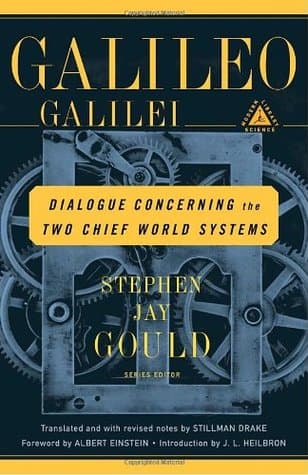
Dialogue Concerning the Two Chief World Systems cover
Archivist's Choice

Dialogue Concerning the Two Chief World Systems

Galileo Galilei (1967)

Genre

History / Science / Philosophy

Reading Time

15-20 hours (for a thorough read)

Key Themes

See below

Track Your Reading

Sign in to track this book

Galileo, through a lively discussion among three characters, shows the ancient, Earth-centered view of the universe is wrong, proving that our world orbits the sun, despite great personal risk.

Core Idea

Galileo's "Dialogue Concerning the Two Chief World Systems" is an important work that is more than just a scientific paper; it is a lesson in intellectual persuasion and a key moment in science history. In a fictional conversation among three characters—Salviati (who supports Copernicus), Sagredo (an open-minded person), and Simplicio (who defends Aristotle and Ptolemy)—Galileo takes apart the geocentric model and offers strong reasons for the heliocentric Copernican system. The book's main idea is that observation, logic, and mathematical consistency should matter more than following old ideas and traditions when understanding the cosmos. It argues for a universe that is always changing, rather than a static, Earth-centered one, changing how people see their place in the cosmos and setting a new standard for scientific study based on facts and reasoned discussion.
Reading time
15-20 hours (for a thorough read)
Difficulty
Hard
✓ Read this if...
You are interested in the historical and philosophical underpinnings of the Copernican Revolution, appreciate the art of scientific persuasion through dialogue, or want to understand a foundational text in the conflict between scientific inquiry and established dogma.
✗ Skip this if...
You are looking for a modern, concise scientific explanation of planetary motion, prefer direct exposition over dialectic argumentation, or are not patient with 17th-century prose and extended philosophical debates.

Core idea

The central argument and framework that powers the entire book.

Galileo's "Dialogue Concerning the Two Chief World Systems" is an important work that is more than just a scientific paper; it is a lesson in intellectual persuasion and a key moment in science history. In a fictional conversation among three characters—Salviati (who supports Copernicus), Sagredo (an open-minded person), and Simplicio (who defends Aristotle and Ptolemy)—Galileo takes apart the geocentric model and offers strong reasons for the heliocentric Copernican system. The book's main idea is that observation, logic, and mathematical consistency should matter more than following old ideas and traditions when understanding the cosmos. It argues for a universe that is always changing, rather than a static, Earth-centered one, changing how people see their place in the cosmos and setting a new standard for scientific study based on facts and reasoned discussion.

At a glance

Reading time

15-20 hours (for a thorough read)

Difficulty

Hard

Read this if...

You are interested in the historical and philosophical underpinnings of the Copernican Revolution, appreciate the art of scientific persuasion through dialogue, or want to understand a foundational text in the conflict between scientific inquiry and established dogma.

Skip this if...

You are looking for a modern, concise scientific explanation of planetary motion, prefer direct exposition over dialectic argumentation, or are not patient with 17th-century prose and extended philosophical debates.

Key Takeaways

1

The Copernican Revolution Isn't Just Astronomical

It represents a fundamental shift in how we approach scientific inquiry and challenge established dogma.

Quote

I cannot doubt that the motion of the Earth is a thing which can be demonstrated, and it is a thing which must be believed.

Galileo's 'Dialogue' is more than a debate about how planets move; it is a founding text for modern science, showing the power of observation and reason over tradition and authority. By making a strong case for the Copernican sun-centered model, Galileo directly challenged the old Aristotelian-Ptolemaic Earth-centered view, which had been tied to religious ideas for centuries. This was not just about Earth's position; it was about the very way we understand the natural world. Galileo supported evidence and logic, setting a standard fo...

Supporting evidence

Galileo systematically dismantles Ptolemaic arguments, such as the apparent lack of stellar parallax (which he explains by the immense distance to stars) and the 'common sense' notion that a moving Earth would leave objects behind or cause constant winds. He uses thought experiments and observations, like the phases of Venus (which are incompatible with the Ptolemaic model but perfectly explained by Copernicus), to build his case.

Apply this

When evaluating any claim, especially those presented as incontrovertible truths, always question the underlying assumptions and seek empirical evidence. Don't be swayed solely by tradition or authority; demand observable, testable proof. Apply critical thinking to distinguish between well-supported theories and mere dogma.
scientific-revolutionheliocentrismepistemology
2

The Power of Dialogue as a Persuasive Tool

Galileo's choice of the dialogue format was a brilliant strategic move to present complex scientific arguments accessibly and provocatively.

Quote

In the discussion of natural problems, one should not begin with the authority of passages from the Bible, but with sensory experience and necessary demonstrations.

Galileo's choice to present his arguments as a conversation among three characters—Salviati (the Copernican supporter), Sagredo (the intelligent observer), and Simplicio (the Aristotelian traditionalist)—was a clever move. This format allowed him to explore different ideas, anticipate objections, and slowly build a strong case for the sun-centered view without directly claiming heresy. Simplicio, often shown as stubbornly sticking to old ideas, plays a key role by voicing the common objections of the time, letting Salviati systematica...

Supporting evidence

The character of Simplicio, whose name itself implies 'simple-minded,' consistently brings forth arguments based on Aristotle or common-sense observations that Salviati then elegantly refutes using logical deductions, thought experiments, or actual astronomical observations (like the moons of Jupiter).

Apply this

When trying to explain complex ideas or persuade others, consider employing a dialogue-based approach. Anticipate counter-arguments and address them directly, using clear, accessible language. Present different perspectives to demonstrate a thorough understanding of the subject, and guide your audience towards the desired conclusion through logical progression rather than mere assertion.

rhetoricpersuasionphilosophical-dialogue
3

The Disarming Simplicity of Evidence

Galileo's most potent arguments often relied on straightforward observations that directly contradicted the prevailing geocentric model.

Quote

I consider the discovery of the Medicean stars (Jupiter's moons) to be the most important observation ever made in the heavens, for it gives us a clear and palpable demonstration that not all celestial bodies revolve around the Earth.

Before Galileo, the Earth-centered model said that all celestial bodies moved around the Earth. A main part of his argument for a sun-centered system was his telescope observation of Jupiter's four largest moons (now called the Galilean moons) orbiting Jupiter itself. This simple, clear fact—that some celestial bodies did not orbit Earth—broke a basic rule of the Ptolemaic system. It provided a small example of the sun-centered model, showing that other centers of rotation could exist in the universe. This observation was important be...

Supporting evidence

Galileo's discovery and meticulous tracking of the 'Medicean Stars' (Jupiter's moons) provided incontrovertible proof of celestial bodies orbiting a planet other than Earth. This observation was a direct blow to the geocentric model's universality.

Apply this

When seeking to overturn a widely held but flawed belief, look for simple, undeniable pieces of evidence that directly contradict its core tenets. Often, a single, clear, and observable fact can be more powerful than complex theoretical arguments. Focus on presenting evidence that is accessible and verifiable by others.

telescopic-observationsempirical-evidencejupiters-moons
4

Relativity of Motion: A Precursor to Modern Physics

Galileo's insights into the nature of motion laid groundwork for Newton and Einstein, demonstrating that motion is relative.

Quote

Shut yourself up with some friend in the main cabin of a large ship, and have with you there some flies, butterflies, and other small flying animals. Have a large bowl of water with some fish in it... Observe carefully how the flies and butterflies all fly with equal speed in every direction... Nor will the fish swim with greater difficulty toward the front of the vessel than toward the rear.

One of the strongest arguments against Earth's motion was the 'tower argument': if Earth were moving, a dropped stone would land behind the tower, as Earth would have moved under it. Galileo cleverly disproved this with his 'ship's cabin' thought experiment. He showed that within a closed system moving at a constant speed, all internal movements act as if the system were still. This idea, known as Galilean relativity, explains why we do not 'feel' Earth moving and why objects fall straight down. It was a new concept that separated abs...

Supporting evidence

The famous thought experiment of the ship's cabin, where objects within a moving ship behave identically whether the ship is moving or at rest, provided a compelling analogy for why inhabitants of a moving Earth would not perceive its motion.

Apply this

When encountering arguments against a new idea, consider whether they are based on an implicit assumption of absolute reference points. Challenge these assumptions by demonstrating how phenomena behave consistently within a relative framework. This can help dismantle 'common sense' objections that stem from an incomplete understanding of physics.

galilean-relativityframes-of-referencenewtonian-physics
5

The Role of Authority vs. Observation

Galileo's trial underscored the perilous conflict between established dogma and empirically derived scientific truth.

Quote

I hold that in the discussion of natural problems, one should not begin with the authority of passages from the Bible, but with sensory experience and necessary demonstrations.

The 'Dialogue' is more than a scientific paper; it is a statement about the nature of knowledge and authority. By presenting the Copernican system as a 'demonstrated truth,' Galileo directly challenged the accepted intellectual and religious authority that supported the Earth-centered model, mainly based on interpretations of scripture and Aristotelian philosophy. His struggle showed the conflict that arises when observed facts clash with established beliefs. The book's publication and later condemnation by the Inquisition serve as a ...

Supporting evidence

The entire context of the book's publication and Galileo's subsequent trial by the Roman Inquisition for 'vehement suspicion of heresy' for advocating heliocentrism, despite being presented as a 'discussion' of two systems, is the ultimate evidence.

Apply this

Always prioritize evidence and logical reasoning over uncritical acceptance of authority, whether it be religious, political, or academic. Be prepared to defend your conclusions with data, and recognize that challenging established norms, however necessary, can come with significant personal or professional risks.

science-vs-religionintellectual-freedominquisition
6

The Tides as Flawed Evidence

Even a genius like Galileo could err, demonstrating that scientific progress is iterative and self-correcting.

Quote

The cause of the tides is the combination of the two motions of the Earth, its diurnal rotation and its annual revolution.

While Galileo's arguments for a sun-centered universe were mostly correct and groundbreaking, his explanation for the tides was famously wrong. He suggested that tides were caused by water sloshing in basins due to Earth's combined daily rotation and yearly revolution around the Sun. He strongly rejected the moon's influence, which others (including Kepler) correctly proposed. This part of the 'Dialogue' stands out as an example of even brilliant minds making mistakes, especially when driven to provide a complete, unified theory. It s...

Supporting evidence

Galileo's extensive, yet incorrect, explanation of the tides in the 'Fourth Day' of the dialogue, where he attributes them solely to the Earth's motion and explicitly dismisses any lunar influence.

Apply this

Recognize that even the most brilliant minds can be wrong about certain aspects of their theories. Approach all scientific claims, including your own, with a degree of skepticism and a willingness to revise based on new evidence. Avoid dogmatism, even in pursuit of what you believe to be a greater truth. Scientific progress often means admitting when you're wrong.

scientific-errortheory-refinementgravitational-tides
7

Accessible Science for a Broad Audience

Galileo wrote in Italian, not Latin, to engage a wider public in scientific discourse.

Quote

I have written in the vernacular so that everyone can read it, because I want to show that the things I have discovered are not the product of a learned imagination, but of observation and experiment.

At a time when most scholarly and scientific works were published in Latin, accessible only to educated elites, Galileo made the choice to write his 'Dialogue' in Italian. This decision was important for making scientific knowledge more widely available. By making complex astronomical arguments understandable to a broader, literate public, he aimed to build more support for the Copernican system and challenge the control over knowledge held by academic and religious institutions. This move was not just about style; it was a political ...

Supporting evidence

The simple fact that the book was published entirely in Italian, a departure from the academic norm of Latin for serious scientific treatises.

Apply this

When communicating scientific or complex information, strive for clarity and accessibility. Tailor your language and format to your intended audience, avoiding jargon where possible. The goal should be to empower a wider public with knowledge, fostering understanding and critical engagement, rather than restricting it to a select few.

science-communicationvernacular-languagepublic-understanding-of-science
8

The Enduring Legacy of Intellectual Courage

Galileo's 'Dialogue' stands as a monument to the courage required to pursue truth against powerful opposition.

Quote

I think that in the discussion of natural problems, we ought not to begin with the authority of passages of Scripture, but with sensory experiences and necessary demonstrations.

Despite the severe personal consequences he faced, including house arrest for the rest of his life, Galileo never gave up his belief in the sun-centered system, even if forced to publicly deny it. The 'Dialogue' itself, though presented as a neutral discussion, is a strong and clear defense of the Copernican view. Its lasting impact is not just in its scientific arguments, but in its demonstration of intellectual honesty and the steady pursuit of truth. Galileo's story, tied to this book, continues to inspire scientists and thinkers t...

Supporting evidence

The historical account of Galileo's trial, conviction, and subsequent house arrest for the rest of his life, directly resulting from the publication and content of this book.

Apply this

Cultivate intellectual courage and be prepared to stand by well-reasoned, evidence-based conclusions, even when they are unpopular or challenge powerful interests. Understand that true progress often requires individuals to take risks and endure hardship for the sake of truth and advancement.

intellectual-couragescientific-integrityfreedom-of-thought
9

The Unveiling of a Dynamic Universe

Galileo's work shifted humanity's perspective from a static, Earth-centered cosmos to a dynamic, ever-moving universe.

Quote

I cannot sufficiently admire the greatness of the universe, and the power of its Creator, when I consider that the whole of its vastness is in continuous motion.

The Earth-centered model presented a relatively unchanging universe, with Earth firmly at its center, and celestial bodies moving in perfect, fixed circles. Galileo's 'Dialogue,' by confirming Earth's motion and revealing Jupiter's moons, broke this static idea. It introduced a universe full of movement, where planets orbited the Sun, and moons orbited planets. This change was significant, moving humanity from a special, central, and still position to one of a moving resident within a much larger, more complex, and active cosmic dance...

Supporting evidence

The cumulative effect of all Galileo's arguments and observations, particularly the Earth's double motion (rotation and revolution) and the orbital paths of Jupiter's moons, directly contradicted the static, geocentric worldview.

Apply this

Embrace the idea of continuous change and dynamism in your understanding of the world. Challenge fixed paradigms and be open to new information that suggests a more complex, interconnected, and evolving reality. Recognize that our current understanding is always a stepping stone to a more complete picture.

cosmologydynamic-universeparadigm-shift
10

The Art of Scientific Persuasion

Beyond scientific accuracy, Galileo's work is a masterclass in making complex arguments compelling and accessible.

Quote

Science is a way of thinking much more than it is a body of knowledge.

What makes the 'Dialogue' last is not just its scientific content, but Galileo's skill with words and rhetoric. He does not just present facts; he guides the reader through a process of discovery, using clear comparisons, thought experiments, and strong arguments to make the Copernican system seem logical and clear. The characters' personalities, the natural flow of conversation, and the clear, engaging language turn what could have been a dry academic paper into an interesting intellectual journey. This shows that good scientific com...

Supporting evidence

The entire structure of the book as a four-day dialogue, with distinct characters, logical progression, and engaging prose, rather than a formal mathematical or observational report.

Apply this

When presenting scientific or technical information, focus not only on the accuracy of your data but also on the clarity, coherence, and persuasive power of your narrative. Use analogies, examples, and a logical flow to make your arguments accessible and compelling to your audience, fostering genuine understanding rather than rote memorization.

scientific-rhetoricstorytelling-in-sciencepublic-engagement

Critical analysis

Notable Quotes

I think in the first place that it is very pious to say, and that it is what we must say, that the Holy Scripture cannot lie, provided that its true meaning is understood.

Salviati (representing Galileo) discusses the interpretation of scripture in relation to scientific findings.

For the Lord God is not less admirable in other works than in the bare text of the sacred books.

Salviati argues that God's works in nature are as revealing as scripture.

But in the natural sciences, whose conclusions are true and necessary, and have nothing to do with human will, one must take care not to place them in the hands of those who can interpret them in such a way as to make them fallacious.

Salviati emphasizes the objective and necessary nature of scientific truths.

To apply oneself to the search for truth is the noblest of all employments.

General philosophical statement about the pursuit of knowledge.

I cannot believe that the same God who has endowed us with senses, reason, and intellect has intended us to forego their use.

Salviati argues against blind faith in favor of using human faculties for understanding.

For it is impossible that a conclusion of science should be false, and that a text of Scripture should be truly interpreted which should contain that conclusion as false.

Salviati asserts the compatibility of scientific truth with correctly interpreted scripture.

I hold that the Sun is located at the center of the world, and is immobile, and that the Earth is not at the center, and moves.

Salviati directly states the Copernican hypothesis, the central topic of the dialogue.

It is a beautiful thing to observe the motions of the planets, to understand their distances, to measure their sizes, and to determine their periods.

Salviati expresses the aesthetic and intellectual pleasure of astronomical study.

Who can doubt that it will be of the greatest utility to obtain certainty in the knowledge of the stars and their motions?

Salviati highlights the practical and intellectual benefits of astronomical knowledge.

Ignorance is the root of all evil.

A general philosophical statement made by Salviati.

Indeed, it is necessary to suppose that the Earth moves, and not the Sun, if one wishes to give a reasonable account of the phenomena.

Salviati argues for the explanatory power of the heliocentric model.

And it seems to me that it is much more reasonable to make the small body move than the large one.

Salviati uses a common-sense argument for the Earth moving around the Sun.

But the Earth, which is a small thing compared to the universe, and which is also a part of the universe, can move without causing any disturbance to the rest of the universe.

Salviati addresses the objection that Earth's motion would disrupt the cosmos.

We cannot understand what God has done unless we examine His works, for they are the book in which He has written His will.

Salviati reiterates the importance of studying nature as a divine text.

The greater the obstacle, the more glory in overcoming it.

A general inspirational quote that could apply to the challenges of scientific discovery.

Quiz

Test Your Knowledge

Ready to see how well you understood this book? Take our interactive quiz with 10 questions.

10
Questions
~5
Minutes
?
Best Score

Key Questions (FAQ)

The book primarily argues for the truth of the Copernican heliocentric model, demonstrating through scientific reasoning and observation that the Earth revolves around the Sun, rather than the Ptolemaic geocentric system where the Earth is stationary at the center of the universe.

About the author

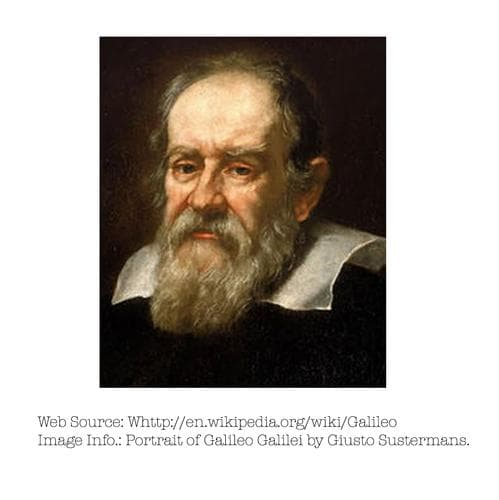
Galileo Galilei

Galileo di Vincenzo Bonaiuti de' Galilei was an Italian astronomer, physicist and engineer, sometimes described as a polymath. Commonly referred to as Galileo, his name is pronounced. He was born in the city of Pisa, then part of the Duchy of Florence. Galileo has been called the father of observational astronomy, modern-era classical physics, the scientific method, and modern science.