BookBrief
The Expression of the Emotions in Man and Animals cover
Archivist's Choice

The Expression of the Emotions in Man and Animals

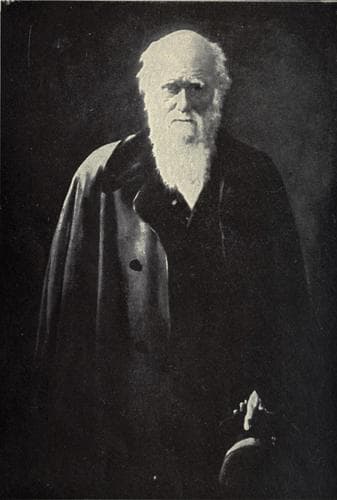
Charles Darwin (1965)

Genre

Psychology / Science / Philosophy

Reading Time

252 min

Key Themes

See below

Track Your Reading

Sign in to track this book

Darwin explores the shared evolutionary origins of human morality and intellect by tracing how emotions are expressed across species, showing the connection between humans and animals.

Core Idea

Darwin's "The Expression of the Emotions in Man and Animals" suggests that emotional expressions are not just human customs but are largely natural, universal, and behaviors passed down through evolution. They have deep roots in our animal ancestors. He argues these expressions serve important communication and survival roles, developing through principles like serviceable associated habits, antithesis, and direct action of the nervous system. By looking at similarities across different human cultures and many animal species, Darwin presents a basic argument for the biological foundation and evolutionary beginnings of emotional displays, linking human psychology directly to the animal kingdom.
Reading time
252 min
Difficulty
Hard
✓ Read this if...
You are interested in the evolutionary origins of human behavior, the universality of emotions, or the historical foundations of psychology and ethology. This book is essential for understanding Darwin's influence beyond natural selection, particularly in the study of non-verbal communication and comparative psychology.
✗ Skip this if...
You prefer modern, accessible introductions to emotion theory and are not comfortable with 19th-century scientific prose, or if you are looking for a purely contemporary psychological framework without historical context. The book can be dense and detailed, reflecting the scientific style of its era.

Core idea

The central argument and framework that powers the entire book.

Darwin's "The Expression of the Emotions in Man and Animals" suggests that emotional expressions are not just human customs but are largely natural, universal, and behaviors passed down through evolution. They have deep roots in our animal ancestors. He argues these expressions serve important communication and survival roles, developing through principles like serviceable associated habits, antithesis, and direct action of the nervous system. By looking at similarities across different human cultures and many animal species, Darwin presents a basic argument for the biological foundation and evolutionary beginnings of emotional displays, linking human psychology directly to the animal kingdom.

At a glance

Reading time

252 min

Difficulty

Hard

Read this if...

You are interested in the evolutionary origins of human behavior, the universality of emotions, or the historical foundations of psychology and ethology. This book is essential for understanding Darwin's influence beyond natural selection, particularly in the study of non-verbal communication and comparative psychology.

Skip this if...

You prefer modern, accessible introductions to emotion theory and are not comfortable with 19th-century scientific prose, or if you are looking for a purely contemporary psychological framework without historical context. The book can be dense and detailed, reflecting the scientific style of its era.

Key Takeaways

1

Universality of Emotion

Emotional expressions are shared across cultures and species, suggesting a common evolutionary origin.

Quote

He who admits, on general grounds, that the structure and habits of all animals have been gradually evolved, will look at the whole subject of Expression in a new and interesting light.

Darwin's work suggests that many emotional expressions are not learned from culture but are natural and universal. They appear in different human groups, no matter their location or customs. He also details how similar expressions can be seen in various animal species, from dogs showing teeth when aggressive to cats bristling their fur when afraid. This universality supports the idea of a shared evolutionary history. These expressions developed as useful behaviors over thousands of years, helping with communication and survival long b...

Supporting evidence

Darwin's extensive collection of observations from missionaries, travelers, and his own studies of children and patients with mental disorders across various cultures (e.g., Kaffirs, Australians, Malays, Americans) showing consistent facial expressions for joy, sorrow, anger, fear, and surprise. He also compares these directly to the expressions of domestic and wild animals.

Apply this

When encountering unfamiliar cultures, recognize that basic emotional signals like a smile or a frown are likely to be understood, fostering initial connection. In interspecies interactions, understanding common expressions (e.g., a dog's tail wag, a cat's arched back) can improve communication and safety.
evolutionary-psychologycross-cultural-psychologyinnate-behavior
2

Principles of Expression

Emotional expressions are governed by three core evolutionary principles: serviceable habits, antithesis, and direct action.

Quote

Certain complex actions are of direct or indirect service under certain states of the mind, in order to relieve or gratify certain sensations, desires, etc.; and whenever the same state of mind is induced, however feebly, there is a tendency through the force of habit and association for the same movements to be performed, though they may not then be of the least use.

Darwin organizes emotional expressions into three main principles. The Principle of Serviceable Associated Habits says that actions originally useful for survival (e.g., baring teeth before biting, pulling back limbs to protect oneself) become routine. They are expressed even when they no longer serve their original purpose, simply because of the associated emotional state. The Principle of Antithesis suggests that when one state of mind is the opposite of another, the expressions are also opposite, even if the latter serves no direct...

Supporting evidence

For serviceable habits: The clenching of fists and baring of teeth in anger, even when no physical attack is intended. For antithesis: The contrasting postures of a confident, dominant dog (tail up, head high, stiff legs) versus a submissive, fearful dog (tail down, body crouched, ears back). For direct action: The dilation of pupils in surprise or fear, the rapid heartbeat, and skin flushing under strong emotion.

Apply this

When observing emotional displays, consider which of Darwin's principles might be at play. This can help decipher the underlying biological and evolutionary roots of human and animal behavior, moving beyond purely psychological interpretations to a more holistic understanding. For instance, recognizing a 'serviceable habit' in an aggressive posture can help de-escalate by understanding its ancient roots rather than purely intentional malice.

behavioral-evolutionnervous-systemethology
3

Vestiges of Our Past

Many human emotional expressions are evolutionary remnants, no longer serving their original purpose but persisting through habit and heredity.

Quote

The power of voluntarily suppressing expressions differs much in different individuals; but the most sensitive of men can not, I presume, command their muscles so perfectly as to conceal all traces of strong emotion.

Darwin argues that many of our common emotional expressions are not chosen consciously or even very useful today. Instead, they are 'leftovers'—behaviors that were once very helpful for our ancestors or for other animals, but have become ingrained through habit and passed down through generations. For example, a sneer, which involves raising the upper lip to show a canine tooth, is a clear remnant of an old threat display. Similarly, goosebumps on our skin when cold or frightened are a leftover from a time when our ancestors had more ...

Supporting evidence

The involuntary 'goosebumps' response (horripilation) in humans when experiencing fear or cold, which in furrier animals makes them appear larger and insulated. The baring of teeth (sneer) in anger, a clear relic of an aggressive display common in many mammals. The tendency to cover the eyes in shame, resembling a protective, self-effacing posture.

Apply this

Reflect on your own involuntary emotional reactions (e.g., blushing, trembling, specific facial twitches). Understanding them as evolutionary vestiges can provide a sense of connection to our deep past and other species, and help us accept these 'uncontrollable' aspects of our emotional selves rather than judging them as weaknesses. It also adds a layer of depth when interpreting the non-verbal cues of others.

atavisminherited-traitsnonverbal-communication
4

The Role of Habit and Association

Repeated actions under certain emotional states become habitual, leading to their expression even when no longer useful.

Quote

When any sensation or emotion is repeatedly and strongly experienced, the corresponding movements tend to become involuntary.

Darwin stresses the power of habit and association in shaping emotional expression. He argues that actions first done with conscious intent or as a direct physical response, if consistently linked with a certain emotional state, eventually become habitual and automatic. This means the emotion itself, even in a weaker form, can trigger the associated expression, regardless of whether that expression serves any immediate purpose. This principle explains why we might furrow our brows when concentrating, even if it doesn't directly help u...

Supporting evidence

The repeated clenching of fists in anger, even when no physical action is taken. The act of shrugging the shoulders as a sign of helplessness, which may have originated from a protective posture but now serves as a purely communicative gesture. Darwin also discusses how habitual expressions can become permanent features, like the wrinkles around the eyes from frequent smiling or frowning.

Apply this

Become more aware of your own habitual emotional expressions. Do you bite your lip when nervous? Do you tap your foot when impatient? Recognizing these deeply ingrained habits can offer insights into your underlying emotional states and potentially allow for more conscious management or mitigation if desired. It also highlights the power of repetition in forming both useful and less useful behaviors.

habit-formationclassical-conditioningunconscious-behavior
5

Emotional Expression as Communication

Expressions evolved primarily for communication, conveying internal states to others for social cohesion and survival.

Quote

The movements of expression in the face and body, whatever their origin, are of importance, because they serve as the first means of communication between the mother and her infant; and they are almost equally important between members of the same community, as they reveal the thoughts and intentions of others more truly than words, which may be falsified.

While some expressions are direct physical outputs, Darwin strongly emphasizes their role in communication. He argues that being able to express and understand emotions gave an important evolutionary advantage. It helped build social connections, warn of danger, and make cooperation easier within groups. A snarl communicates aggression, deterring threats without physical conflict. A smile signals friendliness, inviting interaction. These non-verbal cues are often more honest and immediate than spoken language, which can be manipulated...

Supporting evidence

The warning calls and postures of animals that signal danger to their group. The reciprocal nature of a mother's smile to her infant's gurgle. The universal understanding of a fearful expression, which can prompt others to seek safety. Darwin also notes how animals use expressions to signal submission or dominance, regulating social hierarchies without constant physical conflict.

Apply this

Pay closer attention to non-verbal cues in your daily interactions. Recognize that often, what someone's body language or facial expression conveys is more truthful than their spoken words. Cultivate empathy by actively observing and interpreting these signals, which can improve your relationships and help you better understand the unspoken needs and intentions of others.

social-cognitionempathyinterpersonal-communication
6

The Power of Involuntary Expression

Many emotional expressions are beyond conscious control, revealing genuine internal states despite attempts at concealment.

Quote

The power of voluntarily suppressing expressions differs much in different individuals; but the most sensitive of men can not, I presume, command their muscles so perfectly as to conceal all traces of strong emotion.

A key idea from Darwin's work is how automatic our emotional expressions are. Even very composed people find it hard to completely hide strong emotions. This 'leakage' of true feeling happens because many facial muscles and physical responses work on reflex, bypassing conscious thought. Blushing, trembling, pupil changes, and micro-expressions are all examples of signals that reveal our inner states, often against our will. This automatic nature shows the deep biological wiring of our emotional system. It suggests that our bodies are ...

Supporting evidence

Darwin discusses the difficulty actors have in perfectly simulating genuine emotion. He also notes how children, the insane, and those in extreme pain exhibit expressions with less conscious control. The involuntary clenching of throat muscles during grief, or the rapid fluttering of eyelids during intense surprise, are physiological examples.

Apply this

Be mindful that your own true emotions are often more visible than you realize, even if you try to suppress them. This can encourage authenticity in your interactions. When observing others, look for these involuntary cues – micro-expressions, changes in skin tone, subtle shifts in posture – as they often provide a more reliable indicator of a person's actual feelings than their verbal statements.

microexpressionsnonverbal-leakageemotional-regulation
7

Developmental Origins in Childhood

The study of infant expressions provides crucial evidence for the innate and evolutionary basis of emotions.

Quote

I have been much struck with the fact that the most expressive movements, such as the frowning of a child when displeased, are performed by infants at a very early age, and by the blind.

Darwin understood the value of studying infants to grasp the natural nature of emotional expression. Unlike adults, infants have not yet been heavily influenced by cultural learning or social rules about showing emotions. Their natural expressions of joy, anger, fear, and surprise are strong signs of an unlearned, inherited basis. Importantly, Darwin also saw similar expressions in children born blind. These children, never having seen others' emotional displays, could not have learned them by copying. This evidence strongly supports ...

Supporting evidence

Observations of infants frowning when displeased, smiling when content, and showing surprise with wide eyes, often within the first few months of life. His detailed notes on blind children exhibiting the same expressions, such as sadness (down-turned mouth, tears) or joy (smiles), without visual input.

Apply this

When interacting with infants and young children, observe their emotional expressions closely, recognizing them as fundamental, unadulterated signals. This can help you better understand their needs and develop a deeper, more intuitive connection. It also offers a reminder of the universality of human experience, even at the earliest stages of life.

developmental-psychologyinnate-knowledgechild-development
8

The Interconnectedness of Mind and Body

Emotional states are inextricably linked to physical expressions, challenging dualistic views of mind and body.

Quote

The mind, when strongly affected, not only excites the various movements of expression, but reacts on the whole body, causing various physiological changes.

Darwin's work implicitly argues against a strict separation of mind and body. It shows how deeply linked our mental and physical states are. Emotions are not just abstract psychological events; they appear physically through specific muscle contractions, physical changes (like heart rate, breathing, sweating), and even long-term changes to our features (e.g., 'lines of care'). The act of expressing an emotion can, in turn, affect the internal feeling of that emotion, creating a feedback loop. This connection suggests that our emotiona...

Supporting evidence

The physical effects of strong emotions: blushing from shame, trembling from fear, increased heart rate and respiration during excitement. Darwin also notes how suppressing an expression can sometimes lessen the associated emotion, and conversely, feigning an expression can sometimes evoke the corresponding feeling.

Apply this

Practice 'embodied awareness' by noticing how your emotions manifest physically in your body. If you feel anxious, where do you feel it? What are your muscles doing? This can help you recognize and process emotions more effectively. Conversely, intentionally adopting certain postures or expressions (e.g., a power pose, a smile) can subtly influence your mood, leveraging this mind-body connection.

embodied-cognitionpsychophysiologysomatic-psychology
9

Individual Variation and Temperament

While universal, the intensity and manifestation of emotional expressions vary significantly between individuals.

Quote

The power of voluntarily suppressing expressions differs much in different individuals; but the most sensitive of men can not, I presume, command their muscles so perfectly as to conceal all traces of strong emotion.

Despite arguing for the universality of emotional expressions, Darwin also acknowledges important individual differences in how strong and how they appear. He observes that some people are naturally more expressive, while others are more reserved, even when feeling the same emotion. This variation can come from differences in temperament, upbringing, and the learned ability (or inability) to hide or change natural expressions. While the underlying biological mechanisms might be universal, the outward display is a complex mix of nature...

Supporting evidence

Darwin's observations on the differing abilities of individuals to suppress their emotions, noting that some people are naturally more 'sensitive' and thus more expressive. He also implicitly touches on cultural differences in the 'rules' of emotional display, though his primary focus remains on the biological underpinnings.

Apply this

Avoid making hasty judgments about someone's emotional state based solely on their outward expression. Recognize that some individuals may feel deeply but show little, while others may be highly expressive. Cultivate patience and a nuanced understanding of individual differences in emotional communication, especially in close relationships, to avoid misinterpretations.

temperamentpersonality-traitsemotional-intelligence
10

Evolutionary Ethics and Empathy

The capacity for shared emotional expression underpins our moral and empathetic faculties.

Quote

The community of feeling, which is so important to the social instincts, and which makes us sympathise with the distress and feel pleasure with the happiness of others, would hardly have been acquired, if we had been unable to perceive the expressions of others.

While not directly a book on ethics, Darwin's work on emotional expression provides a basic argument for the evolutionary roots of morality and empathy. The ability to recognize and share others' emotional states—to literally 'read' their joy, sorrow, fear, or anger—is necessary for developing social instincts, cooperation, and kindness. If we could not see distress in another, it would be hard to feel sympathy. If we could not recognize pleasure, it would be hard to share happiness. So, the very ways we express emotions, refined over...

Supporting evidence

Darwin discusses how the 'social instincts' are crucial for group survival. The capacity for sympathy, he argues, is strengthened by our ability to perceive expressions of suffering or joy. He notes how even animals can show rudimentary forms of empathy (e.g., a dog comforting a distressed owner), suggesting its deep evolutionary history.

Apply this

Actively cultivate empathy by observing and responding to the emotional expressions of those around you. Recognize that your capacity for compassion is a deeply evolved trait, and engaging with others' feelings is not just a 'nice' thing to do, but fundamental to human connection and a well-functioning society. Support initiatives that foster emotional literacy and understanding.

moral-philosophyaltruismsocial-evolution

Critical analysis

Notable Quotes

The free expression by outward signs of an emotion intensifies it. On the other hand, the repression, as far as this is possible, of all outward signs softens our emotions.

Darwin's theory on the feedback loop between physical expression and emotional intensity.

He who has a dog, and has watched him, may perceive that when he is pleased, he barks in a peculiar manner, and wags his tail with a rapid movement.

Observing the outward signs of pleasure in dogs.

With all the races of man, the expression of good temper and kind feelings is shown by the corners of the mouth being drawn a little upwards and simultaneously a little backwards.

Universal human expressions of happiness and friendliness.

We have seen that the study of the movements of expression, while it is interesting in itself, as leading us to a better understanding of the mind of man, will likewise throw some light on the origin of species.

Highlighting the broader implications of studying emotional expression.

The fact that the same movements of expression are so generally employed by all the races of man, and by animals, is a strong argument in favour of the belief that they are inherited.

Arguing for the inherited nature of emotional expressions based on their universality.

Terror acts in a most peculiar manner on the heart, causing it to beat with violence, or to flutter in a very feeble and irregular manner.

Describing the physiological effects of terror.

When a man is indignant or defiant, he frowns; when he is surprised, he raises his eyebrows.

Examples of common human facial expressions linked to specific emotions.

We can hardly avoid the conclusion that the various movements of expression must have been of some service to man in his primordial condition.

Suggesting the adaptive value of emotional expressions in early human history.

The power of communication, which is so important to social animals, is largely dependent on the power of expressing feelings.

Connecting emotional expression to social communication and its importance.

Children, when they are pleased, often clap their hands; and this is probably a natural expression, as it is common to so many races.

Observing the universal expression of pleasure in children.

The great principle of the direct action of the excited nervous system on the body, independently of the will, or in opposition to it.

One of Darwin's three core principles explaining involuntary emotional expressions.

The principle of antithesis is that when an emotion is excited, the corresponding habitual movement is performed; and when a directly opposite state of mind is induced, there is a strong and involuntary tendency to perform movements of a directly opposite nature.

Explaining the principle of antithesis, where opposite emotions lead to opposite expressions.

The principle of serviceable associated habits states that certain complex actions are of direct or indirect service under certain states of mind, in order to relieve or gratify certain sensations, desires, etc.

One of Darwin's fundamental principles explaining the origin of expressions as past useful actions.

It is not the eye alone, but the whole face, which is concerned in the expression of the emotions.

Emphasizing that emotional expression involves the entire face, not just individual features.

We have seen that man, and the lower animals, express their emotions in various ways, partly by the same movements in all the races of man and in some of the lower animals, and partly by movements which are peculiar to each species.

Summarizing the commonalities and differences in emotional expression across species.

Quiz

Test Your Knowledge

Ready to see how well you understood this book? Take our interactive quiz with 10 questions.

10
Questions
~5
Minutes
?
Best Score

Key Questions (FAQ)

Charles Darwin's 1872 book explores the evolutionary origins and universality of emotional expressions in both humans and various animal species. It aims to demonstrate how his theories of evolution can explain fundamental human qualities like morality and intellect through the lens of emotional display.

About the author

Charles Darwin

Charles Darwin was a renowned English naturalist and geologist, best known for his groundbreaking work 'On the Origin of Species.' His extensive research and observations during the voyage of the HMS Beagle led to his theory of evolution by natural selection. Darwin's other notable works include 'The Descent of Man' and 'The Expression of the Emotions in Man and Animals,' which profoundly influenced scientific thought.