BookBrief
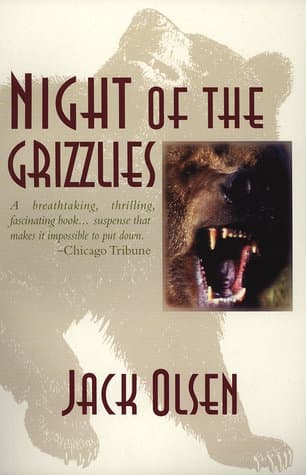
Night of the Grizzlies cover
Archivist's Choice

Night of the Grizzlies

Jack Olsen (1969)

Genre

History / Science

Reading Time

240 min

Key Themes

See below

Track Your Reading

Sign in to track this book

In Glacier National Park, August 1967, two campers died in separate grizzly bear attacks, changing the park's approach to its predators.

Core Idea

Jack Olsen's "Night of the Grizzlies" details the events of August 13, 1967, when two grizzly bear attacks in Glacier National Park killed two young women. The book examines the conflict between how humans view wilderness and the harsh realities of nature. It shows how human actions, like feeding wild animals, created a dangerous environment, turning predators into 'problem bears' because of human interference. The book analyzes the failures, slow government response, and ethical problems park rangers faced in balancing nature preservation with human safety. It highlights the unpredictable nature of wild animals, the responsibility of those managing wilderness, and how these tragedies led to major changes in wildlife management policies, especially concerning bear-human interactions. It stresses the importance of keeping a safe distance from wild predators.
Reading time
240 min
Difficulty
Medium
✓ Read this if...
You are fascinated by true crime, natural history, wildlife management, or the complex relationship between humans and wilderness. Especially if you enjoy detailed, investigative non-fiction that dissects a pivotal event and its broader implications.
✗ Skip this if...
You prefer light reading, are easily disturbed by graphic accounts of animal attacks, or are looking for a purely scientific or academic treatise on bear behavior (the book is more narrative and investigative journalism).

Core idea

The central argument and framework that powers the entire book.

Jack Olsen's "Night of the Grizzlies" details the events of August 13, 1967, when two grizzly bear attacks in Glacier National Park killed two young women. The book examines the conflict between how humans view wilderness and the harsh realities of nature. It shows how human actions, like feeding wild animals, created a dangerous environment, turning predators into 'problem bears' because of human interference.

The book analyzes the failures, slow government response, and ethical problems park rangers faced in balancing nature preservation with human safety. It highlights the unpredictable nature of wild animals, the responsibility of those managing wilderness, and how these tragedies led to major changes in wildlife management policies, especially concerning bear-human interactions. It stresses the importance of keeping a safe distance from wild predators.

At a glance

Reading time

240 min

Difficulty

Medium

Read this if...

You are fascinated by true crime, natural history, wildlife management, or the complex relationship between humans and wilderness. Especially if you enjoy detailed, investigative non-fiction that dissects a pivotal event and its broader implications.

Skip this if...

You prefer light reading, are easily disturbed by graphic accounts of animal attacks, or are looking for a purely scientific or academic treatise on bear behavior (the book is more narrative and investigative journalism).

Key Takeaways

1

The Allure of the Wild, The Sting of Reality

The human desire for untamed nature often clashes with its inherent dangers.

Quote

The wilderness, by its very definition, is a place where man is not in control.

The book shows the contrast between the romanticized view many visitors have of national parks and the reality of a wild ecosystem. Campers, drawn by beauty and the idea of untouched nature, often underestimate the power of its inhabitants, especially large predators like grizzlies. This gap between expectation and reality played a key role in the tragedies, as victims were often made to feel safe by earlier calm encounters or a lack of understanding of bear behavior. The park service also struggled with this conflict, trying to balan...

Supporting evidence

The initial complacency of the victims, who often had prior, harmless encounters with bears, or were simply unprepared for an aggressive encounter.

Apply this

When venturing into wild areas, actively seek to understand the specific dangers and respect the power of the environment and its inhabitants. Never assume familiarity equals safety.


wilderness-risknature-romancehuman-wildlife-conflict
2

Habituation: A Deadly Kindness

Feeding wild animals, even with good intentions, can lead to dangerous dependency and aggression.

Quote

The greatest enemy of the grizzly bear is not the hunter, but the well-meaning tourist with a sandwich.

Olsen details how decades of feeding grizzly bears by tourists and, unintentionally, by park facilities (like garbage dumps), caused them to lose their natural fear of humans. Bears, especially younger ones, learned to link humans with food, abandoning natural foraging for easy meals. This habituation removed their wild instincts, turning them from shy creatures into bold, opportunistic scavengers. When food sources became inconsistent or insufficient, or when humans did not provide, the bears' learned assertiveness could quickly beco...

Supporting evidence

The specific accounts of bears frequenting campgrounds, begging for food, and the park's long-standing use of open garbage dumps as a 'tourist attraction' for viewing bears.

Apply this

Strictly adhere to 'leave no trace' principles in wild areas. Never feed wild animals, and properly store food to prevent access. Understand that a fed animal is a dead animal, or, in this case, a dangerous one.

bear-habituationfood-conditioninghuman-impact
3

The 'Problem Bear' is a Human Problem

Blaming aggressive bears often ignores the systemic human behaviors that created them.

Quote

The bears were not inherently 'bad'; they were merely acting on lessons taught, however inadvertently, by humans.

The book argues that the bears involved in the attacks were not 'evil' animals, but were products of their environment and human conditioning. Olsen shows how the systems meant to manage the park—from visitor access to waste disposal—contributed to the bears' problematic behavior. After an attack, focus often falls on the individual 'killer bear,' but Olsen directs the blame toward the collective human impact: the feeding, the poor waste management, and the lack of understanding of bear ecology. This view shifts responsibility from th...

Supporting evidence

The detailed history of garbage dumps as feeding stations, the park's struggle to implement bear-proof containers, and the public's resistance to changing their habits.

Apply this

When analyzing human-wildlife conflicts, look beyond the immediate incident to identify underlying systemic issues and human behaviors that contribute to the problem. Advocate for proactive, ecologically sound management practices.

wildlife-managementanthropogenic-factorsblame-shifting
4

Nature's Indifference to Human Suffering

The raw power of the wild operates without malice or mercy, only instinct.

Quote

The grizzly is not a monster; it is a force of nature, indifferent to human pleas or pain.

Olsen's story highlights a profound truth: nature is not good or bad, but simply indifferent. The grizzly attacks, while tragic for the victims and their families, were not acts of revenge or cruelty by the bears. Instead, they were instinct-driven responses—perhaps territorial defense, food gathering, or learned aggression—worsened by human habituation. This indifference is a key idea for understanding wilderness; it reminds us that while we may project human emotions onto animals, their actions are governed by survival and instinct,...

Supporting evidence

The clinical descriptions of the attacks, devoid of anthropomorphic interpretations of the bears' motives, focusing instead on their powerful, instinctual actions.

Apply this

Cultivate a realistic understanding of wild animals; appreciate their power and beauty without anthropomorphizing their actions. Recognize that personal safety in the wilderness depends on respecting these natural forces.

natural-selectionwild-instinctecological-perspective
5

The Bureaucratic Slowdown of Safety

Institutional inertia and conflicting priorities can fatally delay necessary safety reforms.

Quote

The solutions were known, but the will to implement them was tangled in layers of bureaucracy and competing interests.

The book reveals a frustrating history of known problems and slow solutions within the National Park Service. Park rangers and wildlife experts had long recognized the dangers of bear habituation and poor waste management. However, making effective changes—like closing garbage dumps, installing bear-proof containers, and enforcing strict food storage rules—faced resistance due to budget limits, public opposition to inconvenience, and bureaucracy. This institutional slowness meant that important safety measures were often discussed, de...

Supporting evidence

The detailed historical accounts of park ranger recommendations for dump closures and bear-proofing, and the protracted timeline before these measures were finally implemented after the tragedies.

Apply this

Advocate for responsive and adaptive governance in public safety and environmental management. Hold institutions accountable for implementing known solutions, especially when human lives or ecological health are at stake.

institutional-failurepublic-policyrisk-management
6

The Weight of Responsibility on Rangers

Park rangers face an impossible task: managing human expectations and untamed nature.

Quote

They were the thin line between man's desire for the wild and the wild's indifference to man.

Olsen portrays park rangers as dedicated but often overwhelmed individuals facing a difficult balance. They are tasked with protecting both visitors and wildlife, often with limited resources and conflicting orders. They see firsthand the dangers of human behavior and the results of habituated bears, yet their ability to make changes is limited by bureaucracy and public opinion. The book highlights their moral burden, knowing the risks yet often unable to prevent tragedies. This dual responsibility—acting as both protectors and enforc...

Supporting evidence

The accounts of rangers warning visitors, their futile attempts to deter habituated bears, and their harrowing experiences responding to the attack sites.

Apply this

Support and appreciate the complex role of park rangers and conservation professionals. Respect their directives and understand the challenges they face in maintaining ecological balance and public safety.

park-rangersconservation-ethicsenvironmental-stewardship
7

Tragedy as a Catalyst for Change

Sometimes, the most horrific events are necessary to force critical, overdue reforms.

Quote

It took death to finally open the eyes that had been willfully shut for too long.

One of the disheartening yet clear lessons from 'Night of the Grizzlies' is that despite years of warnings, major changes in bear management happened only after the fatal attacks. The horror and public outcry following the deaths of Michele Koons and Julie Helgeson finally provided the push needed to overcome bureaucratic inertia and public resistance. This included permanently closing garbage dumps, widely using bear-proof containers, and stricter enforcement of food storage rules. The tragedy, though immense, acted as a grim catalys...

Supporting evidence

The immediate and sweeping policy changes implemented by Glacier National Park in the aftermath of the August 1967 attacks, contrasting sharply with the slow pace of change prior to the events.

Apply this

Proactively identify and address potential risks before they escalate into crises. Don't wait for tragedy to implement necessary safety and environmental reforms.

crisis-managementpolicy-reformpublic-safety
8

The Unpredictable Nature of Predation

Despite all precautions, some wilderness encounters remain inherently unpredictable and dangerous.

Quote

In the wild, even when all the rules are followed, there remains an irreducible element of chance.

While Olsen details the human-caused factors contributing to the attacks, the book also acknowledges an inherent risk in sharing territory with large predators. Even with perfect management and visitor behavior, wild animals are, by definition, wild. Their motivations, individual temperaments, and responses can never be fully controlled or predicted. The tragic events serve as a stark reminder that even in a managed park, the wilderness remains unpredictable. This does not negate the importance of human responsibility but adds a layer...

Supporting evidence

The fact that even experienced outdoorspeople can fall victim to unexpected animal aggression, and the inherent variability in individual animal behavior.

Apply this

Always exercise vigilance and maintain situational awareness in wild environments. Understand that while many risks can be mitigated, some degree of unpredictability is inherent in nature and must be respected.

wilderness-safetyrisk-assessmentnatural-unpredictability

Critical analysis

Notable Quotes

There are people who will tell you that the grizzly bear is a friendly animal, that it will not bother you if you do not bother it. Do not believe them.

Early warning about the true nature of grizzlies, challenging common misconceptions.

The deaths were not an act of God. They were an act of nature, and an act of man.

Reflecting on the dual responsibility for the tragedies, both wildness and human influence.

It was a night of extraordinary violence, a night that would forever change the way Americans looked at grizzly bears.

Summarizing the profound impact of the August 1967 attacks.

In a wilderness, man is only a visitor. He is not the master.

Highlighting humanity's place in the natural order, particularly in wild areas.

The bears were not evil. They were simply bears.

Emphasizing the animalistic, non-malicious nature of the grizzlies' actions.

It was the convergence of many small mistakes, and one very large animal.

Attributing the disaster to a combination of human errors and the power of the grizzly.

The lure of the wild is strong, but sometimes the wild bites back.

A poignant observation about the risks inherent in seeking out wilderness experiences.

They were young, adventurous, and tragically unaware of the forces they were about to encounter.

Describing the victims of the attacks and their lack of preparation.

For years, the garbage dumps were a convenience, a tourist attraction, and a death trap waiting to happen.

Critiquing the long-standing park policy of open dumps that habituated bears to human food.

The silence of the mountains can be deceptive. It can hide terrible things.

Evoking the ominous atmosphere of the wilderness where the attacks occurred.

Science, even in its rawest form, had begun to chip away at the myths.

Referring to the early scientific efforts to understand grizzly behavior and management.

Man had learned to fear the grizzly again, and perhaps that was a good thing.

Suggesting that renewed respect and fear for grizzlies could lead to better co-existence.

The park, a symbol of untouched nature, was also a stage for human folly.

Pointing out the irony of a protected wilderness being compromised by human actions.

It wasn't just a story about bears. It was a story about us.

Broadening the scope of the narrative beyond the animals to human decisions and reactions.

Quiz

Test Your Knowledge

Ready to see how well you understood this book? Take our interactive quiz with 10 questions.

10
Questions
~5
Minutes
?
Best Score

Key Questions (FAQ)

'Night of the Grizzlies' by Jack Olsen is a non-fiction book that recounts the horrifying true events of August 13, 1967, when two young women were killed by grizzly bears in separate, unrelated attacks on the same night in Glacier National Park. The book delves into the circumstances leading up to these tragedies.

About the author