BookBrief
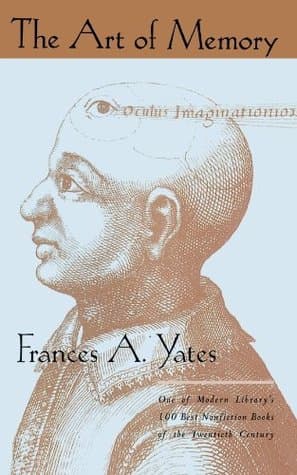
The Art of Memory cover
Archivist's Choice

The Art of Memory

Frances A. Yates (1966)

Genre

Psychology / History / Science / Philosophy

Reading Time

1000 min

Key Themes

See below

Track Your Reading

Sign in to track this book

Frances Yates explores how ancient orators and Renaissance mages mastered vast knowledge before printing, using forgotten memory palace techniques that shaped Western thought.

Core Idea

Frances Yates's "The Art of Memory" traces mnemonic systems, especially the 'memory palace,' from antiquity through the Renaissance. She argues these methods were more than psychological tools; they shaped philosophy, religion, and knowledge in pre-print cultures. The book shows how printing and empiricism led to the decline of this active, imaginative memory tradition, fundamentally changing Western epistemology. Yates demonstrates that understanding the art of memory is key to grasping past intellectual and spiritual worlds, including the esoteric practices of figures like Giordano Bruno.
Reading time
1000 min
Difficulty
Hard
✓ Read this if...
You are fascinated by the history of ideas, the evolution of cognitive techniques, or the intersection of philosophy, magic, and science in pre-modern Europe. Essential for anyone interested in the intellectual foundations of the Renaissance and the impact of technology (like printing) on human cognition and culture.
✗ Skip this if...
You are looking for a practical guide to improving your memory today, a light read, or a purely psychological take on memory. This book is dense, academic, and focused on historical and philosophical analysis rather than modern self-help.

Core idea

The central argument and framework that powers the entire book.

Frances Yates's "The Art of Memory" traces mnemonic systems, especially the 'memory palace,' from antiquity through the Renaissance. She argues these methods were more than psychological tools; they shaped philosophy, religion, and knowledge in pre-print cultures. The book shows how printing and empiricism led to the decline of this active, imaginative memory tradition, fundamentally changing Western epistemology. Yates demonstrates that understanding the art of memory is key to grasping past intellectual and spiritual worlds, including the esoteric practices of figures like Giordano Bruno.

At a glance

Reading time

1000 min

Difficulty

Hard

Read this if...

You are fascinated by the history of ideas, the evolution of cognitive techniques, or the intersection of philosophy, magic, and science in pre-modern Europe. Essential for anyone interested in the intellectual foundations of the Renaissance and the impact of technology (like printing) on human cognition and culture.

Skip this if...

You are looking for a practical guide to improving your memory today, a light read, or a purely psychological take on memory. This book is dense, academic, and focused on historical and philosophical analysis rather than modern self-help.

Key Takeaways

1

The Ancient Mind Palace

Memory as a structured, architectural system

Quote

The fundamental principle of the art was to impress on the memory an ordered series of loci or places and an ordered series of imagines or images which were to be associated with them.

Before widespread literacy and printing, memory was not passive recall but an active construction. The 'Art of Memory' describes a system, from Greek rhetoricians like Simonides of Ceos, where information went into vivid, often unusual, images placed within an imagined architectural structure—a 'memory palace.' This technique was a way to store, retrieve, and organize large amounts of knowledge, from speeches to encyclopedic data. It worked because the human brain remembers spatial relationships and striking visuals well, turning abst...

Supporting evidence

The legend of Simonides of Ceos, who, after a banquet hall collapsed, was able to identify the victims by recalling where each had been seated, is the foundational myth of the 'loci and imagines' technique.

Apply this

To enhance personal memory, one can consciously visualize information as distinct objects or symbols placed within familiar physical spaces (e.g., rooms in your house). The more unusual or exaggerated the image, the better its recall. This can be applied to learning new languages, remembering names, or structuring complex arguments.


memory-palaceloci-and-imaginesclassical-rhetoric
2

Memory's Medieval Metamorphosis

From secular rhetoric to spiritual contemplation

Quote

The memory system of the Middle Ages, though still based on the classical loci and imagines, was profoundly reoriented towards ethical and religious purposes.

Yates shows how the classical art of memory did not disappear after the fall of Rome but was changed by medieval Christian thought. It became a spiritual discipline instead of just a tool for secular speeches. Monks and scholars used the 'memory palace' to remember biblical texts, theological arguments, and moral virtues and vices. The locations became imagined churches, monasteries, or Passion scenes, with images representing saints, sins, or divine attributes. This shift shows how intellectual methods change and take on new cultural...

Supporting evidence

Thomas Aquinas's adaptation of the classical memory rules in his Summa Theologica, where he frames memory as a part of prudence and essential for virtuous living, recommending 'disposition' and 'apt images.'

Apply this

Consider how modern digital tools, like note-taking apps or knowledge management systems, can be adapted beyond their original purpose. Instead of just storing facts, consciously use them to organize moral reflections, spiritual insights, or personal values, creating a 'digital memory palace' for inner growth.

medieval-memorythomas-aquinaschristian-humanism
3

The Occult Turn: Giordano Bruno's Cosmic Memory

Memory art as a key to universal knowledge and magical power

Quote

Bruno's memory systems were not merely mnemonics; they were attempts to grasp the universe, to unify all knowledge, and to achieve magical control over reality.

The Renaissance saw a radical, often esoteric, change in memory art, clearest in the work of Giordano Bruno. For Bruno, the memory palace was not just a recall tool but a microcosm, a magical way to align the human mind with the universe. His systems tied into Hermeticism, Neoplatonism, and Kabbalah, using complex astrological, mythical, and magical images within intricate architectural structures. This was an attempt to recall the entire universe, access its hidden connections, and gain wisdom and spiritual power. Yates argues that t...

Supporting evidence

Bruno's elaborate memory systems, such as those described in works like 'De umbris idearum' (On the Shadows of Ideas), which employed zodiacal images and complex symbolic wheels to structure universal knowledge.

Apply this

When learning a complex subject, instead of merely memorizing facts, try to identify the underlying philosophical or conceptual framework that connects disparate pieces of information. Explore how different disciplines might be symbolically linked to create a more holistic understanding, even if it feels unconventional.

giordano-brunohermeticismrenaissance-magicoccult-memory
4

Printing's Paradox: The Decline of Active Memory

How the rise of the printed page diminished the need for internal memory systems

Quote

The advent of printing gradually but inevitably undermined the traditional art of memory by providing an external, permanent, and easily accessible repository for knowledge.

Yates argues that the printing press, while revolutionary for spreading knowledge, also led to the slow decline of the sophisticated 'Art of Memory.' When books became widely available and affordable, the need to internalize vast information using elaborate mnemonic systems lessened. Knowledge could now be stored externally, in libraries and collections, rather than only in the mind. This changed the nature of learning and intellectual life. Memory shifted from an active, reconstructive process to a more passive, referential one. Whil...

Supporting evidence

The increasing availability of printed books in the 15th and 16th centuries, which allowed scholars to rely on external texts for reference rather than internalizing entire libraries of knowledge.

Apply this

In the digital age, where information is always 'searchable,' consciously practice active recall and internalization for crucial knowledge. Don't just bookmark articles; summarize them in your own words. Don't just rely on search engines; build mental frameworks for understanding key concepts to prevent cognitive dependency.

printing-pressinformation-revolutionexternal-memorycognitive-shift
5

The Philosophical Critique of Imagination

Memory's entanglement with faculty psychology and empiricism

Quote

The very faculty of imagination, upon which the art of memory depended, became suspect in the rise of empiricism and rationalism.

The decline of memory art was not only due to printing but also to changing philosophical ideas. The imaginative and often fantastical images central to the memory palace technique were questioned with the rise of empiricism and rationalism, especially in the 17th century. Philosophers like Descartes and Locke focused on clear ideas and direct sensory experience, seeing the 'phantasms' and 'similitudes' of memory art as potentially misleading. Imagination, once a powerful tool, was increasingly seen as a source of error. This intellec...

Supporting evidence

Descartes's emphasis on clear and distinct ideas, and Locke's rejection of innate ideas in favor of sensory experience, both implicitly undermined the validity of complex, imaginative mnemonic systems.

Apply this

When evaluating information, be aware of the tension between intuitive, image-based understanding and abstract, logical reasoning. Recognize the power of both, but also their potential pitfalls. For complex problems, try both approaches: visualize the problem, then break it down logically.

empiricismrationalismdescarteslockeimagination
6

Memory as a Window to Culture

The art of memory reflects and shapes intellectual history

Quote

The art of memory is not merely a technical device; it is a key to understanding the intellectual and spiritual history of the West.

Yates's greatest contribution is showing that the art of memory is more than a historical curiosity; it is a key way to understand the changing intellectual history of Western civilization. From classical rhetoric to medieval scholasticism, from Renaissance occultism to the scientific revolution, how people thought about and used memory shaped their thinking, values, and understanding of the world. The study shows how intellectual techniques are tied to their cultural contexts, reflecting dominant philosophies, religious beliefs, and ...

Supporting evidence

The entire book, which meticulously traces the art's journey through different historical periods, revealing its adaptive nature and its deep influence on various intellectual movements.

Apply this

When studying any historical period or cultural phenomenon, look beyond surface events to understand the underlying 'technologies of thought' or prevalent cognitive practices. How did people organize, store, and transmit knowledge? This approach can reveal deeper insights into their worldview.

intellectual-historycultural-studiescognitive-historyhistoriography
7

The Power of Grotesque Imagery

Why vivid, unusual images are central to effective memory

Quote

The images chosen for the memory must be striking, unusual, and even grotesque, for these are the most memorable.

A constant theme in the 'Art of Memory' is the advice from ancient rhetoricians to medieval monks to use very vivid, emotionally charged, often unusual or absurd images. This was not just a style choice but a psychological insight: the human mind remembers bizarre, shocking, or humorous things better than mundane or abstract ones. A 'bloody' or 'beautiful' image, as ancient texts suggest, is more potent than a plain one. This principle uses our natural attention to novelty and emotional impact, making the memory palace not just a rati...

Supporting evidence

Classical texts like the 'Ad Herennium' explicitly advise using 'active images' that are 'beautiful or unusually deformed, striking, or comic,' emphasizing their power to stick in the mind.

Apply this

When trying to remember something difficult, don't just repeat it. Transform it into a highly unusual, exaggerated, or even absurd mental image. For example, to remember a name, associate it with a silly, memorable action or object related to that person.

mnemonicsvisual-memorypsychology-of-memoryimagery-vividness
8

Memory as an Ethical Imperative

The moral dimension of remembering and forgetting

Quote

For the medieval mind, memory was not only an intellectual faculty but also a moral virtue, essential for prudence and the avoidance of sin.

Beyond its practical uses for rhetoric or magic, the art of memory often held ethical and moral importance, especially in the Middle Ages. For thinkers like Thomas Aquinas, good memory was part of 'prudence,' a cardinal virtue. Remembering good deeds, moral rules, and the results of sin was essential for a virtuous life. Forgetting, conversely, could be a moral failing. This view raises memory from a cognitive function to a key part of character and spiritual discipline. It shows how deeply moral philosophy and cognitive practice were...

Supporting evidence

Aquinas's detailed discussion of memory within his treatise on prudence, where he outlines specific rules for improving memory as a means to achieve moral good.

Apply this

Actively cultivate a 'moral memory' by regularly reflecting on past decisions, their outcomes, and the values that guided them. Keep a journal of ethical dilemmas and resolutions. This practice can strengthen your moral compass and prevent repeating past mistakes, much like the medieval application.

moral-philosophyvirtue-ethicsthomas-aquinasprudence
9

The Legacy of Lost Knowledge

Reclaiming insights from a forgotten intellectual tradition

Quote

The art of memory, though largely forgotten, offers profound insights into the human mind and the ways in which knowledge can be organized and retained.

Yates's work is intellectual archaeology, uncovering a rich and complex tradition largely ignored or misunderstood by modern scholarship. She argues that while the specific memory palace techniques may seem old-fashioned, the underlying principles—spatial organization, vivid imagery, and associative links—are still relevant to understanding human cognition. The book challenges the linear view of intellectual progress, suggesting that some valuable cognitive skills and ways of thinking may have been lost or marginalized in the pursuit ...

Supporting evidence

The entire book's comprehensive historical survey, which revives an entire intellectual discipline from obscurity and demonstrates its historical importance and philosophical depth.

Apply this

Explore modern applications of ancient memory techniques (e.g., using spaced repetition, creating visual notes, or building personal 'knowledge graphs'). Don't assume newer methods are always superior; integrate time-tested cognitive strategies into your learning toolkit.

cognitive-sciencehistorical-methodsknowledge-managementlearning-strategies

Critical analysis

Notable Quotes

The memory system which the art of memory used was an architectural type. The most common, and indeed the most important, memory system of the classical, medieval, and Renaissance periods was the method of loci.

Explaining the fundamental technique of the art of memory.

The memory images are not just aids for remembering, but also a means of imprinting knowledge more deeply onto the mind, making it more vivid and accessible.

Discussing the function and power of memory images.

The art of memory became associated with occultism and magic, partly because of its reliance on striking, often bizarre, images which could seem to have a life of their own.

Exploring the later historical trajectory and misinterpretations of the art.

For the ancients, the cosmos itself was an ordered mnemonic system, a vast memory theatre.

Highlighting the philosophical and cosmological dimensions of ancient memory.

The decline of the art of memory coincided with the rise of printing. When books became readily available, the need for an internal, personal memory system diminished.

Analyzing the historical factors contributing to the decline of the art.

Ramus destroyed the art of memory by reducing invention and disposition to logic and by relegating memory to a mere faculty for retaining what was already found.

Critiquing the impact of Peter Ramus's reforms on the art of memory.

Giordano Bruno was perhaps the last great figure to fully grasp the cosmic and magical implications of the art of memory, using it as a tool for understanding and manipulating the universe.

Discussing Bruno's unique and profound engagement with the art.

The classical art of memory, though often dismissed as a mere trick, was in fact a highly sophisticated system rooted in rhetoric and philosophy.

Emphasizing the intellectual depth of the ancient memory tradition.

The images in the art of memory were not merely abstract symbols; they were vivid, emotional, and often grotesque, designed to impress themselves deeply on the mind.

Describing the characteristics of effective memory images.

Memory, for the ancients, was not just a storage faculty, but an active, creative power, essential for wisdom and eloquence.

Contrasting ancient and modern conceptions of memory.

The journey through the memory palace was a journey through knowledge, a structured way to recall vast amounts of information.

Illustrating the practical application of the method of loci.

The 'memory theatre' of Giulio Camillo, though never fully realized, represents a fantastic ambition to contain all knowledge within a theatrical mnemonic system.

Discussing an ambitious Renaissance project related to the art of memory.

The art of memory offers a key to understanding Renaissance thought, revealing how deeply embedded symbolic and imaginative thinking was in their intellectual landscape.

Positioning the art of memory as an interpretive tool for historical understanding.

To forget was not merely a personal failing, but a loss of connection to the divine order, a failure to participate in the cosmic memory.

Exploring the profound implications of memory in certain philosophical traditions.

Quiz

Test Your Knowledge

Ready to see how well you understood this book? Take our interactive quiz with 10 questions.

10
Questions
~5
Minutes
?
Best Score

Key Questions (FAQ)

The 'art of memory' refers to various mnemonic systems and techniques developed throughout history, particularly before the invention of the printing press, to help individuals retain and recall large amounts of information. Yates explores its evolution from ancient Greek oratory to its later, more esoteric manifestations.

About the author