BookBrief
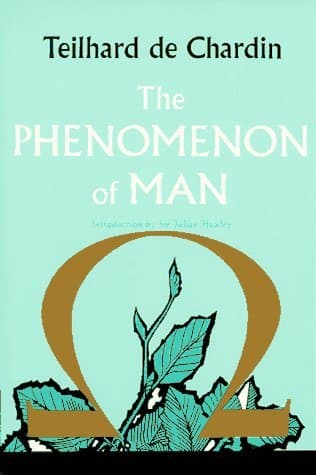
The Phenomenon of Man cover
Archivist's Choice

The Phenomenon of Man

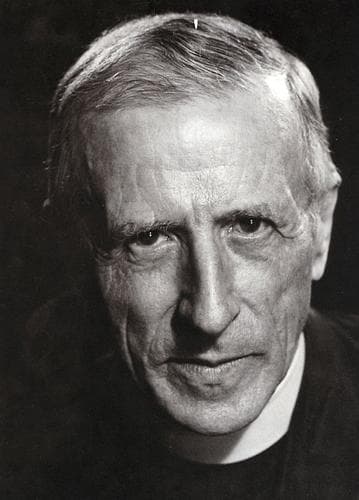
Pierre Teilhard de Chardin (1955)

Genre

Psychology / Spirituality / Science / Philosophy

Reading Time

360-480 min (given density and conceptual challenge)

Key Themes

See below

Track Your Reading

Sign in to track this book

In "The Phenomenon of Man," Teilhard de Chardin explores how Christian theology and scientific evolution can align, showing a universe always moving toward a divine Omega Point.

Core Idea

Pierre Teilhard de Chardin's "The Phenomenon of Man" proposes that evolution is more than a biological process; it is a continuous movement toward greater complexity and consciousness, ending in a spiritual peak he calls Point Omega. He suggests that matter and spirit are different parts of the same cosmic energy, with spirit appearing as matter becomes more organized. Humanity, with its ability to reflect and think together (the Noosphere), is a key moment in this process, helping the universe become more spiritual and unified. The book blends scientific evolution and Christian spirituality, seeing the cosmos as a developing entity aiming for a unified existence driven by love.
Reading time
360-480 min (given density and conceptual challenge)
Difficulty
Hard
✓ Read this if...
You are interested in a grand, unifying theory of evolution that integrates science, spirituality, and philosophy, exploring humanity's cosmic purpose and the future of consciousness. You enjoy speculative, big-picture thinking and are open to synthesizing diverse fields of knowledge.
✗ Skip this if...
You prefer empirically verifiable scientific texts, are skeptical of metaphysical speculation, or are looking for a purely secular account of evolution. Those seeking practical self-help or highly detailed biological explanations will find this too abstract and philosophical.

Core idea

The central argument and framework that powers the entire book.

Pierre Teilhard de Chardin's "The Phenomenon of Man" proposes that evolution is more than a biological process; it is a continuous movement toward greater complexity and consciousness, ending in a spiritual peak he calls Point Omega. He suggests that matter and spirit are different parts of the same cosmic energy, with spirit appearing as matter becomes more organized. Humanity, with its ability to reflect and think together (the Noosphere), is a key moment in this process, helping the universe become more spiritual and unified. The book blends scientific evolution and Christian spirituality, seeing the cosmos as a developing entity aiming for a unified existence driven by love.

At a glance

Reading time

360-480 min (given density and conceptual challenge)

Difficulty

Hard

Read this if...

You are interested in a grand, unifying theory of evolution that integrates science, spirituality, and philosophy, exploring humanity's cosmic purpose and the future of consciousness. You enjoy speculative, big-picture thinking and are open to synthesizing diverse fields of knowledge.

Skip this if...

You prefer empirically verifiable scientific texts, are skeptical of metaphysical speculation, or are looking for a purely secular account of evolution. Those seeking practical self-help or highly detailed biological explanations will find this too abstract and philosophical.

Key Takeaways

1

The Law of Complexity-Consciousness

Evolution is not random, but an ascent towards higher complexity and interiority.

Quote

The more complex a being, the more conscious it is. This 'law of complexity-consciousness' is the master-key to the understanding of evolution.

Teilhard suggests that evolution is not just a spread of species but a clear, continuous movement toward more complexity and, with it, more consciousness. This is not a traditional claim about purpose, but an observation of a basic 'rule' of the universe. From atoms to molecules, then to living cells, organisms, and eventually the human brain, there is a steady trend toward more organization, connection, and inner awareness. Consciousness, in this view, is not something new that appears in advanced life, but a basic 'substance' of the...

Supporting evidence

Teilhard's extensive paleontological and biological research, observing the consistent historical development from simpler to more complex life forms, culminating in the human species with its unique capacity for reflection.

Apply this

Recognize that progress, both personal and societal, often involves embracing complexity rather than seeking simplistic solutions. Cultivate self-awareness and reflective thought as a means of participating in the ongoing evolutionary ascent.

complexity-consciousnessradial-energyinteriority-of-things
2

The Noosphere: Earth's Thinking Layer

Humanity's collective consciousness forms a new planetary layer, driving future evolution.

Quote

After the geosphere (solid earth), the hydrosphere (water), the atmosphere (air), and the biosphere (life), we can discern the noosphere (the sphere of human thought).

Just as life created the biosphere, Teilhard proposes that human thought, culture, and technology are coming together to form a new, global layer: the noosphere. This is not just a figure of speech; he sees it as a real, though unseen, layer of shared consciousness that is growing and strengthening around Earth. The connections made possible by communication, shared ideas, and global networks show this developing layer. The noosphere represents a key point in evolution, where individual human minds start to connect and form a unified,...

Supporting evidence

The rapid development of global communication networks (radio, television, early internet concepts), the spread of ideas, and the increasing interdependence of human societies, even in Teilhard's time.

Apply this

Actively participate in global dialogues, contribute to collective knowledge, and foster interconnectedness. See global challenges as opportunities for humanity to coalesce and evolve a shared understanding and purpose.

noospherecollective-consciousnessplanetization
3

Reflection: The Birth of True Humanity

The ability to know that we know marks a decisive leap in the evolutionary process.

Quote

Man is not merely a living being, but a living being who knows that he lives, and knows that he knows.

For Teilhard, the appearance of reflective thought is the most important event in all of life's history. It is not just about having consciousness (which he attributes to all life to some extent), but about being aware of one's own consciousness. This ability for self-awareness, for 'looking back on oneself,' completely changes existence. With reflection, humans can analyze, plan, dream, create culture, and think about their own existence and future. This marks the shift from pre-human to human, from purely biological evolution to a p...

Supporting evidence

The unique human capacity for abstract thought, language, tool-making, art, and the development of complex social structures and ethical systems, all stemming from self-awareness.

Apply this

Practice mindfulness and self-reflection. Understand that your capacity for introspection and conscious choice is a powerful evolutionary tool. Use it to guide your actions and contribute meaningfully to the world.

reflectionself-awarenesshominization
4

Point Omega: The Ultimate Convergence

Evolution culminates in a super-personal center of love and consciousness.

Quote

Omega is the ultimate pole of the world, the final center of convergence.

Point Omega is Teilhard's most profound and perhaps most debated idea. It is the ultimate end point of evolution, a higher, unified center of consciousness and love toward which all creation is constantly drawn. It is not just an abstract idea but a real, existing entity that pulls the unfolding universe toward greater unity and complexity-consciousness. Omega is both inside the evolutionary process (as its driving force) and beyond it (as its final goal). Teilhard, as a Jesuit priest, clearly connects Omega to Christ, seeing Christ a...

Supporting evidence

The persistent drive towards complexity and unity observed throughout evolution, and the human longing for connection, meaning, and transcendence, which Teilhard interprets as an unconscious pull towards Omega.

Apply this

Cultivate a sense of purpose and direction in your life, seeing your personal growth and contributions as part of a larger, meaningful cosmic trajectory. Embrace love and unity as fundamental forces driving human progress.

point-omegaconvergencechristogenesissuper-personal
5

The Primacy of Spirit in Matter

Consciousness is not an afterthought but the 'stuff' from which matter is woven.

Quote

There is a 'within' to things, a psychic or conscious face, however rudimentary, to all matter.

Challenging traditional materialism, Teilhard argues that consciousness (or 'radial energy') is not something that appears late in complex matter, but an inherent quality present in all matter, even in its simplest forms. He suggests that every particle has an 'outside' (its material aspect, studied by physics) and an 'inside' (its psychic aspect, its potential for consciousness). As matter organizes into more complex structures, this 'within' becomes clearer and stronger, ending in humanity's reflective consciousness. This view remov...

Supporting evidence

The continuous gradient of complexity and 'interiority' observed from subatomic particles to living organisms, suggesting a fundamental continuity rather than a sharp break where consciousness suddenly appears.

Apply this

Develop a deeper respect for all forms of existence, recognizing an inherent 'spirit' or potential for interiority even in seemingly inanimate objects. Adopt a holistic worldview that integrates scientific understanding with spiritual insight.

panpsychismradial-energytangential-energyspirit-in-matter
6

Evolution as a Unified Process

Cosmic, biological, and human evolution are continuous phases of a single, grand unfolding.

Quote

The universe is not a collection of things, but a process, a becoming.

Teilhard's view is deeply unifying. He rejects separating scientific fields and the artificial division between cosmic evolution (stars and galaxies), biological evolution (life), and human evolution (consciousness and culture). Instead, he presents them as smoothly connected stages of a single, continuous, and directed cosmic process. From the Big Bang to Earth's formation, the emergence of life, the development of complex organisms, and finally to humans and the noosphere, there is an unbroken line of increasing complexity and consc...

Supporting evidence

The interconnectedness of physical laws, biological principles, and human cognitive development, all demonstrating an unfolding from simpler to more complex states over vast timescales.

Apply this

Adopt a holistic perspective in your understanding of the world. See your personal journey as part of a larger cosmic narrative. Seek connections between seemingly disparate fields of knowledge.

cosmogenesisholismunificationevolutionary-synthesis
7

The Problem of Evil and the Cost of Evolution

Suffering and imperfection are inherent byproducts of a universe in creation.

Quote

Evil is not a positive reality, but the shadow cast by the process of creation, the refuse of genesis.

Teilhard addresses the problem of evil not as divine punishment or an outside force, but as an unavoidable result of a universe still 'in the making.' In a changing, evolving cosmos, there is naturally some 'trial and error,' incompleteness, poor adaptation, and division. Suffering, death, and flaws are the 'byproducts' or 'waste' inherent in the process of becoming complex and appearing. They are the cost of creation, not a defect in the design. As the universe moves toward greater unity at Omega, these elements of discord will gradu...

Supporting evidence

The vast amount of extinction, competition, and 'imperfect' forms observed throughout the fossil record and in current biological systems, which are necessary steps in the evolutionary ascent.

Apply this

View challenges and setbacks as inherent parts of any creative or developmental process, rather than as ultimate failures. Cultivate resilience and understanding in the face of imperfection, both in yourself and in the world.

problem-of-evilcost-of-creationgenesisimperfection
8

Humanity's Co-Creative Role

We are not passive observers but active agents in directing future evolution.

Quote

Man is not the center of the universe, as once we thought in our naivety, but he is the axis and the arrow of the world's evolution.

With reflective consciousness, humanity gains a new power and responsibility: the ability to consciously influence and guide evolution. We are no longer just subjects of evolution but its conscious participants. Through our shared intelligence, technological progress, ethical choices, and spiritual desires, we can either speed up the convergence toward Omega or hinder it through division and self-destruction. This implies a deep moral duty for humanity to understand its place in the cosmic process and to align its actions with evoluti...

Supporting evidence

Humanity's capacity for technological innovation (e.g., genetic engineering, space exploration), global communication, and the conscious pursuit of ethical and spiritual ideals, all of which shape our collective future.

Apply this

Recognize your agency in shaping the future. Make conscious choices that foster unity, knowledge, and compassion. Engage in collective efforts that aim for human flourishing and planetary well-being.

co-creationhuman-agencyevolutionary-responsibilitynoogenesis
9

The Centrality of Love in Evolution

Love is not just an emotion, but the fundamental energy driving cosmic unification.

Quote

Love is the most universal, the most tremendous and the most mysterious of the cosmic energies.

Teilhard elevates love from a human feeling to a basic cosmic force, the 'connection of being with being.' He argues that attraction, cohesion, and unification, seen at every level of reality (from atomic bonds to social unity), are forms of this inherent 'love energy.' As consciousness grows, so does the capacity for conscious love. At the human level, love becomes a strong force for personal and collective integration, drawing individuals into deeper relationships and fostering the noosphere's unity. Ultimately, the convergence at P...

Supporting evidence

The observable forces of attraction and bonding in physics, the cooperative behaviors in biology, and the human capacity for empathy, altruism, and forming complex social bonds, all pointing to a fundamental drive towards unity.

Apply this

Prioritize and cultivate love, empathy, and connection in your personal relationships and societal interactions. Understand that fostering unity and understanding is a direct participation in the cosmic evolutionary drive.

cosmic-loveaffinityunificationeros
10

The Future: A Super-Organism of Thought

Humanity is evolving towards a globally unified, self-aware collective entity.

Quote

The earth is a closed sphere, and on it, thought, like everything else, is bound to converge.

Teilhard imagines humanity's ultimate future not as separate individuals or nations, but as a 'super-organism' of thought, a highly integrated and self-aware collective consciousness within the noosphere. Just as individual cells form a complex organism, and organisms form species, human minds, through increasing connection and shared purpose, are forming a higher-order entity. This does not mean losing individual identity but rather enhancing it by being part of a larger whole. This future 'planetization' of consciousness, driven by ...

Supporting evidence

The increasing globalization, interdependence, and the rise of global communication technologies and shared knowledge bases, which act as the 'nervous system' of this emerging super-organism.

Apply this

Embrace global citizenship and actively work towards fostering international cooperation and understanding. See your individual contributions to knowledge and connection as building blocks for a more unified human future.

super-organismplanetizationglobal-mindcollective-evolution

Critical analysis

Notable Quotes

The only subject that is worthy of our efforts is the creation of a greater consciousness, a greater vision, a greater love, a greater freedom.

Reflecting on humanity's ultimate purpose and evolutionary trajectory.

Adoration is the most complete and the most adorable of all human acts.

Discussing the profound spiritual act of worship and its significance.

The truth has to be built up by each one of us for himself, and it is in this building that we find our true being.

Emphasizing personal discovery and the construction of individual truth.

The greatest joy of all is to be a part of the movement of the universe, to be a part of the great tide of evolution.

Expressing an optimistic view of humanity's role within the cosmic process.

Love alone is capable of uniting living beings in such a way as to complete and fulfill them, for it alone takes them and joins them by what is deepest in themselves.

Highlighting the unique power of love as a unifying and perfecting force.

The universe has a direction, and that direction is towards ever greater complexity and consciousness.

Stating a core tenet of his evolutionary theory, the 'Law of Complexity-Consciousness'.

Man is not the centre of the universe as once we thought in our simplicity, but something much more wonderful—the arrow pointing to the final unification of the world in the super-life.

Redefining humanity's cosmic significance within an evolutionary framework.

The day will come when, after harnessing space, the winds, the tides and gravitation, we shall harness for God the energies of love. And on that day, for the second time in the history of the world, man will have discovered fire.

A visionary prediction about the future harnessing of spiritual energy, equating it to a new discovery of fire.

To be more is to be united.

A concise summary of his principle that increased complexity and consciousness lead to greater unity.

We are not human beings having a spiritual experience. We are spiritual beings having a human experience.

A widely attributed quote, reflecting the inherent spiritual nature of humanity.

Nothing is comprehensible except in the light of evolution.

Arguing for evolution as the fundamental lens through which to understand all phenomena.

Joy is the infallible sign of the presence of God.

Connecting the emotion of joy directly to divine presence and spiritual experience.

The future of the earth is in our hands, and it is up to us to make it a better place.

A call to action, emphasizing human responsibility for the planet's destiny.

The whole of life lies in the verb 'to see'.

Highlighting the importance of perception, insight, and understanding in the experience of life.

Quiz

Test Your Knowledge

Ready to see how well you understood this book? Take our interactive quiz with 10 questions.

10
Questions
~5
Minutes
?
Best Score

Key Questions (FAQ)

'The Phenomenon of Man' presents Teilhard de Chardin's comprehensive philosophical and scientific vision, aiming to reconcile Christian theology with the scientific theory of evolution. It argues for an evolutionary process that is not purely mechanistic but is guided towards increasing complexity and consciousness, culminating in what he calls the 'Omega Point'.

About the author