BookBrief
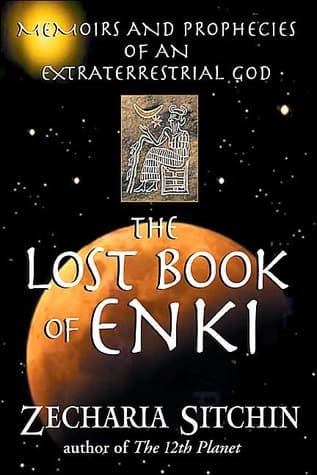
The Lost Book of Enki cover
Archivist's Choice

The Lost Book of Enki

Zecharia Sitchin (2001)

Genre

History / Spirituality / Science

Reading Time

330 min

Key Themes

See below

Track Your Reading

Sign in to track this book

Follow the Anunnaki leader Enki as he shares the extraterrestrial origins of humanity, a story of celestial politics, ancient rivalries, and scientific discoveries that challenge what we know about our past and future.

Core Idea

Zecharia Sitchin claims to translate ancient Sumerian tablets written by the god Enki. He presents a new history of human origins. Humanity was genetically engineered by the Anunnaki, an extraterrestrial race from the planet Nibiru. They came to Earth thousands of years ago for gold to repair their planet's atmosphere. This book details their arrival, their establishment of Earth as a colony, the creation of mankind as a slave race to mine gold, the political disputes among the Anunnaki 'gods,' the real cause of the Great Deluge, and their eventual departure. They left behind advanced knowledge, prophecy, and an ongoing influence on human civilization and religion. The narrative treats ancient myths and religious texts as historical accounts of these extraterrestrial interactions.
Reading time
330 min
Difficulty
Medium
✓ Read this if...
You are fascinated by alternative histories, ancient astronaut theories, or want a comprehensive narrative of Sitchin's interpretation of Sumerian texts.
✗ Skip this if...
You prefer mainstream archaeological and historical accounts, or are not open to speculative theories regarding extraterrestrial involvement in human origins.

Core idea

The central argument and framework that powers the entire book.

Zecharia Sitchin claims to translate ancient Sumerian tablets written by the god Enki. He presents a new history of human origins. Humanity was genetically engineered by the Anunnaki, an extraterrestrial race from the planet Nibiru. They came to Earth thousands of years ago for gold to repair their planet's atmosphere. This book details their arrival, their establishment of Earth as a colony, the creation of mankind as a slave race to mine gold, the political disputes among the Anunnaki 'gods,' the real cause of the Great Deluge, and their eventual departure. They left behind advanced knowledge, prophecy, and an ongoing influence on human civilization and religion. The narrative treats ancient myths and religious texts as historical accounts of these extraterrestrial interactions.

At a glance

Reading time

330 min

Difficulty

Medium

Read this if...

You are fascinated by alternative histories, ancient astronaut theories, or want a comprehensive narrative of Sitchin's interpretation of Sumerian texts.

Skip this if...

You prefer mainstream archaeological and historical accounts, or are not open to speculative theories regarding extraterrestrial involvement in human origins.

Key Takeaways

1

The Anunnaki's Desperate Exodus

A dying planet, Nibiru, forced an extraterrestrial race to Earth in search of gold to save their atmosphere.

Quote

The atmosphere of our planet Nibiru was diminishing, its protective shield weakening. Only gold, hammered into a fine dust and suspended in the heavens, could save us.

Sitchin's narrative, through Enki's 'memoirs,' says the Anunnaki were a civilization facing collapse on their home planet, Nibiru. Their atmosphere was eroding. Their science determined that only finely dispersed gold particles could replenish it, acting as a reflective shield. This crisis drove them to Earth, a planet rich in gold, starting their interactions with early hominids. This motive reframes their actions as a desperate rescue mission for their species, showing how far a civilization might go for survival.

Supporting evidence

Enki's detailed accounts of the atmospheric degradation on Nibiru and the specific scientific solution involving gold dust, which mirrors certain speculative geoengineering concepts in modern science.

Apply this

Consider how resource scarcity and environmental collapse on Earth could drive future extraterrestrial or even human interstellar migrations, and the ethical dilemmas that arise when one species' survival depends on exploiting another's home.
nibiru-atmosphere-decayanunnaki-gold-questextraterrestrial-migration
2

Engineered Humanity: The Adama Project

Humans were genetically engineered by the Anunnaki, specifically Enki and Ninhursag, to serve as a slave labor force.

Quote

Let us create a Lulu, a Primitive Worker, in our image and after our likeness, to bear the toil of the Anunnaki.

The book presents a new origin story for humanity: we are not just from natural evolution or divine creation, but a hybrid. Enki, a scientist, and chief medical officer Ninhursag, started the 'Adama Project.' This combined Anunnaki genetic material with that of indigenous hominids (Homo erectus) on Earth. The main reason was practical: Anunnaki laborers in the gold mines were tired and rebellious. The 'Lulu,' or 'Primitive Worker,' was made to be strong, intelligent enough to follow instructions, but subservient. This changed terrestr...

Supporting evidence

Enki's detailed logs of the genetic experiments, including the 'mixing of essences' (DNA), the failed attempts, and the eventual success in creating the 'Adama' in 'test tubes' (likely referring to advanced biological chambers).

Apply this

Reflect on the ethical implications of genetic engineering for specific purposes, especially regarding labor or subservience. How might artificial intelligence or advanced biotechnology today echo these ancient narratives of creation and control?

anunnaki-genetic-engineeringadama-creationprimitive-worker-luluhuman-origins-sitchin
3

The Great Deluge: Anunnaki Decision, Not Divine Wrath

The biblical flood was a calculated Anunnaki decision to cleanse Earth of humanity, orchestrated by Enlil, but secretly thwarted by Enki.

Quote

The Earth shall be cleansed of the troublesome black-headed ones. Let not one escape the Great Calamity!

Sitchin reinterprets the universal flood myth as an Anunnaki-planned event. As Nibiru neared its closest point to the sun, its gravity caused large tidal waves and atmospheric problems on Earth. Enlil, tired of humanity's growing numbers, noise, and disobedience, saw this as a chance to destroy them. He believed they had served their purpose or become too troublesome. However, Enki, who felt a bond with his creations, secretly warned Ziusudra (Noah) and told him how to build a submersible craft, ensuring humanity's survival. This show...

Supporting evidence

Enki's internal monologues and direct communications with Ziusudra, detailing the impending catastrophe and the construction of the 'ark' (a submersible rather than a floating boat), contrasting sharply with Enlil's decree of total destruction.

Apply this

Consider how natural disasters, coupled with technological capabilities, could be weaponized or manipulated in the future. How do differing perspectives on the value of life (even artificial or engineered life) lead to conflict?

great-flood-anunnakienlil-enki-conflictziusudra-arkbiblical-reinterpretation
4

Royal Succession and Interplanetary Politics

The Anunnaki's presence on Earth was deeply influenced by internal power struggles and dynastic rivalries on Nibiru.

Quote

The right to rule, the destiny of Nibiru, was ever a shadow over our endeavors on Earth. Our feuds were but echoes of those on our home planet.

The Anunnaki story on Earth is an extension of Nibiruan politics. Enki, as Anu's firstborn son, was technically heir, but born of a concubine. Enlil, a younger son born of Anu's half-sister, held the official 'Enlilship' (Lordship of Command). This rivalry caused much of the conflict on Earth, from territory and resource allocation to humanity's fate. Enki's scientific skill and empathy often clashed with Enlil's strict adherence to law and military command, shaping early human civilization and its 'gods.'

Supporting evidence

Enki's detailed accounts of his birthright dispute with Enlil, the Council of Elders on Nibiru, and the subsequent division of Earth's territories (the Abzu for Enki, the Edin for Enlil), which directly led to the establishment of early human cities and cultures.

Apply this

Analyze how power dynamics and familial rivalries within ruling elites can have profound, long-lasting impacts on entire populations, even across different planets or civilizations. How do ancient power structures reflect modern geopolitical tensions?

anunnaki-successionnibiru-politicsenki-enlil-rivalryinterplanetary-dynasty
5

Humanity's Divine Spark and Forbidden Knowledge

Despite being created as laborers, humans possessed a unique 'spark' and were eventually granted forbidden knowledge by Enki.

Quote

Though they were made to toil, I saw in them a potential, a spirit that even we, the Anunnaki, could not fully comprehend. I gave them the knowledge of how to multiply, and then, the understanding of good and evil.

While first made for labor, Enki's narrative shows his growing affection and respect for humanity. He went against the Anunnaki council, especially Enlil, by first giving humans the 'knowledge of procreation' (allowing them to reproduce independently), and later, the 'knowledge of good and evil' (advanced understanding or consciousness). These acts, presented as the biblical 'Garden of Eden' story, were seen as wrong by Enlil, leading to humanity's expulsion from the 'Edin' (the Anunnaki settlements). Enki's actions suggest he believe...

Supporting evidence

Enki's detailed confession of his defiance regarding humanity's procreation and his later secret imparting of 'wisdom' to Adapa (the first fully intelligent human), which echoes the biblical tree of knowledge.

Apply this

Consider the ethics of creating sentient life and the responsibilities of creators to their creations. How does the concept of 'forbidden knowledge' impact societal development, both in ancient myths and in modern scientific advancements?

forbidden-knowledgeanunnaki-human-relationshipgarden-of-eden-sitchinenki-human-advocacy
6

Technology Beyond Comprehension: The Anunnaki Arsenal

The Anunnaki possessed advanced technology, including space travel, genetic manipulation, and destructive weaponry, often misinterpreted as divine powers.

Quote

Our 'chariots of fire' were but celestial craft, our 'thunderbolts' merely advanced weaponry. To the Primitive Workers, these were the acts of gods, but to us, they were the tools of survival.

Sitchin interprets ancient myths and 'miracles' through a technological lens. The Anunnaki arrived in 'celestial boats' (spaceships), communicated with 'talking stones' (communication devices), and used 'weapons of terror' (nuclear or energy weapons). Their ability to terraform, mine, and genetically engineer was far beyond anything known on Earth, leading early humans to see them as 'gods.' This demystification of ancient mythology suggests that many 'supernatural' events were simply advanced technology beyond human understanding, su...

Supporting evidence

Descriptions of 'fiery rockets' (rockets), 'sky chambers' (space stations), 'water-chariots' (submersibles), and 'brilliance weapons' (energy weapons) used in conflicts and for construction, all interpreted as technological devices.

Apply this

How might a less advanced civilization perceive our current technology? Consider the potential for future advanced civilizations to be misunderstood as 'divine' by emerging societies, and the responsibility that comes with such power.

anunnaki-technologyancient-astronaut-theorydemystified-mythologygods-as-aliens
7

The Tower of Babel: Anunnaki Control of Language

The 'confusion of tongues' was an Anunnaki intervention to prevent human unity and the development of rival technology.

Quote

Their speech was one, their purpose united. If they build a tower to the heavens, what will be withheld from them? Let us confound their tongues!

The biblical Tower of Babel story is reinterpreted as direct Anunnaki intervention. As humanity began to unite and develop skills, including trying to build a 'sky-reaching' structure (perhaps a spaceport or launch tower), Enlil saw this as a threat to Anunnaki power. Fearing humanity's potential to rival their technology or even reach Nibiru, the Anunnaki (specifically Enlil and his group) deliberately 'confounded their tongues,' creating linguistic diversity to cause division and prevent large-scale coordinated efforts. This act kep...

Supporting evidence

Enlil's explicit decree to 'scatter them upon the face of the Earth' and 'confound their speech,' leading to the sudden emergence of multiple languages, halting the unified human project.

Apply this

Examine the role of language and communication in unity and division, both historically and in modern society. How might external forces (or even internal ones) manipulate information or communication to maintain control?

tower-of-babel-sitchinlinguistic-diversity-anunnakihuman-unity-suppressionanunnaki-control
8

Earth as a Colony: Resource Extraction and Governance

Earth functioned as a colonial outpost for the Anunnaki, with its resources exploited under a hierarchical governance structure.

Quote

This Earth, our temporary abode, was to be a colony, its resources dedicated to the salvation of Nibiru. Its governance, a mirror of our own.

Sitchin's narrative consistently shows Earth as an Anunnaki colony, established only for resource extraction, mainly gold. The Anunnaki set up an administrative and operational structure, like their own Nibiruan hierarchy. Enlil commanded the mission, Enki was the chief scientist/engineer, and other Anunnaki were governors, military leaders, and overseers. Early human cities, like Eridu and Nippur, are presented as Anunnaki operational bases, later becoming centers of human civilization under their guidance. This colonial framework ex...

Supporting evidence

Detailed descriptions of the division of Earth's territories, the establishment of Anunnaki cities (like Sippar for spaceport operations, Larsa for medical, etc.), and the assignment of specific Anunnaki to manage these 'districts' and oversee human labor.

Apply this

Reflect on historical colonialism and its impact on indigenous populations and resource exploitation. How might future space colonization efforts mirror or diverge from this 'ancient' model of resource-driven expansion?

anunnaki-colonyearth-resource-extractionancient-mesopotamia-anunnakiextraterrestrial-governance
9

The 'Gods' Depart: A Legacy of Mystery and Prophecy

The Anunnaki eventually left Earth, but their legacy, including prophecies and a potential return, continues to shape human belief systems.

Quote

Though we departed, our mark upon this planet and its inhabitants is indelible. They will forever seek our return, and the prophecies will guide their waiting.

The book ends with the Anunnaki leaving Earth, leaving behind a new human civilization shaped by their presence. Their departure, needed because of Nibiru's changing conditions and their mission's completion (or internal conflicts), left humanity with myths, religious beliefs, and prophecies about their 'gods' and a possible 'return.' Sitchin implies this departure was a strategic withdrawal, with the Anunnaki possibly watching humanity's progress and perhaps destined to return when Nibiru's orbit brings it close to Earth again, fulfi...

Supporting evidence

Enki's reflections on the Anunnaki's planned and actual departures from Earth, the instructions left for humanity, and the lingering 'promises' of their return embedded in various ancient texts and prophecies.

Apply this

Consider how the concept of 'divine' or 'alien' return has influenced religious and apocalyptic beliefs throughout history. How might the discovery of advanced extraterrestrial life impact humanity's sense of destiny and its own future?

anunnaki-departureprophecy-of-returnlegacy-of-godsextraterrestrial-influence
10

Enki's Redemption: A Creator's Conscience

Enki's narrative reveals a complex character, a creator who, despite initial motives, developed a protective conscience for his human creations.

Quote

Though I created them for our toil, their struggles, their joy, their very essence, touched me deeply. They were more than tools; they were my children.

Unlike the often strict Enlil, Enki appears as a nuanced and sympathetic figure in his 'memoirs.' While he started the genetic engineering of humanity for labor, his account consistently shows him as humanity's main advocate and protector. He went against council decrees to save them from the Deluge, gave them advanced knowledge, and often helped them against Enlil's harsher judgments. This portrayal challenges simple 'good vs. evil' ideas, showing a 'god' who dealt with the ethical implications of his creations. He eventually develop...

Supporting evidence

Enki's consistent defiance of Enlil's harsh decrees regarding humanity, his secret imparting of knowledge, and his internal monologues expressing empathy and a sense of protectiveness towards his 'black-headed ones.'

Apply this

Reflect on the moral responsibilities of creators, whether in scientific research, artificial intelligence development, or artistic endeavors. How does a creator's empathy or lack thereof shape the destiny of their creations?

enki-redemptioncreator-responsibilityanunnaki-empathyhuman-advocate

Critical analysis

Notable Quotes

At the appointed time, the Anunnaki came. Earth they called their home, but not for long. Gold was their quest, life their gift, civilization their legacy.

Introduction to the Anunnaki's arrival and purpose on Earth.

Let us create a Lulu, a Primitive Worker! Let the Being exist that will the toil and hardship take over from us!

The Anunnaki council's decision to create humanity through genetic manipulation.

The secret of life, the essence of being, was not a gift from a benevolent god, but a carefully engineered solution to a problem of labor.

Enki's perspective on the origins of humanity.

For good and ill, our destiny was intertwined with theirs, a bond forged in the crucible of their needs and our nascent existence.

Reflecting on the relationship between humans and the Anunnaki.

The great deluge was not a divine punishment, but a foreseen catastrophe, a natural cycle amplified by the Anunnaki's own actions and negligence.

The explanation for the Great Flood.

Knowledge, once unleashed, cannot be contained. It shapes destinies, alters paths, and often leads to unforeseen consequences.

The Anunnaki's contemplation of giving knowledge to humanity.

The Nibiruans, we called ourselves, those who cross. Our planet, Nibiru, the planet of the crossing.

Describing the Anunnaki's home planet and their identity.

And so, the Adapa was born, the first of the Earthlings to bear the essence of the Anunnaki within him, a bridge between two worlds.

The creation of Adapa, a more advanced human.

The heavens were our compass, the stars our guide, and the cycles of the planets dictated our journeys and our very existence.

The Anunnaki's reliance on celestial navigation and astrophysics.

Power corrupts, even the gods. The struggles among the Anunnaki mirrored the conflicts that would later plague their human creations.

Observations on the internal conflicts and rivalries among the Anunnaki.

The Ziggurats were not merely temples; they were communication outposts, landing platforms, and observatories, connecting Earth to the heavens.

Explaining the true function of ancient structures like Ziggurats.

For millennia, the truth of our origins lay buried, obscured by myth and misinterpreted by dogma, waiting for the right time to be rediscovered.

Reflecting on the hidden history of humanity and the Anunnaki.

The seed of civilization was planted by their hands, nurtured by their knowledge, and destined to flourish, even in their absence.

The legacy of the Anunnaki on human civilization.

Quiz

Test Your Knowledge

Ready to see how well you understood this book? Take our interactive quiz with 10 questions.

10
Questions
~5
Minutes
?
Best Score

Key Questions (FAQ)

'The Lost Book of Enki' presents the history of humanity's origins and the arrival of the Anunnaki on Earth from the perspective of Lord Enki, an Anunnaki leader. It re-creates Enki's memoirs based on ancient texts, detailing his people's life on their home planet Nibiru, their motives for coming to Earth, and their interactions with early humans.

About the author