BookBrief
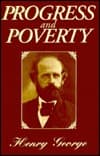
Progress and Poverty cover
Archivist's Choice

Progress and Poverty

Henry George (1879)

Genre

Politics / History / Economics / Science / Philosophy

Reading Time

1500-1800 min (approx. 25-30 hours)

Key Themes

See below

Track Your Reading

Sign in to track this book

Henry George's 1879 book explores why poverty deepens as wealth grows, proposing a solution to industrial slumps and inequality that influenced figures like Einstein and Tolstoy.

Core Idea

Henry George's "Progress and Poverty" suggests that as societies develop and wealth increases, poverty often worsens because individuals privately own land rents. The book argues that land, a limited and basic resource, naturally rises in value with population growth and societal progress. However, this unearned increase goes to private landowners instead of being used for public benefit. George believes this system causes economic inequality, business cycles, and the contradiction of more poverty despite technological and industrial advances. George's main point is that labor and capital should create societal wealth. But, when a few people control land value, it hinders productive work and concentrates wealth, leading to widespread hardship. He proposes a simple solution: a 'Single Tax' on the unimproved value of land. This tax would collect the rent created by society for public use, remove other taxes, boost the economy, ensure fair wealth distribution, and end poverty without interfering with individual property rights in improvements.
Reading time
1500-1800 min (approx. 25-30 hours)
Difficulty
Hard
✓ Read this if...
You are interested in foundational economic theories concerning land, rent, and taxation, or want to understand the historical roots of wealth inequality and proposed solutions outside of traditional capitalism or socialism.
✗ Skip this if...
You are looking for a quick read, a contemporary economic analysis with modern data, or a book that avoids dense philosophical and economic argumentation.

Core idea

The central argument and framework that powers the entire book.

Henry George's "Progress and Poverty" suggests that as societies develop and wealth increases, poverty often worsens because individuals privately own land rents. The book argues that land, a limited and basic resource, naturally rises in value with population growth and societal progress. However, this unearned increase goes to private landowners instead of being used for public benefit. George believes this system causes economic inequality, business cycles, and the contradiction of more poverty despite technological and industrial advances.

George's main point is that labor and capital should create societal wealth. But, when a few people control land value, it hinders productive work and concentrates wealth, leading to widespread hardship. He proposes a simple solution: a 'Single Tax' on the unimproved value of land. This tax would collect the rent created by society for public use, remove other taxes, boost the economy, ensure fair wealth distribution, and end poverty without interfering with individual property rights in improvements.

At a glance

Reading time

1500-1800 min (approx. 25-30 hours)

Difficulty

Hard

Read this if...

You are interested in foundational economic theories concerning land, rent, and taxation, or want to understand the historical roots of wealth inequality and proposed solutions outside of traditional capitalism or socialism.

Skip this if...

You are looking for a quick read, a contemporary economic analysis with modern data, or a book that avoids dense philosophical and economic argumentation.

Key Takeaways

1

The Enigma of Progress and Poverty

Why does poverty persist and even deepen as wealth and technology advance?

Quote

The increase of wealth and the increase of want are but the two sides of the same great problem.

Henry George observes that despite technological progress, which should reduce suffering, poverty remains a widespread and often growing problem. He challenges the common economic ideas of his time, which blamed poverty on population growth or market forces. Instead, George suggests that the same forces driving progress—especially rising land values—also worsen inequality and displace labor, leaving many struggling. He sees this not as natural, but as a system flaw, a 'great enigma' that requires a new look at economic structures, not...

Supporting evidence

George’s initial observation of widespread poverty in burgeoning cities like New York and California, contrasting sharply with the immense wealth generated by the Industrial Revolution and the California Gold Rush. He notes the paradox of 'tramps and millionaires' coexisting in an era of unprecedented productivity.

Apply this

When analyzing economic indicators, look beyond aggregate wealth to assess wealth distribution and the underlying mechanisms that might be creating disparities, even amidst growth. Question assumptions that technological progress inherently leads to universal prosperity.


economic-paradoxwealth-disparityindustrial-revolution-impact
2

Land as the Fundamental Factor

Land is distinct from capital and labor, and its unique nature drives economic inequality.

Quote

Land is not merely soil; it is the whole material universe outside of man himself, from which he draws his subsistence, and to which he must return.

George defines land broadly to include all natural resources—farmland, mineral deposits, water, airwaves, and city plots. He distinguishes land from capital (man-made wealth for production) and labor (human effort). Unlike capital, land has a fixed supply and cannot be created by people. Its value increases not from the owner's work, but from population growth, community development, and public investments. This scarcity and rising value, when privately owned and speculated upon, forms the basis of George's argument for economic unfai...

Supporting evidence

George provides detailed definitions of land, labor, and capital, arguing that confusing these categories leads to flawed economic analysis. He highlights how the value of specific urban plots in growing cities like London or San Francisco skyrocketed due to population density and public infrastructure, not due to any effort by the landowners.

Apply this

When evaluating economic policy, differentiate between wealth generated by production (labor and capital) and wealth extracted from the ownership of natural resources (land). Recognize how policies affecting land ownership and taxation can profoundly impact wealth distribution and economic opportunity.

land-definitionfactor-of-productionresource-scarcity
3

The Rent Theory of Poverty

As society progresses, land rents absorb an increasing share of wealth, leaving less for labor and capital.

Quote

As the value of land is augmented by the increase of population and the general progress of society, the rent of land tends to absorb a larger and larger proportion of the wealth continually produced.

George's main point is that as communities grow and technology advances, landowners capture most economic benefits through rising land rent. 'Rent' here means the unearned income from owning valuable land. As population density, infrastructure, and productivity increase, demand for desirable land rises, driving up its price and the rent that can be charged. This process takes a large portion of wealth created by labor and capital, causing workers and entrepreneurs to struggle even as the economy grows. This 'rent-seeking,' rather than...

Supporting evidence

George analyzes the economic history of developing nations and cities, showing how land values and rents consistently outpace wages and returns on capital in periods of rapid growth. He points to the Irish Famine, arguing that absentee landlords extracted high rents even as the population starved, illustrating how rent can deplete the productive capacity of a society.

Apply this

Examine how increasing property values and rising rents in desirable areas affect the affordability of living and doing business for the majority. Consider how land speculation might stifle productive investment and entrepreneurship.

economic-rentrent-seekingland-value-capture
4

The Single Tax Solution

Taxing land values, not production, is the key to economic justice and prosperity.

Quote

The remedy for the unjust distribution of wealth and power is to make land common property, by taking rent for public uses.

George's solution is the 'Single Tax,' a tax only on the unimproved value of land. He argues that since the community, not individual effort, creates land's value, this 'unearned increment' rightfully belongs to the community. By taxing land value at a rate that collects most of its economic rent, society could fund public services, eliminate other taxes (on income, sales, property improvements, etc.), and discourage land speculation. This would make land more affordable for productive use, encourage investment in improvements (which ...

Supporting evidence

George contrasts his Single Tax with existing taxes, arguing that taxes on labor and capital (income tax, sales tax, property taxes on buildings) discourage production and innovation. He cites historical examples of tithes or land taxes, albeit imperfect ones, as precursors to his idea.

Apply this

Evaluate tax policies not just by their revenue generation but by their impact on economic incentives and wealth distribution. Advocate for policies that shift the tax burden away from productive activity and onto unearned gains from scarce resources.

land-value-taxsingle-taxeconomic-justice-policy
5

Free Trade and the Benefits of Specialization

Removing tariffs and embracing free trade complements the Single Tax by fostering global prosperity.

Quote

Protectionism is a device by which some men are enabled to live without working, while others are compelled to work without living.

While known for the Single Tax, George also strongly supported free trade. He viewed protective tariffs as another economic distortion, enriching a few at the expense of many. Tariffs, by artificially raising prices and protecting inefficient domestic industries, reduce overall wealth and keep poverty going. George believed that free trade, combined with the Single Tax, would create a truly open and prosperous global economy. The Single Tax would ensure that the benefits of increased trade and specialization went to labor and capital,...

Supporting evidence

George dissects the arguments for protectionism, demonstrating how tariffs raise consumer prices, stifle innovation, and create monopolies. He uses examples of specific tariffs in the US and UK to illustrate their detrimental effects on the working class and overall economic efficiency.

Apply this

Support policies that reduce trade barriers and promote international cooperation, recognizing that protectionism often serves narrow interests rather than broad societal well-being. Understand how global economic policies can interact with domestic tax structures.

free-trade-advocacyprotectionism-critiqueglobal-economy
6

The Ethics of Property and Rights

True property rights stem from labor, not from the arbitrary claim to natural resources.

Quote

The equal right of all men to the use of land is as clear as their equal right to breathe the air.

George explores the philosophical basis of property rights. He argues that while individuals have a clear right to the results of their labor, no one has an inherent right to own land. Land, being a natural gift, belongs equally to everyone. Private land ownership, as it exists now, is a historical oddity and a basic injustice. It allows a few to profit from the needs of many without contributing productive effort. The Single Tax is presented not just as an economic policy but as a moral necessity, restoring a natural order where weal...

Supporting evidence

George draws on natural law philosophy, comparing the right to land to the right to air and sunlight. He critiques historical justifications for land ownership, such as conquest or arbitrary legal decrees, arguing they lack a moral basis.

Apply this

When discussing property rights, distinguish between rights to personal property (produced by labor) and rights to natural resources (which should be common). Challenge arguments for absolute land ownership that ignore its community-created value.

natural-rightsproperty-ethicsland-common-heritage
7

Interest and Wages: The Intertwined Fates

The share of wealth going to capital (interest) and labor (wages) is inversely related to rent.

Quote

What is left after the payment of rent is distributed between labor and capital as wages and interest.

George clarifies the link between the three factors of production: land, labor, and capital. He states that land rent is claimed first from the total wealth produced. The remainder is then split between wages (for labor) and interest (for capital). This means that as land rent rises, both wages and interest shrink. This explains why workers and entrepreneurs can both struggle in a growing economy. High land values make it harder for businesses to start and for workers to afford housing, reducing returns for both labor and capital. The...

Supporting evidence

George uses a simplified model of economic distribution, showing how increases in one factor's share (rent) necessarily decrease the shares of the others (wages and interest). He illustrates this with examples of how rising land prices impact the profitability of businesses and the living standards of workers.

Apply this

Analyze economic data to see if rising land values are correlated with stagnant wages or declining returns on capital. Consider how policies that reduce land rent could benefit both workers and businesses.

factor-distributionwages-interest-relationshipeconomic-model
8

The Cycle of Booms and Busts

Land speculation, driven by rising rent, is the primary cause of industrial depressions.

Quote

The great cause of industrial depressions is the speculative advance in the value of land.

George offers a clear explanation for recurring economic boom and bust cycles, or industrial depressions. He argues that during economic growth, expectations of future prosperity drive up land values speculatively. This leads to land being held back from productive use, as owners wait for even higher prices. This speculative bubble eventually bursts when land costs become too high for businesses, stifling investment and jobs. The resulting downturn then lowers land values, allowing the cycle to eventually restart. The Single Tax, by r...

Supporting evidence

George meticulously details the sequence of events leading to the Panic of 1873, showing how land speculation preceded the collapse. He points to the American West, where vast tracts of land were held idle by speculators awaiting price increases, hindering actual development.

Apply this

When observing economic booms, pay close attention to the role of rising asset prices, particularly land and real estate, in driving the expansion. Recognize that unchecked land speculation can be a harbinger of future economic instability.

economic-cyclesland-speculationindustrial-depression
9

Beyond Materialism: A Moral and Spiritual Vision

True progress requires not just material wealth, but a society founded on justice and shared opportunity.

Quote

The truth that I have tried to make clear will not be found in the works of those who have been accepted as the great masters of the science of political economy.

George's work is more than just economic analysis; it offers a moral and spiritual vision for humanity. He argues that continued poverty is not only inefficient but also morally wrong and spiritually damaging. It limits human potential, encourages crime, and weakens society. By creating economic justice through the Single Tax, society could achieve great human flourishing, allowing individuals to pursue higher goals beyond mere survival. He imagined a world where technology truly benefited everyone, promoting cooperation, creativity, ...

Supporting evidence

George often appeals to religious and philosophical principles, citing the Golden Rule and the concept of divine justice. He contrasts the degradation of poverty with the potential for human greatness, arguing that current economic systems actively suppress this potential.

Apply this

Consider the ethical implications of economic policies, not just their material outcomes. Advocate for systems that not only generate wealth but also foster human dignity, equality, and opportunity for all.

moral-economysocial-justicehuman-potential
10

The Enduring Relevance of Georgism

Despite its age, George's critique of land ownership and his proposed solution remain strikingly pertinent today.

Quote

What has been, is; and what is, shall be. But this is not the law of progress.

Published in 1879, 'Progress and Poverty' might seem old, but its main ideas are still relevant today. The problems George identified—growing wealth inequality, unaffordable housing, speculative asset bubbles, and ongoing poverty despite technological wonders—are very much current. From high rents in Silicon Valley to global financial crises linked to real estate, George's ideas offer a unique way to understand modern economic challenges. His focus on land as a distinct and crucial factor, often overlooked in modern economics, provide...

Supporting evidence

The continued relevance is evidenced by ongoing debates about housing crises, the rise of 'landlordism' in major cities, the impact of tech booms on local economies, and the calls for wealth taxes or universal basic income – many of which implicitly or explicitly touch upon the unearned increment of land value.

Apply this

Apply George's framework to contemporary economic issues like housing shortages, gentrification, and the concentration of wealth. Consider how land value taxation could address these problems and contribute to more equitable and stable economies.

contemporary-relevancegeorgismhousing-crisis-solutions

Critical analysis

Notable Quotes

The problem I propose to consider, is one which, to the anxiou s thought of the the time, has again and again presented itself without a solution.

Opening of the book, setting the stage for his inquiry into economic inequality.

Where land is free, and labor is unhindered, there population will be sparse, but there will be no poverty.

Arguing that the availability of land is key to preventing poverty.

The greatest cause of poverty is the appropriation of rent by private individuals.

Central thesis of the book, identifying the root cause of poverty amidst progress.

That land cannot be made property in the same sense as things produced by labor, is a truth which, whenever it comes fairly up for discussion, is admitted by all men.

Highlighting the inherent difference between land and capital.

We have but to give liberty to the producer, and security to the product, to insure that abundance which will enable all to live in comfort.

Advocating for policies that free labor and protect its fruits.

The equal right of all men to the use of the earth is as clear as their equal right to breathe the air—it is a right proclaimed by the voice of nature.

Emphasizing the natural right to access land.

Association in equality is the law of progress.

Arguing that true progress comes from equitable cooperation.

The progress of invention, the increase of productive power, the growth of wealth, instead of rendering the masses of our people independent, and giving them more leisure and comfort, tend to make them more dependent and to crowd them into a harder and more hopeless struggle for existence.

Observing the paradox of increasing poverty amidst technological advancement.

To extirpate poverty, to make wages what justice demands they should be, to make the earth a common heritage, to make men truly equal and free, to abolish crime, with all that it entails of degradation and suffering, it is only necessary to abolish private ownership of land.

Summarizing the far-reaching benefits he believes would result from land value tax.

What has been done, can be done.

Expressing optimism about the possibility of social change.

Private ownership of land is the great original wrong from which all others spring.

Pinpointing the fundamental issue in his economic theory.

The ownership of land is the great fundamental fact which ultimately determines the social, the political, and consequently the intellectual and moral condition of a people.

Highlighting the pervasive influence of land ownership on all aspects of society.

It is not the increase of population that makes land more valuable, but the increase of population that is forced to resort to less productive land.

Refuting Malthusian theory and explaining how land value increases.

The law of wages is not the law of supply and demand for labor, but the law of the produce of labor.

Challenging classical economic theories of wages.

Quiz

Test Your Knowledge

Ready to see how well you understood this book? Take our interactive quiz with 10 questions.

10
Questions
~5
Minutes
?
Best Score

Key Questions (FAQ)

'Progress and Poverty' argues that the fundamental cause of poverty amidst increasing wealth and industrial progress is the private appropriation of ground-rent. George posits that as societies develop, the value of land increases, benefiting landowners at the expense of labor and capital, leading to inequality and economic depressions.

About the author