
Explore our collection of politics books. Discover key insights and summaries from the best titles in this genre.
Showing 24 of 280 books
by Thomas Sowell
4.4(1,583)
Sowell shows how seeking an ill-defined 'cosmic justice' undermines true equality and freedom, slowly eroding the foundations of the American Revolution through well-intentioned but flawed social ideas.
by Will Durant
4.4(1,506)
Durant’s "Story of Civilization" is an eleven-volume series that covers human history from ancient Mesopotamia to the Napoleonic era, detailing the rise and fall of empires, philosophies, and the evolution of art and science.
by James Plunkett
4.3(1,450)
During the brutal 1913 Dublin Lockout, a trade unionist, a priest, and a tramp find their lives connected, showing the city's class divides and the moral problems of a society close to collapse.
by Leon Trotsky
4.0(1,415)
Trotsky explains how the Soviet Union, under Stalin, fell from a revolutionary state to a totalitarian one, showing how bureaucratic corruption and the rejection of true socialist goals betrayed the workers' state.
by Irving Wallace
4.1(1,385)
In 1964, a sudden tragedy makes Douglass Dilman the first Black President, forcing him into a storm of racial bias, political plots, and personal scandal, leading to a historic impeachment trial that threatens American power.

by A.J.P. Taylor
4.0(1,327)
A.J.P. Taylor argues that the Second World War was not Hitler's premeditated plan, but a series of blunders and miscalculations, rewriting the war's beginnings.
by Esther Vilar
3.6(1,264)
Esther Vilar argues that the 'manipulated man' is the true slave, working to support a woman who has become a privileged oppressor through societal conditioning.
by Edmund Wilson
4.1(1,151)
Edmund Wilson chronicles the intellectual journey of revolution, from Enlightenment philosophy to the Bolshevik seizure of power, featuring an unforgettable cast of thinkers, dreamers, and conspirators.
by John Pilger
4.1(1,080)
John Pilger exposes the brutal realities of Western imperialism, revealing how global economic agendas have fueled violence and subjugation from Indonesia to Iraq and even within his homeland, Australia.

by Jacquelyn Frank
3.8(949)
A reclusive ancient demon healer must confront his past passion for the Demon King's sister and fight a rising tide of human necromancers to save her and their hidden world.
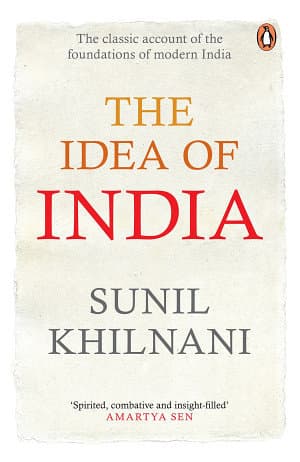
by Sunil Khilnani
3.8(888)
Sunil Khilnani's 'The Idea of India' explores the unlikely seventy-year journey of the world's largest democracy, showing the connection between its founding ideals of pluralism and development, and the constant pressures that challenge its identity.

by Bertolt Brecht
4.1(792)
Through twenty-four chilling vignettes, Brecht exposes how Nazi terror crept into the daily lives of ordinary Germans, revealing a society suffocated by suspicion and fear.
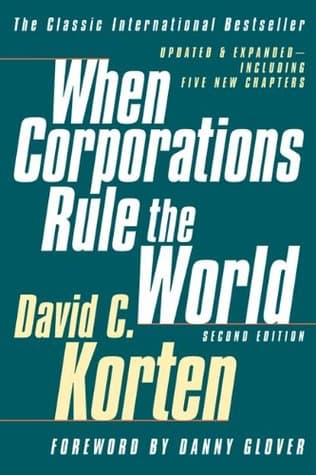
by David C. Korten
4.1(785)
Korten's book analyzes multinational corporations' growing global power and introduces the Living Democracy movement as a hopeful alternative to a system that favors profit over people and the planet.
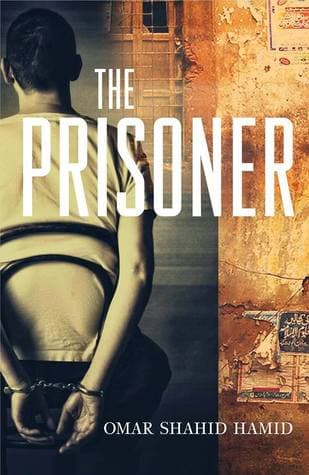
by Omar Shahid Hamid
4.0(686)
In the chilling streets of Karachi, a kidnapped American journalist's Christmas Eve execution deadline ignites a desperate race against time, exposing a city rife with jihadis, corrupt police, and treacherous political machinations where nothing is as it seems.

by Jackie Wang
4.7(619)
Jackie Wang shows how carceral power has grown, explaining how predatory lending, algorithmic control, and government practices extend the prison's reach beyond walls, trapping marginalized communities in a 'living hell' of debt and dehumanization.
by Mahmoud Dowlatabadi
3.8(558)
On a rain-slicked Iranian night, a retired Colonel confronts the devastating legacy of a revolution devouring its own, forced to bury his tortured daughter while grappling with the ghosts of his nation's past and the shattered ideals of his children.
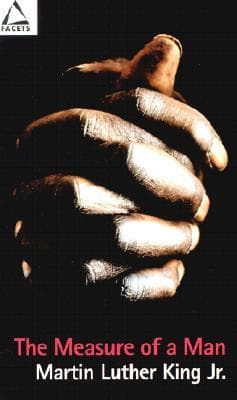
by Martin Luther King Jr.
4.5(552)
Martin Luther King Jr. explores the theological foundations of nonviolent activism, showing its power to change society.
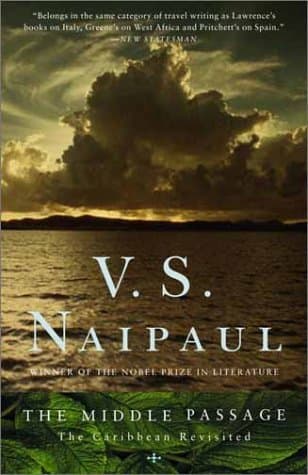
by V.S. Naipaul
3.6(539)
Naipaul's 'The Middle Passage' explores post-colonial Caribbean societies, showing how slavery and Empire still shape identity, politics, and daily life as British rule ends.
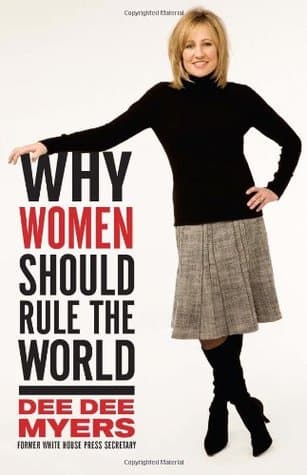
by Dee Dee Myers
3.6(512)
Dee Dee Myers argues that empowering women leaders, with their strengths in communication and agreement-building, could create a more cooperative, productive, and healthier world.
by Mahathir Mohamad
3.9(504)
In 'The Malay Dilemma,' Mahathir Mohamad argues that economic disparity and a perceived threat to Malay identity require immigrants to assimilate into a single Malay culture and language for national harmony.

by Will D. Campbell
4.3(493)
From the segregated backroads of rural Mississippi to the front lines of the Civil Rights movement, a preacher grapples with faith, family tragedy, and the evolving call for justice, forever bound by the memory of his brother.
by Wallace Shawn
4.2(476)
A traveler in a poor land realizes their comfort depends on the suffering they see, which makes them rethink ethical living.
by Shlomo Sand
4.3(474)
Shlomo Sand shows how 19th-century Evangelical Protestants and Jewish Zionists created the 'Land of Israel,' arguing that this invention, meant to secure the Jewish state, now threatens its survival.
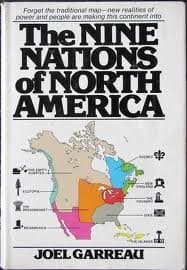
by Joel Garreau
4.0(460)
Garreau breaks down conventional maps, showing a continent split into nine distinct 'nations,' each with its own capital, economy, and outlook, ignoring political borders.