BookBrief
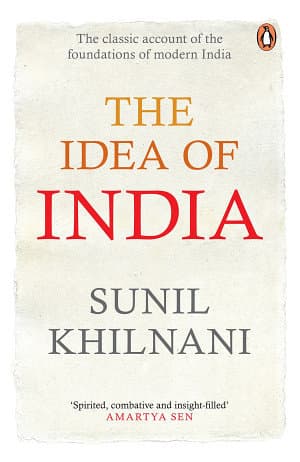
The Idea of India cover
Archivist's Choice

The Idea of India

Sunil Khilnani (1998)

Genre

Politics / History / Economics

Reading Time

5-7 hours

Key Themes

See below

Track Your Reading

Sign in to track this book

Sunil Khilnani's 'The Idea of India' explores the unlikely seventy-year journey of the world's largest democracy, showing the connection between its founding ideals of pluralism and development, and the constant pressures that challenge its identity.

Core Idea

Sunil Khilnani's "The Idea of India" examines the intellectual and political effort behind modern India's creation and growth. It argues that India's identity is not fixed but a continuous, often difficult, negotiation between its diverse past, the modern vision of its founders (especially Nehru), and the realities of democratic pluralism. The book looks at the contradictions in this large-scale experiment: how a secular, democratic state was formed from a subcontinent with vast religious and social divisions, and how its pursuit of modernity and economic development has consistently challenged and redefined what it means to be 'Indian.'
Reading time
5-7 hours
Difficulty
Medium
✓ Read this if...
You are interested in understanding the foundational intellectual and political debates that shaped post-independence India, and how its unique blend of democracy, secularism, and economic development has unfolded over time.
✗ Skip this if...
You are looking for a detailed chronological history of India or a deep dive into specific economic policies, as this book focuses more on the philosophical and political 'idea' of India.

Core idea

The central argument and framework that powers the entire book.

Sunil Khilnani's "The Idea of India" examines the intellectual and political effort behind modern India's creation and growth. It argues that India's identity is not fixed but a continuous, often difficult, negotiation between its diverse past, the modern vision of its founders (especially Nehru), and the realities of democratic pluralism. The book looks at the contradictions in this large-scale experiment: how a secular, democratic state was formed from a subcontinent with vast religious and social divisions, and how its pursuit of modernity and economic development has consistently challenged and redefined what it means to be 'Indian.'

At a glance

Reading time

5-7 hours

Difficulty

Medium

Read this if...

You are interested in understanding the foundational intellectual and political debates that shaped post-independence India, and how its unique blend of democracy, secularism, and economic development has unfolded over time.

Skip this if...

You are looking for a detailed chronological history of India or a deep dive into specific economic policies, as this book focuses more on the philosophical and political 'idea' of India.

Key Takeaways

1

The Grand Experiment of 1947

India's founding was a radical wager on democracy and pluralism against immense odds.

Quote

The founding elite faced the daunting task of forging a unified nation-state from a subcontinent of staggering diversity, poverty, and historical fragmentation, all while committing to democratic and secular principles.

Khilnani describes India's independence in 1947 as an ambitious philosophical and practical experiment, not just a political transfer of power. Unlike many post-colonial nations that became authoritarian or faced ethnic conflict, India's nationalist leaders, especially Nehru, committed to a democratic, secular, and pluralistic vision from the start. This commitment was made despite widespread illiteracy, deep social divisions, and poverty, which many thought would make such a political system impossible. The 'idea of India' was an asp...

Supporting evidence

The author highlights the radical nature of universal adult franchise introduced immediately at independence, contrasting it with the gradual expansion of suffrage in Western democracies. He also points to the conscious choice to enshrine secularism in the constitution despite the trauma of Partition.

Apply this

Reflect on how foundational principles, even when seemingly impractical, can shape a nation's trajectory. For contemporary leaders, this suggests the enduring power of a clear, inclusive national vision, even in the face of overwhelming challenges.


post-colonialismnation-buildingsecularism
2

Nehru's Modernist Project

Jawaharlal Nehru was the chief architect of India's post-independence identity, blending Western modernity with Indian context.

Quote

Nehru's vision for India was profoundly shaped by his encounter with modernity, seeking to industrialize, secularize, and democratize a society historically rooted in tradition.

Khilnani focuses on Jawaharlal Nehru, showing him as the intellectual and political leader behind the 'idea of India.' Nehru's Western education and socialist views led him to support industrialization, scientific thinking, and state-led economic development as essential for India's progress. He imagined a strong, central state that could lift millions out of poverty and integrate a diverse population. His commitment to non-alignment during the Cold War further defined India's unique global position. However, Khilnani also subtly crit...

Supporting evidence

Nehru's establishment of IITs (Indian Institutes of Technology), the Bhakra Nangal Dam, and his foreign policy of non-alignment are presented as direct manifestations of his modernist project.

Apply this

Understand the complexities of adopting foreign models for development. Leaders should strive for a balance between universal ideals and local specificities, ensuring that modernization benefits all segments of society, not just an elite.

nehruvian-socialismnon-alignmentmodernization
3

The Paradox of Pluralism

India's strength in diversity also harbors its most persistent vulnerabilities.

Quote

The very pluralism that was celebrated as India's defining characteristic also presented the most formidable challenge to its unity, constantly testing the limits of its secular contract.

Khilnani identifies India's cultural, linguistic, and religious diversity as both its biggest strength and its biggest challenge. While the 'idea of India' embraced this diversity, aiming for 'unity in diversity,' the reality has been a constant negotiation of competing identities and demands. The book explores how this diversity has led to both lively democratic expression and periods of intense communal violence, regional separatism, and caste conflicts. The secular state, meant to be neutral, has often become involved in these iden...

Supporting evidence

The linguistic reorganization of states in the 1950s and 60s, the enduring challenge of caste politics, and outbreaks of communal violence (e.g., the Ayodhya dispute, though not detailed in the original 1997 edition, is relevant to the 'new introduction') serve as examples of this paradox.

Apply this

Recognize that celebrating diversity is not enough; active and inclusive governance is required to manage its inherent tensions. Policies must foster a sense of shared citizenship while respecting distinct identities, preventing fragmentation.

identity-politicscommunalismfederalism
4

Democracy's Messy Triumph

Despite its imperfections, India's democratic resilience has been its most remarkable achievement.

Quote

India's democracy has been a noisy, often chaotic affair, defying predictions of its collapse and persisting through crises that would have shattered many other states.

Khilnani celebrates the lasting nature of Indian democracy, acknowledging its often-messy reality. He argues that despite electoral problems, corruption, and times of authoritarian temptation (like the Emergency), the democratic system has largely held. This resilience, he suggests, comes from a deeply ingrained political culture, strong institutions (even if imperfect), and active citizen participation. The book contrasts India's democratic journey with that of other newly independent nations, many of which failed. India's ability to...

Supporting evidence

The peaceful transfer of power through numerous national and state elections, the eventual restoration of democracy after the Emergency (1975-77), and the vibrant, if sometimes fractious, electoral campaigns.

Apply this

Appreciate that democracy is not a static ideal but a dynamic, often imperfect process. Its strength lies in its adaptability and the active engagement of its populace, even amidst challenges. Don't mistake chaos for weakness.

electoral-politicspolitical-resilienceemergency
5

The Economic Development Dilemma

India's socialist-inspired economic model yielded mixed results, creating both progress and persistent poverty.

Quote

The early emphasis on a 'mixed economy' and state planning aimed to achieve self-reliance and social justice, but often resulted in slow growth, bureaucratic inefficiencies, and the perpetuation of poverty.

Khilnani examines India's economic path after independence, which was heavily influenced by Nehruvian socialism and state planning. While this model aimed for self-reliance, reduced inequality, and a strong industrial base, it often led to the 'license raj,' bureaucratic obstacles, slow growth, and limited impact on widespread poverty. The book highlights the tension between the goals of social justice and the practical realities of economic development in a nation with limited resources. Khilnani suggests that while the initial focus...

Supporting evidence

The implementation of Five-Year Plans, the 'license raj' system, and the slow pace of economic liberalization prior to the 1990s are discussed as key features of this economic model.

Apply this

Evaluate economic policies based on their long-term outcomes and adaptability. Over-reliance on state control can stifle innovation and efficiency. A flexible approach that balances social goals with market realities is often more effective.

license-rajmixed-economyeconomic-liberalization
6

Who is an Indian? The Shifting Definition

The 'idea of India' has always been contested, particularly regarding national identity.

Quote

The question of 'who is an Indian' has been continuously debated since independence, reflecting the ongoing struggle between a civic, pluralistic nationalism and more exclusivist, religion-based conceptions.

A main theme Khilnani explores is the changing and often debated definition of Indian identity. The founding elite largely promoted a civic, territorial nationalism, emphasizing shared citizenship and a mixed culture, rather than a single ethnic or religious identity. However, this 'idea' has faced constant challenges from various groups — regional movements, caste-based assertions, and, significantly, Hindu nationalist ideologies (Hindutva) that seek to define India primarily through its Hindu majority. The book shows that the strugg...

Supporting evidence

The rise of regional parties, the enduring power of caste as a political identity, and the growing influence of the Bharatiya Janata Party (BJP) and its ideological affiliates (as noted in the new introduction) illustrate this ongoing debate.

Apply this

Recognize that national identity is rarely monolithic; it's often a contested space. Leaders must actively champion inclusive definitions of citizenship and guard against narratives that seek to exclude or marginalize specific groups.

hindutvacivic-nationalismcultural-pluralism
7

The Enduring Legacy of Gandhi

Gandhi's moral authority shaped India's independence, but his vision often clashed with Nehru's modernism.

Quote

Gandhi's legacy, though complex and sometimes contradictory, provided the moral compass for the nationalist movement, even as his rural-centric vision diverged sharply from Nehru's industrial modernism.

Khilnani offers a sharp portrait of Mahatma Gandhi, not just as the father of the nation, but as a figure whose ideals greatly influenced, yet often differed from, the post-independence state. Gandhi's focus on non-violence, self-sufficiency (swaraj), and a village-centered economy contrasted sharply with Nehru's industrial, state-led vision. While Gandhi's moral authority was essential in mobilizing people for independence, his socio-economic philosophy was largely put aside during nation-building. Khilnani highlights this tension, s...

Supporting evidence

Gandhi's philosophy of 'Hind Swaraj' and his advocacy for village industries versus Nehru's push for large-scale industrialization and scientific research institutes.

Apply this

Consider how founding ideals, even if not fully implemented, can continue to exert moral and political influence. Leaders must reconcile foundational principles with the demands of modern governance, finding practical ways to honor both.

gandhian-philosophyswarajahimsa
8

Can the Idea Survive Its Successes?

India's growth and changing global status challenge its original founding principles.

Quote

The very success of India as a rising economic power and a strong state now poses new questions for its original idea of an inclusive, democratic, and secular nation.

In his updated introduction, Khilnani powerfully asks whether the original 'idea of India' can survive its own successes and the new challenges they bring. He notes the rise of a powerful billionaire class, a more assertive and often exclusive Hindu nationalist government, and India's growing global ambitions. These developments, while showing progress in some areas, put immense pressure on the founding principles of democracy, secularism, and pluralism. Khilnani suggests that economic success and national strength, if not managed car...

Supporting evidence

The author points to the increasing wealth disparity, the election of governments with a more 'exclusivist conception of Indian identity,' and India's enhanced global presence as factors testing the original idea.

Apply this

Leaders of developing nations should proactively address the social and political implications of economic growth. Success should not come at the expense of foundational values; rather, it should reinforce them through inclusive policies and robust democratic institutions.

global-powereconomic-inequalitycultural-nationalism
9

The Role of the State and Civil Society

The Indian state's expansive role has often overshadowed, yet also enabled, a vibrant civil society.

Quote

The post-independence Indian state assumed an enormous, almost paternalistic, role in shaping society and economy, leading to both achievements and frustrations, while a resilient civil society continued to assert its presence.

Khilnani examines the widespread influence of the Indian state in almost every aspect of life after independence. From economic planning to social reform, the state was seen as the main driver of change. This broad role, while achieving significant milestones in infrastructure and social welfare, also led to bureaucracy, corruption, and a sense of dependence. However, Khilnani also acknowledges the lasting vitality of Indian civil society — a complex network of NGOs, social movements, media, and local community organizations — which, ...

Supporting evidence

The state's control over key industries, public sector undertakings, and social welfare programs, contrasted with the emergence of grassroots movements, independent media, and advocacy groups challenging state policies.

Apply this

Recognize the importance of balancing state capacity with civil society engagement. A strong state is vital for development, but a vibrant, independent civil society is essential for accountability, innovation, and the health of a democracy.

state-capacitycivil-societygovernance
10

The Enduring Power of Ideas

Despite challenges, the foundational 'idea of India' continues to shape its national discourse.

Quote

The 'idea of India' – with its core tenets of democracy, secularism, and pluralism – remains a powerful, contested, yet enduring framework for understanding the nation's trajectory.

Ultimately, Khilnani's work shows the deep and lasting power of ideas in shaping a nation's future. The 'idea of India' was not predetermined but a deliberate intellectual and political creation. Even as the nation has grown, faced crises, and seen its original vision challenged, these foundational ideas continue to serve as a reference point for debate, criticism, and aspirations. The book suggests that the ongoing struggle over India's future is fundamentally a struggle over which 'idea' of India will win — whether the inclusive, de...

Supporting evidence

The continuous political debates around secularism, federalism, and social justice in India's public sphere, even decades after independence, demonstrate the persistence of these foundational ideas.

Apply this

Understand that national identity and direction are not fixed. Engage in public discourse to articulate and defend foundational values. The battle of ideas is crucial for the future of any nation.

ideologynational-identitypolitical-philosophy

Critical analysis

Notable Quotes

India is a country held together not by a common language, a common religion, or a common race, but by a 'common idea'.

Introducing the central thesis of the book, defining India's unique national identity.

The very act of imagining India as a single entity, given its bewildering diversity, was itself a radical political project.

Discussing the intellectual and political effort required to conceive of a unified India.

Nehru's vision of a secular, democratic, and socialist India was not a natural inheritance but a deliberate and often contested construction.

Examining the foundational principles laid down by Jawaharlal Nehru and their challenges.

The idea of India is not static; it is constantly being re-negotiated, re-imagined, and re-contested by its citizens.

Highlighting the dynamic and evolving nature of Indian identity and politics.

Democracy in India has always been a noisy, messy, and often frustrating affair, yet it has endured.

Reflecting on the unique and resilient character of Indian democracy despite its challenges.

The 'idea' of India is not just a political concept, but also a cultural and economic one, deeply intertwined with its history of pluralism.

Expanding the scope of 'the idea' beyond politics to include other facets of Indian life.

Urbanization, while bringing economic opportunities, also strains the social fabric and challenges traditional notions of community.

Discussing the impact of rapid urbanization on Indian society and identity.

India's engagement with the world has always been a complex interplay of aspiration and anxiety, seeking both integration and distinctiveness.

Analyzing India's foreign policy and its self-perception on the global stage.

The persistence of poverty alongside rapid economic growth presents a fundamental tension in the Indian project.

Addressing the paradox of economic inequality in a developing nation.

Regional identities and loyalties remain potent forces, often shaping national politics in unexpected ways.

Underscoring the enduring importance of sub-national identities within the Indian federal structure.

The judiciary has played a crucial, if sometimes controversial, role in upholding the constitutional idea of India.

Highlighting the significance of the legal system in safeguarding India's foundational principles.

The future of India will depend on its ability to reconcile the competing demands of tradition and modernity, unity and diversity.

Concluding thoughts on the ongoing challenges and potential trajectories for India.

India's greatest strength lies not in its uniformity, but in its capacity to accommodate and celebrate difference.

Reiterating the core argument about India's unique pluralistic identity.

The project of nation-building in India is an ongoing conversation, not a finished document.

Emphasizing the continuous and dynamic nature of India's evolution as a nation.

Quiz

Test Your Knowledge

Ready to see how well you understood this book? Take our interactive quiz with 10 questions.

10
Questions
~5
Minutes
?
Best Score

Key Questions (FAQ)

Sunil Khilnani's 'The Idea of India' is a historical study that examines the paradoxes of India's democracy since its independence in 1947. It investigates how a nationalist elite upheld an idea of India based on democracy, tolerance, economic development, and pluralism, and the fate of this idea over decades.

About the author