“The poor are always with us, but they are not always in the same place.”
— Observation on the shifting nature of poverty in early 20th-century Dublin.

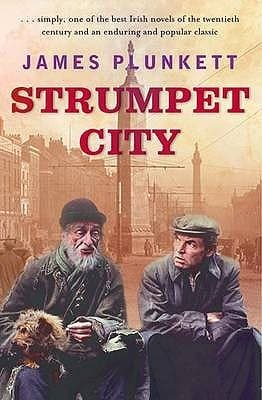
James Plunkett (1969)
Genre
Politics / Historical Fiction
Reading Time
1500 min
Key Themes
See below
Sign in to track this book
During the brutal 1913 Dublin Lockout, a trade unionist, a priest, and a tramp find their lives connected, showing the city's class divides and the moral problems of a society close to collapse.
The novel begins in Dublin in 1913, introducing many characters from different social levels. We meet the poor Rashers Tierney, trying to survive by any means, often begging and stealing, with his dog, Sofia. Mary and Fitz, a young working-class couple, deal with the hard life in the tenements; Fitz works as a tram conductor. Father O'Connor, a kind but somewhat ineffective priest, struggles with the widespread poverty and moral decline he sees. Meanwhile, the rich Bradshaw family, representing the city's upper class, largely ignores the growing unrest among workers. Jim Larkin, the union leader, starts organizing workers, asking for better pay and conditions. Tension grows when Larkin calls a general strike among tramway workers, starting the conflict known as the Dublin Lockout.
Larkin's tram strike quickly turns into a city-wide lockout. Employers, led by William Martin Murphy, refuse to hire any worker who belongs to Larkin's Irish Transport and General Workers' Union (ITGWU). Fitz, loyal to his union, loses his job, which severely strains his marriage to Mary and their ability to live. Rashers Tierney, already struggling, finds his few chances further reduced. The police, especially the Dublin Metropolitan Police (DMP), brutally stop union meetings and protests. Bloody Sunday sees violent clashes between striking workers and the police, leading to injuries and arrests. Father O'Connor sees the violence and feels more and more helpless, while the Bradshaw family stays mostly safe, seeing the workers as troublemakers.
As the lockout continues, hunger and extreme poverty become common among working-class families. Fitz and Mary struggle greatly; Mary has to pawn their few belongings to buy food. Rashers Tierney's situation gets worse; he loses Sofia and has to search for food in bins and rely on charity. The novel clearly shows the dirtiness of the tenements, the common diseases, and the high infant death rates. Jim Larkin organizes food packages from England to help, but the need is too great. Father O'Connor tries to offer what little comfort and help he can, but his efforts often meet with doubt or are overshadowed by the huge systemic problems. The middle and upper classes, including the Bradshaws, mostly stay unsympathetic, often blaming the workers for their own problems.
The long lockout takes a heavy personal toll on the characters. Fitz, firm in his loyalty to the union, faces increasing pressure from Mary, who struggles with the practical parts of survival and fear for their future. Their relationship becomes strained under the constant stress. Rashers Tierney, driven by hunger and desperation, makes choices that are less and less moral to survive, showing how poverty takes away human dignity. Father O'Connor faces the moral failures of his own church, which mostly sides with the employers and criticizes Larkin's socialist ideas. He struggles with his conscience, feeling a growing gap between the church's teachings and its actions. The Bradshaws' daughter, Agnes, starts to notice social injustices, offering a small hope for future change within the privileged class.
Despite Larkin's strong efforts and the initial unity, the lockout's length and harshness start to wear down the workers. Families are starving, and the idea of returning to work, even under the employers' strict conditions, becomes more appealing to many. Scabs are brought in, further weakening the union's position. Jim Larkin continues to gather support, giving powerful speeches that inspire and anger, but the employers' economic power proves too strong. The lockout slowly falls apart, with individual workers and smaller groups returning to work, unable to handle the hardship any longer. Fitz, though sad, eventually has to accept defeat, along with thousands of others, as the strike ends without reaching its main goals.
The lockout officially ends in early 1914, mostly as a defeat for the workers. Many return to their jobs, often having to sign promises to reject union membership. Fitz, deeply disappointed, finds himself back at work but with a heavy heart; the strike's hope is gone. Mary, though relieved to have some income, carries the scars of their hardship. Rashers Tierney's situation stays the same, perhaps even worse, showing how poverty repeats for those at the very bottom. Father O'Connor continues his work, but with a deeper understanding of the systemic injustices and his own limited influence. Dublin, though outwardly returning to normal, is deeply changed by the experience, with lingering anger and a clearer sense of class divisions. The memory of the lockout, and Larkin's fight, affects the future for a long time.
While the lockout's immediate result is a defeat for the workers, the novel suggests the struggle was not completely pointless. The experience created a stronger sense of class awareness and unity among the working class, even if it was temporarily broken. Fitz, though tired, keeps his core belief in union principles. The suffering Father O'Connor saw deepens his empathy and makes him determined to continue his quiet fight against injustice. Even Agnes Bradshaw's early social awareness points to a possible shift in future generations. The book ends by showing the strength of the human spirit when facing great trouble, and the lasting importance of Jim Larkin's fight for social fairness, hinting that while this battle was lost, the fight for workers' rights would go on.
The Protagonist
Fitz's arc moves from hopeful idealism and staunch union loyalty to profound disillusionment and weary resignation, yet he retains his core principles and dignity.
The Supporting
Mary's arc shows her transformation from a supportive wife to a woman hardened by deprivation, who must prioritize practical survival over political idealism.
The Supporting
Rashers' arc is one of constant, brutal struggle for survival, with little change in his circumstances, emphasizing the cyclical nature of extreme poverty.
The Supporting
Father O'Connor's arc reflects a growing disillusionment with the institutional Church's response to poverty, deepening his personal empathy and moral resolve.
The Supporting
Larkin's arc showcases his unwavering dedication to the workers' cause, from initiating the strike to enduring its defeat, remaining a symbol of resistance.
The Supporting
Mr. O'Callaghan's arc is largely static, serving as a consistent voice of working-class wisdom and cynicism regarding societal power structures.
The Supporting
Agnes's arc is one of awakening social consciousness, moving from sheltered ignorance to a nascent understanding of Dublin's class divisions.
The Antagonist
Murphy's arc is static, representing the unyielding force of capital determined to break the union, showing no compromise or significant internal change.
The Mentioned
Sofia's arc is tied to Rashers', her presence and eventual loss underscore the depths of his suffering.
A main theme of 'Strumpet City' is the harsh class struggle in Dublin during the 1913 Lockout. The novel clearly shows the huge difference between the rich lives of industrialists like the Bradshaws and William Martin Murphy, and the extreme poverty of the working class and the poor, like Fitz and Rashers Tierney. Plunkett highlights the unfairness in a society where workers are used for profit, denied basic rights, and met with violence when they try to organize. The lockout itself is the clearest example of this struggle, a fight for dignity and survival against established power. Father O'Connor's inner conflict further shows the moral side of this unfairness.
“What was the purpose of their lives? To eat and work and sleep and breed? To go on living, even if it meant living like animals?”
The novel gives a clear look at how extreme poverty takes away human dignity. Characters like Rashers Tierney are reduced to begging, stealing, and living in terrible conditions, often treated worse than animals. Tenement residents, including Fitz and Mary, face constant hunger, disease, and the threat of eviction. Plunkett carefully details the physical and mental effects of poverty, showing how it removes dignity, strains relationships, and forces people to make desperate choices. The sheer amount of suffering, especially during the lockout when food is scarce, strongly criticizes the societal conditions that allowed such widespread poverty.
“They were the people of the dark streets, the grey houses, the forgotten corners, the broken windows, the hopeless eyes.”
Plunkett looks closely at the Catholic Church's role during the lockout, mainly through Father O'Connor. While O'Connor himself is kind, the Church as an institution is mostly shown as siding with the employers, criticizing Larkin's 'socialist' ideas, and failing to properly address its poorest members' physical suffering. This creates a moral problem for Father O'Connor, who struggles with his conscience and the perceived hypocrisy. The theme explores the conflict between spiritual guidance and social duty, and how limited charity is when systemic change is needed. The Church's perceived inaction or even involvement shows the moral blindness of some societal groups.
“He felt a cold resentment at the way the Church, his Church, had turned its face away from the suffering.”
The novel explores the strength of working-class unity and how easily it breaks under intense economic pressure. Jim Larkin's leadership first creates a strong sense of unity among workers, leading them to strike for better conditions. Fitz shows this early hope and loyalty. However, as the lockout continues, hunger and desperation start to weaken this unity, forcing many to leave the union and return to work. The strike's eventual defeat leads to widespread disappointment, especially for characters like Fitz, who see their hopes destroyed. This theme shows the human cost of a long struggle and how hard it is to maintain group action against powerful, established opposition.
“They had fought. They had lost. But they had fought.”
Despite the widespread suffering and the lockout's eventual defeat, 'Strumpet City' also shows the lasting strength of the human spirit. Characters like Fitz and Mary, though deeply hurt, continue to strive for survival and dignity. Rashers Tierney, despite everything, finds small moments of connection and keeps trying to live. The working class's sheer endurance through starvation, police violence, and institutional indifference speaks to an unbreakable spirit. Even in defeat, the seeds of future resistance are planted, and the memory of the struggle creates a deeper class awareness. This theme suggests that while battles can be lost, the ability to hope and resist remains.
“They were battered, but not broken. They were beaten, but still there.”
Multiple interwoven storylines depict various social strata.
Plunkett employs a panoramic, multi-perspective narrative structure, shifting between the lives of characters from different social classes: the impoverished Rashers Tierney, the working-class couple Fitz and Mary, the conflicted Father O'Connor, and the affluent Bradshaw family. This device allows the author to present a comprehensive and nuanced picture of Dublin society during the Lockout, demonstrating how the same historical events are experienced and perceived vastly differently across the social spectrum. It emphasizes the pervasive nature of the conflict and its impact on every level of the city, preventing a single, narrow viewpoint from dominating the story.
Direct contrasts highlight social inequality and its consequences.
The novel frequently uses juxtaposition to starkly contrast the lives of the rich and the poor. Scenes depicting the dire conditions in the tenements, the hunger, and the disease are often immediately followed by descriptions of the comfortable, often lavish, existence of the Bradshaw family or the industrialists. This device serves to underscore the profound social injustice and the moral outrage that fuels the narrative. It makes the disparities tangible and emotionally resonant, forcing the reader to confront the ethical implications of such extreme inequality and the indifference of the privileged class.
Real historical figures interact with fictional characters to ground the story in reality.
Plunkett masterfully blends historical figures like Jim Larkin and William Martin Murphy with his fictional creations such as Fitz, Mary, and Rashers Tierney. This device provides a strong sense of historical authenticity and allows the reader to experience the major events of the 1913 Lockout through the eyes of both the key players and the ordinary people most affected. The presence of real figures lends weight and credibility to the fictional narratives, making the political and social struggles feel immediate and impactful, while the fictional characters personalize the historical context and make the human cost explicit.
The city itself is personified as a fallen, exploited entity.
The title itself, 'Strumpet City,' serves as a powerful metaphor. Dublin is personified as a fallen woman, exploited and degraded, reflecting the moral decay, poverty, and social injustice rampant within its confines. This symbolism extends to the city's physical landscape – the beautiful Georgian architecture contrasted with the squalid tenements, the grand streets versus the dark alleys. It suggests that the city, for all its charm, is fundamentally corrupt and morally compromised by its class divisions and the suffering of its inhabitants. The city itself becomes a character, bearing witness to and embodying the struggles of its people.
Larkin's speeches serve as both plot drivers and thematic statements.
Jim Larkin's powerful and charismatic public speeches are a significant plot device. They are not merely reported but often quoted at length, serving multiple functions: they galvanize the workers, articulate the union's demands, and express the author's moral outrage. These speeches act as catalysts for action, inspiring loyalty and defiance, but also provoking fear and reaction from the employers and authorities. They are crucial for understanding the ideological battle at the heart of the lockout and for conveying the emotional intensity of the workers' movement, making Larkin's presence felt even when he is not directly interacting with the fictional characters.
“The poor are always with us, but they are not always in the same place.”
— Observation on the shifting nature of poverty in early 20th-century Dublin.
“A man must have a trade, or he is nothing.”
— Spoken by a working-class character emphasizing dignity in labor.
“We are not asking for charity, but for justice.”
— A rallying cry during the 1913 Dublin Lockout labor disputes.
“The city is a strumpet, offering glitter and promise, but delivering only hardship.”
— Reflection on Dublin's allure and harsh realities for the poor.
“In unity there is strength, but in division there is only defeat.”
— Encouragement for solidarity among striking workers.
“The past is a ghost that haunts every street corner.”
— Musing on Dublin's history and its lingering impact.
“A landlord's heart is as hard as the cobbles under our feet.”
— Criticism of property owners during housing crises.
“Hope is the last thing to die in a tenement room.”
— Describing resilience among impoverished families.
“The strike is not just about wages, but about the soul of a man.”
— Philosophical take on the 1913 Lockout's deeper significance.
“Dublin wears its history like a worn coat, threadbare but familiar.”
— Evocative description of the city's enduring character.
“They talk of empire, but what has empire done for us?”
— Questioning British rule from a working-class perspective.
“A child's hunger is a silent accusation against us all.”
— Moral reflection on societal neglect during the Lockout.
“The river Liffey flows through the city like a vein of sorrow.”
— Poetic imagery linking Dublin's geography to its struggles.
“We build the city with our hands, yet we are strangers in it.”
— Lament of workers excluded from Dublin's prosperity.
Ready to see how well you understood this book? Take our interactive quiz with 10 questions.

Brett Casper
5.0

Dirk Uffelmann
4.7

Winston S. Churchill
4.5
Chimamanda Ngozi Adichie
4.5
Will Durant
4.4
Thomas Sowell
4.4
W.E.B. Du Bois
4.3
Alan Moore
4.3