BookBrief
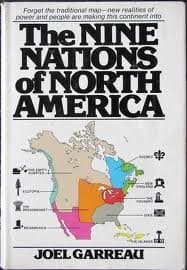
The Nine Nations of North America cover
Archivist's Choice

The Nine Nations of North America

Joel Garreau (1981)

Genre

Business / Politics / History

Reading Time

10-12 hours

Key Themes

See below

Track Your Reading

Sign in to track this book

Garreau breaks down conventional maps, showing a continent split into nine distinct 'nations,' each with its own capital, economy, and outlook, ignoring political borders.

Core Idea

North America is not one entity defined by political borders. Instead, it is made of nine distinct and lasting cultural, economic, and social regions, or 'nations.' These nations, each with its own outlook, history, and economic drivers, go beyond national boundaries. They influence the lives and identities of their people more than the lines on maps do. Understanding these regional differences is key to understanding the continent's politics, economic gaps, and culture. Garreau says these nine nations—Dixie, The Foundry, New England, The Islands, Mexamerica, The Empty Quarter, Ecotopia, Quebec, and The Breadbasket—are basic, often conflicting, forces that shape North American society. Their interactions, conflicts, and shared interests explain much about the continent's past, present, and future, challenging ideas of national unity.
Reading time
10-12 hours
Difficulty
Medium
✓ Read this if...
You are interested in understanding the deep-seated cultural and economic divisions that shape North America beyond conventional state or national borders, and how these regions influence politics, business, and identity.
✗ Skip this if...
You prefer a chronological history or a book focused solely on national politics, or if you are looking for prescriptive solutions rather than a descriptive analysis of regional identities.

Core idea

The central argument and framework that powers the entire book.

North America is not one entity defined by political borders. Instead, it is made of nine distinct and lasting cultural, economic, and social regions, or 'nations.' These nations, each with its own outlook, history, and economic drivers, go beyond national boundaries. They influence the lives and identities of their people more than the lines on maps do. Understanding these regional differences is key to understanding the continent's politics, economic gaps, and culture. Garreau says these nine nations—Dixie, The Foundry, New England, The Islands, Mexamerica, The Empty Quarter, Ecotopia, Quebec, and The Breadbasket—are basic, often conflicting, forces that shape North American society. Their interactions, conflicts, and shared interests explain much about the continent's past, present, and future, challenging ideas of national unity.

At a glance

Reading time

10-12 hours

Difficulty

Medium

Read this if...

You are interested in understanding the deep-seated cultural and economic divisions that shape North America beyond conventional state or national borders, and how these regions influence politics, business, and identity.

Skip this if...

You prefer a chronological history or a book focused solely on national politics, or if you are looking for prescriptive solutions rather than a descriptive analysis of regional identities.

Key Takeaways

1

Beyond Artificial Borders

North America is not defined by political lines, but by nine distinct cultural and economic nations.

Quote

Forget the schoolbook divisions of North America-the arbitrary borders that separate countries, states, and provinces... Consider, instead, the way North America really works. It is Nine Nations.

Garreau says the standard political map of North America—divided into Canada, the U.S., and Mexico, then by states or provinces—is not very helpful for understanding the continent's real social, economic, and cultural dynamics. Instead, he suggests nine distinct 'nations,' each with its own capital, economy, history, and unique perspective. These nations often cross existing international and state borders. This shows that shared identity and interests are shaped more by geography, settlement patterns, resources, and economic activiti...

Supporting evidence

Garreau's entire premise is built on empirical observation of economic flows, migration patterns, cultural markers (music, language, cuisine), and political allegiances that consistently defy official borders.

Apply this

When analyzing socio-economic trends, market opportunities, or political movements in North America, discard the default country-level view and instead consider which of Garreau's nine nations the region falls within. This provides a more accurate lens for predicting behavior and understanding motivations.


regionalismgeopoliticscultural-geography
2

The Foundry: Manufacturing's Rust Belt

This industrial heartland, stretching from the Great Lakes to New York, is defined by its manufacturing heritage and subsequent deindustrialization.

Quote

The Foundry is the continent's industrial heartland, a region forged in steel and coal, now grappling with the ghost of its past.

The Foundry, covering the industrial Midwest and parts of the Northeast U.S. and Ontario, Canada, is known for its past reliance on heavy manufacturing. Once the heart of North American prosperity, this region now faces the challenges of deindustrialization, economic change, and population loss. Its identity is tied to its blue-collar work ethic, union history, and the physical reminders of its industrial past. Despite economic struggles, a strong sense of community and a drive for new ideas remain, often through new manufacturing or ...

Supporting evidence

Garreau details the rise and decline of cities like Detroit, Cleveland, and Pittsburgh, highlighting their shared economic trajectories and social challenges rooted in the automotive and steel industries.

Apply this

Understanding the Foundry's historical economic base is crucial for comprehending its political leanings, social issues (e.g., opioid crisis), and ongoing efforts for revitalization. Businesses targeting this region need to acknowledge its legacy and focus on solutions for retraining, infrastructure, and diversification.

deindustrializationrust-beltmanufacturing-economy
3

Mexamerica: A Blended Culture

This nation, spanning the U.S. Southwest and Northern Mexico, is a vibrant fusion of Anglo and Hispanic cultures.

Quote

Mexamerica is not merely a borderland; it is a distinct nation where two cultures have not just met, but profoundly merged.

Mexamerica is a blend of Anglo and Hispanic cultures, stretching from Los Angeles through the American Southwest and into Northern Mexico. This region is defined by its unique population, fluid languages, and cultural mix, seen in food, music, architecture, and social customs. Garreau stresses that this is not just a 'border region' but a unified nation with its own economic drivers, often linked to cross-border trade, agriculture, and tourism. The constant movement of people, ideas, and goods across the official U.S.-Mexico border st...

Supporting evidence

Garreau points to the historical Spanish colonial influence, the continuous migration patterns, and the economic interdependence between cities like San Diego/Tijuana and El Paso/Ciudad Juárez as proof of a unified cultural and economic zone.

Apply this

Businesses and policymakers operating in or interacting with this region must recognize its bicultural nature. Marketing strategies, public services, and political messaging should be tailored to resonate with a population that often navigates both Anglo and Hispanic identities seamlessly.

biculturalismborder-studieshispanic-culture
4

The Empty Quarter: Vast and Resource-Rich

This sparsely populated interior, from the Rockies to the Canadian Prairies, is defined by its natural resources and independent spirit.

Quote

The Empty Quarter is where the raw power of nature still dictates human existence, a land of vast distances and fiercely independent souls.

The Empty Quarter is a huge, sparsely populated nation covering the Rocky Mountain states, the Canadian Prairies, and parts of the Pacific Northwest. Its identity is linked to its vast natural resources—minerals, timber, oil, and gas—and the industries built around them. Known for a strong sense of individualism, self-reliance, and often doubt about distant government power, its people value open spaces and a rugged way of life. While its economy relies on resource cycles, the region also deals with environmental care, Indigenous righ...

Supporting evidence

Garreau highlights the boom-and-bust cycles of mining towns, the cattle ranching heritage, and the political conservatism prevalent in states like Wyoming and provinces like Alberta as defining features.

Apply this

When engaging with the Empty Quarter, respect for its independent spirit and understanding of its resource-dependent economy are paramount. Environmental policies, land use regulations, and economic development initiatives must consider the unique challenges and values of its dispersed population.

resource-economyfrontier-mentalitywestern-identity
5

Ecotopia: The Pacific's Progressive Edge

The Pacific Northwest, driven by technology and environmentalism, forms a distinct, forward-thinking nation.

Quote

Ecotopia is a land where the future is being invented, where technology and environmental consciousness converge in a unique societal experiment.

Ecotopia, along the Pacific coast from Northern California through Oregon, Washington, and into British Columbia, is a nation known for its progressive politics, technology, and strong environmental awareness. It hosts major tech hubs and a population focused on sustainability, alternative lifestyles, and social justice. While economically strong, driven by industries like software, aerospace, and renewable energy, this nation also deals with fast urbanization, housing costs, and keeping its distinct culture amid growth. Its residents...

Supporting evidence

Garreau points to the emergence of Silicon Valley, the environmental movement's strength in the region, and the distinct political leanings of cities like Seattle, Portland, and Vancouver as hallmarks of Ecotopia.

Apply this

Businesses targeting Ecotopia should emphasize sustainability, ethical practices, and innovative solutions. Policymakers should be prepared for a highly engaged and vocal citizenry on issues of environmental protection, social equity, and technological advancement.

tech-hubenvironmentalismprogressive-politics
6

The Islands: A Caribbean Connection

South Florida and the Caribbean basin form a unique, interconnected nation defined by tropical influences and international trade.

Quote

The Islands are not just a scattering of landmasses, but a cohesive nation bound by the rhythm of the tropics, the flow of trade, and a shared diasporic experience.

Garreau identifies 'The Islands' as a nation including South Florida, the Caribbean islands, and parts of the Gulf Coast. This region is known for its tropical climate, diverse immigrant populations (especially from Latin America and the Caribbean), and its role as a center for international trade, tourism, and finance. It has a distinct culture, often lively and multicultural, with strong ties to both the U.S. and various Latin American countries. While economically active, it also faces unique challenges from climate change (hurrica...

Supporting evidence

Garreau highlights Miami's role as the unofficial capital, its strong Cuban and other Caribbean diasporas, and the region's economic dependence on tourism and international banking.

Apply this

Understanding 'The Islands' requires appreciating its unique demographic makeup and its position as a gateway between North and Latin America. Business strategies should account for multilingualism and diverse cultural norms, while planning must consider climate resilience and international policy implications.

caribbean-culturediasporainternational-trade
7

Dixie: The Enduring Southern Identity

The American South, with its unique history and cultural markers, forms a distinct and powerful nation.

Quote

Dixie is not merely a region, but a nation forged in a crucible of history, where the past continues to shape the present with undeniable force.

Dixie, covering the traditional American South, is perhaps the most culturally distinct of Garreau's nations. It is defined by its farming past, the legacy of slavery and the Civil War, its strong religious traditions (the Bible Belt), and a mix of hospitality and conservatism. While seeing much economic change and population shifts, Dixie's core identity remains, shown through its music, food, dialects, and politics. This nation often sees itself as separate from the rest of the United States, with a deep sense of place and heritage ...

Supporting evidence

Garreau details the historical narrative of the Confederacy, the enduring power of evangelical Christianity, and the distinct political conservatism that differentiates Dixie from other U.S. regions.

Apply this

Engaging with Dixie requires sensitivity to its historical narrative and cultural values. Marketing, political campaigns, and social initiatives should acknowledge its conservative leanings, religious influences, and strong community ties, while also recognizing its ongoing evolution.

southern-culturebible-beltagrarian-history
8

Quebec: A French-Speaking Enclave

This distinct French-speaking nation within North America maintains a unique cultural and linguistic identity.

Quote

Quebec is not just a Canadian province; it is a nation that has steadfastly preserved its language and culture against the tide of Anglophone North America.

Quebec is a unique nation due to its main French language and distinct culture, setting it apart from the rest of English-speaking North America. This nation has a long history of self-preservation, seen in its unique legal system (civil law), education, and a strong sense of national pride, often leading to independence movements. Its economy is varied, with Montreal as a major cultural and economic hub. Garreau stresses that Quebec's distinctiveness is a powerful force, shaping its internal politics, its relationship with the rest o...

Supporting evidence

Garreau points to the historical struggles for linguistic and cultural preservation, the distinct legal framework, and the recurring sovereignty debates as clear indicators of Quebec's national identity.

Apply this

Any interaction with Quebec, whether business or political, must respect its linguistic and cultural distinctiveness. Services and communications should be available in French, and an understanding of its unique history and political sensitivities is crucial.

quebecois-culturelinguistic-identitycanadian-federalism
9

The Breadbasket: America's Agricultural Heartland

This vast agricultural region, focused on food production, forms a distinct and vital nation.

Quote

The Breadbasket is the continent's stomach, a land whose very existence is dedicated to feeding the world, embodying a pragmatic, industrious spirit.

The Breadbasket includes the large farming plains of the American Midwest and parts of the Great Plains, extending into the Canadian Prairies. This nation's identity is mostly tied to its role as a main food producer, known for vast farmlands, a strong work ethic, and a deep connection to the land. Its economy relies on commodities like corn, wheat, and soybeans, making it sensitive to global market changes and weather. The culture is often conservative, community-focused, and based on traditional values. While often overlooked in nat...

Supporting evidence

Garreau highlights the massive scale of agricultural production, the small-town values, and the political influence of farm lobbies as defining characteristics of the Breadbasket.

Apply this

Understanding the Breadbasket's agricultural focus is key to grasping its economic drivers, political priorities (e.g., farm subsidies, trade policy), and social values. Solutions for this region should address issues like sustainable farming, water management, and rural economic development.

agricultural-economymidwestern-valuesfood-production

Critical analysis

Notable Quotes

Each nation has its own history, its own cultural values, its own way of looking at the future.

Introducing the core thesis of the book.

If you don't know which nation you're in, you can't tell what's going on.

Emphasizing the importance of understanding the national divisions for political and social comprehension.

The people of the Foundry, for example, have a very different sense of time and progress than the people of Ecotopia.

Illustrating a key difference between two of the 'nations'.

The most important political fact in North America is not the division between Canada and the United States, but the divisions within them.

Challenging traditional geopolitical boundaries.

Empty Quarter: The land where nobody lives, and everybody wants to go.

Characterizing the allure and reality of the sparsely populated western regions.

Dixie's defining characteristic is its sense of loss and its fierce independence.

Describing the historical and cultural underpinnings of the Southern 'nation'.

The Islands: A sense of being a place apart, a place where the rules are different.

Referring to the Caribbean basin and its unique cultural and economic ties.

The Foundry: The place where things are made, and where the future used to be.

Evoking the industrial past and present challenges of the American Midwest and Northeast.

Quebec: A nation that exists because it refuses to die.

Highlighting Quebec's persistent cultural and linguistic distinctiveness.

Breadbasket: The land of plenty, where the land itself is the primary resource.

Describing the agricultural heartland of North America.

Ecotopia: Where the future is now, and the past is a problem.

Characterizing the environmentally conscious and forward-looking Pacific Northwest.

Mexamerica: A place where two cultures clash, blend, and create something new.

Describing the unique cultural synthesis of the American Southwest and Northern Mexico.

The nations are not static; they are constantly evolving, constantly redefining themselves.

Underscoring the dynamic nature of his regional divisions.

These are not political boundaries. These are cultural boundaries. And they are far more powerful.

Distinguishing his framework from traditional political maps.

Quiz

Test Your Knowledge

Ready to see how well you understood this book? Take our interactive quiz with 10 questions.

10
Questions
~5
Minutes
?
Best Score

Key Questions (FAQ)

The Nine Nations are distinct regions of North America, each defined by unique cultural, economic, and historical characteristics, rather than traditional political borders. They represent how the continent 'really works' according to the book's premise.

About the author