
Biography coming soon.
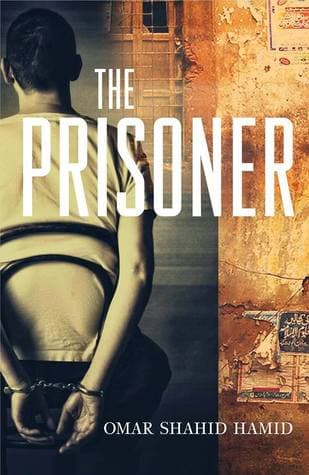
Archivist's Choice
The Prisoner
Omar Shahid Hamid (2013)
Genre
Politics / Thriller / Mystery
Reading Time
12 Minutes
Key Themes
See below
Track Your Reading
Sign in to track this book
In the chilling streets of Karachi, a kidnapped American journalist's Christmas Eve execution deadline ignites a desperate race against time, exposing a city rife with jihadis, corrupt police, and treacherous political machinations where nothing is as it seems.
Synopsis
On an unseasonably cold December evening in Karachi, Pakistan, American journalist Jon Friedland is abducted by kidnappers who plan to broadcast his execution via the internet on Christmas Eve. This abduction places the Pakistani government in a precarious position, threatening to embarrass them before their American allies. As the clock ticks down, intelligence agencies and the police race against time to locate Friedland alive. The narrative plunges into the gritty streets of Karachi, exploring the all-too-real world of jihadists, corrupt police, and ruthless political operatives, in a city where nothing is as it seems.
Difficulty
Medium
Pacing
Fast
Mood
Tense, Suspenseful, Gritty, Urgent
Plot Summary
The Abduction of Jon Friedland
On an unusually cold December evening in Karachi, Pakistan, American journalist Jon Friedland is abducted. Friedland, known for his critical reporting, is taken by kidnappers who plan to release a video of his execution on Christmas Eve. The abduction immediately alarms the Pakistani government, as it risks severe embarrassment and strained relations with its American allies, especially given the sensitive political climate. The clock begins ticking for the authorities, specifically the intelligence agencies and local police, who must find Friedland alive before the kidnappers can carry out their deadly threat. The initial investigation focuses on identifying the perpetrators and their motives, starting a high-stakes search through the city's dangerous underworld.
Enter Constantine D'Souza
The Inspector General of Police, facing immense pressure, brings in Constantine D'Souza, a retired and somewhat disgraced police officer, to assist with the investigation. D'Souza, known for his unconventional methods and deep understanding of Karachi's criminal networks, initially resists, preferring his quiet retirement. However, the gravity of the situation and a personal plea from the IG eventually convince him to take the case. His involvement immediately raises eyebrows among the active police force, many of whom remember his past controversies. D'Souza's return signals a shift in the investigative approach, moving away from conventional police work towards a more ambiguous strategy, using his old contacts and street-level intelligence.
Initial Leads and Dead Ends
D'Souza and his team, which includes a young, idealistic officer, begin sifting through the limited evidence. They encounter numerous dead ends, false leads, and deliberate misdirection. The kidnappers prove to be highly organized and elusive, leaving minimal traces. Early theories range from a simple ransom demand to a politically motivated act by extremist groups or rival intelligence agencies. The pressure mounts as Christmas Eve draws nearer, and the authorities struggle to gain a solid foothold in the investigation. D'Souza's methods, while initially met with skepticism, start to yield fragmented pieces of information, hinting at a larger conspiracy.
The Search for the Mastermind
As D'Souza investigates, he starts to uncover connections between the current abduction and past incidents, suggesting a pattern and a more sophisticated mastermind behind the operation. He realizes that Friedland's kidnapping is not merely a random act but a carefully orchestrated event with wide-ranging implications. His investigation leads him to suspect a shadowy figure with deep ties to both extremist organizations and elements within the Pakistani establishment. This discovery complicates the case significantly, as it means D'Souza is not just fighting criminals but also navigating a treacherous political situation where allegiances are fluid and betrayal is common. The urgency to identify this mastermind intensifies, as their capture is key to Friedland's rescue.
The Role of International Politics
The American government, deeply concerned about its citizen's fate, exerts significant pressure on Pakistan. This international involvement, while providing resources, also complicates the local investigation. US intelligence agencies often clash with Pakistani counterparts, leading to mistrust, conflicting strategies, and a lack of cooperation. D'Souza finds himself caught between the demands of his own government and the heavy-handed interference of foreign powers. This dynamic highlights the geopolitical tensions at play, where Friedland's life becomes a pawn in a larger game of international diplomacy and regional power struggles. The conflicting agendas threaten to derail the rescue efforts, adding another layer of complexity to an already difficult situation.
A Race Against Time
With Christmas Eve looming, the deadline for Friedland's execution draws dangerously close. The kidnappers release ominous messages, increasing the psychological warfare. D'Souza and his team intensify their efforts, working around the clock. They pursue every possible lead, no matter how remote, navigating the dangerous streets of Karachi, where informants are unreliable and violence is ever-present. The pressure is immense, and the emotional toll on the investigators is palpable. Despite their best efforts, a clear path to Friedland remains elusive, and the fear that they might fail grows with each passing hour. The city itself seems to hold its breath, anticipating the outcome of this desperate race.
Betrayal and Double-Crossing
As the investigation progresses, D'Souza uncovers layers of betrayal and double-crossing within the very institutions he is supposed to trust. He realizes that some individuals within the police and intelligence agencies may be complicit, either directly or indirectly, in Friedland's abduction or are actively obstructing the investigation for their own political or financial gains. This revelation shatters his trust and makes his task even more perilous. He must now discern who he can truly rely on, operating in an environment where loyalty is a commodity and corruption is rampant. The conspiracy extends far beyond simple criminals, reaching into the highest levels of power, making the search for Friedland a battle against an entrenched system.
The Confrontation
Through shrewd deduction, old-school detective work, and a crucial tip-off from an unexpected source, D'Souza finally zeroes in on the likely location of Friedland's captivity. The hideout is in a volatile and heavily guarded area, making a direct assault extremely risky. D'Souza must carefully plan his next move, weighing the lives of his team against the urgency of rescuing Friedland. The stage is set for a tense confrontation, where the forces of law and order, albeit fractured, will face the well-entrenched kidnappers. This moment is the culmination of weeks of relentless investigation, leading to a high-stakes operation with no guarantee of success.
The Rescue Attempt
D'Souza leads a small, hand-picked team in a daring raid on the kidnappers' hideout, just hours before the Christmas Eve deadline. The operation is fraught with danger, as the kidnappers are heavily armed and prepared to fight. Gunfire erupts, and a violent struggle ensues. D'Souza, despite his age and a past injury, demonstrates remarkable courage and tactical acumen. The team faces unexpected resistance and casualties, but their determination to save Friedland propels them forward. The chaotic scene highlights the brutal realities of their mission, where every decision carries life-or-death consequences. The success of the rescue hangs precariously in the balance amidst the exchange of fire.
The Aftermath and Loose Ends
Miraculously, Jon Friedland is rescued, albeit shaken and injured, just as the deadline was about to expire. The immediate threat is neutralized, and a major international crisis is averted. However, the victory is bittersweet. While some of the immediate kidnappers are apprehended or killed, the true masterminds behind the elaborate plot, those who pulled the strings from the shadows, manage to evade capture. D'Souza is left with the unsettling realization that while he saved Friedland, the deeper conspiracy remains largely intact. The ending suggests that the cycle of violence and political machinations in Karachi is far from over, leaving many questions unanswered about the powerful forces at play and the true cost of justice in such a complex city.
Principal Figures
Constantine D'Souza
The Protagonist
Initially reluctant to re-enter the corrupt world of Karachi policing, D'Souza grapples with his past and the moral ambiguities of his work, ultimately reaffirming his commitment to justice despite the personal cost.
Jon Friedland
The Victim/Catalyst
Friedland experiences the trauma of captivity, becoming a symbol of the external pressures and internal conflicts within Pakistan, ultimately rescued but deeply affected by his ordeal.
Inspector General (IG)
The Supporting
The IG navigates the political minefield of the abduction, demonstrating the compromises and difficult decisions required of leadership in a corrupt system.
The Mastermind (unnamed or alias)
The Antagonist
The Mastermind's identity and true motives are slowly unveiled throughout the narrative, culminating in a partial exposure but ultimately remaining elusive, symbolizing the enduring nature of systemic corruption.
Younger Police Officer (e.g., Junaid)
The Supporting
The younger officer's idealism is tested and tempered by the harsh realities of the investigation, leading to a more nuanced understanding of justice in a corrupt world.
US Embassy Officials / CIA Operatives
The Supporting
These officials escalate diplomatic and intelligence efforts, showcasing the complexities and potential conflicts of international cooperation in a crisis.
Local Informants / Underworld Figures
The Supporting
These figures provide intermittent, often dangerous, assistance, illustrating the murky ethics and necessity of D'Souza's methods.
Corrupt Police/Intelligence Officers
The Antagonist/Supporting
Their actions expose the pervasive corruption within the system, forcing D'Souza to navigate treacherous internal politics as much as external threats.
Themes & Insights
Corruption and Moral Ambiguity
The novel explores the corruption within Pakistani institutions, from the police force to political circles. It portrays a world where lines between good and evil are blurred, and individuals, even those striving for justice, must often compromise their morals to achieve their goals. Constantine D'Souza embodies this theme, forced to navigate a system riddled with deceit, where loyalty is bought, and betrayal is common. The narrative constantly questions whether true justice can exist in such an environment.
“In Karachi, the truth was rarely simple, and justice, if it existed at all, often wore a disguise of compromise and expediency.”
The Price of Justice
This theme examines the personal and societal cost of pursuing justice in a fractured and dangerous society. D'Souza's character arc highlights the sacrifices, disillusionment, and personal risks involved in fighting against entrenched power structures and crime. The novel suggests that achieving even a semblance of justice often requires individuals to operate outside the law, endure immense personal suffering, and accept that complete victory may be impossible. It is a somber reflection on the enduring struggle against injustice.
“Every victory against the darkness came with a price, and in this city, the currency was often paid in blood or shattered ideals.”
Geopolitics and International Intrigue
The abduction of an American journalist immediately thrusts the local crime into the global arena, illustrating how international politics impacts domestic affairs. The novel shows the complex and often tense relationship between Pakistan and the United States, with conflicting agendas, mistrust between intelligence agencies, and the use of individuals as pawns in larger geopolitical games. It highlights how local conflicts can have far-reaching international consequences and how foreign intervention can complicate, rather than simplify, local efforts.
“Friedland wasn't just a man; he was a flag, and his fate was a diplomatic incident waiting to explode.”
The Nature of Karachi
Karachi itself is a character in the novel – a sprawling, chaotic, and energetic metropolis that is both dangerous and alluring. The city's unique blend of poverty, wealth, political factions, and criminal networks creates a complex backdrop for the narrative. The novel portrays Karachi as a place where nothing is as it seems, where loyalties are fluid, and survival often depends on understanding its unwritten rules. It emphasizes the city's ability to consume and reshape those who inhabit it, reflecting its tumultuous history and uncertain future.
“Karachi was a beast, alive and hungry, and if you didn't understand its rhythm, it would devour you whole.”
Plot Devices & Literary Techniques
Ticking Clock
The Christmas Eve execution deadline
The kidnappers' threat to execute Jon Friedland on Christmas Eve creates an intense and relentless ticking clock. This device builds immense suspense and urgency throughout the narrative, driving the characters' actions and decisions. It constantly reminds the reader of the high stakes and the limited time available, amplifying the pressure on D'Souza and his team. Every lead, every setback, and every moment of inaction is magnified by the looming deadline, making the rescue attempt a desperate race against time.
The Reluctant Hero
Constantine D'Souza's return to duty
Constantine D'Souza embodies the reluctant hero archetype. Having retired and become disillusioned with the system, he initially resists being drawn back into the dangerous world of police work. His reluctance stems from past traumas and a deep understanding of the pervasive corruption he'll have to confront. This device allows for character development as D'Souza grapples with his past and present, while also adding realism to his heroism – he's not a gung-ho idealist, but a weary veteran making a difficult choice for the greater good.
Red Herring
Misleading clues and false suspects
Throughout the investigation, D'Souza and his team encounter numerous red herrings – misleading clues, false informants, and deliberately planted evidence. These diversions are often orchestrated by the true masterminds or by rival factions seeking to muddy the waters. This device keeps the reader guessing, making the mystery more complex and highlighting the treacherous nature of the investigation in Karachi. It underscores the difficulty of discerning truth from deception in a city where nothing can be taken at face value.
Political Intrigue and Conspiracy
Layers of hidden agendas and powerful forces
The plot is deeply woven with political intrigue and a complex conspiracy that extends beyond simple criminal activity. Friedland's abduction is not an isolated incident but part of a larger, carefully orchestrated plan involving powerful figures within the government, intelligence agencies, and extremist groups. This device creates a labyrinthine narrative where D'Souza must navigate not only the immediate threat but also the hidden agendas and power struggles that constantly threaten to derail his mission. It adds depth and realism to the portrayal of the geopolitical landscape.
Critical analysis
Notable Quotes
Quiz
Test Your Knowledge
Ready to see how well you understood this book? Take our interactive quiz with 10 questions.
10
Questions
~5
Minutes
?
Best Score
Key Questions (FAQ)
'The Prisoner' follows the abduction of American journalist Jon Friedland in Karachi, Pakistan. His kidnappers plan to release a video of his execution on Christmas Eve, creating immense pressure on the Pakistani government and intelligence agencies to find him before time runs out.
Similar books

The Political Gut
Brett Casper
5.0

Vladimir Sorokin’s Discourses
Dirk Uffelmann
4.7

The Second World War
Winston S. Churchill
4.5
We Should All Be Feminists
Chimamanda Ngozi Adichie
4.5
The Story of Civilization
Will Durant
4.4
The Quest for Cosmic Justice
Thomas Sowell
4.4
The Souls of Black Folk
W.E.B. Du Bois
4.3

V for Vendetta
Alan Moore
4.3