BookBrief
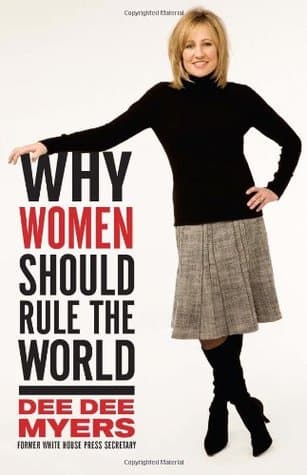
Why Women Should Rule the World cover
Archivist's Choice

Why Women Should Rule the World

Dee Dee Myers (2008)

Genre

Business / Politics / Leadership / Memoir / History

Reading Time

12 Minutes

Key Themes

See below

Track Your Reading

Sign in to track this book

Dee Dee Myers argues that empowering women leaders, with their strengths in communication and agreement-building, could create a more cooperative, productive, and healthier world.

Core Idea

Dee Dee Myers, a seasoned political communicator and the first female White House Press Secretary, argues that societies and organizations would be significantly more effective, equitable, and stable if women held a greater share of leadership positions across all sectors, particularly in business and politics. Drawing on historical context, personal anecdotes from her career in the male-dominated world of Washington D.C., and contemporary data, Myers contends that women's inherent leadership styles, often characterized by collaboration, empathy, long-term thinking, and a focus on consensus-building, are precisely what is needed to tackle complex global challenges. She advocates for a fundamental shift in power dynamics, not just for gender equality's sake, but as a strategic imperative for a better-functioning world.
Difficulty
Medium

Core idea

The central argument and framework that powers the entire book.

Dee Dee Myers, a seasoned political communicator and the first female White House Press Secretary, argues that societies and organizations would be significantly more effective, equitable, and stable if women held a greater share of leadership positions across all sectors, particularly in business and politics. Drawing on historical context, personal anecdotes from her career in the male-dominated world of Washington D.C., and contemporary data, Myers contends that women's inherent leadership styles, often characterized by collaboration, empathy, long-term thinking, and a focus on consensus-building, are precisely what is needed to tackle complex global challenges. She advocates for a fundamental shift in power dynamics, not just for gender equality's sake, but as a strategic imperative for a better-functioning world.

At a glance

Difficulty

Medium

Key Takeaways

1

The Untapped Strength of Difference

Women's distinct leadership styles offer unique advantages over traditional male-dominated approaches.

Quote

Empowering women would make the world a better place—not because women are the same as men, but precisely because they are different.

Myers' main point is that the world needs more female leadership. This isn't about replacing men with women, but about bringing new ways to solve problems. She believes women, because of how they are raised and their natural traits, tend to value teamwork, agreement, and understanding. These qualities are often overlooked in male-dominated power structures. Myers argues this difference is a strategic advantage, leading to more effective, less confrontational environments in politics, business, and communities. The book suggests these ...

Supporting evidence

Myers' personal experience as the first female White House Press Secretary highlights the contrast. While male counterparts might focus solely on policy or political strategy, her tenure was marked by constant scrutiny of her appearance, underscoring a societal expectation of women to conform while simultaneously demanding their unique contributions.

Apply this

Organizations should actively seek to diversify leadership, not just for optics, but to intentionally integrate these distinct problem-solving approaches. Leaders should foster environments where collaborative, empathetic communication is rewarded, rather than solely individualistic achievement.

2

Communication as a Core Competency

Women often excel at communication, listening, and fostering understanding, skills vital for modern leadership.

Quote

Women tend to be better communicators, better listeners, better at forming consensus.

Myers states that women have better communication and listening skills, which directly lead to effective leadership. In a time of division and misunderstanding, being able to truly listen, explain complex ideas clearly, and mediate different views is vital. This isn't just about being pleasant; it's about being strategically effective. Better listening leads to better decisions, and better communication leads to clearer directions and stronger team unity. Reaching agreement, often seen as a soft skill, is presented as a powerful way t...

Supporting evidence

Myers' experience in the high-stakes environment of the White House press briefing room, where precise and effective communication was essential, implicitly backs this claim. Her observations come from a direct vantage point of observing communication failures and successes at the highest levels of government.

Apply this

Individuals should actively cultivate active listening and clear, empathetic communication skills, recognizing them as leadership strengths. Organizations should provide training and incentives for these skills, moving beyond solely focusing on assertive or directive communication.

3

The Appearance Trap

Female leaders face disproportionate scrutiny over their physical appearance, diverting focus from their accomplishments.

Quote

Virtually every story written about me included observations about my earrings, my makeup, my clothes, my shoes. And then there was my hair.

This is one of the book's most poignant and relatable ideas, drawing from Myers' own experiences. The 'appearance trap' describes the constant, often crippling focus on how a woman leader looks, rather than her professional skill or policy positions. This common societal bias not only trivializes their accomplishments but also puts an unfair burden on women. They must navigate aesthetic judgments along with their professional duties. It shows a double standard: male leaders are rarely judged on their clothes or hair, while women are c...

Supporting evidence

Myers' personal account of being White House Press Secretary where media reports consistently focused on her earrings, makeup, clothes, and hair, rather than solely on the policy discussions or her strategic communication.

Apply this

Media outlets should consciously challenge their own biases in reporting on female leaders, shifting focus to their substantive contributions. Individuals should call out and challenge appearance-based critiques of female professionals, redirecting the conversation to their work.

4

Beyond Partisanship: Women Forging Alliances

Female leaders often demonstrate a greater capacity for cross-partisan collaboration and friendship.

Quote

From...friendships that transcend partisanship in the U.S. Senate, she describes how female participation in public life has already transformed the world in which we live.

Myers suggests that women in politics, even in highly divided settings like the U.S. Senate, can form friendships and alliances across traditional party lines. This idea challenges the common belief that politics must always be adversarial. By prioritizing relationships and finding common ground, female leaders can help create more effective governance and problem-solving, moving past stalemates. This doesn't mean ignoring ideological differences but finding ways to work together despite them, creating a more cooperative and productiv...

Supporting evidence

Myers references 'friendships that transcend partisanship in the U.S. Senate,' implying real-world examples of female senators from opposing parties finding common ground and working together more effectively than their male counterparts.

Apply this

Politicians and organizational leaders should actively seek out opportunities for cross-group collaboration, modeling behavior that prioritizes common goals over rigid ideological adherence. Mentorship programs could encourage these inter-group connections.

5

The 'West Wing' Effect: Portrayal vs. Reality

Fictional portrayals of female leadership can both inspire and oversimplify the real-world challenges.

Quote

Myers assesses the crucial but long-ignored strengths that female leaders bring to the table. Reflecting on her own tenure in the Clinton administration and her work as a political analyst, media commentator, and former consultant to NBC's The West Wing...

Myers' work as a consultant for 'The West Wing' gives a unique look at how female leadership is seen and shown. While fictional stories can inspire and offer ideal visions of women in power, they often skip over the tough, everyday challenges and systemic biases that real women face. The book suggests a contrast between the idealized, often flawless competence of TV characters and the messy reality of dealing with sexism, scrutiny of appearance, and constant pressure to prove oneself in male-dominated fields. This point highlights the...

Supporting evidence

Myers' direct involvement with 'The West Wing' and her contrasting real-world experience as Press Secretary provide the basis for this insight, drawing a distinction between the idealized TV world and the actual challenges she faced.

Apply this

Audiences should critically evaluate media portrayals of female leaders, recognizing the inherent simplifications. Aspiring female leaders should seek out diverse, realistic accounts of women in power to prepare for the multifaceted challenges they may encounter.

6

Productivity Through Inclusivity

Businesses led or significantly influenced by women tend to be more productive and innovative.

Quote

Businesses would be more productive. And communities would be healthier.

Myers extends her argument beyond politics to the corporate world, stating that more women in business leadership leads to greater productivity and innovation. This is an economic argument. Diverse teams, especially those with gender diversity, are proven to be more innovative, make better decisions, and achieve better financial results. Women's leadership styles, with their focus on teamwork and communication, can create more inclusive workplaces where diverse ideas are welcome and employees feel more involved. This directly contribu...

Supporting evidence

While the summary doesn't provide a specific study, Myers' broad claim that 'businesses would be more productive' aligns with numerous contemporary studies on diversity and corporate performance, suggesting she draws upon this broader trend.

Apply this

Companies should prioritize gender diversity at all levels of leadership, not just as a matter of fairness, but as a strategic imperative for enhanced productivity and innovation. Metrics for diversity and inclusion should be integrated into business performance reviews.

7

The Path to Success: Overcoming and Avoiding Traps

Women must proactively navigate and mitigate unique challenges on their leadership journey.

Quote

Myers offers a hard-hitting look at the challenges women must overcome and the traps they must avoid as they travel the path toward success.

Beyond just identifying challenges, Myers offers practical advice on how women can navigate the complex world of leadership. This includes being aware of the 'traps' – such as the focus on appearance, being underestimated, or the burden of having to prove oneself more than others. Her emphasis on 'overcoming' and 'avoiding' suggests a proactive, strategic approach. This point highlights the need for resilience, self-awareness, and perhaps a different kind of ambition that accounts for systemic hurdles. It's not just about breaking bar...

Supporting evidence

Her candid recollection of the 'pressures—both invited and imposed—of her West Wing years' serves as a direct example of these challenges and traps, informing her advice on how to navigate them.

Apply this

Women aspiring to leadership should seek mentors who have successfully navigated similar challenges. Organizations should create support systems and training programs that specifically address the unique obstacles women face in leadership roles.

8

Healthier Communities Through Female Influence

Increased female leadership correlates with improved community well-being and social outcomes.

Quote

Businesses would be more productive. And communities would be healthier.

Myers broadens her view to society, arguing that a world with more women in power would lead to 'healthier communities.' This suggests that female leaders, who often prioritize social welfare, education, and public health, tend to invest in policies and initiatives that directly benefit the wider population. Their collaborative and empathetic approach can result in more effective social programs, stronger community bonds, and a fairer distribution of resources. This is a powerful argument for the societal benefits of gender equality i...

Supporting evidence

While specific studies aren't provided in the summary, Myers' assertion aligns with research demonstrating that countries with higher female representation in government often show better outcomes in health, education, and economic equality.

Apply this

Citizens should advocate for policies that support women's entry into and advancement in public office. Community organizations should actively recruit and support female leaders, recognizing their potential impact on local well-being.

Critical analysis

Notable Quotes

Quiz

Test Your Knowledge

Ready to see how well you understood this book? Take our interactive quiz with 10 questions.

10
Questions
~5
Minutes
?
Best Score

Key Questions (FAQ)

The book argues that increasing women's leadership in politics and business would lead to a better world. It posits that women's unique strengths, such as better communication and consensus-building skills, are crucial for solving complex problems and fostering healthier communities.

About the author