BookBrief
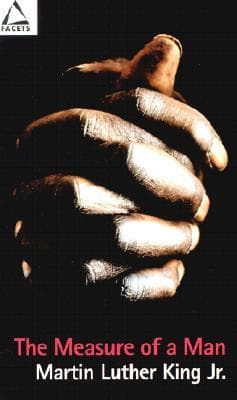
The Measure of a Man cover
Archivist's Choice

The Measure of a Man

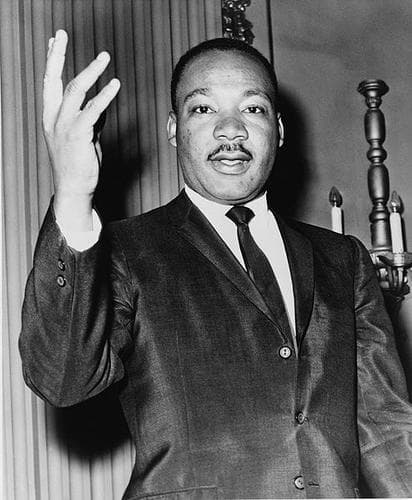
Martin Luther King Jr. (1959)

Genre

Politics / History / Spirituality / Philosophy

Reading Time

45 min

Key Themes

See below

Track Your Reading

Sign in to track this book

Martin Luther King Jr. explores the theological foundations of nonviolent activism, showing its power to change society.

Core Idea

Martin Luther King Jr.'s "The Measure of a Man" argues that true human worth comes from moral character, unconditional love (agape), and a commitment to justice, not from material possessions or social status. King believes humanity has a fundamental duality—a tension between animal instincts and divine potential. Individuals must actively overcome selfishness and hatred to embrace an interconnected brotherhood. He emphasizes that a just society and a fulfilled life come from actively practicing nonviolence, self-purification, and courageously opposing conformity and spiritual blindness. This is driven by the belief that justice will prevail, but only through human effort.
Reading time
45 min
Difficulty
Medium
✓ Read this if...
You are seeking a concise and profound distillation of Martin Luther King Jr.'s core philosophical and spiritual tenets, particularly his views on human nature, love, justice, and nonviolence.
✗ Skip this if...
You are looking for a detailed historical account of the Civil Rights Movement or an exhaustive biography of MLK; this book is a collection of sermons focusing on abstract moral and spiritual principles.

Core idea

The central argument and framework that powers the entire book.

Martin Luther King Jr.'s "The Measure of a Man" argues that true human worth comes from moral character, unconditional love (agape), and a commitment to justice, not from material possessions or social status. King believes humanity has a fundamental duality—a tension between animal instincts and divine potential. Individuals must actively overcome selfishness and hatred to embrace an interconnected brotherhood. He emphasizes that a just society and a fulfilled life come from actively practicing nonviolence, self-purification, and courageously opposing conformity and spiritual blindness. This is driven by the belief that justice will prevail, but only through human effort.

At a glance

Reading time

45 min

Difficulty

Medium

Read this if...

You are seeking a concise and profound distillation of Martin Luther King Jr.'s core philosophical and spiritual tenets, particularly his views on human nature, love, justice, and nonviolence.

Skip this if...

You are looking for a detailed historical account of the Civil Rights Movement or an exhaustive biography of MLK; this book is a collection of sermons focusing on abstract moral and spiritual principles.

Key Takeaways

1

The Duality of Human Nature

Humanity possesses both an animalistic drive and a divine spark, constantly striving for dominance.

Quote

Man is a being of both matter and spirit, a creature of dust and divinity.

King believes humans are dualistic, existing between the finite and the infinite. We have a physical, animalistic nature driven by instinct, but also a spiritual, divine essence capable of reason, morality, and love. This internal conflict is a defining trait. True humanity comes from consciously choosing to prioritize the spiritual over the material, aiming for a higher purpose based on justice and compassion. This ongoing struggle shapes our moral choices and our potential for both good and evil.

Supporting evidence

King frequently references theological concepts, particularly the Judeo-Christian understanding of humanity's creation 'in the image of God' (imago Dei) combined with the recognition of human fallibility and sin.

Apply this

Reflect on daily decisions: are they driven by immediate gratification and self-interest (animalistic) or by principles of justice, empathy, and long-term well-being (spiritual)? Consciously choose actions that align with your higher moral compass.

human-naturedualismspiritual-growth
2

The Interconnectedness of All Life

No individual or nation can thrive in isolation; we are bound together in an inescapable network of mutuality.

Quote

All life is interrelated. We are all caught in an inescapable network of mutuality, tied into a single garment of destiny.

King argues that all humanity and all life are deeply interconnected. Our destinies are linked, meaning injustice or suffering in one part of the world affects everyone. This idea, rooted in a theological understanding of creation, forms the ethical basis for his call to social justice. It rejects individualistic salvation or national exceptionalism, demanding shared responsibility and empathy. To harm another is to harm oneself; to uplift another is to uplift all. This interconnectedness requires a universal ethic of care and justice...

Supporting evidence

King frequently uses the metaphor of a 'single garment of destiny' to illustrate how actions in one part of the world inevitably impact others, making segregation and injustice not just morally wrong but practically destructive.

Apply this

When considering social or political issues, broaden your perspective beyond your immediate community. Ask: 'How does this affect the most vulnerable among us, and how will their condition ultimately impact everyone?' Support policies that promote global equity and justice.

interconnectednesssocial-justiceglobal-community
3

The Power of Unconditional Love (Agape)

Agape, a selfless and redemptive love, is the only force capable of transforming enemies into friends.

Quote

Agape means understanding, creative, redemptive goodwill for all men. It is an overflowing love which seeks nothing in return.

Agape is central to King's nonviolence philosophy. It is a selfless, unconditional, and redemptive love that extends even to one's oppressors. This is not emotional love (eros) or familial love (philia), but a principled love that seeks the well-being of all, regardless of their actions. King argues that agape is the ultimate tool against injustice, capable of breaking cycles of hatred and violence. By loving the enemy, one seeks to understand their motives, expose injustice without humiliating them, and ultimately redeem them. This r...

Supporting evidence

King draws heavily from the teachings of Jesus, particularly the command to 'love your enemies' (Matthew 5:44), framing it not as a naive sentiment but as a powerful, strategic tool for social change.

Apply this

In conflict situations, rather than demonizing opponents, try to understand their perspectives and underlying needs. Respond with firm but non-aggressive actions, aiming to reveal the injustice and seek reconciliation rather than retribution. Practice empathy, even when it's difficult.

agapenonviolenceredemptionlove-your-enemies
4

Nonviolence as a Way of Life

Nonviolent resistance is not passive inaction, but an active, courageous, and transformative force for justice.

Quote

Nonviolence is not a method for cowards; it is a method for the strong.

King strongly refutes the idea that nonviolence is a sign of weakness. He presents it as a powerful, disciplined, and courageous way of life and a method for social change. It requires great inner strength, moral conviction, and a willingness to suffer without retaliation. Nonviolence actively resists evil and injustice through moral persuasion, civil disobedience, and direct action. It aims to awaken the conscience of the oppressor and society. It seeks not to defeat the opponent but to build understanding and friendship, creating a ...

Supporting evidence

King references the success of the Montgomery Bus Boycott as a prime example of nonviolent direct action effectively challenging segregation and initiating significant social change.

Apply this

When faced with injustice, consider how to actively resist without resorting to aggression. This might involve peaceful protest, boycotts, advocacy, or engaging in dialogue, always maintaining a commitment to the dignity of all parties involved.

nonviolent-resistancecivil-disobediencecouragesocial-change
5

The Moral Arc of the Universe

Justice is not merely an ideal but an inherent trajectory towards which history is bending.

Quote

The arc of the moral universe is long, but it bends toward justice.

King's statement that the moral arc of the universe bends toward justice offers both theological conviction and encouragement for activists. It suggests that justice is not arbitrary but is woven into existence, reflecting a divine order. While acknowledging slow and painful progress, King's statement offers hope and a sense of eventual triumph for those fighting injustice. It implies that even against great oppression, the universe aligns with righteousness, giving moral weight and eventual success to sustained, principled action. Th...

Supporting evidence

This phrase, often attributed to Unitarian minister Theodore Parker, was popularized by King and became a cornerstone of his rhetoric, offering a theological grounding for the civil rights movement's ultimate success.

Apply this

When facing setbacks or feeling discouraged in the fight for justice, remember this long-term perspective. Focus on consistent, incremental actions, trusting that collective effort over time will contribute to the inevitable shift towards a more just world.

justicehopemoral-universeprogress
6

The Urgency of Now

Procrastination on matters of justice is a dangerous delusion; the time for action is always now.

Quote

We are confronted with the fierce urgency of now. This is no time for apathy or complacency. This is a time for vigorous and positive action.

King rejects waiting for a 'more convenient season' for justice. He argues that waiting only prolongs injustice and suffering. The 'fierce urgency of now' is a call to immediate, decisive action against oppression. It highlights the moral need to confront evil directly and without delay, recognizing that 'justice too long delayed is justice denied.' This urgency comes from a deep moral conviction that human dignity cannot be postponed. It challenges complacency and apathy, demanding active participation in the fight for a more equitab...

Supporting evidence

King's 'Letter from Birmingham Jail' powerfully articulates this urgency, directly confronting the white moderate's call for patience and emphasizing the immediate suffering caused by segregation.

Apply this

Identify an area of injustice you care about. Instead of waiting for someone else to act or for the 'perfect moment,' take a small, concrete step today towards addressing it, whether through advocacy, volunteering, or educating yourself and others.

urgencyactionjustice-nowmoral-imperative
7

The Peril of Uncritical Conformity

True individuality lies in independent thought and moral courage, not in blind adherence to the status quo.

Quote

The ultimate measure of a man is not where he stands in moments of comfort and convenience, but where he stands at times of challenge and controversy.

King challenges individuals to resist conformity, especially when societal norms are unjust. He argues that true character shows not in comfortable agreement, but in the willingness to stand for truth and justice even when it means opposing popular opinion or facing hardship. Uncritical conformity, he warns, can lead to moral cowardice and complicity in evil. To be a 'man' in the truest sense requires independent thought, a developed conscience, and the courage to act on one's convictions, even if it means ostracization or suffering. ...

Supporting evidence

King himself exemplified this, standing against deeply entrenched racial segregation and social norms, facing immense criticism and danger, yet refusing to compromise his moral principles.

Apply this

Before accepting prevailing opinions, especially on complex social issues, critically examine them through the lens of your own moral values and factual understanding. Be prepared to voice your convictions respectfully, even if they differ from the majority.

conformitymoral-courageindividualitycritical-thinking
8

The Danger of Spiritual Blindness

A society that prioritizes material gain over spiritual and moral values risks its own destruction.

Quote

Modern man has gained a fantastic mastery over things, but has not gained a mastery over himself.

King criticizes a society that has achieved great technological and material progress but has neglected its spiritual and moral development. He warns that this imbalance creates a dangerous 'spiritual blindness,' where the pursuit of wealth and power overshadows ethics, compassion, and justice. This leads to a dehumanizing environment where individuals are valued for their usefulness rather than their inherent worth, and where systemic injustices continue. Without a strong moral compass and a commitment to higher values, even advanced...

Supporting evidence

King observed the stark contrast between America's economic prosperity and its rampant racial segregation and poverty, highlighting the moral bankruptcy beneath the veneer of progress.

Apply this

Regularly assess your own priorities and those of your community. Are decisions driven primarily by economic gain, or by ethical considerations, human well-being, and environmental stewardship? Advocate for policies and practices that balance material progress with moral and spiritual growth.

materialismspiritual-blindnessmoral-decaysocietal-critique
9

The Necessity of Self-Purification

Before engaging in external struggle, one must first confront and purify one's own internal motivations.

Quote

Before you can begin to engage in outer action, you must have an inner preparation.

King emphasizes that nonviolent direct action is a spiritual discipline requiring rigorous self-purification. This internal preparation involves examining one's motives, removing hatred or resentment, and committing to love and nonviolence. It ensures that the struggle for justice is not driven by personal animosity but by a genuine desire for reconciliation and the creation of a 'beloved community.' This self-purification enables activists to endure suffering without retaliation, maintain their moral standing, and effectively appeal ...

Supporting evidence

King frequently referred to the 'workshops' and training sessions conducted by civil rights activists, where participants were taught to internalize nonviolent principles and prepare for the emotional and physical challenges of direct action.

Apply this

Before engaging in any form of advocacy or confrontation, take time for self-reflection. Ask yourself: 'Am I acting out of anger or a genuine desire for justice and reconciliation? Am I prepared to endure challenges without compromising my values?' Practice mindfulness or meditation to cultivate inner peace and clarity.

self-reflectioninner-worknonviolent-disciplinemoral-integrity
10

The Call to Universal Brotherhood

Ultimately, humanity's highest calling is to recognize and embody a shared sense of family, transcending all divisions.

Quote

We are brothers, because we are all children of the same God.

King's vision is based on the belief in universal brotherhood, rooted in a shared divine creator. This conviction provides the moral framework for dismantling racism, prejudice, and all forms of discrimination. If all humans are children of the same God, then arbitrary distinctions of race, nationality, or class become meaningless and morally wrong. This call to brotherhood is a theological requirement for building a just and peaceful world. It challenges individuals to look past surface differences and recognize the inherent dignity ...

Supporting evidence

King's sermons and speeches are replete with references to the 'children of God' and the 'family of man,' drawing on biblical narratives to emphasize universal kinship.

Apply this

Actively seek opportunities to connect with and understand individuals from backgrounds different from your own. Challenge your own biases and assumptions, and work to dismantle systems that perpetuate division and inequality, always affirming the shared humanity of all people.

brotherhooduniversalismhuman-dignitybeloved-community

Critical analysis

Notable Quotes

The ultimate measure of a man is not where he stands in moments of comfort and convenience, but where he stands at times of challenge and controversy.

From a sermon reflecting on character and moral courage.

We are not makers of history. We are made by history.

Discussing the forces that shape human existence and social movements.

The arc of the moral universe is long, but it bends toward justice.

Expressing an enduring faith in the eventual triumph of justice despite present struggles.

Darkness cannot drive out darkness; only light can do that. Hate cannot drive out hate; only love can do that.

Advocating for nonviolence and love as the only effective means to combat hatred and injustice.

A man who won't die for something is not fit to live.

Emphasizing the importance of having principles worth sacrificing for.

True peace is not merely the absence of tension; it is the presence of justice.

Defining genuine peace as something more profound than simply the lack of conflict.

Injustice anywhere is a threat to justice everywhere.

Highlighting the interconnectedness of justice and the universal impact of injustice.

We must learn to live together as brothers or perish together as fools.

A call for unity and cooperation in the face of global challenges.

I refuse to accept the view that mankind is so tragically bound to the starless midnight of racism and war that the bright daybreak of peace and brotherhood can never become a reality.

Expressing optimism about humanity's capacity for progress and overcoming social ills.

Every man must decide whether he will walk in the light of creative altruism or in the darkness of destructive selfishness.

Presenting a fundamental moral choice facing every individual.

The function of education is to teach one to think intensively and to think critically. Intelligence plus character—that is the goal of true education.

Discussing the purpose and true value of education beyond mere information.

He who passively accepts evil is as much involved in it as he who helps to perpetrate it. He who accepts evil without protesting against it is really cooperating with it.

Challenging the idea of passive acceptance of injustice and the importance of active resistance.

Faith is taking the first step even when you don't see the whole staircase.

A powerful metaphor for the nature of faith and perseverance.

The time is always ripe to do right.

Emphasizing that there is never an inappropriate moment to act morally.

Quiz

Test Your Knowledge

Ready to see how well you understood this book? Take our interactive quiz with 10 questions.

10
Questions
~5
Minutes
?
Best Score

Key Questions (FAQ)

The book explores the theological and philosophical underpinnings of Martin Luther King Jr.'s commitment to nonviolent activism. It delves into the spiritual dimensions of human existence and the moral imperative for justice and love in society.

About the author