“There are some things in life that you cannot change, no matter how much you want to. And the only thing you can do is to accept them and move on.”
— The Colonel's internal monologue about his past and the fate of his children.

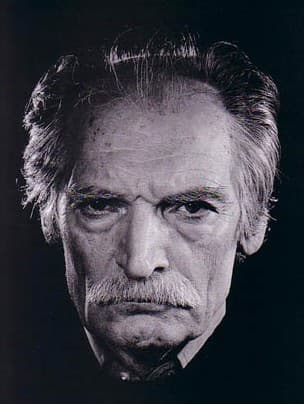
Mahmoud Dowlatabadi (2011)
Genre
Literary Fiction / Politics / Historical Fiction
Reading Time
360 min
Key Themes
See below
Sign in to track this book
On a rain-slicked Iranian night, a retired Colonel confronts the devastating legacy of a revolution devouring its own, forced to bury his tortured daughter while grappling with the ghosts of his nation's past and the shattered ideals of his children.
On a torrential, pitch-black night in a small Iranian town, an aging Colonel is lost in agonizing memories. He recalls his deceased wife, the tragic fates of historical patriots, and the fractured political allegiances of his five children who joined the 1979 Iranian Revolution. The oppressive silence of his house is shattered by a knock. Two young policemen stand at his door. They inform the Colonel that his youngest daughter, Parvaneh, has been killed. He must come to collect her tortured body from the morgue and bury her before dawn. The revolution, once a beacon of hope, has turned on its own, demanding a grim sacrifice from his family.
The Colonel, accompanied by his surviving son, Amir, makes the somber journey through the rain-soaked streets to the morgue. There, he confronts the horrific reality of Parvaneh's death: her body bears signs of brutal torture. The authorities, cold and indifferent, pressure him to bury her swiftly and silently, minimizing any public display of dissent or mourning. The Colonel and Amir are forced to carry out the burial themselves, digging a grave in the pre-dawn darkness. The act shows their grief and the oppressive atmosphere that stifles even basic human rights, stripping them of dignity in their sorrow.
As they bury Parvaneh, Amir confesses to his father that he, too, was involved with revolutionary groups, though he has now distanced himself. This revelation deepens the Colonel's despair, showing how much his children were consumed by political fervor. He reflects on his other children: Hossein, a communist; Faezeh, an Islamist; and two other sons, one a leftist, the other a nationalist. The family, once a cohesive unit, has been torn apart by the ideologies they embraced, mirroring the broader societal divisions that the revolution both exposed and worsened. The burial becomes a physical symbol of their fractured lives.
Throughout the night, the Colonel's mind often returns to his deceased wife, a woman he deeply loved and respected. He recalls their life together, a time when their children were young and full of promise, before the revolution changed their paths. He remembers his wife's quiet strength and her attempts to hold the family together amidst his own military career and the growing political unrest. These memories are tinged with both nostalgia and regret, as he grapples with the 'what ifs' and the feeling that he failed to protect his loved ones from the encroaching political storm that ultimately claimed their lives and ideals. Her absence is a constant ache.
The Colonel's internal monologue delves into his own past as a military officer and his disillusionment with various political movements throughout Iranian history. He recalls his youthful idealism, his military training, and the numerous coups, counter-coups, and political betrayals that have plagued the nation. He is a man who has witnessed the cyclical nature of revolutionary zeal and its subsequent descent into repression. His reflections are not just personal but also a broader critique of the Iranian left's historical missteps, their infighting, and their inability to forge a lasting, stable, and just society. He questions the very idea of 'revolution' and its inevitable cost.
The Colonel's thoughts are heavily preoccupied with his son, Hossein, a communist who dedicated his life to the cause. He remembers Hossein's intellectual rigor, his conviction, and his ultimate demise at the hands of the revolutionary regime he initially supported. Hossein's story embodies the tragic irony of the revolution destroying its own, as those who fought for change often became its first victims. The Colonel grapples with the futility of Hossein's sacrifice, questioning whether his son's idealism was a naive dream leading to destruction, or a necessary, though doomed, struggle for justice. His son's death haunts him deeply.
Faezeh, the Colonel's daughter who embraced the Islamic revolutionary ideals, also occupies his thoughts. He understands her initial fervor and devotion to what she believed was a righteous cause. However, he also senses her eventual disillusionment as the revolution became something more rigid and oppressive than she might have envisioned. While her fate is not explicitly detailed as Parvaneh's or Hossein's, the Colonel's contemplation suggests a similar tragic trajectory, either through imprisonment, execution, or a profound loss of self within the new order. Her story represents another facet of his children's revolutionary entanglement and its devastating aftermath.
As the night progresses and the burial concludes, the Colonel is consumed by the question of what his children's sacrifices truly achieved. He sees the revolution's promise dissolve into a new form of tyranny, and the ideals his children fought for seemingly betrayed. He struggles to find meaning in their deaths, particularly Parvaneh's brutal end, and wonders if their lives were merely pawns in a larger, destructive political game. This existential crisis extends beyond his personal grief, encompassing a broader critique of the cyclical violence and unfulfilled promises that have characterized Iran's modern history. He seeks a reason, but finds only despair.
Amidst his grief and anger, the Colonel conducts an internal trial, examining his own role in the unfolding tragedy. He questions whether his own political detachment, his military background, or his inability to steer his children away from radical ideologies contributed to their fates. He grapples with a deep sense of guilt, wondering if he could have done more to protect them or to guide them towards a different path. This self-recrimination is a central emotional current, highlighting his struggle not only with external political forces but also with his personal failures as a father and a citizen in a turbulent nation.
As the first rays of dawn pierce the dark, rainy sky, the burial is complete. The Colonel returns to his desolate home, carrying the weight of his profound loss and the bitter realization that the revolution, which promised liberation, has instead brought only more suffering and death to his family and his nation. The physical act of burying Parvaneh is over, but the emotional and psychological burial of his hopes and dreams for his children, and for Iran, continues. He is left alone with his memories, his grief, and the chilling understanding that the cycle of violence and betrayal shows no sign of abating, leaving him in an unending state of despair.
The Protagonist
He moves from a state of passive, intellectual observation of history to a profound, personal grappling with its devastating consequences, accepting his own complicity in his family's fate.
The Mentioned/Catalyst
Her physical death is the beginning of the Colonel's intense internal journey, her silenced voice amplifying the novel's central themes of loss and political betrayal.
The Supporting
Amir provides a grounded counterpoint to the Colonel's historical musings, his presence confirming the immediate, raw pain of the revolution's aftermath.
The Mentioned
Hossein's unwavering belief and ultimate sacrifice underscore the novel's tragic depiction of revolutionary idealism corrupted.
The Mentioned
Faezeh's choice to embrace Islamism illustrates the diverse, often conflicting, paths taken by individuals during the revolution.
The Mentioned
Her memory serves as a poignant reminder of the personal cost of political upheaval, emphasizing the destruction of family life.
The Supporting
They serve as immediate antagonists, embodying the oppressive power of the post-revolutionary state.
This theme is central to the novel, appearing most starkly in the death of Parvaneh and Hossein. Revolutionary ideals, initially embraced by many, turn into a brutal system that persecutes and executes those who once championed it or those who simply do not conform. The Colonel's children, representing different facets of the Iranian left and even Islamism, are all consumed by the very movement they believed in. This theme highlights the betrayal and cyclical violence often found in revolutions, where the pursuit of a new order leads to the destruction of its own proponents.
“The Islamic Revolution, like every other revolution in history, is devouring its own children.”
The novel is steeped in the disillusionment felt by the Colonel and implicitly by his children as the revolution's promise of freedom and justice devolves into repression and tyranny. The ideals of communism, nationalism, and even early Islamism are shown to be corrupted or co-opted, leading to a profound sense of betrayal. The Colonel's historical reflections show a pattern of unfulfilled promises and the cyclical nature of political failure in Iran, where each new movement ultimately fails to deliver on its grand visions, leaving only a trail of suffering and broken dreams.
“Whose fault is that?”
The Colonel is constantly immersed in his memories, both personal and historical. The narrative is fragmented, jumping between the present act of burying Parvaneh and the Colonel's recollections of his wife, his children's political awakenings, and the broader sweep of Iranian political history. This constant interplay between past and present illustrates how history is not merely a backdrop but an active, oppressive force shaping individual lives. The Colonel's inability to escape his memories signifies the enduring burden of Iran's tumultuous past and the way it continues to haunt the present.
“Memories are storming in. Memories of his wife. Memories of the great patriots of the past, all of them assassinated or executed.”
At its core, the novel is an exploration of a father's grief and his self-questioning. The Colonel's sorrow over the loss of his children, particularly Parvaneh, is raw. This grief is compounded by a deep sense of guilt, as he questions his own role in their fates. Did he adequately protect them? Did his own political detachment contribute to their radicalization? This personal tragedy is linked to the political, showing how grand historical events inflict immense, intimate suffering on families and individuals, leaving parents to grapple with the unbearable cost of their children's choices.
“He tried to recall the last time he had truly spoken to Parvaneh, truly seen her, before the revolution claimed her.”
The story jumps between the present burial and the Colonel's past memories.
The novel employs a non-linear narrative structure, constantly shifting between the immediate present — the Colonel's journey to collect and bury Parvaneh's body — and his extensive internal monologues and flashbacks. These flashbacks delve into his personal history, his family's story, and the broader political history of Iran. This device effectively mirrors the Colonel's fragmented state of mind, his inability to escape the past, and emphasizes how historical events directly shape the present tragedy. It allows for a deeper exploration of themes like memory, history's burden, and the cyclical nature of political violence.
The Colonel's thoughts dominate the narrative, revealing his reflections and analyses.
The majority of the novel unfolds through the Colonel's intricate and often philosophical internal monologue. This device provides direct access to his consciousness, revealing his profound grief, his critical analysis of Iranian political history, his self-recrimination, and his memories of his family. The monologue is rich with historical references, literary allusions, and personal reflections, making the Colonel a complex and unreliable narrator whose perspective is shaped by his unique experiences. It allows the reader to experience his mental anguish and intellectual grappling with the catastrophic events surrounding him.
The protagonist is never explicitly named, universalizing his experience.
The protagonist is referred to only as 'The Colonel,' rather than by a specific name. This deliberate choice by the author serves to universalize his experience. By stripping him of a personal name, the Colonel becomes an archetypal figure representing a generation of Iranians who witnessed decades of political upheaval, experienced profound loss, and grappled with the unfulfilled promises of various movements. His story, while deeply personal, thus transcends individual identity to speak to the collective trauma and disillusionment of an entire nation caught in the throes of revolutionary change.
The weather reflects the somber and oppressive mood of the story.
The novel opens and is steeped in a 'pitch black, rainy night.' This pervasive use of pathetic fallacy immediately establishes a somber, oppressive, and tragic atmosphere that mirrors the Colonel's internal state and the grim reality of the political situation. The unrelenting rain symbolizes tears, purification, and renewal, yet in this context, it feels more like a relentless washing away of hope and a deepening of despair. The darkness underscores the moral and political obscurity, the hidden atrocities, and the Colonel's own mental anguish, making the setting an active participant in the story's emotional landscape.
“There are some things in life that you cannot change, no matter how much you want to. And the only thing you can do is to accept them and move on.”
— The Colonel's internal monologue about his past and the fate of his children.
“We are all prisoners of our own pasts, chained to the memories that haunt us.”
— A reflection on the lasting impact of the revolution and personal tragedies.
“The weight of the world is not on your shoulders, but on your heart.”
— A philosophical observation made during a moment of profound grief.
“In a country where truth is a luxury, silence becomes a weapon.”
— Referring to the political climate and the suppression of dissent.
“Every revolution devours its own children, one way or another.”
— The Colonel's bitter reflection on the aftermath of the revolution and the sacrifices made.
“What good is freedom if you have nothing left to live for?”
— A character's despair after losing loved ones and purpose.
“The dead speak louder than the living, if only you listen closely enough.”
— The Colonel's haunting connection to his deceased family members.
“Hope is a dangerous thing in times like these, but what else is there?”
— A character grappling with the bleak reality but still clinging to a sliver of hope.
“A man's worth is not measured by his victories, but by the scars he carries.”
— The Colonel's internal thoughts on the true cost of his life and experiences.
“The past is not a story we tell, but a wound that never heals.”
— A recurring theme reflecting the characters' inability to escape their pasts.
“To be a father in this land is to be a witness to endless sorrow.”
— The Colonel's profound sorrow over the fate of his children in a turbulent country.
“There are many ways to die, but the slowest is to lose your soul.”
— A character's reflection on the spiritual toll of conflict and oppression.
“The silence of God is sometimes the loudest sound of all.”
— A moment of existential questioning amidst profound suffering and loss.
“We build our lives on sand, and the wind always comes to blow it away.”
— A metaphorical statement about the fragility of life and human endeavors in times of upheaval.
Ready to see how well you understood this book? Take our interactive quiz with 10 questions.
Biography coming soon.







