“The great thing is that you can still feel happy, even if you are a German.”
— From 'The Jewish Wife', Martha talks to her husband about her forced departure.

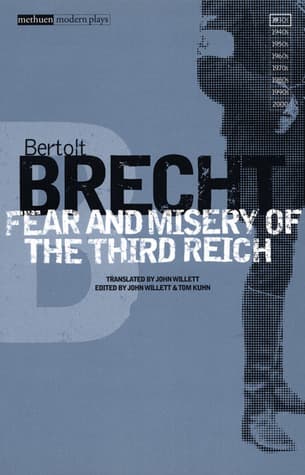
Bertolt Brecht (2002)
Genre
Politics
Reading Time
180 min
Key Themes
See below
Sign in to track this book
Through twenty-four chilling vignettes, Brecht exposes how Nazi terror crept into the daily lives of ordinary Germans, revealing a society suffocated by suspicion and fear.
“The great thing is that you can still feel happy, even if you are a German.”
— From 'The Jewish Wife', Martha talks to her husband about her forced departure.
“They say the Führer is very ill. He has a growth in his stomach. But they won't say it in the papers.”
— From 'The Spy', a husband and wife discuss rumors about Hitler.
“It's all very well, all this talk about the 'new Germany'. But what's new about it?”
— From 'The Chalk Cross', a woman questions the supposed changes in society.
“You can't trust anyone anymore. Not even your own brother. Especially not your own brother.”
— From 'The Informer', a man expresses his paranoia about being reported.
“We're not allowed to read the foreign newspapers. They say they're full of lies. But I think they're full of truth.”
— From 'The Old Man', an elderly man reflects on censorship.
“The air is thick with fear. You can taste it. It's in the bread, in the water, in the very air we breathe.”
— From 'The Jewish Wife', Martha describes the oppressive atmosphere.
“They say that even the walls have ears now. So you have to be careful what you say, even to yourself.”
— From 'The Spy', a wife cautions her husband about surveillance.
“My son, he used to be so full of life. Now he just sits there, staring into space. They've broken him.”
— From 'The Chalk Cross', a mother laments her son's changed demeanor.
“It's a good thing to be loyal. But what if the cause you're loyal to is wrong?”
— From 'The Informer', a character questions blind loyalty.
“We used to sing songs of hope. Now we just sing songs of resignation.”
— From 'The Old Man', a character reflects on the loss of hope.
“They say that in a time of war, truth is the first casualty. But what if the war is against your own people?”
— A general observation on the nature of truth during conflict.
“The biggest lie is the one you tell yourself.”
— From 'The Jewish Wife', Martha confronts her husband's self-deception.
“Silence is not always consent. Sometimes it is pure terror.”
— A pervasive theme throughout the play, reflecting the fear that prevents people from speaking out.
“When injustice becomes law, resistance becomes duty.”
— While not a direct quote from the play, this sentiment encapsulates the underlying message and Brecht's broader political stance.
Ready to see how well you understood this book? Take our interactive quiz with 10 questions.
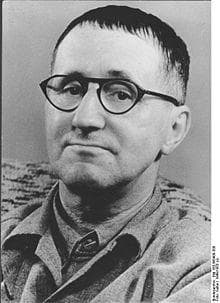
Bertolt Brecht was a highly influential German playwright, poet, and theatre director. He is best known for his epic theatre style, which aimed to provoke critical thought rather than emotional identification. His notable works include "The Threepenny Opera," "Mother Courage and Her Children," and "The Good Woman of Setzuan."

Brett Casper
5.0
Dirk Uffelmann
4.7

Winston S. Churchill
4.5
Chimamanda Ngozi Adichie
4.5
Will Durant
4.4
Thomas Sowell
4.4
W.E.B. Du Bois
4.3
Alan Moore
4.3