BookBrief
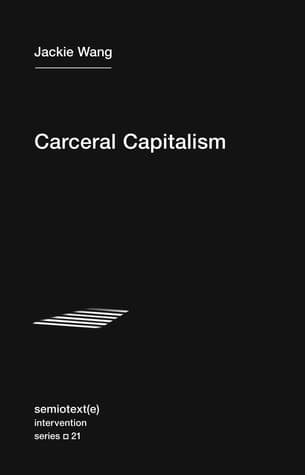
Carceral Capitalism cover
Archivist's Choice

Carceral Capitalism

Jackie Wang (2017)

Genre

Politics / Economics / Philosophy

Reading Time

12-15 hours (given its density and theoretical depth)

Key Themes

See below

Track Your Reading

Sign in to track this book

Jackie Wang shows how carceral power has grown, explaining how predatory lending, algorithmic control, and government practices extend the prison's reach beyond walls, trapping marginalized communities in a 'living hell' of debt and dehumanization.

Core Idea

Jackie Wang's "Carceral Capitalism" says that the modern carceral state goes beyond prisons. It is a widespread, profit-driven system that uses a "carceral continuum" to exploit marginalized communities. This continuum includes traditional incarceration, as well as debt, fines, algorithmic policing, and unstable labor. It creates a system where the government profits by taking wealth and labor from vulnerable groups and reinforcing racial and class differences. Wang believes that capitalism, in its current form, increasingly uses carceral methods to manage extra populations and keep social control. This turns the state into an entity that profits from the suffering and criminalization of its citizens. The book combines critical race theory, Marxist analysis, and psychoanalytic thought to show how this carceral logic affects many parts of life. This includes juvenile justice, mental health systems, how things are understood, and where predation happens. Wang questions common ideas of innocence and guilt, showing how the system's racism and classism make some groups seem suspicious, subject to surveillance, control, and exploitation. She calls for a new way to think about justice and freedom, asking readers to see and break down the linked systems of carceral capitalism that shape today's society.
Reading time
12-15 hours (given its density and theoretical depth)
Difficulty
Hard
✓ Read this if...
You are interested in a critical, interdisciplinary analysis of the carceral state, its economic underpinnings, and its pervasive impact on marginalized communities, moving beyond simple critiques of mass incarceration to understand how capitalism profits from punishment and precarity.
✗ Skip this if...
You prefer a purely policy-oriented or reformist approach to criminal justice, or if you are looking for an easy, introductory text on the topic without engaging with complex theoretical frameworks.

Core idea

The central argument and framework that powers the entire book.

Jackie Wang's "Carceral Capitalism" says that the modern carceral state goes beyond prisons. It is a widespread, profit-driven system that uses a "carceral continuum" to exploit marginalized communities. This continuum includes traditional incarceration, as well as debt, fines, algorithmic policing, and unstable labor. It creates a system where the government profits by taking wealth and labor from vulnerable groups and reinforcing racial and class differences. Wang believes that capitalism, in its current form, increasingly uses carceral methods to manage extra populations and keep social control. This turns the state into an entity that profits from the suffering and criminalization of its citizens.

The book combines critical race theory, Marxist analysis, and psychoanalytic thought to show how this carceral logic affects many parts of life. This includes juvenile justice, mental health systems, how things are understood, and where predation happens. Wang questions common ideas of innocence and guilt, showing how the system's racism and classism make some groups seem suspicious, subject to surveillance, control, and exploitation. She calls for a new way to think about justice and freedom, asking readers to see and break down the linked systems of carceral capitalism that shape today's society.

At a glance

Reading time

12-15 hours (given its density and theoretical depth)

Difficulty

Hard

Read this if...

You are interested in a critical, interdisciplinary analysis of the carceral state, its economic underpinnings, and its pervasive impact on marginalized communities, moving beyond simple critiques of mass incarceration to understand how capitalism profits from punishment and precarity.

Skip this if...

You prefer a purely policy-oriented or reformist approach to criminal justice, or if you are looking for an easy, introductory text on the topic without engaging with complex theoretical frameworks.

Key Takeaways

1

The Carceral Continuum

Incarceration extends far beyond prison walls, creating a pervasive system of control.

Quote

new carceral modes have blurred the distinction between the inside and outside of prison. As technologies of control are perfected, carcerality tends to bleed into society.

Wang says that modern incarceration is not just physical confinement. It includes a 'carceral continuum' that affects all of society. This continuum involves predatory policing, the financial side of fees and fines, and algorithmic surveillance. These create a system of control and punishment that reaches into daily life. The old idea of 'inside' versus 'outside' prison is less true now. Instead, carceral ideas and control methods spread into communities, especially marginalized ones. This means that even those not in prison are subje...

Supporting evidence

Wang's analysis of the 'new racial capitalism' highlights how parasitic governance and predatory lending—like subprime mortgages, student loans for sham colleges, and payday loans—dispossess individuals and communities, creating a debt trap that functions as a form of carceral control.

Apply this

Recognize that 'freedom' for many is a conditional state, constantly threatened by carceral forces. Advocate for policies that dismantle not just prisons, but also the broader systems of fines, fees, and predatory lending that constitute the carceral continuum.


carceral-continuumpredatory-policingdebt-trap
2

Parasitic Governance

The state extracts wealth and maintains control through five key techniques of dispossessive governance.

Quote

Parasitic governance... operates through five primary techniques: financial states of exception, automation, extraction and looting, confinement, and gratuitous violence.

Wang identifies 'parasitic governance' as a main part of carceral capitalism. It works through five methods. 'Financial states of exception' suspend normal economic rules for unchecked exploitation. 'Automation' is using algorithms and technology for control and surveillance. 'Extraction and looting' is taking wealth from marginalized communities through fees, fines, and predatory loans. 'Confinement' includes physical prison and social confinement by surveillance and economic instability. 'Gratuitous violence' is the state's willingn...

Supporting evidence

The political economy of fees and fines in cities like Ferguson exemplifies 'extraction and looting,' where municipal governments rely on revenue generated from minor infractions, trapping residents in cycles of debt and court appearances.

Apply this

Challenge policies that disproportionately penalize low-income communities through fines and fees. Support movements that seek to expose and dismantle the financial incentives behind policing and incarceration.

parasitic-governancefinancial-states-of-exceptionextraction-and-looting
3

Debt as a Carceral Tool

Predatory lending and financial obligations create a modern form of bondage, limiting agency and future-making.

Quote

When people are trapped in a cycle of debt it also can affect their subjectivity and how they temporally inhabit the world by making it difficult for them to imagine and plan for the future.

Wang shows how debt, from predatory lending and the financial system of fees and fines, is a strong carceral tool. This financial involvement—from subprime mortgages and student loans to car loans and bail bonds—traps people in a cycle. It makes it almost impossible to get financial stability or escape the carceral system. The mental cost is high: constant insecurity and not being able to plan for the future reduce a person's sense of self and ability to act. This is not just economic hardship; it is a type of time-based confinement. ...

Supporting evidence

The widespread practice of imposing exorbitant fees and fines for minor offenses, as documented in Ferguson, creates a system where individuals are perpetually indebted to the state, often leading to warrants and further entanglement with the justice system.

Apply this

Advocate for debt relief and reforms to predatory lending practices. Support community-based initiatives that provide financial literacy and legal aid to those trapped in debt cycles.

debt-bondagepredatory-lendingfinancial-precarity
4

The Psychic Toll of Dehumanization

Constant exploitation and surveillance inflict severe psychological damage, eroding self-worth and future prospects.

Quote

How does it feel to be routinely dehumanized and exploited by the police?—from Carceral Capitalism

Wang asks readers to consider the mental cost of constant dehumanization and exploitation, especially by law enforcement. The constant threat of being stopped, searched, fined, or arrested, often without good reason, creates fear, anxiety, and powerlessness. This harassment reduces a person's self-worth and dignity, making it hard to trust institutions or see a stable future. The carceral system does not just punish; it harms the mind, leaving deep scars that affect mental health, community ties, and the ability to act together. This ...

Supporting evidence

Wang's work directly addresses the lived experience of residents in places like Ferguson, where predatory policing contributes to 'living hells' by making it impossible to escape cycles of debt and harassment, leading to deep-seated trauma.

Apply this

Support mental health services for communities impacted by carceral violence. Prioritize restorative justice practices that acknowledge and address the psychological harm caused by the system.

psychic-tolldehumanizationpolice-brutality
5

Against Innocence

Liberal anti-racist politics often fail by demanding 'innocence' from victims, rather than critiquing systemic power.

Quote

Wang's influential critique of liberal anti-racist politics, 'Against Innocence,'

In her essay 'Against Innocence,' Wang criticizes a common flaw in liberal anti-racist discussions: asking victims of state violence to prove their 'innocence' to get sympathy or justify their rights. This approach unintentionally supports the power systems it tries to break down. It puts the burden of proof on the oppressed instead of focusing on the injustice and violence of the carceral state. Focusing on individual 'innocence' distracts from the systemic nature of racialized violence and exploitation. It suggests that some victims...

Supporting evidence

The public discourse surrounding police killings often scrutinizes the victim's past, looking for reasons to justify the violence, rather than unequivocally condemning the state's actions.

Apply this

Reject the demand for 'perfect victims' in discussions of state violence. Center critiques on the systems of power and violence, not the moral purity of those affected.

against-innocenceliberal-anti-racismsystemic-violence
6

Algorithmic Policing and Cybernetic Governance

Technology is deployed not for justice, but to optimize control, surveillance, and extraction.

Quote

Included in this volume is Wang's influential critique of liberal anti-racist politics, 'Against Innocence,' as well as essays on RoboCop, techno-policing, and the aesthetic problem of making invisible forms of power legible.

Wang explores the implications of 'algorithmic policing' and 'cybernetic governance.' She shows how technology, far from being neutral, is used to increase carceral control. These systems use data and algorithms to predict crime, find 'risky' individuals, and improve surveillance. They often reinforce existing biases and target marginalized communities more. The promise of efficiency and objectivity hides a deeper goal: to make invisible forms of power better at taking wealth and keeping social order through technology. This techno-po...

Supporting evidence

Wang's essays on RoboCop and techno-policing explore how the fantasy of automated law enforcement translates into real-world applications of predictive policing and surveillance technologies that expand the carceral state.

Apply this

Advocate for transparency and accountability in the development and deployment of policing technologies. Challenge the narrative that technology inherently leads to more just or efficient policing.

algorithmic-policingcybernetic-governancetechno-policing
7

The Biopolitics of Juvenile Delinquency

The state manages and categorizes youth to control future populations and reinforce social hierarchies.

Quote

The essays illustrate various aspects of the carceral continuum, including the biopolitics of juvenile delinquency...

Wang looks at the 'biopolitics of juvenile delinquency.' She shows how the state acts in the lives of young people, especially those from marginalized communities. It does this not just to punish, but to manage and categorize future populations. This involves defining and labeling certain behaviors as 'delinquent,' often with racial biases. Then, these youth are put into a system meant to control their development and path. The goal is to control potential threats to social order before they happen and to reproduce existing social dif...

Supporting evidence

The disproportionate arrests and incarceration rates of Black and brown youth for minor offenses, and their channeling into punitive carceral systems rather than educational or supportive ones.

Apply this

Support programs that divert youth from the carceral system and invest in community-based alternatives. Advocate for policy changes that challenge the criminalization of youth behavior.

biopoliticsjuvenile-delinquencyyouth-incarceration
8

Aesthetic Problem of Legibility

Making invisible forms of carceral power visible is crucial for resistance and understanding.

Quote

...the aesthetic problem of making invisible forms of power legible.

Wang discusses the 'aesthetic problem' of making invisible carceral power clear. Much of carceral capitalism works through subtle, harmful, and often abstract methods—like algorithms, financial policies, and bureaucracy—that are hard to see, understand, or critique. The challenge is to find new ways to show and explain these hidden control structures so they can be recognized, challenged, and eventually dismantled. This is not just an academic task; it is an important political one. If people cannot see how they are oppressed, resista...

Supporting evidence

Wang's essays on the political economy of fees and fines, and algorithmic policing, are direct attempts to make the abstract financial and technological mechanisms of carceral power understandable.

Apply this

Support artists, writers, and activists who create work that exposes and critiques hidden systems of power. Engage in critical analysis to connect seemingly disparate issues to the broader carceral continuum.

legibilityinvisible-powercarceral-aesthetics
9

The Spatial Character of Predation

Predatory lending disproportionately targets and exploits specific geographic areas and communities.

Quote

Predatory lending has a decidedly spatial character and exists in many forms...

Wang emphasizes the 'spatial character' of predatory lending. She argues that these exploitative financial practices are not random. They specifically target certain geographic areas and communities. These are often neighborhoods already disadvantaged by past disinvestment, racial segregation, and economic instability. Practices like subprime mortgages, payday loans, and rent-to-own schemes are concentrated in these areas. They take wealth and ensure that residents stay trapped in cycles of debt and instability. This spatial targeting...

Supporting evidence

The concentration of subprime mortgage lending in historically redlined neighborhoods, or the proliferation of payday loan storefronts in low-income communities, demonstrates this spatial targeting.

Apply this

Investigate and challenge zoning laws and financial regulations that enable the concentration of predatory businesses in specific communities. Support community-led development initiatives that build local wealth and autonomy.

spatial-inequalityredliningzones-of-dispossession

Critical analysis

Notable Quotes

The carceral state is not a deviation from liberal democracy but a constitutive feature of it.

Wang argues that mass incarceration is integral to the functioning of modern capitalist states, not an aberration.

Debt is not just an economic relation but a technology of racialized social control.

Explores how debt functions as a mechanism to enforce racial hierarchies and limit freedom.

The prison is a site where the logic of capitalism is distilled to its purest form.

Describes prisons as extreme manifestations of capitalist exploitation and dehumanization.

Financialization has turned every aspect of life into a potential site of extraction.

Critiques how modern finance capitalism monetizes and exploits even personal and social realms.

Predatory lending is a form of economic violence that targets the most vulnerable.

Highlights how exploitative financial practices disproportionately harm marginalized communities.

The carceral continuum extends beyond prison walls into schools, neighborhoods, and digital spaces.

Argues that surveillance and control mechanisms permeate all aspects of society.

Racial capitalism operates by rendering black life disposable and profitable.

Examines how capitalism historically and currently exploits racial differences for economic gain.

The state uses debt as a way to criminalize poverty and maintain social order.

Discusses how financial obligations become tools for legal punishment and control.

Abolition is not just about tearing down prisons but building new forms of sociality.

Presents prison abolition as a constructive project of creating alternative communities and economies.

Algorithmic governance reproduces and intensifies existing biases under the guise of neutrality.

Critiques how automated systems in policing and finance perpetuate discrimination.

The privatization of public services turns citizens into consumers of their own surveillance.

Analyzes how market-based reforms in areas like policing create perverse incentives.

Carceral logic transforms social problems into individual pathologies to be managed.

Argues that systemic issues are recast as personal failures requiring punitive solutions.

Financial inclusion programs often function as new modes of capture and data extraction.

Critiques initiatives that bring marginalized groups into banking systems on exploitative terms.

The threat of violence underpins all credit relations in racial capitalism.

Connects economic coercion to physical and structural violence against racialized groups.

Quiz

Test Your Knowledge

Ready to see how well you understood this book? Take our interactive quiz with 10 questions.

10
Questions
~5
Minutes
?
Best Score

Key Questions (FAQ)

Carceral capitalism refers to a contemporary economic system where incarceration techniques extend beyond prisons to create a continuum of control through predatory financial practices, algorithmic policing, and parasitic governance that disproportionately targets marginalized communities, particularly Black Americans.

About the author