“The Presidency is a lonely office, but it need not be an isolated one.”
— President Douglass is reflecting on the nature of his new role.

Genre
Politics / Thriller / Historical Fiction / Mystery / Romance
Reading Time
1280 min
Key Themes
See below
Sign in to track this book
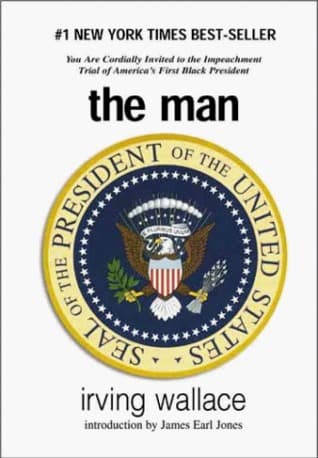
In 1964, a sudden tragedy makes Douglass Dilman the first Black President, forcing him into a storm of racial bias, political plots, and personal scandal, leading to a historic impeachment trial that threatens American power.
The story begins with a terrible accident in Frankfurt, Germany. A building collapses during a diplomatic meeting, killing the President of the United States, William Alfred Eaton, and his Vice President, Noah Calvin. According to the line of succession, the Speaker of the House, Douglass Dilman, a Black man and former Senator from California, becomes the 49th President. This unexpected event immediately creates political and racial tension across the United States and worldwide. Dilman, at first overwhelmed, must quickly learn the huge responsibilities of the office while facing deep prejudice and doubt from his own government and the public.
After becoming President, Dilman faces immediate and widespread opposition. Many people, especially in the Southern states, refuse to accept him because of his race. Senator Lafe Harkness, a powerful and openly racist figure, becomes a main enemy, vowing to remove Dilman from office. The White House staff, mostly from the previous administration, includes both cautious supporters and clear saboteurs. Everything Dilman does is watched closely, and the media, both at home and abroad, focuses on the newness and controversy of a Black man in the Oval Office, showing the deep racial divisions in American society.
President Dilman's first big international test is a growing crisis in the Congo. A coup attempt threatens to destabilize the region, with major effects on American interests and global stability. Dilman, wanting to show his leadership and avoid looking weak, takes a firm but careful approach. He manages complex diplomatic relations, especially with European and African nations, showing his intelligence and determination. This early success, however, does little to calm the domestic opposition, who continue to question his abilities and right to lead, often using racist language in their criticisms.
At home, President Dilman prioritizes a comprehensive civil rights bill. This action further increases racial tensions across the nation. Protests, both for and against the bill, break out in major cities, sometimes becoming violent. Dilman is pressured to either back down or take a stronger stance, but he remains committed to the law. He faces strong opposition in Congress, especially from Southern Democrats led by Senator Harkness. The struggle to pass the bill tests his political skill and his ability to unite a deeply divided country, all while dealing with the constant threat of civil unrest.
As the pressures of the presidency grow, President Dilman's private life becomes a weapon for his enemies. His estranged daughter, Wanda, is in a controversial relationship with a white man. This gives his enemies material for racist attacks and attempts to damage Dilman's moral standing. Additionally, his political enemies uncover a past, secret relationship Dilman had with a white woman, threatening to become a major scandal. These personal attacks aim to undermine his credibility and exploit racial prejudices, forcing Dilman to deal with the very public nature of his job while protecting his family and his reputation.
Driven by his strong racial prejudice and political ambition, Senator Lafe Harkness starts to build a case for President Dilman's impeachment. He gathers a group of like-minded senators and uses every available scandal, real or made up, to portray Dilman as unfit for office. Harkness's plan involves using the controversy around Dilman's daughter, his past relationships, and any perceived mistakes in his policy decisions. The threat of impeachment hangs over the White House, creating an atmosphere of suspicion and forcing Dilman to prepare for the fight of his political life.
The impeachment process against President Douglass Dilman officially begins in the Senate. This marks a historic and tense moment for the nation. Senator Harkness presents several charges, including alleged abuses of power, moral failings, and being unfit for office. The trial becomes a public show, with intense media coverage and a deeply divided public watching every development. Dilman, advised by his legal team, must defend himself against many accusations, many of which are thinly veiled attacks on his race and character. The political stakes are very high, with the future of his presidency and the nation hanging in the balance.
During the impeachment trial, President Dilman's defense team systematically disproves the prosecution's case. They reveal the racist reasons behind Senator Harkness's actions and show the lack of real evidence for many of the charges. Key witnesses are called, and the truth behind some of the alleged scandals begins to appear, showing them as misunderstandings or politically motivated lies. The trial becomes a chance for Dilman to explain his vision for the country and to directly confront the prejudice he has faced, gaining some public sympathy and support as the trial continues.
After a difficult and emotional trial, the Senate votes on the articles of impeachment. The verdict is close, but President Dilman is found not guilty of the charges, allowing him to stay in office. Despite the win, the experience has affected Dilman and the nation. The trial exposed the deep-seated racial prejudices and political divisions in the country. Dilman must now decide how to move forward, whether to seek reconciliation or to continue fighting against those who tried to remove him. His presidency, though saved, is forever changed by the ordeal.
After the impeachment trial, President Dilman thinks about his journey from an unknown senator to the first Black President. He acknowledges the huge challenges and personal sacrifices, but also the progress made in civil rights and showing that a Black man could lead the nation. While divisions remain, Dilman's survival of the impeachment and his continued dedication to his office offer hope for a more unified future. The book ends with Dilman looking to the future, determined to continue his work despite the problems, having created a unique and lasting legacy.
The Protagonist
From a reluctant, accidental leader, Dilman transforms into a steadfast and principled President who endures immense personal and political attacks to uphold his oath and advance civil rights.
The Antagonist
Harkness remains a static antagonist, unwavering in his racist motivations and tactics, ultimately failing in his attempt to depose Dilman but revealing the depth of societal prejudice.
The Supporting
Wanda navigates the intense public scrutiny and the weaponization of her personal life, ultimately standing by her father despite the difficulties.
The Supporting
Foster remains a loyal and effective aide, his commitment to Dilman strengthening as he witnesses the President's resilience.
The Supporting
Initially a cautious but experienced aide, Miller develops a deep respect and loyalty for Dilman, becoming an indispensable part of his administration.
The Supporting
Gold remains a consistent and unwavering advocate for Dilman and his policies, proving to be a valuable ally throughout the impeachment crisis.
The Mentioned
His death serves as the inciting incident, allowing Dilman's story to begin.
The Mentioned
His death, along with Eaton's, serves as the critical plot device to elevate Dilman to the presidency.
The most important theme explores the deep racial prejudice in American society, especially in the 1960s. Dilman's presidency faces constant challenges from open racism, like from Senator Harkness, and subtle biases from others. The book shows the institutional and personal barriers a Black man faces in a position of ultimate power, from the initial shock to organized efforts to discredit and remove him based on his race. The civil rights movement and related unrest provide an important background, highlighting the nation's struggle with racial equality. For example, Harkness's impeachment efforts are clear racist attacks.
“He was the Man. A Negro Man. And that, more than anything else, was the problem.”
The book details the huge personal and political pressures that come with being president. Douglass Dilman, an accidental President, must deal with international crises, domestic unrest, political schemes, and intense public scrutiny. He faces the challenge of uniting a divided nation, making hard decisions, and keeping his integrity while constantly under attack. This theme explores the isolation of the office and the sacrifices required, as Dilman's private life is examined and his every action watched. His struggle to balance duty, morality, and political survival shows this burden, especially during the impeachment trial.
“The weight of the world, he thought, was a heavy cloak, and it settled most heavily on the man who wore the highest office.”
This theme explores how political power works, both fairly and unfairly. It looks at how power is used, misused, and fought over in Washington. Senator Harkness's ruthless pursuit of Dilman's impeachment, driven by racial hatred and ambition, shows the corrupting effect of power and prejudice. The secret deals, strategic leaks, and manipulation of public opinion during the impeachment trial highlight the darker side of political maneuvering. The book contrasts Harkness's corrupt use of power with Dilman's principled approach, showing the constant battle between integrity and political gain.
“In Washington, power was not given; it was taken, or it was lost.”
The book explores what it means for a Black man to hold the highest office in a mostly white nation. Dilman's identity as a Black man is central to his presidency, shaping how people see him, how he governs, and the problems he faces. He becomes a symbol of hope for many, and a target of fear and hatred for others. This theme explores the psychological impact of being a pioneer, the responsibility of representing an entire race, and the struggle to define oneself beyond racial categories while also acknowledging their deep importance. His presence forces the nation to confront its identity and representation.
“He was not just a President; he was a symbol, a mirror reflecting the best and worst of America.”
The sudden, unexpected death of the President and Vice President.
The catastrophic building collapse in Frankfurt that kills President Eaton and Vice President Calvin is the central 'deus ex machina' that sets the entire plot in motion. This sudden, unforeseeable event is the sole reason Douglass Dilman, the Speaker of the House, is elevated to the presidency. It serves as a tragic catalyst, immediately thrusting the protagonist into an extraordinary situation without any prior political maneuvering on his part, thus creating the central conflict and premise of the novel. This device bypasses conventional political succession struggles to immediately establish the core racial and political drama.
A dramatic legal and political battle to remove the President.
The impeachment trial of President Dilman serves as the novel's climactic plot device. It provides a structured framework for the central conflict, allowing for the public airing of grievances, the revelation of political machinations, and the direct confrontation between Dilman and his adversaries. This device ratchets up tension, forcing Dilman to defend his character and presidency under intense scrutiny. It encapsulates the themes of prejudice, political power, and the burden of leadership, culminating in a high-stakes resolution that determines the fate of Dilman's presidency and symbolizes the nation's struggle with racial equality.
The constitutional mechanism that elevates Dilman.
The U.S. Presidential line of succession is a fundamental plot device that dictates how Douglass Dilman assumes the presidency. By having both the President and Vice President perish, the novel meticulously adheres to this constitutional process, making Dilman's ascension legally legitimate, despite the unprecedented racial implications. This device grounds the extraordinary premise in a realistic political framework, lending credibility to the story and emphasizing that Dilman's position is not a coup but a lawful, albeit shocking, consequence of established law, thereby highlighting the racial prejudice of those who still challenge his legitimacy.
“The Presidency is a lonely office, but it need not be an isolated one.”
— President Douglass is reflecting on the nature of his new role.
“Power, like a dangerous drug, can be intoxicating, and its withdrawal, agonizing.”
— A character observes the impact of power on political figures.
“History does not judge intentions, only results.”
— A seasoned politician offers advice to a newcomer.
“To lead, one must sometimes stand alone, even against the tide of popular opinion.”
— President Douglass makes a difficult decision that is unpopular.
“The truth is a weapon, and like all weapons, it can be used for good or ill.”
— A character debates the ethics of revealing sensitive information.
“In politics, a man is often judged not by his character, but by his perceived weaknesses.”
— A discussion about the media's portrayal of public figures.
“Sometimes the greatest victories are won not on the battlefield, but in the quiet corridors of negotiation.”
— A character reflects on diplomatic efforts to prevent a crisis.
“Fear is a powerful motivator, but hope is an even stronger one.”
— President Douglass tries to inspire a divided nation.
“The past is never truly dead; it merely waits for an opportune moment to resurface.”
— A character uncovers a long-buried secret that impacts the present.
“A leader must be a shepherd, not a wolf.”
— An analogy used to describe the ideal qualities of a president.
“Even in the darkest times, there is always a flicker of light, if one only chooses to see it.”
— A moment of optimism amidst political turmoil.
“The greatest danger is not in falling, but in refusing to get back up.”
— President Douglass faces a significant setback and considers his options.
“Love, even in the most tumultuous of circumstances, can be a steadfast anchor.”
— A character finds solace and strength in a romantic relationship.
“The weight of the world rests on few shoulders, but the burden is felt by all.”
— A reflection on the collective impact of presidential decisions.
Ready to see how well you understood this book? Take our interactive quiz with 10 questions.
Biography coming soon.

Brett Casper
5.0

Dirk Uffelmann
4.7

Winston S. Churchill
4.5

Chimamanda Ngozi Adichie
4.5

Will Durant
4.4
Thomas Sowell
4.4

W.E.B. Du Bois
4.3

Alan Moore
4.3