
Explore our collection of economics books. Discover key insights and summaries from the best titles in this genre.
Showing 24 of 84 books

by W. Edwards Deming
4.1(3,654)
Deming's major work tells American businesses to stop focusing on short-term profits and instead commit to quality and innovation, guided by his 14 Points, or face decline.
by Thomas Sowell
4.2(3,635)
Sowell examines common economic myths, revealing their subtle appeal, from urban decay to gender pay gaps, and provides readers with accessible, real-world explanations.
by Felix Dennis
4.2(3,597)
Felix Dennis, a self-made millionaire, shares the plain truth and often hard lessons from his journey 'from a South London lad' to immense wealth, showing that getting rich is a learnable skill available to anyone with enough determination.
by Adam Smith
4.1(3,556)
Adam Smith's foundational work explains that true virtue and a moral life go beyond self-interest, coming instead from our human ability for sympathy and the judgments of an 'impartial spectator'.
by Tony Judt
4.0(3,349)
Tony Judt examines the decline of the postwar social contract, calling for a return to social democratic principles and collective responsibility to fix our current problems.
by Theodore J. Kaczynski
3.9(3,228)
Ted Kaczynski's manifesto argues that the Industrial Revolution is a catastrophic turning point, condemning humanity to an unfulfilling, undignified existence and the natural world to ruin, all made worse by unchecked technological advancement.
by Terry Eagleton
3.9(3,048)
Terry Eagleton, with his signature wit, dissects ten common myths about Marxism, showing its lasting relevance and frequent misrepresentation in today's capitalist world.
by Palagummi Sainath
4.3(2,615)
Through vivid, on-the-ground reporting, Sainath exposes the absurdities and failures of India's development policies, revealing the human cost behind the statistics of poverty and displacement.
by John Kenneth Galbraith
4.0(2,422)
Galbraith criticizes classical economics, showing how an affluent society still focuses on scarcity, creating artificial desires while neglecting public good for private spending.
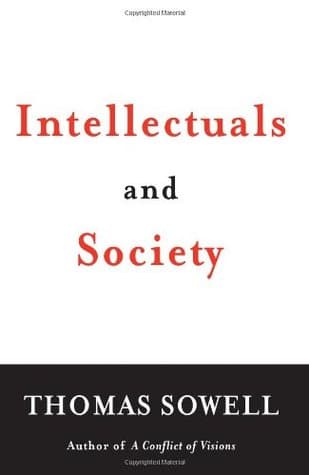
by Thomas Sowell
4.3(2,278)
Thomas Sowell explains how modern intellectuals, despite often being wrong, subtly influence democratic societies by shaping public opinion rather than directly advising rulers, making them a powerful but unaccountable force.
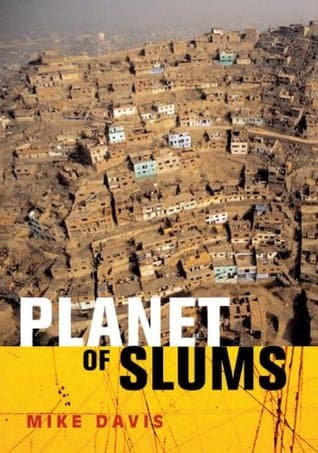
by Mike Davis
3.9(2,235)
Mike Davis chillingly forecasts a global future where cities, for billions, become Malthusian traps of 'perverse' growth, devoid of industry and development, threatening to transform the planet into an archipelago of ever-expanding slums.
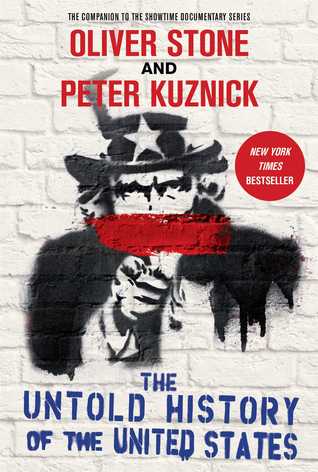
by Oliver Stone
4.2(2,218)
Oliver Stone and Peter Kuznick expose the truth about American foreign policy, from unnecessary atomic bombings to supporting dictators and prolonging the Cold War, challenging the idea of American exceptionalism.
by Benjamin Franklin
4.1(2,092)
Through the voice of Father Abraham, Benjamin Franklin distills a quarter-century of Poor Richard's wisdom into a timeless sermon on the industrious grit and shrewd frugality required to forge one's own prosperity.
by Paul Hawken
4.1(2,091)
Paul Hawken's "The Ecology of Commerce" presents a new way for businesses to move from harmful practices to ones that restore the planet, showing that economic health and ecological well-being depend on each other.
by Erich Fromm
4.3(2,003)
Erich Fromm examines the 'pathology of normalcy' in Western capitalism, showing how societal sickness isolates individuals and suggesting radical community-based solutions for mental health, love, and freedom.

by Arundhati Roy
4.0(1,877)
In post-nuclear India, Arundhati Roy uses her writing to expose power, politics, and the struggles of marginalized people in essays that mourn a lost world and champion the voiceless.
by Jean Merrill
4.1(1,822)
In 1960s Cleveland, a sixth-grader's quest to save on toothpaste unexpectedly becomes a million-dollar empire, showing that ingenuity and basic math can conquer the market.
by Robert Axelrod
4.2(1,649)
Axelrod shows how cooperation can emerge and last, even among self-interested groups without a central authority, through the surprising success of 'Tit for Tat' in game theory.

by Amartya Sen
4.0(1,630)
Amartya Sen argues against seeking a perfectly just society, instead favoring a practical, comparative approach to justice that addresses real-world inequalities by considering diverse viewpoints.
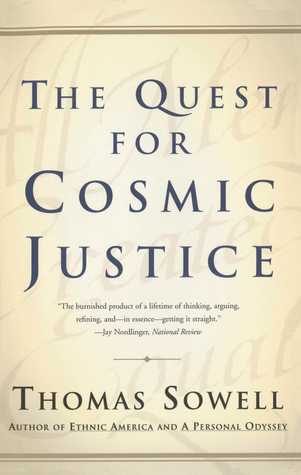
by Thomas Sowell
4.4(1,583)
Sowell shows how seeking an ill-defined 'cosmic justice' undermines true equality and freedom, slowly eroding the foundations of the American Revolution through well-intentioned but flawed social ideas.
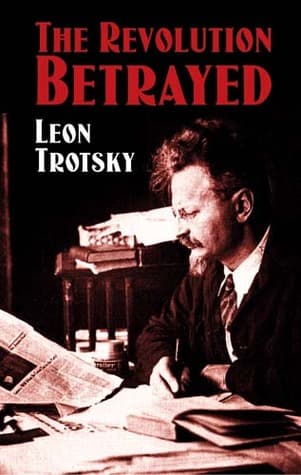
by Leon Trotsky
4.0(1,415)
Trotsky explains how the Soviet Union, under Stalin, fell from a revolutionary state to a totalitarian one, showing how bureaucratic corruption and the rejection of true socialist goals betrayed the workers' state.
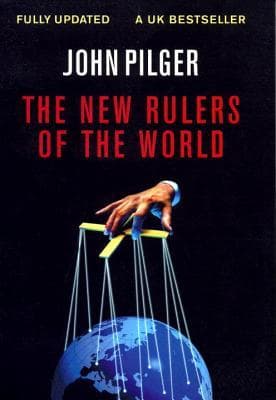
by John Pilger
4.1(1,080)
John Pilger exposes the brutal realities of Western imperialism, revealing how global economic agendas have fueled violence and subjugation from Indonesia to Iraq and even within his homeland, Australia.
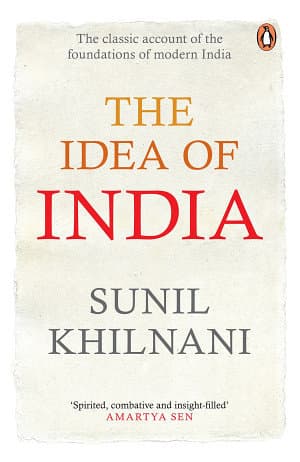
by Sunil Khilnani
3.8(888)
Sunil Khilnani's 'The Idea of India' explores the unlikely seventy-year journey of the world's largest democracy, showing the connection between its founding ideals of pluralism and development, and the constant pressures that challenge its identity.
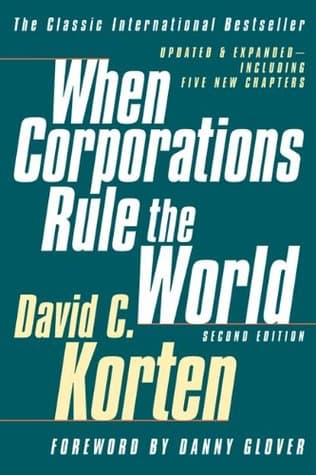
by David C. Korten
4.1(785)
Korten's book analyzes multinational corporations' growing global power and introduces the Living Democracy movement as a hopeful alternative to a system that favors profit over people and the planet.