BookBrief
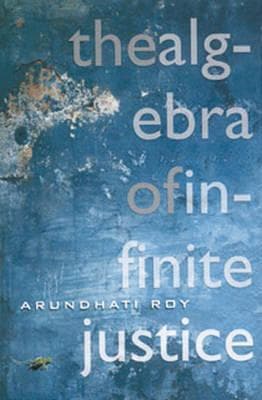
The Algebra of Infinite Justice cover
Archivist's Choice

The Algebra of Infinite Justice

Arundhati Roy (2001)

Genre

Politics / History / Economics

Reading Time

240 min

Key Themes

See below

Track Your Reading

Sign in to track this book

In post-nuclear India, Arundhati Roy uses her writing to expose power, politics, and the struggles of marginalized people in essays that mourn a lost world and champion the voiceless.

Core Idea

Arundhati Roy's "The Algebra of Infinite Justice" argues that dominant global powers, especially the United States and its allies, along with institutions like the World Bank and IMF, create systemic injustice through militarism, economic exploitation, and a manufactured consensus. She says that talk of democracy, development, and humanitarian aid often hides neo-colonial goals, leading to the mistreatment of marginalized groups and the suppression of disagreement. The book explains how nuclear weapons, large construction projects, and the 'War on Terror' control people, concentrating wealth and power in a few hands while harming many lives and environments. Roy states that true justice is not a simple equation solvable by these powerful groups. Instead, it is an ongoing fight against the violence in their systems. She stresses that language shapes perceptions and justifies terrible acts, and she supports individual and group resistance, storytelling, and a strong commitment to truth as ways to challenge common narratives and imagine different futures.
Reading time
240 min
Difficulty
Medium
✓ Read this if...
You are interested in a fierce, critical analysis of global power dynamics, the impact of neoliberal policies, and the hypocrisy of Western foreign policy, especially in the post-9/11 era. This book is for those who seek to understand the interconnectedness of political, economic, and social injustices and are open to challenging dominant narratives.
✗ Skip this if...
You prefer a purely academic, detached analysis, or are uncomfortable with passionate, polemical writing that is deeply critical of Western governments and global capitalism. If you are looking for prescriptive solutions rather than incisive critique, this might not be for you.

Core idea

The central argument and framework that powers the entire book.

Arundhati Roy's "The Algebra of Infinite Justice" argues that dominant global powers, especially the United States and its allies, along with institutions like the World Bank and IMF, create systemic injustice through militarism, economic exploitation, and a manufactured consensus. She says that talk of democracy, development, and humanitarian aid often hides neo-colonial goals, leading to the mistreatment of marginalized groups and the suppression of disagreement. The book explains how nuclear weapons, large construction projects, and the 'War on Terror' control people, concentrating wealth and power in a few hands while harming many lives and environments.

Roy states that true justice is not a simple equation solvable by these powerful groups. Instead, it is an ongoing fight against the violence in their systems. She stresses that language shapes perceptions and justifies terrible acts, and she supports individual and group resistance, storytelling, and a strong commitment to truth as ways to challenge common narratives and imagine different futures.

At a glance

Reading time

240 min

Difficulty

Medium

Read this if...

You are interested in a fierce, critical analysis of global power dynamics, the impact of neoliberal policies, and the hypocrisy of Western foreign policy, especially in the post-9/11 era. This book is for those who seek to understand the interconnectedness of political, economic, and social injustices and are open to challenging dominant narratives.

Skip this if...

You prefer a purely academic, detached analysis, or are uncomfortable with passionate, polemical writing that is deeply critical of Western governments and global capitalism. If you are looking for prescriptive solutions rather than incisive critique, this might not be for you.

Key Takeaways

1

The End of Imagination: Nuclear Folly

Roy mourns the death of a world where humanity wasn't held hostage by nuclear weapons.

Quote

My world has died. And I write to mourn its passing.

Arundhati Roy's first essay, 'The End of Imagination,' is a deep expression of sorrow for a world changed forever by India's nuclear tests in 1998. She argues that having and testing nuclear weapons shows a major failure of human imagination, leading to a future always threatened by annihilation. This is not just a criticism of global strategy but a personal feeling of loss for shared innocence and the chance for a truly peaceful future. The essay criticizes the intense nationalism that often comes with military advancements, showing ...

Supporting evidence

Roy's visceral reaction to India's 1998 nuclear tests and her declaration of 'my world has died' as a direct consequence.

Apply this

Reflect on how nationalistic narratives can obscure critical ethical considerations in policy-making. Engage in discussions that question the true costs and benefits of military power beyond immediate strategic gains.


nuclear-proliferationnationalismexistential-threat
2

Democracy's Façade: The Illusion of Choice

Roy dissects how corporate power and media manipulation undermine genuine democratic participation.

Quote

Democracy is the greatest show on earth. It's where the rich and powerful pretend to care about the poor and powerless.

Roy consistently exposes how democracy is merely performed in many modern nations, especially India. She argues that what often seems like democracy is actually a complex system designed to keep things as they are and to give power to a few chosen people—often working with corporations. The idea of choice is maintained through controlled stories in mainstream media and by ignoring opposing voices. Elections become shows rather than true reflections of what people want, with issues like economic inequality, environmental damage, and hu...

Supporting evidence

Her analysis of how large corporations influence political decisions and media narratives in India, often at the expense of marginalized communities and environmental protection.

Apply this

Critically analyze news sources for underlying biases and corporate influence. Support independent media and grassroots movements that genuinely advocate for the voiceless. Question political rhetoric that simplifies complex issues.

corporate-powermedia-biaspolitical-disillusionment
3

The Violence of Development

Large-scale development projects are often instruments of dispossession and environmental destruction.

Quote

Big dams are to a nation what nuclear bombs are to the world. They're a weapon of mass destruction.

A main theme in Roy's essays is the terrible human and environmental cost of 'development' projects, especially large dams. She argues that these huge projects, often promoted as symbols of progress and national pride, are actually tools of great harm against indigenous communities, rural populations, and the environment. The displacement of millions, the destruction of livelihoods, and irreversible environmental damage are rarely considered in the grand stories of economic growth. Roy questions the very meaning of 'development,' show...

Supporting evidence

Her extensive writings and activism against the Narmada Dam project in India, detailing the displacement of tribal communities and the ecological impact.

Apply this

Investigate the human and environmental impact of large infrastructure projects in your region or globally. Advocate for community-led development models that prioritize local needs and ecological sustainability. Support organizations fighting for indigenous rights.

forced-displacementenvironmental-justiceindigenous-rightseconomic-imperialism
4

The Charity Industrial Complex

Western aid and NGOs can inadvertently perpetuate systemic inequalities and dependency.

Quote

The corporate-philanthropic complex is not a solution, but an extension of the problem.

Roy critically examines the role of international aid organizations and NGOs, especially those funded by Western governments and large corporations. She argues that while they seem kind, these groups can sometimes remove the politics from poverty and injustice, turning systemic problems into humanitarian crises that need 'technical solutions' instead of basic political change. By focusing on symptoms rather than root causes, they can unintentionally strengthen existing power structures, making local populations dependent on outside he...

Supporting evidence

Her critique of the Gates Foundation and other large philanthropic organizations, questioning their influence on public policy and their role in maintaining the status quo.

Apply this

Scrutinize the funding sources and political implications of large NGOs and aid organizations. Prioritize supporting local, community-led initiatives that empower people to advocate for their own rights and needs. Question narratives that frame global poverty as a purely technical problem.

neoliberalismpostcolonialismdependency-theorysocial-justice
5

Language as a Weapon: Dehumanization and Control

Roy highlights how language is manipulated to justify violence, oppression, and maintain power.

Quote

To call a spade a spade is to risk being called a terrorist.

Roy is skilled at analyzing how language is used to manipulate, showing how it cleans up terrible acts, demonizes those who disagree, and controls public opinion. She reveals the polite terms used by governments and corporations to hide violence and exploitation—'collateral damage' for civilian deaths, 'development' for taking land, 'freedom fighters' for rebels, and 'terrorists' for those who resist. By controlling the story and labeling opponents, those in power can justify their actions and discredit valid complaints. Roy's essays ...

Supporting evidence

Her analysis of how the term 'terrorism' was broadly applied after 9/11 to justify a wide range of state actions and suppress dissent, both domestically and internationally.

Apply this

Pay close attention to the language used by politicians, media, and corporations, especially when discussing conflict, poverty, or social unrest. Identify euphemisms and loaded terms. Challenge narratives that dehumanize groups of people or simplify complex political situations.

propagandadiscourse-analysissemantic-manipulationdehumanization
6

The Interconnectedness of Global Injustice

Local struggles for justice are inextricably linked to global economic and political systems.

Quote

There's really no such thing as the 'voiceless.' There are only the deliberately silenced, or the preferably unheard.

Roy consistently shows that the seemingly separate injustices she discusses—from nuclear weapons and large dams in India to the Iraq War and corporate globalization—are not isolated events. Instead, they are parts of a deeply connected global system. She traces the lines of influence from multinational corporations and international financial institutions to national governments and local communities. This global network of power, she argues, maintains a cycle of exploitation, resource extraction, and inequality that crosses national ...

Supporting evidence

Her essays draw explicit connections between the economic policies of the IMF/World Bank, the actions of multinational corporations, and the suffering of marginalized communities in India and beyond.

Apply this

Seek to understand the global context of local issues. Support movements that build solidarity across borders and address the systemic roots of injustice. Recognize that your own consumption choices and political actions have global implications.

globalizationimperialismsystemic-injusticesolidarity
7

The Power of Dissent and Storytelling

Even in the face of overwhelming power, individual voices and alternative narratives are vital acts of resistance.

Quote

Another world is not just possible, she is on her way. On a quiet day, I can hear her breathing.

Despite the grim realities she describes, Roy's work ultimately confirms the power of disagreement and alternative stories. She herself demonstrates this, using her platform to share the experiences and views of marginalized people, offering a different story from official histories and mainstream media. She argues that speaking truth to power, refusing to be silent, and imagining different futures are radical and necessary forms of resistance. Her essays are not just analytical; they are deeply human, full of empathy and a strong com...

Supporting evidence

Roy's own commitment to writing and activism, even when facing criticism and potential legal repercussions, serves as a testament to the power of a single voice.

Apply this

Cultivate your own critical voice and seek out diverse perspectives. Support writers, artists, and activists who challenge dominant narratives. Engage in public discourse with integrity and a commitment to truth, even when it's uncomfortable.

resistancecounter-narrativeactivismfreedom-of-speech
8

The War on Terror: A Global Pretext

The 'War on Terror' served as a convenient justification for expanding state power and suppressing dissent globally.

Quote

The 'War on Terror' is not a war on terror. It is a war on freedom, a war on dissent, a war on the poor.

Roy carefully examines the 'War on Terror' declared after 9/11, arguing that it was less about fighting actual terrorism and more about consolidating global power, expanding military actions, and reducing civil liberties. She reveals how fear-mongering related to 'terrorism' was used to justify invasions (like Iraq and Afghanistan), increase surveillance, and silence critics of government policy, both at home and abroad. For Roy, the 'War on Terror' became a global excuse for states to crack down on internal dissent and to pursue econ...

Supporting evidence

Her analysis of the invasions of Afghanistan and Iraq, and the Patriot Act in the US, as examples of how the 'War on Terror' was used to expand state power and curtail freedoms.

Apply this

Critically examine justifications for military interventions and increased surveillance. Advocate for the protection of civil liberties, even in times of perceived crisis. Support organizations that monitor human rights abuses in conflict zones.

imperialismsurveillance-statecivil-libertiesgeopolitics
9

The Hypocrisy of Power

Those in power often champion ideals they simultaneously undermine through their actions.

Quote

The difference between what they say and what they do could fill a library.

A repeated idea in Roy's analysis is the deep hypocrisy shown by powerful nations and leaders. She points out the clear contradiction between the talk of democracy, human rights, and freedom spoken by Western powers and their actual policies, which often involve supporting dictatorships, engaging in military aggression, and exploiting resources in developing nations. Similarly, she criticizes the Indian state for calling itself the world's largest democracy while suppressing minority rights, displacing millions for development project...

Supporting evidence

Her contrast between the US's stated commitment to democracy and its history of supporting authoritarian regimes or intervening in sovereign nations.

Apply this

Hold leaders and institutions accountable for the consistency of their stated values and their actual policies. Challenge double standards in international relations and domestic governance. Demand transparency in decision-making.

political-hypocrisydouble-standardsmoral-relativismpower-dynamics
10

The Enduring Spirit of Resistance

Despite immense odds, the human spirit to resist oppression and fight for justice persists.

Quote

Our strategy should be not only to confront empire, but to lay siege to it. To deprive it of oxygen. To shame it. To mock it. With our art, our music, our literature, our stubbornness, our joy, our brilliance, our sheer will to survive.

While Roy clearly details the harsh realities of global injustice, her essays are ultimately filled with a strong belief in the lasting spirit of human resistance. She highlights the courage and strength of ordinary people—farmers, tribal communities, activists, and intellectuals—who stand up against overwhelming corporate and state power. She emphasizes that resistance takes many forms: from direct action and protest to quiet acts of preserving culture, telling different stories, and simply refusing to comply. This collective desire ...

Supporting evidence

Her detailed accounts of the Narmada Bachao Andolan (Save Narmada Movement) and other grassroots struggles, showcasing the unwavering commitment of activists.

Apply this

Identify and support grassroots movements and activists fighting for justice in your community and globally. Find ways to contribute to collective action, whether through advocacy, volunteering, or simply amplifying marginalized voices. Cultivate hope and resilience in the face of systemic challenges.

resiliencegrassroots-activismhopesocial-change

Critical analysis

Notable Quotes

The world is on fire. And you are here to put it out. Or to burn with it.

Reflecting on the urgency of the political climate.

Our strategy should be not only to confront empire, but to lay siege to it. To deprive it of oxygen. To harass it, to mock it, to discredit it, and with every blow, to transform the system.

Discussing strategies for resisting global powers.

There's really no such thing as the 'voiceless'. There are only the deliberately silenced, or the preferably unheard.

Critiquing the notion of 'voiceless' people and media representation.

Once you have seen the arc of the moral universe, you cannot unsee it.

On the irreversible nature of understanding injustice.

The ultimate power of a government is not its ability to suppress, but its ability to convince people that suppression is for their own good.

Analyzing the mechanisms of state control and propaganda.

What is the 'good life' for a country, if it's based on the 'bad life' for its own people?

Questioning the ethics of national prosperity at the expense of its citizens.

To love. To be loved. To never forget your own insignificance. To never get used to the unspeakable violence and the vulgar disparity of life around you. To seek joy in the saddest places. To pursue beauty to its lair. To never simplify what is complicated or complicate what is simple. To respect strength, never power. Above all, to watch. To try and understand. To never look away. And never, never to forget.

A profound reflection on living a conscious and engaged life.

The trouble is, if you don't risk anything, you risk even more.

Encouraging boldness in the face of political and social challenges.

War is a way of rearranging the world for the benefit of the powerful, at the expense of the poor.

Critiquing the economic and social motivations behind conflict.

Globalization is not about the free movement of goods, it's about the free movement of capital, and the free movement of the powerful.

Deconstructing the true nature and beneficiaries of globalization.

The more you read, the more you realise how much more there is to read.

On the endless pursuit of knowledge and understanding.

If we want to change the world, we have to change the way we think about the world.

Emphasizing the importance of paradigm shifts in achieving social change.

The only way to make sense out of change is to plunge into it, move with it, and join the dance.

Discussing how to adapt and engage with societal shifts.

Quiz

Test Your Knowledge

Ready to see how well you understood this book? Take our interactive quiz with 10 questions.

10
Questions
~5
Minutes
?
Best Score

Key Questions (FAQ)

'The Algebra of Infinite Justice' is a collection of essays by Arundhati Roy, written after India's nuclear tests in 1998. It explores themes of globalization, war, corporate power, and environmental destruction, often focusing on the plight of the marginalized and voiceless.

About the author

Arundhati Roy

Suzanna Arundhati Roy is an Indian author best known for her novel The God of Small Things (1997), which won the Booker Prize for Fiction in 1997 and became the best-selling book by a non-expatriate Indian author. She is also a political activist involved in human rights and environmental causes.