BookBrief
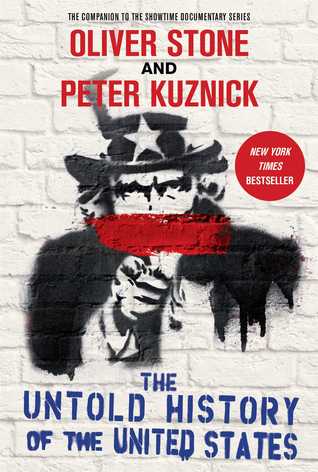
The Untold History of The United States cover
Archivist's Choice

The Untold History of The United States

Oliver Stone (2012)

Genre

Politics / History / Economics

Reading Time

15-20 hours

Key Themes

See below

Track Your Reading

Sign in to track this book

Oliver Stone and Peter Kuznick expose the truth about American foreign policy, from unnecessary atomic bombings to supporting dictators and prolonging the Cold War, challenging the idea of American exceptionalism.

Core Idea

Oliver Stone's "The Untold History of the United States" argues that America's post-World War II foreign policy, driven by economic interests, fear of communism, and a military-industrial complex, often undermined democratic movements and supported authoritarian regimes. This destabilized global relations and weakened constitutional principles at home. Through a close look at history, using declassified documents and overlooked views, Stone says the United States has acted as an imperial power. Its actions include unnecessary atomic bombings, nuclear brinkmanship, and constant intervention. He wants readers to face a more critical and uncomfortable truth about America's past and its current effects.
Reading time
15-20 hours
Difficulty
Hard
✓ Read this if...
You are interested in a highly critical, revisionist account of 20th-century U.S. foreign policy, enjoy deep dives into historical controversies, and are open to challenging mainstream historical narratives.
✗ Skip this if...
You prefer a celebratory or traditional view of American history, are uncomfortable with strong anti-establishment perspectives, or are looking for a concise overview rather than an extensive, detailed re-examination.

Core idea

The central argument and framework that powers the entire book.

Oliver Stone's "The Untold History of the United States" argues that America's post-World War II foreign policy, driven by economic interests, fear of communism, and a military-industrial complex, often undermined democratic movements and supported authoritarian regimes. This destabilized global relations and weakened constitutional principles at home. Through a close look at history, using declassified documents and overlooked views, Stone says the United States has acted as an imperial power. Its actions include unnecessary atomic bombings, nuclear brinkmanship, and constant intervention. He wants readers to face a more critical and uncomfortable truth about America's past and its current effects.

At a glance

Reading time

15-20 hours

Difficulty

Hard

Read this if...

You are interested in a highly critical, revisionist account of 20th-century U.S. foreign policy, enjoy deep dives into historical controversies, and are open to challenging mainstream historical narratives.

Skip this if...

You prefer a celebratory or traditional view of American history, are uncomfortable with strong anti-establishment perspectives, or are looking for a concise overview rather than an extensive, detailed re-examination.

Key Takeaways

1

The Myth of American Exceptionalism

Challenging the narrative of inherent American moral superiority and its historical implications.

Quote

The notion of American exceptionalism, dating back to John Winthrop’s 1630 sermon aboard the Arbella, still warps Americans’ understanding of their nation’s role in the world. Most are loathe to admit that the United States has any imperial pretensions. But history tells a different story...

The United States has long seen itself as a uniquely good nation, meant to spread democracy and freedom. Stone and Kuznick show that this idea of American exceptionalism is a dangerous myth. It stops the nation from seeing its imperial actions and past wrongs. This self-perception has justified interventions, regime changes, and military actions, even when these actions caused suffering and instability. By holding onto this myth, the U.S. avoids looking at itself critically, making it hard to learn from past mistakes and adjust to a n...

Supporting evidence

The authors trace the concept of exceptionalism from John Winthrop's 1630 sermon to its modern manifestations, arguing it consistently obscures the nation's 'imperial pretensions' and actions, such as numerous regime changes and support for dictators.

Apply this

Actively question dominant national narratives and media portrayals of U.S. foreign policy. Seek out diverse historical perspectives that challenge the 'good versus evil' dichotomy, particularly regarding interventions in other sovereign nations.


american-exceptionalismimperialismhistorical-revisionism
2

Unnecessary Atomic Bombings

The devastating truth behind Hiroshima and Nagasaki: not a military necessity, but a political statement.

Quote

The atomic bombings of Hiroshima and Nagasaki were militarily unnecessary and morally indefensible.

Stone and Kuznick argue that the atomic bombings of Hiroshima and Nagasaki were not necessary to end World War II and save American lives, as commonly taught. Using declassified documents and research, they claim Japan was already close to surrendering because the Soviets entered the war and conventional bombing was devastating. They say the real reason for the bombings was to scare the Soviet Union and establish American power in the early Cold War. This changes how we understand America's moral standing after the war. It reveals a c...

Supporting evidence

The authors cite newly declassified documents and intelligence reports from the time, indicating that Japan was actively seeking surrender avenues, especially after the Soviet Union declared war and invaded Manchuria. They also reference the views of prominent military figures like General Dwight D. Eisenhower, who believed the bombings were 'completely unnecessary.'

Apply this

Critically analyze official justifications for military actions. Understand that the 'official story' may often serve political agendas rather than historical accuracy. Advocate for nuclear disarmament and non-proliferation by understanding the true, often non-military, motivations behind their use.

atomic-bombingshiroshima-nagasakicold-war-originsnuclear-weapons
3

America's Role in the Cold War

Challenging the narrative of Soviet culpability, and highlighting U.S. actions that fueled the global conflict.

Quote

The United States, not the Soviet Union, bore the lion’s share of responsibility for perpetuating the Cold War.

Stone and Kuznick claim the United States was a main cause of escalating and prolonging the Cold War, not just reacting to Soviet aggression. They argue that American policies—like rejecting Soviet offers for post-war cooperation, quickly developing nuclear weapons, and an aggressive containment strategy—actively contributed to stronger ideological divisions. The authors detail how U.S. actions, often driven by anti-communist fear and a desire for global power, worsened tensions and missed chances for de-escalation. This view makes us...

Supporting evidence

The book points to specific instances like President Truman's confrontational stance at Potsdam, the rapid U.S. nuclear buildup after WWII, the rejection of Soviet proposals for international control of atomic energy, and the aggressive implementation of the 'containment' doctrine.

Apply this

Recognize the dangers of ideological rigidity in international relations. Consider how national security narratives can be shaped by internal political agendas and economic interests, leading to prolonged conflicts.

cold-warcontainment-policysoviet-unionus-foreign-policy
4

The Embrace of Dictators

Exposing the U.S. history of supporting authoritarian regimes for strategic and economic gain.

Quote

The U.S. love affair with right-wing dictators has gone as far as overthrowing elected leaders, arming and training murderous military officers, and forcing millions of people into poverty.

Stone and Kuznick reveal that the United States has a history of supporting brutal right-wing dictatorships around the world, often at the cost of democratic movements and human rights. This support was a planned strategy to protect economic interests, stop communism, and keep geopolitical influence. The book details how the U.S. supported coups, gave military aid and training to oppressive governments, and ignored atrocities committed by its allies, from Latin America to Southeast Asia. This pattern of intervention has not only gone ...

Supporting evidence

The authors cite numerous examples, including the overthrow of democratically elected leaders like Jacobo Árbenz in Guatemala (1954) and Salvador Allende in Chile (1973), and extensive support for figures like General Suharto in Indonesia and various military juntas in South America.

Apply this

Investigate the true beneficiaries of U.S. foreign aid and military support. Challenge the notion that 'stability' always equates to justice, especially when it involves supporting authoritarian regimes. Support organizations advocating for human rights and democracy globally.

regime-changedictatorshiplatin-america-interventionscold-war-proxy
5

Blowback: Unintended Consequences

How U.S. interventions and support for extremist groups have backfired with devastating results.

Quote

U.S.-funded Islamist fundamentalists, who fought against the Soviets in Afghanistan, have blown back to threaten the interests of the U.S. and its allies.

The book shows how U.S. foreign policy actions, especially secret operations and support for proxy forces, have unintentionally created future enemies and crises. A key example is the U.S. funding and arming of Islamist groups, including figures like Osama bin Laden, during the Soviet-Afghan War. While first seen as a successful strategy against communism, these groups later turned against the United States. This led to terrorist attacks like 9/11 and the rise of global jihadist movements. This pattern shows a major flaw in American f...

Supporting evidence

The primary example is the CIA's Operation Cyclone, which funded and trained Mujahideen fighters in Afghanistan to combat the Soviets, a policy that inadvertently strengthened radical Islamist groups, including those that would later form al-Qaeda.

Apply this

Demand greater transparency in foreign policy and intelligence operations. Advocate for a more holistic and long-term approach to international relations, considering cultural and historical contexts, rather than purely military or economic interests.

blowbackafghanistan-warislamist-extremismcia-operations
6

Presidential Overreach and Constitutional Erosion

Examining how U.S. presidents have frequently bypassed constitutional and international law.

Quote

U.S. presidents, especially in wartime, have frequently trampled on the constitution and international law.

Stone and Kuznick document a troubling trend of U.S. presidents, especially during crises or wars, overstepping their constitutional power and ignoring international law. From undeclared wars to surveillance programs, drone strikes to indefinite detentions, the book reveals a pattern of executive power growing at the expense of checks and balances and democratic principles. This weakening of constitutional norms, often justified by national security, has major effects on civil liberties and the rule of law. The authors argue that such...

Supporting evidence

The book discusses presidential actions during the Vietnam War (e.g., Gulf of Tonkin Resolution), the post-9/11 'War on Terror' (e.g., NSA surveillance, Guantanamo Bay), and various covert operations, demonstrating a consistent pattern of executive overreach.

Apply this

Support civil liberties organizations and advocate for stronger congressional oversight of executive power. Educate yourself on constitutional law and international treaties to hold leaders accountable for their actions.

presidential-powerconstitutional-lawwar-on-terrorexecutive-overreach
7

Nuclear Brinkmanship and the Threat of Annihilation

The terrifying instances when the U.S. brought the world to the precipice of nuclear war.

Quote

The United States has brandished nuclear threats repeatedly and come terrifyingly close to nuclear war.

The authors reveal how often the United States has come dangerously close to starting nuclear war, often through mistakes, aggressive actions, or direct threats. They detail many times during the Cold War when American leaders seriously considered or prepared for nuclear strikes, or when technical problems and human error almost caused a global disaster. This shows the constant danger of nuclear weapons, challenging the comforting idea that their use is unthinkable. Stone and Kuznick argue that America's willingness to use its nuclear...

Supporting evidence

The book details incidents like the Cuban Missile Crisis, the 1961 B-52 crash in Goldsboro, North Carolina, and numerous close calls involving false alarms and strategic bluffs during the Cold War, where nuclear war was narrowly averted.

Apply this

Support initiatives for nuclear disarmament and non-proliferation. Understand the catastrophic implications of nuclear conflict and advocate for diplomatic solutions over military confrontation in international disputes.

nuclear-warcold-war-crisisarms-racemutually-assured-destruction
8

The Dissenters and Forgotten Heroes

Highlighting the individuals who bravely challenged the prevailing orthodoxies and imperial policies.

Quote

Stone and Kuznick will introduce readers to a pantheon of heroes and villains as they show not only how far the United States has drifted from its democratic traditions, but the powerful forces that have struggled to get us back on track.

While the book often paints a grim picture of American foreign policy, Stone and Kuznick also highlight the unsung heroes and brave dissenters who challenged the imperial impulses and moral failings of the U.S. government. These figures, often ignored or criticized in their time, include politicians, activists, journalists, and even military personnel who spoke truth to power, advocated for peace, and fought for democratic ideals and international law. By highlighting these individuals, the authors offer hope, showing that resistance ...

Supporting evidence

The book features figures like Henry Wallace, who opposed Truman's aggressive stance against the Soviets, and various anti-war activists, whistleblowers, and politicians who argued against interventions and nuclear proliferation.

Apply this

Seek out and support voices that challenge mainstream narratives. Understand the importance of dissent in a democracy and be willing to speak out against policies that violate ethical principles or international law.

dissentactivismpeace-movementwhistleblowers
9

The Military-Industrial Complex's Enduring Influence

Analyzing how economic interests perpetuate conflict and shape foreign policy.

Quote

The authors show how the United States has drifted from its democratic traditions, driven by powerful forces that have struggled to get us back on track.

Building on Eisenhower's warning, Stone and Kuznick show how the military-industrial complex has become a powerful and self-sustaining force in American society, deeply influencing foreign policy decisions. The book details how the connected interests of defense contractors, the Pentagon, and political leaders create an economic need for constant conflict and huge defense spending. This complex benefits from a climate of fear and perceived threats, often exaggerating dangers to justify its existence and growth. The authors argue that ...

Supporting evidence

The book implicitly and explicitly traces the influence of defense spending and the arms industry on policy decisions from the Cold War onwards, linking economic motivations to the continuation of conflicts and the resistance to disarmament efforts.

Apply this

Investigate the financial ties between politicians, defense contractors, and think tanks. Support efforts to reduce military spending and reallocate resources to social programs. Advocate for transparency in government contracts and lobbying activities.

military-industrial-complexdefense-spendinglobbyingeconomic-determinism
10

Facing History: A Call for Change

The urgent necessity of confronting America's troubling past to forge a new, ethical future.

Quote

American leaders often believe they are unbound by history, yet Stone and Kuznick argue that we must face our troubling history honestly and forthrightly in order to set a new course for the twenty-first century. Their conclusions will challenge even experts, but there is one question only readers can answer: Is it too late for America to change?

The main message of Stone and Kuznick's work is an urgent call for Americans to face their nation's history with honesty and clear self-reflection. They believe that ignoring past wrongs, especially those driven by imperial ambition and a mistaken sense of exceptionalism, stops the U.S. from learning important lessons and adapting to a changing world. The authors challenge readers to move beyond comfortable stories and acknowledge the darker parts of American power. They argue that only through such an honest look can the nation hope ...

Supporting evidence

The entire book serves as evidence for this takeaway, with the concluding remarks explicitly stating the need for an honest confrontation with history to 'set a new course for the twenty-first century.'

Apply this

Engage in critical self-reflection about national identity and history. Support educational initiatives that promote a comprehensive and nuanced understanding of global events. Participate in democratic processes to advocate for a more ethical and less interventionist foreign policy.

historical-memorynational-identityethical-governancefuture-of-america

Critical analysis

Notable Quotes

We have to be honest with ourselves and with the world: The United States, since the end of World War II, has often acted as an empire.

Introduction to the series, setting the tone for a critical re-evaluation of US foreign policy.

The myth of American exceptionalism, the idea that the United States is uniquely virtuous and destined to lead the world, has obscured a much more complex and often troubling reality.

Discussing the prevailing narrative of American history versus the authors' interpretation.

Truman's decision to drop the atomic bombs on Hiroshima and Nagasaki was not purely a military one; it was also a political act, a message to the Soviet Union.

Analyzing the end of WWII and the beginning of the Cold War.

The Cold War was not just a conflict of ideologies; it was a struggle for global dominance, with both sides committing atrocities in the name of their respective systems.

Broad overview of the nature and impact of the Cold War.

The CIA became an instrument of covert intervention, overthrowing democratically elected governments and propping up dictatorships, all in the name of anti-communism.

Examining the role of the CIA in various global conflicts and coups.

Vietnam was not a mistake; it was a crime. A deliberate act of aggression based on false pretenses, leading to the deaths of millions.

Strong condemnation of the Vietnam War and its justifications.

Nixon's opening to China was a pragmatic move, a recognition of geopolitical realities, but it did not fundamentally alter the confrontational nature of US foreign policy.

Analyzing the Nixon administration's foreign policy shifts.

Reagan's rhetoric of freedom and democracy often masked a brutal interventionist policy in Central and South America, supporting death squads and destabilizing regimes.

Critique of the Reagan administration's actions in Latin America.

The collapse of the Soviet Union was hailed as a victory for capitalism and democracy, but it also unleashed new dangers, including the rise of unipolar American power.

Reflecting on the end of the Cold War and its aftermath.

The 'War on Terror' became a pretext for endless wars, erosion of civil liberties, and the expansion of the military-industrial complex.

Analysis of US policy after the September 11th attacks.

The financial crisis of 2008 exposed the inherent instability and corruption within the capitalist system, yet the powerful largely escaped accountability.

Discussing the causes and consequences of the 2008 financial crisis.

Obama, despite his promises of change, largely continued the interventionist policies of his predecessors, expanding drone warfare and surveillance.

Critique of the Obama administration's foreign and domestic policies.

The media, far from being a watchdog, often functions as a propagandist for the established order, shaping public opinion to support official narratives.

Discussion on the role of media in shaping public perception of history and current events.

To truly understand American history, one must look beyond the triumphalist narratives and confront the uncomfortable truths about power, profit, and violence.

Concluding thoughts on the necessity of a critical and honest historical examination.

Quiz

Test Your Knowledge

Ready to see how well you understood this book? Take our interactive quiz with 10 questions.

10
Questions
~5
Minutes
?
Best Score

Key Questions (FAQ)

The book challenges traditional narratives of American history, arguing that the United States has frequently acted with imperialistic ambitions, deviated from its democratic ideals, and often contributed to global conflicts, contrary to the notion of American exceptionalism.

About the author