BookBrief
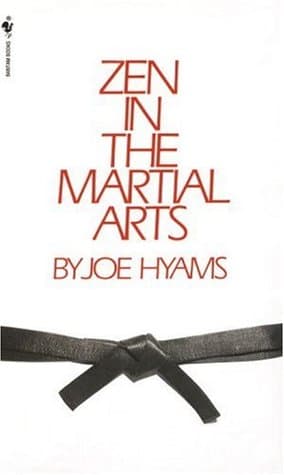
Zen in the Martial Arts cover
Archivist's Choice

Zen in the Martial Arts

Joe Hyams (1979)

Genre

Spirituality / Philosophy

Reading Time

135 min

Key Themes

See below

Track Your Reading

Sign in to track this book

Joe Hyams, taught by masters like Bruce Lee, explains how martial arts' spiritual side can improve not just physical ability but also mental strength, leading to less stress and better relationships.

Core Idea

Joe Hyams' "Zen in the Martial Arts" argues that the real goal of martial arts, beyond physical moves, is to develop a Zen mind: a state of acceptance, focus on the present, and mental discipline. By comparing his training with martial arts masters to Zen ideas, Hyams shows how mental sharpness, emotional control, and the ability to 'empty one's cup' are essential for effortless power and skill, not just in fighting but in all parts of life. The book suggests that understanding and overcoming one's own inner challenges is more important than physical strength, leading to a deep change that goes beyond the training hall.
Reading time
135 min
Difficulty
Easy
✓ Read this if...
You are interested in applying Zen Buddhist principles to practical self-improvement, martial arts, or everyday challenges, seeking mental discipline over brute force.
✗ Skip this if...
You are looking for a technical guide on martial arts techniques or a deep dive into historical Zen philosophy, as this book is more autobiographical and application-focused.

Core idea

The central argument and framework that powers the entire book.

Joe Hyams' "Zen in the Martial Arts" argues that the real goal of martial arts, beyond physical moves, is to develop a Zen mind: a state of acceptance, focus on the present, and mental discipline. By comparing his training with martial arts masters to Zen ideas, Hyams shows how mental sharpness, emotional control, and the ability to 'empty one's cup' are essential for effortless power and skill, not just in fighting but in all parts of life. The book suggests that understanding and overcoming one's own inner challenges is more important than physical strength, leading to a deep change that goes beyond the training hall.

At a glance

Reading time

135 min

Difficulty

Easy

Read this if...

You are interested in applying Zen Buddhist principles to practical self-improvement, martial arts, or everyday challenges, seeking mental discipline over brute force.

Skip this if...

You are looking for a technical guide on martial arts techniques or a deep dive into historical Zen philosophy, as this book is more autobiographical and application-focused.

Key Takeaways

1

The Art of Non-Resistance

Allowing, rather than fighting, life's challenges can lead to greater control.

Quote

The way to control a thing is to go with it. When you resist, you are overcome.

Hyams often talks about the Zen idea of non-resistance, relating it to his martial arts training. Instead of meeting an opponent's force with equal or more force, the practitioner learns to move with the energy, redirecting it or using it to their advantage. This is not about being passive, but about smart engagement. In daily life, this means acknowledging problems without immediately fighting them, understanding them, and then finding the easiest way to solve or adapt. This approach saves energy and often leads to more effective, le...

Supporting evidence

Hyams recounts a lesson from Ed Parker, where he learned to 'go with' an opponent's punch rather than block it head-on, thereby minimizing impact and creating an opening.

Apply this

When facing a difficult task at work, instead of immediately feeling overwhelmed or resisting, take a moment to observe the task's components. Break it down, identify its flow, and find the easiest entry point. For emotional challenges, acknowledge the feeling rather than suppressing it, allowing it to pass through before deciding on a response.

non-resistanceflow-stateacceptance
2

Mind Over Muscle

True strength stems from mental discipline and focus, not just physical prowess.

Quote

The physical techniques are merely outward manifestations of an inner discipline.

Hyams consistently argues that martial arts skill is mostly a mental game. While physical fitness is important, it is mental discipline—focus, presence, and control over one's thoughts and emotions—that separates a good practitioner from a great one. He shows how fear, anger, or distraction can hinder even physically capable people. Developing a calm, clear mind allows for quicker reactions, better decisions, and the ability to perform under pressure, both in training and in life. This mental strength becomes the foundation for all ot...

Supporting evidence

Bruce Lee taught Hyams that 'the opponent is in your mind.' Hyams describes how his own self-doubt and fear would often hinder his performance more than any physical challenge.

Apply this

Before a challenging meeting or presentation, take five minutes to practice mindful breathing to calm your thoughts and enhance focus. When you feel overwhelmed, identify the distracting thoughts and consciously bring your attention back to the task at hand, one step at a time.

mental-disciplinefocusmindfulness
3

The Power of Emptying Your Cup

To learn and grow, one must first let go of preconceived notions and ego.

Quote

You must empty your cup before you can fill it.

A repeated idea, especially in Hyams' talks with his teachers, is the need to approach new learning with an open, 'beginner's mind.' His teachers often challenged his assumptions and previous knowledge, making him unlearn old habits and accept new ideas. This 'emptying the cup' is not about giving up intellectually, but about letting go of ego and the resistance that comes from thinking one already knows enough. It encourages humility and openness, qualities essential for deep learning and true skill in any field, allowing for real ab...

Supporting evidence

Hyams recounts being told by a master to 'forget everything you think you know' when struggling with a new technique, highlighting the mental block caused by his own assumptions.

Apply this

When starting a new project or learning a new skill, consciously set aside your previous experiences or biases. Approach it with curiosity and a willingness to be completely wrong. Ask 'dumb' questions and actively listen without formulating your rebuttal.

beginner's-mindhumilityunlearning
4

Practice, Not Perfection

Consistent, dedicated practice is the path to progress, not the pursuit of an unattainable ideal.

Quote

The way is in the practice, not in the result.

Hyams emphasizes that skill in martial arts, and in life, is a continuous journey of practice rather than a final state of perfection. He learns that focusing only on the outcome or an ideal performance can lead to frustration and slow progress. Instead, the focus is on consistent effort, the process of showing up, and the small improvements that add up over time. This mindset shifts the focus from external approval to internal growth and the joy of learning itself, making the journey sustainable and rewarding.

Supporting evidence

Hyams details countless hours spent repeating basic movements, like a single punch or block, understanding that repetition engrains the technique and builds muscle memory and mental discipline.

Apply this

Instead of aiming for a 'perfect' first draft of an essay, commit to writing for 30 minutes every day, focusing on getting ideas down. For fitness, aim for consistent workouts rather than hitting an unrealistic weight goal immediately. Celebrate the act of showing up.

deliberate-practiceprocess-over-outcomepersistence
5

Confronting Your Inner Opponent

Our greatest challenges often come from within – our fears, doubts, and ego.

Quote

The real opponent is always yourself.

A key realization Hyams has is that the toughest opponent is not a physical adversary but his own inner struggles. Fear of failure, self-consciousness, anger, and a desire to prove himself often created more problems than any external opponent. His teachers, especially Bruce Lee, always directed him inward, teaching him that mastering oneself—one's emotions, thoughts, and reactions—is necessary before mastering any external art. This self-reflection is important for real growth, helping one identify and overcome the self-imposed limit...

Supporting evidence

Hyams recounts a sparring session where his fear of getting hit made him tense and ineffective, only to realize later that his mental state was the true barrier.

Apply this

Before reacting to a stressful situation, pause and identify if your initial response is driven by fear, ego, or insecurity. Work on understanding these internal triggers. Journaling can be a powerful tool to identify recurring patterns of self-sabotage or negative self-talk.

self-masteryintrospectionego-death
6

The Paradox of Effortless Power

True power emerges from relaxation and fluidity, not from brute force or tension.

Quote

Be like water, my friend.

Hyams learns that tension harms efficiency and power. His teachers consistently guided him to relax, to move with fluidity, rather than relying on strained muscles. This shows that maximum effort often gives less return, while a relaxed state allows energy to flow freely, movements to be quicker, and strikes to be more powerful. This idea extends beyond physical combat to mental tasks: a tense, rigid mind struggles, while a relaxed, adaptable mind can process information and solve problems more easily and creatively. It is about worki...

Supporting evidence

Bruce Lee's famous 'be like water' analogy is central here, teaching Hyams to adapt and flow rather than be rigid. Hyams notes how his own tension would make him slow and predictable in sparring.

Apply this

When feeling overwhelmed or stuck on a problem, take a short break to consciously relax your shoulders, jaw, and entire body. Return to the task with a softer gaze and a more relaxed posture. Practice deep breathing to release physical and mental tension.

fluidityrelaxationefficiency
7

Presence in the Present Moment

Optimal performance and peace are found by fully inhabiting the 'here and now'.

Quote

There is no past, no future, only now.

A central Zen teaching, very important in martial arts, is the need to live and act in the present moment. Hyams discovers that dwelling on past mistakes or worrying about future outcomes hinders his ability to react well in sparring. True awareness and responsiveness come from being completely present, where the mind is fully engaged with the immediate action. This is not just about performance; it is also about inner peace. By letting go of mental distractions, one can experience life more fully and engage with tasks with greater fo...

Supporting evidence

Hyams describes how thinking about an opponent's previous move or anticipating their next one would cause him to miss crucial openings or blocks in real-time sparring.

Apply this

During daily activities like eating or walking, consciously bring your attention to the sensations, sights, and sounds of that moment. When engaged in conversation, truly listen without mentally preparing your response. Practice single-tasking rather than multitasking.

mindfulnesspresent-momentawareness
8

The Master as a Mirror

True teachers reflect back our potential and limitations, guiding us to self-discovery.

Quote

A true master doesn't give you answers, but helps you find them within yourself.

Hyams' experiences with his teachers, especially Bruce Lee and Ed Parker, show that a true teacher does not just give answers but helps students discover things for themselves. They did not just teach techniques; they challenged Hyams' ideas, pushed his limits, and made him face his own weaknesses and fears. Their methods were often indirect, using questions or simple drills to encourage deeper self-reflection. This approach helps the student internalize lessons and develop personal understanding, rather than just imitating, fostering...

Supporting evidence

Hyams recounts Bruce Lee's enigmatic questions and indirect challenges that forced him to think for himself, rather than simply follow instructions.

Apply this

Seek mentors who challenge your assumptions and encourage independent thought, rather than those who simply tell you what to do. When mentoring others, ask open-ended questions that prompt reflection rather than providing immediate solutions.

mentorshipself-discoverysocratic-method
9

Beyond the Physical Form

The ultimate goal of martial arts transcends combat, aiming for holistic self-improvement.

Quote

Martial arts is not about fighting; it's about building character.

Throughout the book, Hyams shows that physical techniques and sparring are just ways to achieve a deeper change. The discipline, focus, patience, and self-awareness gained in training carry over into every part of his life, improving his relationships, career, and personal well-being. The real 'art' is not in defeating an opponent, but in mastering oneself and applying these Zen ideas to daily life. This broad view elevates martial arts from a sport or self-defense system to a philosophy for living a more balanced, purposeful, and eff...

Supporting evidence

Hyams frequently discusses how the lessons learned in sparring helped him manage work pressure, improve his self-image, and handle competition in his professional life.

Apply this

Identify a skill you are trying to master (e.g., public speaking, coding). Consider how the discipline and mental fortitude required for that skill can be applied to other areas of your life, such as managing stress or improving communication.

holistic-developmentcharacter-buildinglife-philosophy
10

The Power of Habit and Routine

Consistent, small actions build lasting discipline and pave the way for transformation.

Quote

It is not the spectacular actions, but the daily habits that forge true character.

Hyams emphasizes the importance of consistent daily practice and routines for his progress. His journey was not about sudden insights, but about the total effect of showing up, repeating drills, and dedicating himself to the process, day after day. This seemingly ordinary part of training is where real discipline is built and where deep changes become possible. It shows that skill is built gradually, through deliberate and sustained effort, proving that even small, consistent actions can lead to significant long-term change in any are...

Supporting evidence

Hyams details his rigorous training schedule, including daily practice of basic movements and meditation, highlighting the non-glamorous, repetitive nature of true progress.

Apply this

Start a small daily habit, like meditating for five minutes or reading one page of a book. Focus on consistency over intensity. Track your progress to build momentum and reinforce the habit loop.

habit-formationdaily-disciplineconsistency

Critical analysis

Notable Quotes

The mind is like a monkey, constantly chattering, jumping from one branch to another.

Explaining the restless nature of the untrained mind and the need for mental discipline.

The art of living is more like wrestling than dancing.

Highlighting that life often involves struggle and direct engagement, rather than graceful avoidance.

True strength is not in the muscles, but in the spirit.

Emphasizing that physical prowess alone is insufficient without inner fortitude and mental resolve.

When you are in a situation, be in it completely. Don't be somewhere else.

Advocating for complete presence and focus in any given moment or task.

The journey of a thousand miles begins with a single step.

A classic proverb used to illustrate the importance of starting and the gradual nature of progress.

Fear is a great teacher, but it is also a paralyzer.

Discussing the dual nature of fear as both a source of learning and an impediment to action.

Empty your mind, be formless, shapeless, like water.

Bruce Lee's famous quote, adopted and discussed in the context of adaptability and fluidity in martial arts and life.

The master has failed more times than the beginner has even tried.

Encouraging persistence and viewing failure as a necessary part of the learning process.

Do not seek to follow in the footsteps of the wise. Seek what they sought.

Urging readers to understand the underlying principles and wisdom, rather than merely imitating outward actions.

The real battle is always within.

Highlighting that self-mastery and inner struggles are more significant than external conflicts.

To conquer others is to have power, to conquer yourself is to be enlightened.

Distinguishing between external power and the deeper, more profound achievement of self-conquest.

The greatest enemy of knowledge is not ignorance, it is the illusion of knowledge.

Warning against complacency and the false belief that one already knows everything, which hinders true learning.

Life is a succession of moments. To live each one is to succeed.

Emphasizing the importance of living fully in the present moment as the essence of a successful life.

It is not the mountain we conquer, but ourselves.

Illustrating that challenges are often opportunities for self-improvement and overcoming internal limitations.

Quiz

Test Your Knowledge

Ready to see how well you understood this book? Take our interactive quiz with 10 questions.

10
Questions
~5
Minutes
?
Best Score

Key Questions (FAQ)

'Zen in the Martial Arts' by Joe Hyams explores how applying Zen principles, learned through his extensive martial arts training with masters like Bruce Lee, can develop not only physical expertise but also mental discipline. It shows how these spiritual insights can help manage personal problems, improve relationships, and enhance overall quality of life.

About the author