BookBrief
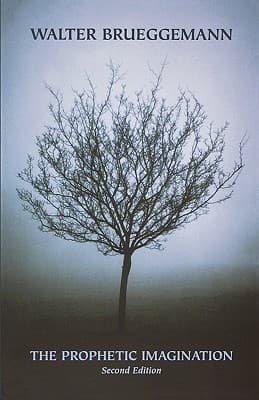
The Prophetic Imagination cover
Archivist's Choice

The Prophetic Imagination

Walter Brueggemann (1978)

Genre

Spirituality / Philosophy

Reading Time

90 min

Key Themes

See below

Track Your Reading

Sign in to track this book

Brueggemann shows how the ancient prophetic voice is a radical, poetic force that can dismantle oppressive present realities and envision a liberated future.

Core Idea

Walter Brueggemann argues that the prophetic imagination is a counter-cultural force for personal and communal transformation. He says that the dominant consciousness, often marked by scarcity, consumerism, and the status quo, makes people numb to their own pain and the pain of others, stopping real engagement with reality. The prophetic task is two-fold: to criticize the dominant consciousness, exposing its false promises and injustices, and to energize the community with new possibilities through words and actions that express hope and an alternative future. This process involves embracing grief as a way to acknowledge loss and pain, which then opens space for new imagination and the expression of God's alternative vision for justice and abundance, moving beyond the oppressive narratives of the present.
Reading time
90 min
Difficulty
Medium
✓ Read this if...
You are a theologian, pastor, or layperson interested in understanding the social and political dimensions of biblical prophecy and its relevance for contemporary critique and hope.
✗ Skip this if...
You are looking for a light, prescriptive self-help guide or a detailed historical analysis of ancient prophets rather than a theological and philosophical exploration of the prophetic function.

Core idea

The central argument and framework that powers the entire book.

Walter Brueggemann argues that the prophetic imagination is a counter-cultural force for personal and communal transformation. He says that the dominant consciousness, often marked by scarcity, consumerism, and the status quo, makes people numb to their own pain and the pain of others, stopping real engagement with reality. The prophetic task is two-fold: to criticize the dominant consciousness, exposing its false promises and injustices, and to energize the community with new possibilities through words and actions that express hope and an alternative future. This process involves embracing grief as a way to acknowledge loss and pain, which then opens space for new imagination and the expression of God's alternative vision for justice and abundance, moving beyond the oppressive narratives of the present.

At a glance

Reading time

90 min

Difficulty

Medium

Read this if...

You are a theologian, pastor, or layperson interested in understanding the social and political dimensions of biblical prophecy and its relevance for contemporary critique and hope.

Skip this if...

You are looking for a light, prescriptive self-help guide or a detailed historical analysis of ancient prophets rather than a theological and philosophical exploration of the prophetic function.

Key Takeaways

1

The Dominant Consciousness

How societal norms lull us into a state of uncritical acceptance.

Quote

The dominant consciousness is the king's consciousness, which makes the present order appear to be the only possible order.

Brueggemann says that every society operates under a 'dominant consciousness' – a set of common assumptions, values, and stories that define reality and limit what is possible. This consciousness, often supported by powerful institutions (political, economic, religious), makes people feel 'there is no alternative.' It creates a state of numbness, where people become so used to the status quo that they lose the ability to imagine or even want a different future. This is not always bad; it is the natural settling of cultural norms, but ...

Supporting evidence

Brueggemann frequently references the Egyptian empire and Pharaoh's control as a prime example of a dominant consciousness that enslaved the Israelites not just physically, but also imaginatively.

Apply this

Identify areas in your own life or community where 'the way things are' feels immutable. Question the underlying assumptions and narratives that reinforce this feeling. Seek out alternative perspectives and histories.

dominant-consciousnesssocietal-numbnessstatus-quo
2

Grief as a Prophetic Act

Acknowledging communal pain is the first step towards a new future.

Quote

The prophetic task is not to make people feel better, but to enable them to feel the full weight of their pain, so that new possibilities can emerge.

Prophetic imagination does not start with solutions or perfect visions; it starts with lament. Brueggemann stresses that before a new world can be imagined, the old world and its pain, injustice, and brokenness must be fully grieved. This act of communal lament breaks the numbness enforced by the dominant consciousness, which often discourages expressing pain that might disrupt its story of order and well-being. By giving voice to sorrow, anger, and disappointment, the prophet creates a space for real feeling, which then opens the ima...

Supporting evidence

The lament psalms in the Old Testament are central to Brueggemann's argument, demonstrating how ancient Israel openly expressed its pain and disillusionment with God and the world.

Apply this

Create spaces (personal or communal) to genuinely acknowledge and articulate pain, injustice, or loss without immediately seeking to 'fix' it. Practice active listening to others' grief without minimizing or offering platitudes.

lamentcommunal-griefprophetic-resistance
3

Critique of the Status Quo

Exposing the false promises and limitations of the prevailing order.

Quote

The prophet's first task is to unmask the 'as if' quality of the present order, to show that it is not inevitable, but a human construction.

Once numbness is broken by grief, the prophetic imagination moves to critique. This is not just complaining; it is a deep, sharp analysis that exposes the contradictions, injustices, and, in the end, the unsustainability of the dominant consciousness. Brueggemann says that the status quo often promises security, prosperity, and order, but at the cost of real freedom, justice, and human flourishing for many. The prophet's critique reveals the 'gods' behind the system – the idols of consumerism, nationalism, or endless growth – showing ...

Supporting evidence

Moses' confrontation with Pharaoh is a foundational example. Moses critiques Pharaoh's claims of divine power and self-sufficiency, exposing the brutality and injustice underpinning his empire.

Apply this

Practice critical thinking by analyzing the implicit assumptions and values behind societal structures, political rhetoric, or advertising. Ask: 'Who benefits from this? Who is marginalized? What are the hidden costs?'

critical-analysisunmasking-idolssocietal-critique
4

Imagining the Alternative

Conjuring new possibilities beyond the current constraints.

Quote

The prophetic imagination does not just dismantle; it also re-members, re-constitutes, and re-envisions.

Critique alone is not enough; true prophetic imagination must also offer a compelling vision of an alternative. Brueggemann says this is not about providing a detailed plan, but about expressing a poetic, moving vision that inspires hope and possibility. This vision often comes from forgotten traditions, marginalized voices, and a deep understanding of human desire for justice and shalom (wholeness). It challenges the scarcity mindset of the dominant consciousness by proclaiming God's abundance and generosity. The prophet's task is to...

Supporting evidence

The Exodus narrative, particularly the promise of a 'land flowing with milk and honey,' serves as a powerful imaginative alternative to Egyptian slavery, offering a vision of freedom and abundance.

Apply this

Engage in creative exercises to envision a radically different future for your community or the world. Write a story, draw a picture, or describe in detail what a truly just and compassionate society might look like, unconstrained by present limitations.

alternative-visionshalomhope-creation
5

The Power of the Word

Prophetic speech as an act of world-making and world-breaking.

Quote

The prophetic word is not merely descriptive; it is performative. It does not just speak about reality; it creates reality.

For Brueggemann, the prophetic word is not just information or opinion; it is a powerful, active force. Drawing from the biblical idea of God's creative word (e.g., 'Let there be light'), he says that prophetic speech can break the spell of the dominant consciousness and bring a new reality into existence. This 'performative' aspect means that when a prophet speaks truth to power, laments injustice, or proclaims an alternative vision, they are not just saying ideas but actively helping to transform the world. Their words disrupt, chal...

Supporting evidence

The 'Thus says the Lord' formula in biblical prophecy highlights the divine authority and world-changing power attributed to the prophet's words.

Apply this

Be mindful of the power of your own words. Choose to speak truthfully, compassionately, and with an awareness of how your language can either reinforce the status quo or open up new possibilities. Practice articulating your values and visions clearly.

performative-speechcreative-worddisruptive-truth
6

The Prophetic Community

Prophecy is a communal, not just individual, endeavor.

Quote

The prophetic imagination is not simply the genius of an individual, but the spirit that animates a community committed to an alternative reality.

While we often connect prophecy with single figures like Moses or Jeremiah, Brueggemann stresses that prophetic imagination is a communal effort. The prophet does not speak alone; they come from and speak to a community that is either suffering under the dominant consciousness or longing for an alternative. The community's shared memory, traditions of resistance, and collective longing are important for keeping the prophetic message alive and acting on it. Without a receptive and involved community, the prophet's words might be dismis...

Supporting evidence

The Exodus event, while led by Moses, was the liberation of an entire people, whose collective memory and shared experience formed the basis of their prophetic identity.

Apply this

Seek out or cultivate communities that share your values for justice and transformation. Participate in shared learning, lament, and action. Recognize that collective effort amplifies individual prophetic voices.

communal-imaginationcollective-actionshared-vision
7

Embracing Vulnerability and Risk

Prophetic action inherently involves danger and discomfort.

Quote

To speak prophetically is to risk one's comfort, one's security, and often one's life, for the sake of a truth that must be spoken.

Brueggemann does not make prophecy seem easy; he acknowledges its dangers. Speaking truth to power, challenging deeply rooted systems, and advocating for radical change will bring resistance, ridicule, and even persecution. The dominant consciousness will try to silence or discredit those who threaten its stability. Therefore, prophetic imagination requires great courage and a willingness to be vulnerable, knowing that one's message may be unpopular, misunderstood, or met with hostility. This shows that prophecy is not just an intelle...

Supporting evidence

The persecution of biblical prophets like Jeremiah, who faced imprisonment and rejection for delivering unpopular messages, serves as a stark reminder of the risks involved.

Apply this

Reflect on situations where speaking your truth might involve personal cost. Practice articulating your convictions in small, safe settings to build courage for larger challenges. Be prepared for discomfort and pushback when advocating for change.

prophetic-couragespeaking-truth-to-powervulnerability
8

The Cycle of Prophecy

Prophetic imagination is an ongoing, dynamic process.

Quote

Prophecy is not a one-time event but a continuous movement from numbness to grief, from critique to hope, and back again.

Brueggemann describes prophetic imagination not as a straight path but as a dynamic, repeating process. Societies can fall back into numbness, new injustices appear, and previously imagined alternatives may become the new status quo that needs fresh critique. This means the prophetic task is never truly done. It requires constant watchfulness, renewed lament for new forms of brokenness, and a continuous re-imagining of what is possible. This repeating nature shows the ongoing need for prophetic voices and communities to stay aware of ...

Supporting evidence

The recurring cycles of Israel's faithfulness and unfaithfulness, requiring new prophetic interventions throughout its history, illustrates this ongoing need.

Apply this

Regularly reassess your own assumptions and the societal norms around you. Be open to new perspectives and critiques, even of ideas you once championed. Commit to lifelong learning and engagement with issues of justice.

prophetic-cycleongoing-engagementsocietal-renewal

Critical analysis

Notable Quotes

The task of prophetic ministry is to nurture, nourish, and evoke a consciousness and perception alternative to the consciousness and perception of the dominant culture around us.

Introduction, defining the core purpose of prophetic work.

The royal consciousness leads people to numbness, especially to numbness about death. It is the task of the prophetic imagination and ministry to bring people to engage their experiences of suffering to death.

Critique of oppressive systems that suppress awareness of mortality.

Hope, on the other hand, is the refusal to accept the reading of reality which is the majority opinion.

Contrasting hope with societal conformity and despair.

The prophet does not ask if the vision can be implemented, for questions of implementation are of no consequence until the vision can be imagined.

Emphasizing imagination over practicality in prophetic work.

The alternative community of Moses is not a better Pharaoh but a community of justice and compassion.

Discussing the Exodus narrative as a model for alternative social structures.

The royal consciousness is committed to continuity and sameness; the prophetic consciousness is committed to discontinuity and newness.

Contrasting static power structures with dynamic prophetic change.

Grief is the ultimate criticism, for it declares that things are not right.

Exploring grief as a form of social and spiritual critique.

The prophetic imagination knows that the world is not as it seems to be, and it is the task of the prophet to keep alive the ministry of imagination.

Reiterating the role of imagination in challenging perceived reality.

The dominant culture wants to silence the groans of the oppressed, but the prophet amplifies them.

Describing how prophets give voice to marginalized suffering.

Hope is the conviction that the present order is not ultimate, that it can be changed.

Defining hope as a belief in transformative possibility.

The royal consciousness is a consciousness of affluence, which believes that there is enough to go around and that the system can work.

Critiquing affluent systems that ignore inequality.

The prophet engages in futuring, in dreaming dreams and seeing visions of what might be.

Highlighting the forward-looking, creative aspect of prophecy.

The prophetic task is to offer symbols that are adequate to contradict the symbols of the dominant reality.

Discussing the use of symbolic language to challenge power.

Lament is the language of pain that leads to transformation.

Explaining the transformative power of lament in spirituality.

Quiz

Test Your Knowledge

Ready to see how well you understood this book? Take our interactive quiz with 10 questions.

10
Questions
~5
Minutes
?
Best Score

Key Questions (FAQ)

The prophetic imagination is a concept introduced by Walter Brueggemann that describes the ability to envision and articulate alternative realities to the dominant culture's oppressive systems, drawing on biblical prophetic traditions to critique the present and inspire hope for transformation.

About the author