BookBrief
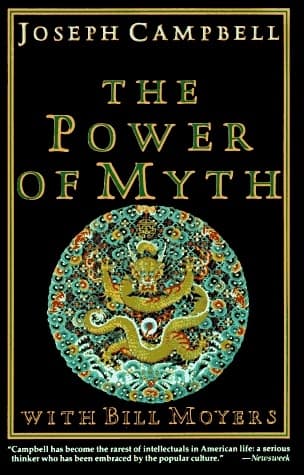
The Power of Myth cover
Archivist's Choice

The Power of Myth

Joseph Campbell (1988)

Genre

Psychology / History / Spirituality / Creativity / Philosophy

Reading Time

300 min

Key Themes

See below

Track Your Reading

Sign in to track this book

Explore the classic stories that shape human experience, from old rituals to modern love, as Joseph Campbell and Bill Moyers show how myths reveal life's deepest truths.

Core Idea

Joseph Campbell's "The Power of Myth" suggests that myths are not just old stories but essential, active narratives with key psychological, social, cosmic, and teaching roles in human society. By looking at the monomyth, or hero's journey, Campbell argues that a common pattern exists in all great myths, despite cultural differences. This pattern reflects a human need to understand the universe, our place in it, and the journey of self-discovery. He encourages people to recognize these patterns in their own lives, especially through the idea of "follow your bliss," which he presents as an inner guide to finding one's unique path and spiritual understanding, helping to connect the modern self to a larger, meaningful cosmic story.
Reading time
300 min
Difficulty
Medium
✓ Read this if...
You are fascinated by the universal patterns in human storytelling, seeking deeper meaning in life through ancient wisdom, or curious about the psychological and spiritual significance of myths across cultures.
✗ Skip this if...
You prefer practical, prescriptive self-help, are uninterested in abstract philosophical or mythological concepts, or are looking for a purely historical account of specific mythologies without broader interpretation.

Core idea

The central argument and framework that powers the entire book.

Joseph Campbell's "The Power of Myth" suggests that myths are not just old stories but essential, active narratives with key psychological, social, cosmic, and teaching roles in human society. By looking at the monomyth, or hero's journey, Campbell argues that a common pattern exists in all great myths, despite cultural differences. This pattern reflects a human need to understand the universe, our place in it, and the journey of self-discovery. He encourages people to recognize these patterns in their own lives, especially through the idea of "follow your bliss," which he presents as an inner guide to finding one's unique path and spiritual understanding, helping to connect the modern self to a larger, meaningful cosmic story.

At a glance

Reading time

300 min

Difficulty

Medium

Read this if...

You are fascinated by the universal patterns in human storytelling, seeking deeper meaning in life through ancient wisdom, or curious about the psychological and spiritual significance of myths across cultures.

Skip this if...

You prefer practical, prescriptive self-help, are uninterested in abstract philosophical or mythological concepts, or are looking for a purely historical account of specific mythologies without broader interpretation.

Key Takeaways

1

The Monomyth: A Universal Journey

All heroic narratives share a fundamental, cyclical structure.

Quote

A hero ventures forth from the world of common day into a region of supernatural wonder: fabulous forces are there encountered and a decisive victory is won: the hero comes back from this mysterious adventure with the power to bestow boons on his fellow man.

Campbell says that despite many cultural differences, myths worldwide follow a single, main story pattern he called the 'monomyth' or 'Hero's Journey.' This structure includes a call to adventure, refusing the call, meeting a mentor, entering an unknown world, facing challenges, receiving a reward, and finally, returning with new wisdom or power to help society. Understanding this pattern reveals deep psychological truths about human growth, the search for meaning, and the common challenges we all face. It is not just a story device b...

Supporting evidence

Campbell extensively analyzes myths from diverse cultures—such as the story of Osiris, Buddha's enlightenment, the quest for the Holy Grail, and Luke Skywalker's journey in Star Wars—to demonstrate the consistent application of the monomyth structure.

Apply this

Recognize the stages of the Hero's Journey in your own life's challenges and transitions. When faced with a 'call to adventure' (a new opportunity, a crisis), understand that fear and resistance are natural, but crossing the 'threshold' into the unknown is where true growth lies. Seek mentors, embrace trials as opportunities for transformation, and aim to return with insights that can enrich your community.
hero's-journeyarchetypecollective-unconscious
2

Myths as Life's Guiding Metaphors

Myths are not literal truths but profound psychological and spiritual maps.

Quote

Myth is not a lie; it is a metaphor for a mystery that we cannot grasp directly.

Campbell strongly argues that myths should not be seen as historical facts or simple science, but as symbolic stories that carry deep, timeless truths about the human condition, the universe, and our place in it. They work as important metaphors, giving a way to understand the unexplainable, handle life's problems, and find meaning. By focusing on a literal reading, we miss the deep psychological, social, cosmic, and spiritual roles myths play. They are active stories that offer guidance, inspire awe, and help people fit into society ...

Supporting evidence

Campbell discusses how the virgin birth narrative, for instance, in various traditions (Jesus, Buddha, Zoroaster) is not a biological claim but a symbolic representation of a divine spark or spiritual purity inherent in the hero's origin, signifying their extraordinary nature and destiny.

Apply this

Approach stories, religious texts, and even personal narratives (like family legends) not for their factual accuracy but for their underlying symbolic meaning. Ask: 'What psychological truth does this convey?' or 'What does this story teach me about living?' This shift in perspective unlocks deeper insights and personal relevance.

symbolismmetaphormeaning-making
3

Follow Your Bliss: The Inner Call

Authentic living means aligning with your deepest passions and inner calling.

Quote

If you follow your bliss, you put yourself on a kind of track that has been there all the while, waiting for you, and the life that you ought to be living is the one you are living. When you can see that, you begin to meet people who are in your field of bliss, and they open doors for you.

Campbell's most famous advice, 'Follow your bliss,' is not about seeking pleasure but a deep spiritual and psychological instruction. It means finding and pursuing what truly excites your passion and sense of purpose, even if it goes against common expectations. This 'bliss' is not just pleasure, but a strong feeling of being alive and connected to one's true self, a sense of being on the right path. By following this inner guide, people connect to a universal energy that supports their journey, leading to unexpected meetings and chan...

Supporting evidence

Campbell draws parallels with heroes like the Buddha, who left behind a life of luxury to pursue enlightenment, or artists and innovators who defy societal norms to create their unique contributions, driven by an inner, compelling force.

Apply this

Regularly reflect on what truly excites and energizes you. What activities make you lose track of time? What causes do you feel compelled to serve? Take small, consistent steps towards integrating these 'blissful' elements into your daily life, even if they initially seem impractical. Trust that by aligning with your inner calling, external opportunities will emerge.

self-actualizationpurposeauthenticity
4

The Four Functions of Myth

Myths serve essential roles in human society and individual psychology.

Quote

The first function of mythology is to reconcile consciousness with the preconditions of its own being.

Campbell identifies four key roles of mythology. First, the 'mystical function' creates a sense of wonder, helping us see the mystery of the universe beyond reason. Second, the 'cosmological function' explains the shape of the universe and our place in it, giving us a worldview. Third, the 'sociological function' supports the existing social order, helping people fit into their community. Finally, the 'pedagogical function' guides individuals through life's stages, from childhood to adult responsibility, and eventually, to the wisdom ...

Supporting evidence

Campbell illustrates these functions by referencing various rituals: initiation rites (pedagogical), creation myths (cosmological), divine king narratives (sociological), and meditative practices (mystical), showing how each addresses fundamental human needs.

Apply this

When encountering a myth, story, or even a cultural tradition, analyze which of these four functions it primarily serves. Consider how contemporary narratives (movies, political ideologies, advertising) might be fulfilling similar roles in modern society. This helps to critically evaluate their impact and understand their underlying power.

myth-functionssociology-of-religionspiritual-development
5

Initiation: The Death and Rebirth

Personal growth often requires symbolic death to old selves and rebirth into new ones.

Quote

The ultimate aim of the quest must be that of the release of the individual from the ego, from the bonds of the ego.

Many myths include rites of passage, often with symbolic death and rebirth. This is not literal death but a deep psychological change where an old identity, beliefs, or way of being 'dies' to let a new, more complete self appear. These 'initiations' are often hard, challenging a person's comfort zone and making them face their limits and fears. The hero often goes into an underworld or fights a monster, which symbolizes facing the shadow self. Coming out of this struggle, the person is reborn with more wisdom, strength, and a deeper u...

Supporting evidence

Campbell references shamanic initiations, where the initiate undergoes ritual dismemberment and reassembly, or stories like Jonah and the Whale, where being swallowed and later expelled represents a transformative journey through the belly of the unconscious.

Apply this

Identify moments in your life where you've experienced a 'death' of an old self (e.g., losing a job, ending a relationship, a major illness). Instead of seeing these as purely negative, recognize them as opportunities for initiation and rebirth. Actively engage in self-reflection, mourn the old, and consciously cultivate the new identity that emerges from the challenge.

rite-of-passageshadow-selftransformation
6

The Mythology of Modern Life

Even in secular society, we create and live by powerful, often unconscious, myths.

Quote

The society that has lost its myths is like a man who has lost his memory.

Campbell notes the loss of traditional myths in Western society, which has created a gap in providing meaning and direction. However, he also believes that humans cannot live without myth. Instead of old religious stories, modern society creates new 'myths' around nationalism, consumerism, science, or celebrity culture. While these can offer a sense of belonging or purpose, they often lack the depth and universal wisdom of ancient myths, possibly leading to isolation or superficiality. Understanding these new myths is important for se...

Supporting evidence

Campbell discusses how political ideologies, national anthems, and even sports heroes serve a mythological function by uniting people, providing shared narratives, and embodying aspirational values, albeit sometimes with less transcendent meaning.

Apply this

Critically examine the 'stories' that dominate your personal and societal landscape. What values do they promote? What kind of 'hero' do they present? Are these myths serving your deeper needs, or are they leading to a sense of emptiness? Actively seek out and engage with narratives (books, art, personal stories) that resonate with universal truths and offer profound meaning.

secular-mythologycultural-narrativepostmodernism
7

The Cosmic Dance: Duality and Unity

Myths reveal the inherent duality of existence and the ultimate unity underlying it.

Quote

The ultimate mystery of being is beyond all categories of thought and is therefore beyond all categories of good and evil.

Myths often explore the interaction of opposites: light and dark, good and bad, creation and destruction, male and female. These pairs are not always in conflict but represent the basic forces that make up existence. Campbell stresses that the divine or ultimate reality goes beyond these oppositions, including both without judgment. The goal of spiritual insight, often shown through myth, is to move past a simple 'us vs. them' thinking and see the underlying unity that embraces all seeming contradictions. This understanding promotes c...

Supporting evidence

The Hindu concept of Shiva as both creator and destroyer, or the Chinese Yin and Yang symbol, beautifully illustrates the harmonious interplay of seemingly opposing forces within a unified whole.

Apply this

When faced with seemingly irreconcilable opposites in your life or the world, try to perceive the larger pattern or context in which they exist. Embrace paradox and resist the urge to categorize everything as strictly 'good' or 'bad.' Cultivate a perspective that seeks the underlying unity and interdependence of all things, fostering greater acceptance and peace.

dualitynon-dualitycosmic-unity
8

The Call to Adventure in Marriage

Modern marriage is a challenging and transformative journey, akin to a heroic quest.

Quote

Marriage is not a love affair. A love affair is a work of art. A marriage is a work of art, but it's a social institution. And you are entering it as a hero.

Campbell sees modern marriage as a unique and challenging 'call to adventure,' different from its historical role as a social contract for having children and property. Today, people marry seeking deep personal fulfillment, psychological growth, and spiritual connection. This makes it an extremely difficult heroic journey, as partners must constantly face their own egos, projections, and shadow selves, and adapt to the changing nature of another person. It requires great courage, sacrifice, and a willingness to undergo continuous chan...

Supporting evidence

Campbell contrasts traditional arranged marriages, focused on societal roles, with modern 'romantic' marriages, where the individual's psychological and spiritual development within the relationship becomes paramount, requiring a new kind of heroism.

Apply this

Approach marriage (or any long-term committed relationship) not just as a partnership, but as a dynamic spiritual quest. Recognize that challenges are opportunities for growth and self-discovery. Be willing to confront your own limitations and patterns, and actively work towards mutual understanding and transformation, viewing your partner as a fellow traveler on this heroic path.

relationship-psychologysacred-marriagepersonal-growth
9

Living the Myth: Finding Your Personal Legend

The ultimate purpose is not just to understand myths, but to embody their timeless truths.

Quote

The ultimate mystery is that we are it. We are the source of the myth.

Campbell's work is not just an academic study of old stories; it is an invitation to live mythically. He suggests that the deepest role of myth is to connect us to the 'ground of our being,' to the universal consciousness from which all stories, and all life, come. By understanding the archetypal patterns, we can see them at play in our own lives and choose to take part in our personal 'hero's journey.' This means taking responsibility for our story, seeing our unique challenges as chances for change, and bringing our awakened self to...

Supporting evidence

Campbell frequently discusses the idea of 'mythic identification,' where individuals, through ritual or contemplation, come to embody the qualities of the hero or deity, realizing their own divine potential.

Apply this

Actively seek to understand the underlying mythic structure of your own life story. What are your 'calls to adventure,' your 'threshold guardians,' your 'boons'? Frame your challenges as trials on your unique heroic journey. By doing so, you imbue your life with deeper meaning and purpose, transforming mundane experiences into significant steps on your personal legend.

personal-mythologyself-realizationexistentialism
10

The World as a Living Organism

Myths help us reconnect with the sacredness and interconnectedness of nature.

Quote

The problem of the world is that we've lost touch with the mystery of the world.

Campbell expresses concern that modern scientific and materialistic views have separated humanity from nature, leading to environmental problems and a feeling of spiritual emptiness. Traditional myths, in contrast, often show the Earth, animals, and nature as sacred, full of spirit, and connected to human destiny. They teach respect for life and a sense of belonging within the larger cosmic order. Reconnecting with these mythic views can help us overcome our perceived separation from nature, fostering a deeper respect for the environm...

Supporting evidence

Campbell references indigenous myths where animals are seen as spiritual guides or ancestors, or where specific landscapes hold divine power, contrasting this with a Western view that often positions humanity as separate from and dominant over nature.

Apply this

Spend time in nature with a mindful, contemplative attitude, seeking to perceive its inherent sacredness rather than just its utility. Read myths and stories that emphasize humanity's interconnectedness with the natural world. Challenge anthropocentric views and cultivate a sense of awe and respect for all living beings, recognizing the 'mystery' inherent in every aspect of existence.

eco-spiritualitynature-reverenceinterconnectedness

Critical analysis

Notable Quotes

The cave you fear to enter holds the treasure you seek.

Discussing the hero's journey and confronting inner fears.

Mythology is not a lie, mythology is poetry. It is metaphorical. It has been well said that mythology is the penultimate truth—penultimate because the ultimate cannot be put into words.

Defining myth's nature and its relationship to truth.

Follow your bliss. If you do, you put yourself on a kind of track that has been there all the while, waiting for you, and the life that you ought to be living is the one you are living. When you can see that, you begin to meet people who are in your field of bliss, and they open doors to you.

Encouraging individuals to pursue their passions and inner calling.

The ultimate aim of the human mind, in any field, is to know the truth. The ultimate aim of the human heart, in any field, is to experience beauty. The ultimate aim of the human spirit, in any field, is to realize goodness.

Reflecting on fundamental human aspirations.

Myths are public dreams; dreams are private myths.

Drawing a parallel between collective myths and individual dreams.

Where we thought to slay another, we shall slay ourselves; where we thought to travel outward, we shall come to the center of our own existence; where we thought to be alone, we shall be with all the world.

Describing the transformative nature of the hero's journey.

The world is a wasteland. But it has always been a wasteland. It is a wasteland only if you don't have the eyes to see what is there.

Challenging the perception of reality and finding meaning.

The hero's journey is a symbol of the spiritual journey, of the journey of the soul, of the journey of the individual from the known to the unknown.

Explaining the universal relevance of the hero's journey.

Life has no meaning. Each of us has meaning and we bring it to life. It is not something we discover. It is something we create.

Emphasizing individual agency in creating meaning in life.

What we are looking for is an experience of being alive, so that our life experiences on the purely physical plane will have resonances within our innermost being and reality, so that we actually feel the rapture of being alive.

Describing the desire for profound life experiences.

The function of mythology is to open the mind and the heart to the mystery of creation and to the mystery of life.

Summarizing the purpose and impact of mythology.

The privilege of a lifetime is to be who you are.

Encouraging authenticity and self-acceptance.

The demon that you can swallow gives you its power, and the greater life's pain, the greater life's reply.

Discussing confronting and integrating challenging experiences.

Myth is a way of making sense in a senseless world. Myth is a way of understanding yourself and your life.

Highlighting the role of myth in personal understanding and meaning-making.

Quiz

Test Your Knowledge

Ready to see how well you understood this book? Take our interactive quiz with 10 questions.

10
Questions
~5
Minutes
?
Best Score

Key Questions (FAQ)

The book explores the universal patterns and themes found across various mythologies from different cultures and eras. Campbell argues that myths are not mere stories but essential guides that help individuals understand their place in the world, navigate life's challenges, and find meaning and purpose.

About the author