BookBrief
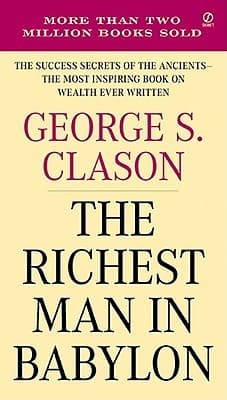
The Richest Man in Babylon cover
Archivist's Choice

The Richest Man in Babylon

George S. Clason (1926)

Genre

Business / Economics / Finance / Philosophy / Self-Help

Reading Time

180 min

Key Themes

See below

Track Your Reading

Sign in to track this book

Learn ancient Babylonian parables that explain how to create and keep wealth, moving from small earnings to lasting financial security.

Core Idea

Anyone can build wealth and financial security by following basic, timeless money principles. These principles, told through parables from ancient Babylon, stress saving a part of all income, controlling spending, investing wisely, protecting investments, owning a home, planning for retirement, and improving skills. The book suggests that consistently using these basic ideas, not complex plans or high incomes, helps people move from poverty to prosperity.
Reading time
180 min
Difficulty
Easy
✓ Read this if...
You are new to personal finance, looking for foundational principles of wealth building, or appreciate financial advice presented through engaging parables and stories.
✗ Skip this if...
You are an experienced investor seeking advanced financial strategies, or prefer modern, data-driven economic analysis over allegorical wisdom.

Core idea

The central argument and framework that powers the entire book.

Anyone can build wealth and financial security by following basic, timeless money principles. These principles, told through parables from ancient Babylon, stress saving a part of all income, controlling spending, investing wisely, protecting investments, owning a home, planning for retirement, and improving skills. The book suggests that consistently using these basic ideas, not complex plans or high incomes, helps people move from poverty to prosperity.

At a glance

Reading time

180 min

Difficulty

Easy

Read this if...

You are new to personal finance, looking for foundational principles of wealth building, or appreciate financial advice presented through engaging parables and stories.

Skip this if...

You are an experienced investor seeking advanced financial strategies, or prefer modern, data-driven economic analysis over allegorical wisdom.

Key Takeaways

1

Pay Yourself First

Allocate at least one-tenth of all earnings for savings and investment.

Quote

A part of all you earn is yours to keep. It should be no less than one-tenth no matter how little you earn.

The main rule for building wealth, as taught by Arkad, the richest man in Babylon, is to always save a part of your income before paying for anything else. This is not just for emergencies; it is about building a strong financial base and a mindset of having enough. By putting yourself first financially, you ensure that some of your work always benefits you, not just others. This small act, done consistently, grows over time, leading to significant wealth. It requires discipline but guarantees your money will start to increase.

Supporting evidence

Arkad's first lesson to the 'class of ten men' was to save one-tenth of all their earnings, regardless of how much they made.

Apply this

Automate savings transfers on payday to a separate, high-yield savings account or investment vehicle. Treat this transfer as a non-negotiable bill.

financial-disciplinepersonal-financesaving-habits
2

Control Thy Expenditures

Distinguish between necessary expenses and desires, and live within your means.

Quote

What each of us calls our 'necessary expenses' will always grow to equal our incomes unless we protest to the contrary.

The book notes that 'necessary expenses' tend to grow to use up all available income. To truly build wealth, one must carefully look at spending, telling the difference between real needs and temporary wants. This is not about going without, but about spending with purpose and avoiding increased living costs. By making and sticking to a budget, people control their money, stopping it from being spent on non-essential items. This control frees up money that can then go towards savings and investments, speeding up the path to financial ...

Supporting evidence

Bansir, the chariot builder, and Kobbi, the musician, initially struggled because their 'necessary expenses' always consumed their income, despite earning a fair wage. Arkad teaches them to budget and only spend nine-tenths of their earnings.

Apply this

Create a detailed budget, tracking all income and expenses. Prioritize needs over wants, and consciously reduce or eliminate discretionary spending that doesn't align with your financial goals.

budgetingexpense-managementfinancial-literacy
3

Make Thy Gold Multiply

Invest your savings wisely to generate passive income and grow your wealth.

Quote

Every gold piece you save is a slave to work for you. Every copper it earns is its child that also can earn for you.

Saving money is only the first step; real wealth comes from making that saved money work for you. The book highlights the power of compound interest, showing how even small investments can grow a lot over time as their earnings make more earnings. This idea of 'making thy gold multiply' encourages people to become investors, not just savers. It is about changing from earning money in a straight line (trading time for money) to earning money in multiple ways, where your capital makes income on its own, setting the stage for financial f...

Supporting evidence

Arkad tells the story of how his initial savings, when invested, brought him more wealth, and those new earnings were also invested, creating a 'stream of gold' flowing back to him.

Apply this

Research and invest in diversified assets like stocks, bonds, or real estate. Reinvest dividends and earnings to maximize compounding returns.

investingcompound-interestwealth-creation
4

Guard Thy Treasures from Loss

Protect your capital by investing cautiously and seeking expert advice.

Quote

Consult with men who are experienced in handling money. Let their wisdom protect thy treasure from unsafe investments.

While making your money grow is important, protecting your original investment is just as, if not more, important. The book warns against quick-rich schemes and advises careful investment choices. It points out the danger of trusting your hard-earned savings to inexperienced or dishonest people. Getting advice from knowledgeable and proven experts is essential. This point stresses the importance of checking things carefully, understanding investment risks, and putting the safety of your money ahead of the appeal of huge, but often fal...

Supporting evidence

Arkad recounts his mistake of investing with a brickmaker who promised to buy jewels from afar but was swindled, losing Arkad's initial savings. He learned to seek advice from a goldsmith, a man experienced in handling money.

Apply this

Before making any investment, thoroughly research it. Seek advice from certified financial advisors. Diversify your investments to mitigate risk, and be wary of promises of unusually high, guaranteed returns.

risk-managementfinancial-planninginvestment-safety
5

Make of Thy Dwelling a Profitable Investment

Own your home and turn it into an asset rather than a perpetual expense.

Quote

Own thy own home. And when thy dwelling is thy castle, thou wilt find that thy life is richer and thy spirit is lighter.

The book supports homeownership not just for emotional security but as a smart financial move. Rent is an ongoing expense that does not create a long-term asset. In contrast, paying a mortgage, while a burden at first, eventually leads to owning a valuable asset. This allows one to remove a major regular expense, freeing up significant money for more investment or enjoyment. Also, a well-kept home can increase in value, becoming a big part of one's total wealth. It turns a cost (rent) into an asset that builds equity.

Supporting evidence

Dabasir, a merchant, describes how owning his home, even with a mortgage, was a far better decision than continuously paying rent, as it eventually eliminated a major monthly expense and provided an asset.

Apply this

Prioritize saving for a down payment on a home. Once owned, continue to maintain and improve the property, viewing it as a long-term investment.

homeownershipreal-estate-investmentasset-building
6

Insure a Future Income

Plan for old age and the protection of your family through long-term investments and insurance.

Quote

Provide in advance for the needs of thy growing age and the protection of thy family.

Financial wisdom goes beyond immediate rewards to securing one's future and the well-being of family. This point stresses the importance of planning ahead, urging people to build a financial cushion that will support them in old age or during unexpected difficulties. This includes creating different investments that will make income long after one stops working, along with suitable insurance to protect against life's uncertainties. It is about building a legacy and ensuring peace of mind for oneself and loved ones, preventing future f...

Supporting evidence

The character of the 'camel trader' learns to invest in land and property that will continue to yield income even when he is no longer able to work, ensuring his comfort in old age.

Apply this

Start a retirement fund (e.g., 401k, IRA), invest in income-generating assets, and consider life and disability insurance to protect your family and future income.

retirement-planningfinancial-securitywealth-preservation
7

Increase Thy Ability to Earn

Continuously improve your skills and knowledge to enhance your earning potential.

Quote

The more wisdom we possess, the more we can earn. The man who seeks to learn more of his craft shall be rewarded.

While managing existing money is important, the book also points out the importance of increasing one's ability to earn. This involves continuous self-improvement, learning new skills, and becoming more expert in one's field. By becoming more valuable in the job market, people can earn higher wages, get better opportunities, and ultimately speed up their wealth-building journey. This principle supports lifelong learning and professional growth, recognizing that human capital is one of the most powerful assets a person has. It is an in...

Supporting evidence

Arkad explains that he constantly sought wisdom and improved his craft, which led to greater opportunities and higher earnings, allowing him to accumulate more wealth.

Apply this

Read books, take courses, attend workshops, and seek mentorship in your field. Continuously look for ways to add value in your work or business.

skill-developmentcareer-growthself-improvement
8

Seek Counsel from Wise Men

Leverage the experience of others to avoid mistakes and make informed decisions.

Quote

The advice of wise men is as gold to him who will take it.

One of the book's strongest lessons is the value of mentorship and seeking advice from those who have already achieved financial success. It is unwise to try and navigate the complex financial world alone when experienced people can offer valuable insights and help avoid costly mistakes. This point encourages humility and a willingness to learn, stressing that true wisdom often comes from watching and listening to those who have gone before you. It is about building a network of trusted advisors who can give good, unbiased advice.

Supporting evidence

Arkad explicitly advises consulting with experienced goldsmiths about investments, rather than trusting naive brickmakers, to protect his capital.

Apply this

Identify mentors or financial advisors who have a proven track record of success. Actively seek their advice, listen carefully, and implement their counsel when appropriate.

mentorshipfinancial-advicelearning-from-others
9

Good Luck Follows Hard Work

Opportunity often arises for those who are prepared and diligent.

Quote

Men of action are favored by the goddess of good luck.

The 'goddess of good luck' in Babylon is not a random god but a symbol for opportunities that appear to those who are active, prepared, and persistent. This point challenges the idea of passive luck, suggesting that hard work, continuous self-improvement, and a readiness to take opportunities are the real drivers of good results. It is about having a mindset where one is always looking for ways to improve their situation, rather than just waiting for good fortune. Success is rarely accidental; it comes from consistent action and readi...

Supporting evidence

The story of the 'lucky' merchant who was always prepared for new opportunities, unlike his lazy contemporaries, illustrates that his 'luck' was a result of his diligence and readiness.

Apply this

Actively seek out opportunities, whether in your career, investments, or personal development. Be prepared to act quickly and decisively when they arise, and maintain a strong work ethic.

proactivenessopportunity-seekingdiligence
10

The Laws of Gold are Simple and Eternal

Wealth accumulation is governed by timeless, understandable principles.

Quote

The laws of gold are but five. He who knoweth them and abideth by them shall be rich.

Ultimately, 'The Richest Man in Babylon' simplifies wealth creation into a set of basic, unchanging principles. These 'laws of gold' are not secret but practical, common-sense rules that have been true for thousands of years. The book argues that financial success is not about luck, birthright, or complex plans, but about consistently using these basic ideas: saving, budgeting, investing wisely, protecting money, and increasing earning power. Understanding and consistently following these simple, eternal laws is presented as the sure ...

Supporting evidence

The entire book is structured around the 'Seven Cures for a Lean Purse' and the 'Five Laws of Gold,' presented as universal principles for wealth.

Apply this

Regularly review and ensure your financial habits align with these core principles: save a portion, control spending, invest wisely, protect assets, and continuously improve your earning capacity.

financial-principlestimeless-wisdomwealth-fundamentals

Critical analysis

Notable Quotes

A part of all you earn is yours to keep. It should be not less than a tenth no matter how little you earn.

Arkad's first law for building wealth.

Gold cometh gladly and in increasing quantity to any man who will put by not less than one-tenth of his earnings to create an estate for his future and that of his family.

The first law of gold, explaining its attraction to savers.

Gold clingeth to the protection of the cautious owner who invests it under the advice of men wise in its handling.

The second law of gold, emphasizing wise investment.

Gold slippeth away from the man who invests it in businesses or purposes with which he is not familiar or which are not approved by those who are skilled in its safe guarding.

The third law of gold, warning against speculative investments.

Gold flees the man who would force it to impossible earnings or who followeth the alluring advice of tricksters and schemers or who trusts it to his own inexperience and romantic desires in investment.

The fourth law of gold, cautioning against greed and get-rich-quick schemes.

The man who desires to become rich must not only save his first tenth, but must also learn to make his money work for him.

Bansir's realization about the importance of investing savings.

Opportunity is a haughty goddess who wastes no time with those who are unprepared.

Kalabab's wisdom on preparedness and seizing chances.

We are what we are because we understand how to save our money and how to make it earn us more money.

Arkad's explanation of the foundation of his wealth.

The more wisdom we possess, the more we can earn.

Kalabab discussing the value of knowledge.

Our acts are not wiser than our thoughts.

Dabasir reflecting on the importance of clear thinking before action.

Better a little caution than a great regret.

A merchant's advice regarding financial decisions.

If you desire to help your friend, do so in a way that will not bring your friend's burdens upon yourself.

Arkad's advice on lending money to friends.

Teach yourself to make your budget, that it may assist you to have your necessities, to have your enjoyments and to satisfy your worthwhile desires without spending more than nine-tenths of your earnings.

One of Arkad's five laws for a lean purse.

The Goddess of Good Luck is bestowing her favors upon those who recognize her opportunity and grasp it.

The concept of luck favoring the prepared and proactive.

Quiz

Test Your Knowledge

Ready to see how well you understood this book? Take our interactive quiz with 10 questions.

10
Questions
~5
Minutes
?
Best Score

Key Questions (FAQ)

'The Richest Man in Babylon' is a collection of parables set in ancient Babylon that offers timeless advice on personal finance, wealth building, and financial planning. It presents universal principles through engaging stories that guide readers on how to save, invest, and grow their money.

About the author