BookBrief
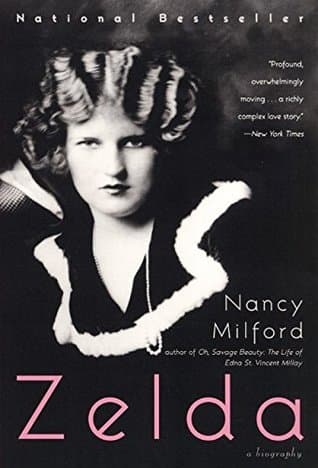
Zelda cover
Archivist's Choice

Zelda

Nancy Milford (1970)

Genre

Biography / Memoir / History

Reading Time

10-12 hours

Key Themes

See below

Track Your Reading

Sign in to track this book

Zelda Fitzgerald's life with F. Scott Fitzgerald was a dazzling, tragic story of madness, artistic struggle, and fiery demise, forever entangled in the shadow of his ambition.

Core Idea

Nancy Milford's "Zelda" reconstructs the life of Zelda Sayre Fitzgerald, not just as the wife of F. Scott Fitzgerald, but as a complex individual. Her artistic aspirations, mental health struggles, and fierce independence were often overshadowed, misinterpreted, or suppressed by the story of her more famous husband. The book argues that Zelda was a significant, if tragic, figure of the Jazz Age, whose personal and creative journey reflected the era's promises and problems, exploring the cost of being both muse and rival.
Reading time
10-12 hours
Difficulty
Medium
✓ Read this if...
You are fascinated by the untold stories of women behind famous men, the psychological impact of celebrity, the complexities of mental illness in a historical context, or a deep dive into the Jazz Age's darker undercurrents.
✗ Skip this if...
You prefer a purely chronological, uncritical narrative, or are looking for a light, romanticized portrayal of the Fitzgeralds' life.

Core idea

The central argument and framework that powers the entire book.

Nancy Milford's "Zelda" reconstructs the life of Zelda Sayre Fitzgerald, not just as the wife of F. Scott Fitzgerald, but as a complex individual. Her artistic aspirations, mental health struggles, and fierce independence were often overshadowed, misinterpreted, or suppressed by the story of her more famous husband. The book argues that Zelda was a significant, if tragic, figure of the Jazz Age, whose personal and creative journey reflected the era's promises and problems, exploring the cost of being both muse and rival.

At a glance

Reading time

10-12 hours

Difficulty

Medium

Read this if...

You are fascinated by the untold stories of women behind famous men, the psychological impact of celebrity, the complexities of mental illness in a historical context, or a deep dive into the Jazz Age's darker undercurrents.

Skip this if...

You prefer a purely chronological, uncritical narrative, or are looking for a light, romanticized portrayal of the Fitzgeralds' life.

Key Takeaways

1

The Price of Muse

Zelda's life was a constant negotiation between her identity and her role as Scott Fitzgerald's muse.

Quote

Scott saw Zelda not only as his wife but as a literary property, a source of inspiration and material for his fiction.

Zelda Sayre entered her marriage to F. Scott Fitzgerald as an independent spirit, but his literary ambition increasingly consumed her. Milford details how Scott directly used their shared life, her letters, diaries, and even her speech, often without her consent. While this fueled his masterpieces like 'The Beautiful and Damned' and 'Tender Is the Night,' it also took away Zelda's sense of self and ownership over her own experiences. Her initial delight in being part of his world slowly turned into resentment as she realized her life ...

Supporting evidence

Milford cites numerous instances where Scott directly lifted passages from Zelda's letters and journals for his novels, often with minimal alteration. For example, her 'Southern girl' persona and specific anecdotes from their early life appear verbatim in 'This Side of Paradise' and 'The Beautiful and Damned.'

Apply this

Aspiring creatives in relationships should establish clear boundaries regarding personal experiences and shared narratives. Openly discuss what is fair game for artistic interpretation and what remains private. Recognize the importance of individual creative pursuits outside of a shared artistic endeavor.


creative-ownershipartistic-ethicsspousal-muse
2

The Jazz Age's Double-Edged Sword

The era that defined Zelda also contributed to her downfall, offering freedom without true liberation.

Quote

The Jazz Age promised a new kind of freedom for women, but for Zelda, it was a freedom often conflated with excess and spectacle, rather horrific consequences.

Zelda Fitzgerald was the quintessential flapper, embodying the exuberance, rebellion, and perceived freedom of the Jazz Age. Milford portrays her as a woman who embraced the era's new freedoms—drinking, dancing, daring fashion, and a rejection of Victorian norms. However, this freedom was often superficial, largely defined by male expectations and public spectacle rather than true empowerment. The constant pursuit of pleasure, travel, and lavish living was financially unsustainable and emotionally draining. The era's focus on youth an...

Supporting evidence

Milford details their extravagant lifestyle in Paris and on the Riviera, characterized by excessive drinking, late-night parties, and impulsive spending that led to constant financial strain. She also recounts the public fascination with Zelda's scandalous behavior, which was both celebrated and later used as evidence of her instability.

Apply this

Critically evaluate cultural trends and their promises of 'freedom.' Differentiate between superficial societal acceptance and genuine personal autonomy. Cultivate sustainable practices and meaningful pursuits beyond fleeting trends.

flapper-culturesocietal-expectationshedonism
3

The Unfulfilled Artist

Zelda’s multifaceted artistic ambitions were perpetually overshadowed and undermined by her husband’s towering literary career.

Quote

She was a woman of immense, if undisciplined, talent, whose creative urges were often dismissed as mere hobbies or, worse, symptoms of her instability.

Milford argues for Zelda as a legitimate, though ultimately stifled, artist across multiple fields. Zelda pursued ballet with obsessive passion, reaching a professional level despite starting late. Her painting, often vibrant and surreal, showed a unique vision, and her novel, 'Save Me the Waltz,' though imperfect, offered a raw, autobiographical counter-narrative to Scott's work. However, each of these efforts met with condescension, direct competition from Scott, or was viewed through the lens of her mental health. Scott’s jealousy ...

Supporting evidence

Milford details Zelda's rigorous ballet training in Paris, her dedication to painting, and the circumstances surrounding the publication of 'Save Me the Waltz.' She highlights Scott's anger and attempts to sabotage Zelda's novel, feeling it encroached on his own material and narrative territory, particularly with 'Tender Is the Night.'

Apply this

Support and encourage the independent creative pursuits of partners, recognizing that artistic expression is vital for individual well-being. Acknowledge and respect differing artistic voices and narratives within a relationship. Actively seek out and value diverse perspectives in art and life.

creative-suppressionartistic-jealousyunrecognized-talent
4

Diagnosis and Despair

Zelda's mental illness was complex, exacerbated by societal misunderstanding, misdiagnosis, and the pressures of her life.

Quote

The medical understanding of mental illness in her time was rudimentary, often punitive, and deeply intertwined with gendered expectations.

Milford handles the tragic path of Zelda's mental health with sensitivity, providing context for the limits of psychiatry in the early 20th century. Zelda's breakdowns, starting in her late twenties, were likely a mix of genetic predisposition, the pressures of her marriage, public scrutiny, and the frustration of her unfulfilled artistic ambitions. She underwent various treatments, including insulin shock therapy and hydrotherapy, often in institutions that offered little real therapeutic understanding. Her diagnoses varied, reflecti...

Supporting evidence

Milford extensively documents Zelda's various hospitalizations, the differing diagnoses (from schizophrenia to bipolar disorder), and the primitive and often brutal treatments she endured. She also uses letters from doctors and Scott himself to illustrate the prevailing attitudes towards her illness.

Apply this

Advocate for nuanced and empathetic approaches to mental health care. Recognize the historical context of mental illness treatment and its impact on individuals. Challenge narratives that pathologize independent or unconventional behavior without genuine understanding.

mental-health-historypsychiatric-caregender-and-madness
5

The War of Narratives

Zelda and Scott's marriage was a battleground for who controlled their shared story, with Scott ultimately dominating the public perception.

Quote

Their life together was a constant negotiation over who owned the experiences, who had the right to tell their story, and whose version would become canonical.

One of Milford's most important insights is the ongoing struggle between Zelda and Scott to control the narrative of their own lives. Scott, as the published author, had the advantage, weaving their experiences into his fiction and shaping public opinion. Zelda's attempts to tell her own story, especially through 'Save Me the Waltz,' met with fierce resistance and even sabotage from Scott, who felt she was infringing on 'his' material. This created a dynamic where Zelda's reality was constantly reinterpreted and taken by her husband, ...

Supporting evidence

Milford details the contentious period surrounding the publication of 'Save Me the Waltz,' including Scott's furious letters demanding changes and his subsequent rush to publish 'Tender Is the Night,' which covered similar autobiographical ground, effectively eclipsing Zelda's work.

Apply this

Recognize the power of narrative control and actively seek out marginalized voices. Be critical of single-perspective histories and biographies. Encourage individuals to tell their own stories in their own words, free from external pressures.

autobiographical-fictionnarrative-controlhistorical-bias
6

Southern Belle to International Icon

Zelda's identity was deeply rooted in her Southern upbringing, which both shaped her charm and contributed to her later alienation.

Quote

She carried the South with her, a blend of charm, defiance, and a certain anachronistic grace that both captivated and eventually alienated her from the European avant-garde.

Milford establishes Zelda's origins as a privileged Southern belle from Montgomery, Alabama, a background that gave her a unique mix of vivacity, charm, and a rebellious spirit. This upbringing, rooted in a specific social code and sense of place, heavily influenced her personality and initial appeal to Scott. However, as they moved to the cosmopolitan circles of New York and Europe, her Southern identity, once a source of fascination, began to clash with the more intellectual and cynical environments they inhabited. Her theatricality...

Supporting evidence

Milford recounts anecdotes from Zelda's youth in Montgomery, her reputation as a spirited and unconventional debutante, and how these traits initially charmed Scott. She then contrasts this with her experiences in Paris, where her Southern sensibilities sometimes felt out of place among figures like Hemingway and Gertrude Stein.

Apply this

Understand how cultural backgrounds shape identity and interaction. Practice cultural empathy and avoid quick judgments based on regional differences. Reflect on how personal origins can be both a strength and a source of friction in new environments.

cultural-identityregionalismexpatriate-experience
7

The Burden of Celebrity

The Fitzgeralds' public image as the 'golden couple' created an unsustainable pressure that ultimately crushed Zelda.

Quote

They were not merely a couple, but a public spectacle, living out a dream that was destined to become a nightmare under the relentless gaze of the world.

Milford portrays the Fitzgeralds as the ultimate celebrity couple of their era, admired and scrutinized by the press and public. Their glamorous image, carefully created by Scott and enthusiastically embodied by Zelda, became a performance they were constantly expected to maintain. This burden of celebrity meant their personal struggles, financial problems, and Zelda's mental health issues often played out publicly, or worse, became fodder for gossip. The expectation to always be 'on,' to embody the spirit of the Jazz Age, left them l...

Supporting evidence

Milford details numerous newspaper articles and social commentaries that followed the Fitzgeralds' every move, from their wild parties to their public spats. She also describes how Scott often used their public image to his advantage, even as it became detrimental to Zelda.

Apply this

Be wary of the allure and demands of public image and celebrity. Prioritize genuine connection and well-being over external validation. Understand that public personas often hide complex and difficult realities.

public-personacelebrity-culturemedia-scrutiny
8

A Legacy Reclaimed

Milford's biography was instrumental in shifting public perception of Zelda from 'mad wife' to a complex, tragic figure.

Quote

Before Milford, Zelda was largely a footnote in Scott's story, a tragic figure defined by her madness. This book forced a reevaluation.

Nancy Milford's 'Zelda' was a groundbreaking work, published when Zelda Fitzgerald was largely dismissed as simply the 'mad wife' of a literary genius. Milford did extensive research, looking into Zelda's letters, diaries, medical records, and interviewing many people who knew her, to create a nuanced and empathetic portrait. This biography was important in reclaiming Zelda's agency and artistic identity, challenging the long-held narrative, largely perpetuated by Scott himself and later by biographers like Arthur Mizener, that painte...

Supporting evidence

Milford's extensive bibliography and personal interviews, detailed in the book's appendices and acknowledgments, demonstrate the depth of her research. The critical reception of the book upon its release in 1970 marked a significant turning point in Zelda's historiography.

Apply this

Seek out and support biographies and historical accounts that offer alternative perspectives and challenge dominant narratives. Recognize the importance of rigorous research in correcting historical injustices. Advocate for the re-evaluation of figures who have been historically marginalized or misrepresented.

feminist-biographyhistorical-revisionismreclaiming-narratives
9

Love and Codependency

Their intense, passionate love was inextricably bound to a destructive codependency that ultimately consumed them both.

Quote

Their love was as intoxicating as it was toxic, a bond so intense it became suffocating, each feeding off the other's strengths and weaknesses in a fatal embrace.

The relationship between Zelda and Scott Fitzgerald was passionate, a whirlwind romance that defined an era. However, Milford dissects how this intense love became a destructive codependency. They were deeply intertwined, drawing inspiration from each other, but also fueling each other's insecurities, jealousies, and self-destructive tendencies. Scott relied on Zelda for material, validation, and a vibrant public image, while Zelda sought validation and identity through Scott's fame, yet resented his use of her life. Their inability t...

Supporting evidence

Milford uses their voluminous correspondence, filled with declarations of love, bitter accusations, and pleas for understanding, to illustrate the depth of their emotional entanglement and the cyclical nature of their conflicts. She also details their shared alcoholism and public outbursts.

Apply this

Cultivate healthy relationship boundaries and foster individual growth within partnerships. Recognize the signs of codependency and seek support for balanced emotional connections. Understand that intense passion alone does not equate to a healthy or sustainable relationship.

codependent-relationshipstoxic-loveinterpersonal-dynamics
10

The Silent Battle for Selfhood

Zelda's life was a continuous, albeit often internal, struggle to define herself outside of her husband's shadow.

Quote

Beneath the dazzling surface, Zelda fought a lonely battle for her own identity, a fight for a self that was not merely a reflection or extension of Scott Fitzgerald.

Throughout her life, Zelda Fitzgerald fought a silent, often unrecognized, war for her own identity. Milford's biography shows a woman constantly trying to assert her individuality, whether through her rebellious youth, her pursuit of ballet, her painting style, or her attempt to write her own novel. Yet, each effort met with formidable obstacles, primarily the overwhelming presence and demands of F. Scott Fitzgerald. She was always seen through his lens, her actions interpreted through his narrative, and her talents often dismissed a...

Supporting evidence

Milford quotes Zelda's own writings and letters, particularly during her time in various institutions, where she expressed a longing for creative autonomy and a clear sense of self separate from Scott. Her dedication to ballet, despite ridicule, is a testament to this struggle.

Apply this

Actively support and celebrate individual identity and autonomy within relationships and society. Encourage self-expression and creative pursuits as vital components of well-being. Reflect on how societal pressures or dominant figures can inadvertently suppress individual selfhood.

self-identitypersonal-autonomyexistential-struggle

Critical analysis

Notable Quotes

I was married to a man who was very fond of me and wanted to marry me. He was a good man. But I loved Scott.

Zelda reflecting on her first serious suitor, Lieutenant Commander J. R. W. S. Baugh, before she met F. Scott Fitzgerald.

She was beautiful, high-spirited, and had a reckless disregard for convention.

Description of Zelda's character during her youth in Montgomery, Alabama, before her marriage.

The only way to write a good novel is to be a good person.

Zelda's belief about the creative process and personal integrity, contrasting with Scott's more pragmatic view.

I don't want to live; I want to love first, and live incidentally.

A sentiment attributed to Zelda, reflecting her passionate and intense approach to life and relationships.

We were not meant for each other; we were meant for the world.

Zelda's poignant realization about her and Scott's relationship, suggesting their individual ambitions overshadowed their union.

She was his muse, his rival, and his greatest tragedy.

A summary of Zelda's complex role in F. Scott Fitzgerald's life and work, encompassing both inspiration and conflict.

I began to write because I had to, because there was no other way to explain what was happening to me.

Zelda's motivation for beginning her own literary pursuits, particularly her novel 'Save Me the Waltz'.

The crack-up had begun long before the first symptoms appeared.

Referring to the slow decline of her and Scott's relationship and her mental health, a gradual process.

I have been a great nuisance to myself and to everybody else.

Zelda's self-deprecating reflection during one of her periods of illness, expressing her frustration.

Why should I be a background when I have a foreground of my own?

Zelda's fierce assertion of her individual identity and ambition, resisting being overshadowed by Scott.

She was a woman ahead of her time, trapped in a time that couldn't understand her.

A characterization of Zelda's modern sensibilities and her struggle within the societal constraints of her era.

The price of genius is often paid by those who love it.

A commentary on the toll Scott's genius and demanding nature took on Zelda and their relationship.

She was not mad, she was simply too much herself.

A reinterpretation of Zelda's mental illness, suggesting it was an intense expression of her unique personality.

I wish I had been a man. I wish I had been a writer.

Zelda's lament, expressing her frustration with the limitations placed on women of her time and her desire for literary recognition.

Quiz

Test Your Knowledge

Ready to see how well you understood this book? Take our interactive quiz with 10 questions.

10
Questions
~5
Minutes
?
Best Score

Key Questions (FAQ)

Zelda Sayre Fitzgerald was an American socialite, novelist, painter, and dancer, best known as the wife of author F. Scott Fitzgerald. She embodied the spirit of the Jazz Age, living a life of excitement and glamour that ultimately gave way to personal struggles and mental health challenges.

About the author