BookBrief
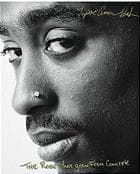
The Rose That Grew from Concrete cover
Archivist's Choice

The Rose That Grew from Concrete

Tupac Shakur (1999)

Genre

Biography / Memoir

Reading Time

120 min

Key Themes

See below

Track Your Reading

Sign in to track this book

Tupac Shakur's raw, handwritten verses bloom from the concrete of his life, revealing a garden of reflections on struggle, beauty, and the human spirit.

Core Idea

Tupac Shakur's poetry collection, "The Rose That Grew from Concrete," is an intimate revelation of his inner world, showing that vulnerability and depth coexisted with his public persona. The book argues that resilience, art, and a strong sense of social injustice are formed in difficult environments and personal struggle, providing a voice for those who feel unheard. It suggests that even from the most challenging circumstances, beauty, wisdom, and insight can emerge through self-reflection and the search for truth.
Reading time
120 min
Difficulty
Medium
✓ Read this if...
You are interested in understanding the complex inner life of a cultural icon, exploring themes of resilience, vulnerability, and social commentary through poetry, or appreciate the raw, introspective side of Tupac Shakur beyond his musical legacy.
✗ Skip this if...
You are looking for a traditional narrative biography, prefer prose over poetry, or are not open to engaging with the unfiltered emotional and social critiques presented in verse.

Core idea

The central argument and framework that powers the entire book.

Tupac Shakur's poetry collection, "The Rose That Grew from Concrete," is an intimate revelation of his inner world, showing that vulnerability and depth coexisted with his public persona. The book argues that resilience, art, and a strong sense of social injustice are formed in difficult environments and personal struggle, providing a voice for those who feel unheard. It suggests that even from the most challenging circumstances, beauty, wisdom, and insight can emerge through self-reflection and the search for truth.

At a glance

Reading time

120 min

Difficulty

Medium

Read this if...

You are interested in understanding the complex inner life of a cultural icon, exploring themes of resilience, vulnerability, and social commentary through poetry, or appreciate the raw, introspective side of Tupac Shakur beyond his musical legacy.

Skip this if...

You are looking for a traditional narrative biography, prefer prose over poetry, or are not open to engaging with the unfiltered emotional and social critiques presented in verse.

Key Takeaways

1

The Root of Resilience

Inner strength can bloom even in the harshest environments.

Quote

Did you hear about the rose that grew from a crack in the concrete? Proving nature's laws wrong it learned to walk without having feet. Funny it seems, but by keeping its dreams, it learned to breathe fresh air. Long live the rose that grew from concrete when no one else ever cared.

Tupac's poem, 'The Rose That Grew from Concrete,' is the central metaphor for the collection and his life. It champions the idea that beauty, talent, and resilience can emerge from unlikely and unsupportive circumstances. This is a statement on the human spirit's ability to overcome systemic disadvantage, neglect, and violence. The 'concrete' represents the harsh realities of poverty, racism, and societal indifference that Tupac and many others faced. Yet, the 'rose' thrives, symbolizing a drive to live, create, and find purpose despi...

Supporting evidence

The titular poem itself, 'The Rose That Grew from Concrete,' encapsulates this theme, directly addressing the improbable survival and flourishing against all odds.

Apply this

Reflect on your own 'concrete' – the challenges or limitations you face. Identify the 'rose' within you – your unique strengths, dreams, and resilience. Cultivate a mindset that sees obstacles not as impenetrable barriers, but as soil from which growth can emerge. Seek beauty and purpose in unexpected places.

resilienceovercoming-adversityinner-strength
2

Poetry as a Sanctuary

Writing offered an escape and a voice for raw, complex emotions.

Quote

I'm not a thug, I'm a poet. I'm an artist.

Long before his fame, Tupac found solace and expression in poetry. This collection reveals his early, unadulterated passion for the written word as a primary outlet for his deepest thoughts and feelings. Poetry was a sanctuary where he could process trauma, articulate his observations of the world, and explore his identity without the filters or pressures of the music industry. The raw nature of many of these poems shows their therapeutic function; they are not merely art but acts of self-preservation and communication. This takeaway ...

Supporting evidence

The sheer volume and personal nature of the poems, written from a young age and covering a wide range of intimate topics, demonstrate poetry's central role in his life before mainstream success.

Apply this

Find your own creative outlet – writing, painting, music, dance – to process emotions, express thoughts, and create a personal space for introspection. Don't censor yourself; allow for raw and authentic expression. Recognize that the act of creation itself can be profoundly healing and empowering.

creative-expressionemotional-outletself-discovery
3

The Unseen Vulnerability

Beneath the public persona lay a sensitive, introspective soul.

Quote

U will never understand how much I love U / Not with words or deeds / But with a feeling that lives in my heart / Like a rose that blooms in the dark.

The poems in this collection offer a stark contrast to Tupac's often confrontational public image. They reveal a sensitive, introspective, and even vulnerable young man grappling with questions of love, loss, identity, and injustice. Readers encounter a Tupac who writes tenderly about his mother, expresses yearning for connection, and agonizes over societal ills. This vulnerability is important because it humanizes an icon often reduced to a caricature of 'thug life.' It challenges the simplistic narratives often imposed on public fig...

Supporting evidence

Poems like 'Can U C the Pride in the Pimp,' 'Mama's Just a Little Girl,' and 'U R RITE' showcase his tenderness, love for his mother, and capacity for deep emotional connection, which often went unacknowledged in his public image.

Apply this

Challenge your own preconceived notions about individuals, especially those in the public eye or from different backgrounds. Seek to understand the layers beneath a person's outward presentation. Practice self-compassion and allow yourself to express vulnerability, recognizing it as a strength rather than a weakness.

vulnerabilitypublic-personaemotional-depth
4

Social Commentary's Genesis

Early poems foreshadowed the critical voice of his music.

Quote

The ghetto is a place where dreams go to die, but where souls often learn to fly.

Long before his rap lyrics became anthems of social justice, Tupac's poetry was a vehicle for social commentary. His poems articulate an awareness of systemic oppression, poverty, racial injustice, and the struggles faced by marginalized communities. He writes about police brutality, the drug epidemic, absent fathers, and the resilience of single mothers with honesty and a developing political consciousness. These early works reveal the intellectual and emotional foundations of his later musical activism, showing that his commitment t...

Supporting evidence

Poems such as 'The Ghetto,' 'A Pimp's Reflection,' and 'When U Feel Like Giving Up' directly address socio-economic disparities, the cycle of poverty, and the challenges faced by Black communities.

Apply this

Use your own voice and chosen medium to address social issues you care about. Don't wait for a platform; start by articulating your thoughts and observations. Recognize that art, in any form, can be a powerful tool for social change and awareness.

social-justiceactivismsystemic-oppression
5

The Paradox of Masculinity

Navigating tenderness and aggression in a complex world.

Quote

I'm a man, a warrior, but also a lover, a poet. I contain multitudes.

Tupac's poetry often grapples with the complexities of Black masculinity, particularly in the context of the ghetto. He expresses both a desire for tenderness, love, and emotional connection, alongside the hardened exterior and aggressive stance often needed for survival in a hostile environment. This paradox is evident in poems that shift from declarations of love to reflections on violence or the need for self-protection. He challenges the idea of masculinity, revealing the internal struggle to reconcile sensitivity with the demands...

Supporting evidence

The contrast between poems like 'U R RITE' (expressing deep love) and 'The Power of a Word' (discussing the impact of verbal aggression) or 'In the Depths of Solitude' (exploring loneliness and self-reflection) illustrates this internal tension.

Apply this

Examine the societal expectations of masculinity (or femininity) and how they might limit your authentic expression. Allow yourself to embody a full range of emotions and traits, rather than conforming to rigid stereotypes. Foster environments where vulnerability is seen as strength, not weakness.

masculinitygender-rolesidentity-struggle
6

The Burden of Prophecy

A premonition of his own tragic fate echoes through his verses.

Quote

I'm not afraid to die, I'm afraid to not live.

Reading these poems with the hindsight of Tupac's untimely death adds a layer of tragic irony and a sense of prophecy. Many verses touch upon themes of mortality, the fleeting nature of life, and the struggle to leave a lasting legacy. There's an urgency in his desire to be heard and understood, as if he instinctively knew his time would be short. This is not just about his personal fate, but a broader commentary on the precariousness of life for young Black men in America. The poems show his awareness of the dangers surrounding him, ...

Supporting evidence

Poems like 'In the Depths of Solitude,' where he reflects on his own mortality and the search for meaning, or 'The P.O.W.,' which can be interpreted as a feeling of being trapped or under siege, carry a heavy weight given his eventual fate.

Apply this

Reflect on your own legacy and what you want to achieve. Live with a sense of purpose and urgency, but also cultivate an appreciation for the present moment. Acknowledge the systemic factors that lead to premature loss of life in certain communities and advocate for change.

mortalitylegacypremonition
7

The Power of the Mother Figure

A recurring reverence for maternal strength and sacrifice.

Quote

My mother was my first teacher, my first love, my first hero.

Throughout his poetry, Tupac expresses admiration and love for his mother, Afeni Shakur, and for the strong, resilient Black mother. He acknowledges the sacrifices, struggles, and unwavering love provided by these women, often in the face of overwhelming adversity. This reverence for the maternal figure is a powerful theme, highlighting the foundational role mothers play in shaping identity and providing stability in unstable environments. It also serves as a tribute to the unsung heroes of his community—women who battled systemic cha...

Supporting evidence

Poems such as 'Mama's Just a Little Girl' (which, despite its title, reflects on his mother's journey and strength) and 'The Lady in My Life' (a broader ode to women) exemplify his deep respect and love for the maternal figure.

Apply this

Express gratitude and appreciation for the maternal figures in your life. Recognize and support the strength and sacrifices of mothers, especially those facing challenging circumstances. Advocate for policies that uplift and empower women and caregivers.

motherhoodmaternal-lovefamily-bonds
8

Universal Themes, Personal Lens

His specific experiences illuminate broader human truths.

Quote

Though my story is unique, the feelings are universal. Love, pain, hope, despair – these are the threads that connect us all.

While Tupac's poems are rooted in his personal experiences within a specific cultural and socio-economic context, they resonate with universal human emotions and struggles. Themes of love, loss, betrayal, hope, despair, identity, and the search for meaning transcend geographical and cultural boundaries. His ability to articulate his personal journey with honesty allows readers from diverse backgrounds to connect with the underlying humanity in his words. This takeaway shows the power of specific storytelling to reveal universal truths...

Supporting evidence

Poems like 'In the Depths of Solitude' (loneliness, self-reflection), 'The P.O.W.' (feeling trapped, yearning for freedom), and 'A Love Poem' (universal desire for connection) illustrate how his specific context gives way to relatable human experiences.

Apply this

Seek out stories and voices from diverse backgrounds; recognize that their unique experiences often illuminate universal human themes. Practice empathy by looking for common ground in others' narratives, even when their circumstances differ greatly from your own. Share your own specific story, knowing it holds universal resonance.

universal-themeshuman-conditionempathy

Critical analysis

Notable Quotes

Did you hear about the rose that grew from a crack in the concrete? Proving nature's laws are wrong it learned to walk without having feet. Funny it seems, but by keeping its dreams, it learned to breathe fresh air. Long live the rose that grew from concrete when no one else even cared.

From the titular poem, a metaphor for overcoming adversity and thriving against all odds.

We are not meant to be perfect, we are meant to be ourselves.

A reflection on authenticity and self-acceptance, often found in his personal musings.

I'm not saying I'm gonna change the world, but I guarantee that I will spark the brain that will change the world.

A quote reflecting his ambition and belief in the power of his message to inspire others.

The only thing that can save us is us.

A call for self-reliance and community empowerment, emphasizing internal strength.

Reality is wrong. Dreams are for real.

Highlighting the importance of imagination and dreams as a refuge or a guide for a better future.

Fear is stronger than love, remember that. Fear is stronger than love. All that love I gave didn't mean nothing when it came to fear.

A poignant observation on the power dynamics between fear and love, likely from a more cynical period.

You can spend minutes, hours, days, weeks, or even months over-analyzing a situation; trying to put the pieces together, justifying what could've, would've happened... or you can just leave the pieces on the floor and move on.

A practical philosophy on letting go of past regrets and moving forward.

What I learned in jail is that I can't change the world. I can't change the world. I can't change no one. The only thing I can change is myself.

A reflective thought on personal responsibility and the limits of individual influence, born from introspection.

Sometimes I sit and look at the sky, and I think of all the things I've done, and all the things I'm gonna do, and I wonder what it all means.

A moment of existential contemplation, common in his more introspective writings.

Long live the rose that grew from concrete when no one else even cared.

A powerful concluding line from the famous poem, emphasizing resilience and uniqueness.

I was raised in the ghetto, and I'm proud of it. But I'm not gonna let it define me.

A statement of pride in his origins but also a determination to transcend limitations.

A lot of people are scared to say what they want. That's why they don't get what they want.

An observation on the importance of clear communication and assertiveness in achieving goals.

My mama always told me, 'If you can't find something to live for, you best find something to die for.'

A profound statement on purpose and conviction, reflecting his mother's influence.

The greatest thing to a man is to have his own mind.

Emphasizing intellectual independence and the value of critical thought.

Quiz

Test Your Knowledge

Ready to see how well you understood this book? Take our interactive quiz with 10 questions.

10
Questions
~5
Minutes
?
Best Score

Key Questions (FAQ)

'The Rose That Grew from Concrete' is a collection of over 100 poems written by Tupac Shakur. The book delves into a wide range of topics including poverty, motherhood, social injustice, and personal reflections, offering an intimate look into the artist's mind and experiences.

About the author