BookBrief
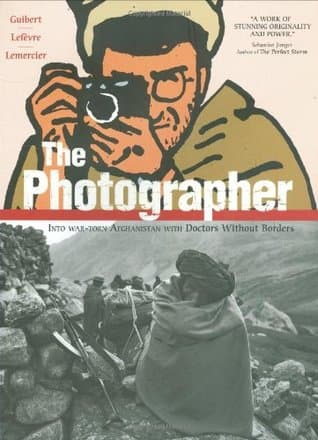
The Photographer cover
Archivist's Choice

The Photographer

Emmanuel Guibert (2003)

Genre

Lifestyle / Memoir / History

Reading Time

12 Minutes

Key Themes

See below

Track Your Reading

Sign in to track this book

Amidst the brutal Soviet-Afghan War, a photographer's gripping visual diary, intertwined with Guibert's art, chronicles a perilous journey with Doctors Without Borders to heal a ravaged nation.

Core Idea

Emmanuel Guibert's "The Photographer" is a poignant and visually innovative graphic novel that tells the true story of Didier Lefèvre, a French photojournalist, and his harrowing experiences covering the Soviet-Afghan War in 1986. Through a unique blend of Lefèvre's original black-and-white photographs, Guibert's evocative illustrations, and their collaborative narrative, the book explores the stark realities of war, the ethical complexities of photojournalism, and the profound human connections forged in extreme circumstances. It is a powerful meditation on memory, the act of bearing witness, and the enduring impact of conflict on individuals and the landscapes they inhabit.
Difficulty
Medium

Core idea

The central argument and framework that powers the entire book.

Emmanuel Guibert's "The Photographer" is a poignant and visually innovative graphic novel that tells the true story of Didier Lefèvre, a French photojournalist, and his harrowing experiences covering the Soviet-Afghan War in 1986. Through a unique blend of Lefèvre's original black-and-white photographs, Guibert's evocative illustrations, and their collaborative narrative, the book explores the stark realities of war, the ethical complexities of photojournalism, and the profound human connections forged in extreme circumstances. It is a powerful meditation on memory, the act of bearing witness, and the enduring impact of conflict on individuals and the landscapes they inhabit.

At a glance

Difficulty

Medium

Key Takeaways

1

The Unseen Toll of Humanitarian Aid

Beyond the headlines, the daily grind and psychological burden on aid workers is immense.

Quote

The hardest part isn't just the danger, but the relentless witnessing of suffering, day in and day out, with limited means to truly fix it all.

This book shows the physical and emotional exhaustion of humanitarian work in a war zone. Lefèvre's photographs, often showing everyday moments alongside difficult ones, reveal the constant strain on Doctors Without Borders teams. They face not only the immediate threats of conflict—shelling, landmines, ambushes—but also the demands of makeshift surgery, long treks over difficult terrain, and the psychological weight of treating many victims, including children. Guibert's illustrations often highlight the fatigue in their faces, the w...

Supporting evidence

Lefèvre's photographs showing exhausted doctors operating by flashlight, the arduous mule treks across mountains, and the constant fear of discovery by Soviet forces.

Apply this

When considering humanitarian crises, remember to acknowledge and support the mental health and well-being of aid workers, not just their physical safety. Fund organizations that prioritize staff care.


2

Photography as a Witness, Not Just a Spectacle

Lefèvre's approach elevates photojournalism beyond mere documentation to a deeply personal act of bearing witness.

Quote

I wasn't just taking pictures; I was trying to understand, to feel, to bring back a piece of what I saw for those who couldn't be there.

The book's best insight is how photography can be an act of empathy, not just image capture. Lefèvre's photographs are not always technically perfect or sensational; instead, they are raw, immediate, and human. He focuses on the faces of the injured, the hands of the surgeons, the daily lives of the Afghan people caught in the conflict. Guibert's decision to put these photographs directly into the graphic novel creates a dialogue between art and reality, letting the reader experience Lefèvre's view. This approach challenges the passiv...

Supporting evidence

The close-up portraits of wounded children, the candid shots of Doctors Without Borders staff, and the integration of these unpolished photos directly into Guibert's sequential art.

Apply this

When consuming news photography, look beyond the immediate shock value. Consider the context, the photographer's intent, and the human story behind the lens. Seek out photojournalism that prioritizes empathy over sensationalism.

3

The Unseen War: A Ground-Level Perspective

The graphic novel format vividly conveys the arduous, often hidden reality of conflict for civilians and aid workers.

Quote

The war wasn't just on the front lines; it was in every village, every path, every wounded body we encountered.

Unlike traditional war reporting that focuses on strategic movements or large battles, 'The Photographer' offers a personal, ground-level view of the Soviet-Afghan War. The story unfolds through the slow, dangerous journey of the Doctors Without Borders team and Lefèvre, traveling rugged mountains and remote villages. This perspective highlights how conflict affects civilians, who bear the brunt of the violence, often far from any official 'front.' Guibert's art captures the vast, unforgiving landscape and the constant threat within i...

Supporting evidence

The detailed illustrations of the treacherous mountain passes, the frequent encounters with landmine victims, and the descriptions of shelling in seemingly remote villages.

Apply this

Seek out diverse perspectives when learning about conflicts, prioritizing the voices and experiences of those directly impacted, including civilians and humanitarian workers, over purely military or political analyses.

4

The Power of Collaboration in Storytelling

The unique blend of photography and graphic novel art creates an unparalleled narrative depth.

Quote

The photos show what I saw, but the drawings show what I felt, what I couldn't capture with a lens.

The collaboration between Didier Lefèvre's photographs and Emmanuel Guibert's illustrations is the heart of this book. Guibert integrates the photos seamlessly, using his art to provide context, emotional depth, and to fill in gaps where photography alone might fall short. He draws the journey, conversations, internal thoughts, and the broader landscape, while Lefèvre's photos ground the story in reality, especially when showing the injured and medical procedures. This approach allows for a richer, more immersive storytelling experien...

Supporting evidence

Specific pages where Guibert's drawings transition into or out of Lefèvre's photographs, often with characters from the drawings interacting with the photo's subjects or setting the scene for a photo.

Apply this

When creating or consuming multi-media content, consider how different forms can be intentionally interwoven to enhance understanding and emotional resonance, rather than simply being presented side-by-side.

5

The Fragility of Life Amidst Conflict

The book starkly illustrates how easily life can be shattered and the constant presence of death in a war zone.

Quote

Every person we treated, every life we saved, felt like a small miracle against the overwhelming tide of destruction.

A theme throughout 'The Photographer' is the fragility of human life when exposed to the violence of war. Lefèvre's photographs often show severe injuries—amputations, shrapnel wounds, burns—that are a direct result of the conflict. The Doctors Without Borders team operates under constant pressure, often with limited resources, performing life-saving surgeries in basic conditions. The book shows the grim reality of death, both from injuries and the harsh environment. This constant closeness to death highlights the value of each life s...

Supporting evidence

Photographs of patients with grievous injuries, descriptions of the difficulty of transporting the wounded, and the constant threat of further attacks.

Apply this

Support organizations that provide medical aid in conflict zones, understanding that their work is not just about treatment but about affirming the value of human life in the face of widespread destruction.

6

Cultural Immersion and Understanding

Beyond the conflict, the book offers glimpses into Afghan culture and the resilience of its people.

Quote

Despite the war, there was a profound sense of hospitality, a deep connection to their land and traditions that persisted.

While the war is central, 'The Photographer' also provides insights into Afghan culture and the daily lives of its people during a time of upheaval. Lefèvre's photographs capture not only the suffering but also moments of resilience, community, and the spirit of the Afghan people. Guibert's illustrations depict interactions with villagers, the importance of hospitality, and traditional ways of life that continued despite the conflict. This portrayal prevents the story from becoming solely one of victimhood, instead highlighting the st...

Supporting evidence

Photographs of Afghan villagers in their homes, scenes of traditional meals, and descriptions of the hospitality extended to the aid workers despite the dangers.

Apply this

When engaging with narratives from conflict-affected regions, actively seek out stories that highlight the cultural richness and resilience of the local population, challenging monolithic portrayals of victimhood.

7

The Ethical Tightrope of Photojournalism

Lefèvre navigates the difficult balance between capturing truth and respecting dignity.

Quote

There were moments I hesitated, wondering if taking a picture was an intrusion, but I believed it was important to show the world what was happening.

The book raises questions about the ethics of photojournalism in conflict zones. Lefèvre, as a journalist with Doctors Without Borders, is privy to intimate and vulnerable moments of suffering. While his intent is to bear witness and inform, photographing the injured and dying always carries ethical weight. The book's strength is its unvarnished presentation, letting readers consider the choices made: what to photograph, how to frame it, and the potential impact on those being photographed. Guibert's art often provides a layer of inte...

Supporting evidence

Lefèvre's internal monologues (narrated by Guibert) expressing doubt or concern about his role, and the direct, often unflinching, nature of his photographs of wounded individuals.

Apply this

Critically analyze news photography, questioning the photographer's intent, the subject's consent, and the potential for exploitation, especially in sensitive contexts like war zones.

8

The Mundane Amidst the Extraordinary

The narrative highlights the prosaic details of survival that define life in a war zone.

Quote

Life, even in the midst of war, is still largely made up of small, ordinary moments: eating, sleeping, walking, waiting.

One compelling aspect of 'The Photographer' is its focus on the mundane realities of daily life for both aid workers and the Afghan people. Amidst the dangers and humanitarian crises, the book details the practicalities of survival: finding food, securing shelter, the arduous process of travel by foot and mule, the constant need for vigilance, and simple acts of camaraderie. Guibert's detailed drawings often dwell on these seemingly ordinary moments, emphasizing how they form daily existence even in extreme circumstances. This perspec...

Supporting evidence

Illustrations depicting the preparation of meals, the setting up of temporary camps, and the long, silent treks through the mountains, interspersed with moments of intense action.

Apply this

When considering major historical events or conflicts, remember to explore the micro-narratives and daily experiences of individuals, as these often reveal deeper truths than grand historical accounts.

9

The Enduring Impact of Witnessing Trauma

The book subtly reveals the long-term psychological scars carried by those who experience and document war.

Quote

You can leave the war, but the war never truly leaves you. It stays in the images, in the memories, in the quiet moments.

Though not a psychological study, 'The Photographer' offers a look at the lasting impact of witnessing trauma. Lefèvre's narrative, especially in retrospect, hints at the psychological toll of his journey. The raw, unfiltered nature of his photographs, combined with Guibert's illustrations that sometimes depict Lefèvre's internal reflections or later memories, suggests a deep internal processing of the horrors he documented. The book doesn't offer easy answers but portrays the lasting imprint of war on the human mind, not just for the...

Supporting evidence

Lefèvre's later reflections and the emotional weight conveyed through certain photographs and Guibert's drawings that suggest lingering memories or unspoken burdens.

Apply this

Recognize that the impact of war extends far beyond physical injury, affecting mental health for years, even decades. Support mental health initiatives for veterans, journalists, and aid workers returning from conflict zones.

10

A Timeless Narrative of Human Courage

Despite its specific historical context, the book's themes of courage, compassion, and resilience resonate universally.

Quote

In the face of overwhelming adversity, the human spirit's capacity for compassion and resilience shines brightest.

While 'The Photographer' is rooted in the Soviet-Afghan War of 1986, its core themes are timeless. It shows human courage—both the courage of the Afghan people enduring hardship and the courage of the Doctors Without Borders team risking their lives to alleviate suffering. The book celebrates compassion and highlights the resilience of individuals in the face of conflict. Its story goes beyond the specific historical event to speak to the human capacity for empathy, self-sacrifice, and hope, even in the darkest of times. This makes it...

Supporting evidence

The unwavering dedication of the Doctors Without Borders team, the resilience of the Afghan people in maintaining their daily lives and culture, and Lefèvre's own determination to complete his mission despite the dangers.

Apply this

Draw inspiration from stories of courage and compassion to foster empathy and advocate for humanitarian efforts in contemporary conflicts, recognizing the universal human experiences portrayed.

Critical analysis

Notable Quotes

Quiz

Test Your Knowledge

Ready to see how well you understood this book? Take our interactive quiz with 10 questions.

10
Questions
~5
Minutes
?
Best Score

Key Questions (FAQ)

"The Photographer" is a graphic novel and photo-journal that chronicles the dangerous journey of reporter Didier Lefevre through Afghanistan during the Soviet-Afghan War in 1986. He accompanied Doctors Without Borders on their mission to provide medical aid amidst the conflict.

About the author