BookBrief
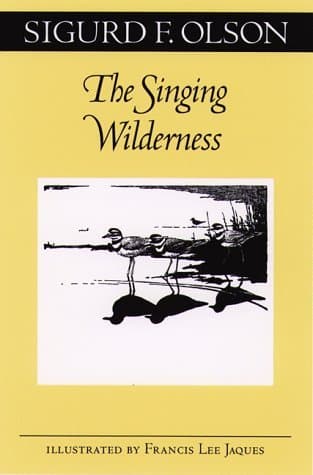
The Singing Wilderness cover
Archivist's Choice

The Singing Wilderness

Sigurd F. Olson (1956)

Genre

Memoir / History

Reading Time

240 min

Key Themes

See below

Track Your Reading

Sign in to track this book

Join 'Bourgeois' as he shares the ancient magic and lost stories of the Quetico-Superior wilderness, guiding you through its old lakes and quiet forests.

Core Idea

Sigurd F. Olson's "The Singing Wilderness" explores the deep connection people can form with wild places, especially the Quetico-Superior region. Through essays and personal stories, Olson explains that wilderness is not just a location but a part of who we are, offering comfort, self-discovery, and a way to understand our place in nature. He highlights the importance of experiencing nature with all senses, the wisdom found in quiet, and nature's cycles. He urges readers to value and protect wild spaces that connect with our oldest memories. The book suggests that true understanding and peace come from leaving modern distractions behind and listening to the 'singing' of the wilderness—its sounds, rhythms, and old tales. Olson believes that trips into these untouched areas change us, showing universal truths about change, renewal, and the lasting spirit of nature and those who explore it. Ultimately, it is a strong call to protect wildness, both around us and within us.
Reading time
240 min
Difficulty
Easy
✓ Read this if...
You seek a meditative, poetic reflection on nature and the spiritual benefits of wilderness, or if you appreciate memoirs that blend personal experience with broader philosophical observations about conservation and human connection to the wild.
✗ Skip this if...
You prefer fast-paced narratives, detailed scientific analysis of ecosystems, or practical guides to outdoor survival. This book is more about the emotional and philosophical experience of nature than its technical aspects.

Core idea

The central argument and framework that powers the entire book.

Sigurd F. Olson's "The Singing Wilderness" explores the deep connection people can form with wild places, especially the Quetico-Superior region. Through essays and personal stories, Olson explains that wilderness is not just a location but a part of who we are, offering comfort, self-discovery, and a way to understand our place in nature. He highlights the importance of experiencing nature with all senses, the wisdom found in quiet, and nature's cycles. He urges readers to value and protect wild spaces that connect with our oldest memories.

The book suggests that true understanding and peace come from leaving modern distractions behind and listening to the 'singing' of the wilderness—its sounds, rhythms, and old tales. Olson believes that trips into these untouched areas change us, showing universal truths about change, renewal, and the lasting spirit of nature and those who explore it. Ultimately, it is a strong call to protect wildness, both around us and within us.

At a glance

Reading time

240 min

Difficulty

Easy

Read this if...

You seek a meditative, poetic reflection on nature and the spiritual benefits of wilderness, or if you appreciate memoirs that blend personal experience with broader philosophical observations about conservation and human connection to the wild.

Skip this if...

You prefer fast-paced narratives, detailed scientific analysis of ecosystems, or practical guides to outdoor survival. This book is more about the emotional and philosophical experience of nature than its technical aspects.

Key Takeaways

1

The Call of the Wild is Innate

Humanity's deep-seated need for wilderness connection persists despite modern advancements.

Quote

There is a hunger in all of us, a longing for something we have lost, a yearning for the primeval and the ancient.

Olson argues that the appeal of wilderness is not just a hobby but a basic human need. He suggests that even in our modern world, an old instinct in us longs for the wild, the quiet, and nature's raw beauty. This is more than just escaping city life; it is about reconnecting with a part of ourselves that has been forgotten. Wilderness offers a return to simplicity, a chance to shed modern complexities and experience life on a more basic, sensory level. This connection is important for our mental health, creating a sense of belonging a...

Supporting evidence

Olson frequently recounts the transformation he observes in people—from jaded city dwellers to revitalized individuals—after even short trips into the Quetico-Superior wilderness, noting their renewed spirit and clarity of thought.

Apply this

Actively seek opportunities to spend time in natural, undeveloped areas, even if it's just a local park. Prioritize experiences that allow for quiet contemplation and sensory engagement with the environment, rather than just active recreation.


wilderness-therapybiophilianature-connection
2

Silence as a Spiritual Balm

True wilderness offers a profound silence that heals and reorients the human spirit.

Quote

In the wilderness, one finds a silence so profound it becomes a presence, a living thing that speaks without words.

Olson praises wilderness quiet, not as an absence of sound, but as a rich mix of natural noises that allows for deep thought and spiritual renewal. This is not the dead silence of a soundproof room, but the soft symphony of wind through trees, a distant loon's call, or the gentle sound of water. In this setting, the noise of modern life fades, replaced by clear thinking and heightened senses. It is a place where one can truly think, process feelings, and connect with an inner calm. This deep quiet is rare in our noisy world and is pre...

Supporting evidence

He details how the sounds of the city—cars, horns, human chatter—are replaced by the 'voices' of the wilderness: the whisper of wind, the splash of a paddle, the calls of birds and animals, which he describes as far more enriching and restorative.

Apply this

Seek out quiet places regularly, even if it's just turning off all devices for an hour. Practice mindful listening to natural sounds when outdoors, focusing on the nuanced auditory landscape rather than seeking complete absence of sound.

mindfulnesssolitudeforest-bathing
3

The Journey, Not Just the Destination

The process of engaging with the wilderness through primitive travel builds character and deep appreciation.

Quote

The portage, the paddle, the camp by the lake—these are not merely means to an end, but the very essence of the wilderness experience.

Olson stresses that the real value of the wilderness experience comes from actively engaging with it, especially through traditional methods like canoeing and portaging. These activities require physical effort, problem-solving, and relying on one's own abilities, building strength and self-reliance. The challenges faced—navigating rapids, carrying heavy canoes over rough land, adapting to changing weather—are part of the journey, not just obstacles. They create a deeper bond with the landscape and give a sense of achievement and humi...

Supporting evidence

His vivid descriptions of portaging through dense forests with canoes, the strain, the sweat, and the eventual reward of reaching a new lake, illustrate how physical effort deepens the sensory and spiritual experience.

Apply this

When engaging with nature, choose activities that require active participation and a degree of effort, rather than passive observation. Embrace challenges as part of the experience, understanding they contribute to a deeper connection and personal growth.

self-relianceresilienceexperiential-learning
4

Reading the Wilderness Language

Developing an intimate understanding of nature's subtle signs unlocks its deepest secrets.

Quote

The wilderness speaks in a language of its own, a language of wind and water, of tracks and calls, and only those who listen carefully can understand.

Olson, the experienced guide, shows that the wilderness is not a still background but a living, communicating presence. He teaches the importance of 'reading' nature's subtle signs—the shift in wind, the patterns on water, the flight of birds, animal tracks—to understand the environment. This keen observation skill is not just practical for survival; it is a way to have a deep conversation with the natural world. It moves beyond just seeing to truly perceiving, recognizing patterns and connections that are hidden to those unfamiliar. ...

Supporting evidence

He details how he could predict weather changes by observing cloud formations and wind direction, or locate wildlife by understanding their tracks and sounds, demonstrating a profound intuitive knowledge of the ecosystem.

Apply this

When in nature, consciously observe your surroundings: notice the details of plants, the movements of animals, the feel of the air, the sounds. Try to interpret what these signs might mean, fostering a more active and engaged perception.

nature-observationecological-literacytracking
5

The Impermanence of Wilderness

The fragile beauty of wild places necessitates urgent and vigilant conservation efforts.

Quote

We cannot afford to lose the last remnants of the primeval, for in them lies the memory of what we once were and what we still need to be.

Olson's deep love for the Quetico-Superior wilderness comes with a strong concern for its protection. He saw, even in the mid-20th century, the constant pressures of development and human activity threatening these untouched areas. He understood that once a wilderness is lost, it is gone forever, taking with it not only unique ecosystems but also a vital part of the human spirit's connection to its beginnings. This point is a strong call to action, emphasizing that the inherent value of wilderness far outweighs short-term economic gai...

Supporting evidence

Olson was a tireless advocate for the establishment and protection of the Boundary Waters Canoe Area Wilderness and Quetico Provincial Park, highlighting the constant threats from logging, mining, and recreational overuse.

Apply this

Support conservation organizations dedicated to protecting wild spaces. Advocate for policies that prioritize wilderness preservation. Educate yourself and others on the importance of minimal impact practices when visiting natural areas.

conservationenvironmental-activismwilderness-ethics
6

The Power of Fire and Renewal

Natural cycles, including forest fires, are essential for wilderness health and transformation.

Quote

Fire is not always destruction; often, it is the great purifier, the catalyst for new life and vibrant growth.

Olson offers a balanced view of natural processes, especially forest fires, challenging the common idea that they are only destructive. He explains how fire, in its natural cycle, is a key part of the boreal forest ecosystem. It clears old growth, returns nutrients to the soil, and encourages new, diverse plant life. This understanding moves past human fear to an appreciation of nature's wisdom and ability to recover. He shows how the wilderness, left alone, uses seemingly destructive forces for long-term health. This idea encourages ...

Supporting evidence

He describes witnessing the aftermath of a natural fire, noting how quickly new growth emerges from the ashes, leading to a richer, more diverse forest floor and attracting different wildlife, demonstrating nature's regenerative power.

Apply this

Challenge preconceived notions about natural events. Understand the ecological role of processes like fire, floods, or decomposition. Embrace the idea of cyclical change and renewal in personal and natural systems.

ecological-successionecosystem-resiliencenatural-cycles
7

Solitude as Self-Discovery

Extended time alone in the wilderness fosters profound self-awareness and inner peace.

Quote

When one is truly alone in the wilderness, the distractions fall away, and one is left with oneself, stark and clear.

Olson promotes the power of solitude in the wilderness to change people. He argues that stepping away from constant stimulation and social demands allows for a unique kind of self-reflection. Without outside distractions, one is forced to face their inner thoughts and emotions. This isolation, though daunting at first, eventually leads to a deeper understanding of one's values, priorities, and true self. It is a journey inward as much as it is outward, building clarity, resilience, and a deep sense of inner peace. The wilderness, in i...

Supporting evidence

He often describes the profound sense of clarity and peace experienced by individuals, including himself, after days or weeks spent alone or in small, quiet groups deep within the wilderness, far from human settlements.

Apply this

Schedule regular periods of intentional solitude, whether in nature or a quiet personal space. Use this time for reflection, journaling, or simply being present with your thoughts without external input.

introspectionmindfulnessspiritual-growth
8

The Enduring Spirit of the Voyageurs

History and human connection to the land imbue the wilderness with deeper meaning.

Quote

The echoes of the voyageurs' paddles still resound across these lakes, connecting us to a past that shaped this land and its spirit.

Olson skillfully weaves the rich history of the voyageurs—the French-Canadian fur traders who traveled the Quetico-Superior region—into his personal story. He highlights that the wilderness is not just a natural space but also a historical one, filled with the stories and struggles of those who came before. By following their old routes, camping at their traditional sites, and even using their travel methods, Olson connects today's explorer to a lively past. This historical layer adds deep meaning to the wilderness experience, turning...

Supporting evidence

He frequently references the routes, portages, and campsites used by the voyageurs, imagining their presence and struggles, and even adopting the honorific 'Bourgeois' himself, linking directly to this historical tradition.

Apply this

When exploring natural areas, research their human history—indigenous cultures, explorers, early settlers. Reflect on the stories and lives lived in those spaces, fostering a deeper connection to both nature and history.

cultural-heritagehistorical-ecologysense-of-place
9

Sensory Immersion for Fullness of Life

Engaging all senses in the wilderness enriches perception and deepens appreciation for existence.

Quote

To truly know the wilderness, one must taste its water, smell its pines, hear its silence, and feel its earth beneath one's feet.

Olson consistently invites readers to experience the wilderness not just visually, but through all their senses. He describes the taste of cool lake water, the smell of pine needles warmed by the sun, the feel of rough granite underfoot, and the subtle sounds of the forest. This focus on engaging all senses is important, as it changes the wilderness experience from passive watching to active participation. By paying attention to these sensory details, people become more present, more alive, and more deeply connected to their surroundi...

Supporting evidence

His prose is rich with sensory details: the 'tang of wood smoke,' the 'feel of a paddle in the hand,' the 'smell of wet moss and decaying leaves,' and the 'sound of water lapping against the shore,' all contributing to a vivid, immersive experience.

Apply this

When outdoors, consciously engage each of your five senses. Take moments to close your eyes and focus on sounds and smells, or touch different textures. Describe these sensations to yourself to heighten awareness.

sensory-awarenesspresent-momentembodiment
10

Wilderness as a Moral Compass

The values learned in nature—humility, patience, respect—guide a more ethical way of living.

Quote

The wilderness teaches us humility, for we are but a small part of its grandeur, and patience, for its rhythms are slow and deliberate.

Olson suggests that the wilderness is more than a place; it is a teacher of important life lessons. It teaches humility by making human concerns seem small against its vastness and power, reminding us of our place in the larger world. It teaches patience through its slow rhythms and the need to wait for the right conditions. It demands respect for all living things and the delicate balance of ecosystems. These lessons, learned in the wild, can be applied to daily life, encouraging a more thoughtful, empathetic, and responsible way of ...

Supporting evidence

He recounts numerous instances where individuals, including himself, are forced to adapt to nature's schedule, wait out storms, or respect the power of rapids, leading to a profound sense of humility and patience.

Apply this

Reflect on how challenges and observations in nature can teach you about patience, adaptation, and interdependence. Consider how these 'wilderness values' can be applied to your relationships and daily decisions.

environmental-ethicsvirtue-ethicspersonal-growth

Critical analysis

Notable Quotes

There is a quality of life in the wilderness, and to be in the midst of it is to feel a part of something ancient, something that has been going on for a long, long time.

Reflecting on the timelessness and continuity of nature in the wilderness.

The voices of the wilderness are not loud, but they are persistent, and if you listen carefully, you will hear them.

Encouraging a deeper, more attentive engagement with the subtle sounds of nature.

To be alone in the wilderness is not to be lonely, but to be a part of everything.

Describing the feeling of interconnectedness experienced during solitude in nature.

The canoe is not merely a means of travel; it is a way of life, a symbol of freedom and discovery.

Highlighting the cultural and personal significance of the canoe in wilderness exploration.

What we save, we save for ourselves, for our own spiritual renewal.

Arguing for the importance of wilderness preservation for human well-being.

The wind in the pines, the splash of a paddle, the cry of a loon – these are the voices of the singing wilderness.

Evoking the iconic sounds that characterize the wilderness experience.

It is not so much what you see, but what you feel that matters in the wilderness.

Emphasizing the emotional and intuitive aspects of experiencing nature.

The old trails are still there, faint and overgrown, but they speak of those who passed before us.

Reflecting on the history and human presence in the seemingly untouched wilderness.

Every portage is an adventure, a challenge, and a chance to truly connect with the land.

Describing the physical and mental engagement involved in portaging a canoe.

There is a deep peace in the north country, a quietude that penetrates the very soul.

Conveying the profound sense of tranquility found in the northern wilderness.

The fire is more than just warmth; it is companionship, a focal point for stories and dreams.

Highlighting the social and symbolic role of a campfire in the wilderness.

To learn the rhythm of the wilderness is to learn the rhythm of life itself.

Suggesting that understanding nature's cycles offers insights into broader life principles.

The true meaning of wilderness is not just in its untouched beauty, but in what it does to us.

Exploring the transformative and introspective impact of wilderness on individuals.

We need the wilderness, not just for recreation, but for perspective, for a sense of belonging.

Articulating the essential human need for wilderness beyond mere leisure.

Quiz

Test Your Knowledge

Ready to see how well you understood this book? Take our interactive quiz with 10 questions.

10
Questions
~5
Minutes
?
Best Score

Key Questions (FAQ)

'The Singing Wilderness' is a memoir and historical account by Sigurd F. Olson, chronicling his deep connection and experiences as a wilderness guide in the Quetico-Superior country. It explores the mysteries and beauty of its lakes and forests through his intimate perspective.

About the author