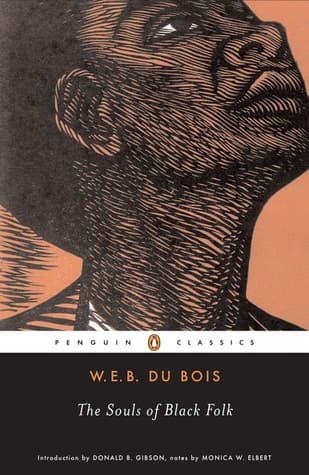
“The problem of the Twentieth Century is the problem of the color-line.”
— From the 'Forethought' and a recurring theme throughout the book.
“It is a peculiar sensation, this double-consciousness, this sense of always looking at one's self through the eyes of others, of measuring one's soul by the tape of a world that looks on in amused contempt and pity. One ever feels his two-ness,—an American, a Negro; two souls, two thoughts, two unreconciled strivings; two warring ideals in one dark body, whose dogged strength alone keeps it from being torn asunder.”
— Explaining the concept of 'double-consciousness' in Chapter 1, 'Of Our Spiritual Strivings'.
“The shadow of a mighty Negro problem fell upon the land. It came as a strange thing to most of the nation, and yet every thoughtful student of history knew that it was coming; knew that it must come.”
— Discussing the aftermath of Emancipation and the emergence of the 'Negro problem' in Chapter 2, 'Of the Dawn of Freedom'.
“To be a poor man is hard, but to be a poor race in a land of dollars is the very bottom of hardships.”
— Reflecting on the economic struggles faced by Black Americans in Chapter 2, 'Of the Dawn of Freedom'.
“The training of the schools we need; the training of the industrial school we need; the training for leadership we need; all these we need, but above all, we need the spirit of love and sympathy, the spirit of human brotherhood, the spirit of the Golden Rule.”
— Arguing for a comprehensive approach to education and social uplift in Chapter 3, 'Of Mr. Booker T. Washington and Others'.
“The way for a people to gain their rights is not by voluntarily throwing them away and trusting to the haphazard of fortune, but by incessant agitation, by persistent demand, and by thorough organization.”
— Critiquing Booker T. Washington's accommodationist approach in Chapter 3, 'Of Mr. Booker T. Washington and Others'.
“The Negro race, like all races, is going to be saved by its exceptional men.”
— Advocating for the importance of higher education and the 'Talented Tenth' in Chapter 6, 'Of the Training of Black Men'.
“The history of the American Negro is the history of this strife,—this longing to attain self-conscious manhood, to merge his double self into a better and truer self.”
— Reiterating the central struggle of Black Americans in Chapter 1, 'Of Our Spiritual Strivings'.
“Little of beauty has America given the world save the rude grandeur God himself stamped on her virgin bosom; the endless sweep of forests, the majesty of mountains, and the rugged rivers. But even this was not of her doing. She has been the world's pioneer in an industrial civilization, and she has boasted her triumph; but her triumph is for the few and the cost for the many.”
— A critical observation on American society and its industrial progress in Chapter 8, 'Of the Quest of the Golden Fleece'.
“Work, culture, liberty,—all these we need, not singly but together, not successively but simultaneously, for the comprehensive development of the Negro.”
— Outlining a holistic vision for Black progress in Chapter 6, 'Of the Training of Black Men'.
“The child of slave parents, he had in him the something of the 'sorrow-song'—the deep, unutterable sadness of the world.”
— Describing the character of John Jones in Chapter 7, 'Of the Black Belt', connecting him to the spirituals.
“Daily the Negro is coming more and more to look upon law and justice, not as an instrument to protect him, but as a weapon to punish him.”
— Reflecting on the pervasive injustice faced by Black Americans in Chapter 9, 'Of the Sons of Master and Man'.
“Through it all, the spirituals have been the most original and beautiful expression of human emotion. They are the articulate creation of the Negro's soul.”
— Celebrating the profound cultural significance of the 'sorrow songs' in Chapter 14, 'Of the Sorrow Songs'.
“Here, then, is the American problem: not to make men, but to make men free.”
— A powerful statement on the fundamental challenge facing America in Chapter 1, 'Of Our Spiritual Strivings'.
“He simply wishes to make it possible for a man to be both a Negro and an American, without being cursed and spit upon by his fellows, without having the doors of Opportunity closed in his face.”
— Defining the core aspiration of Black Americans in Chapter 1, 'Of Our Spiritual Strivings'.