BookBrief
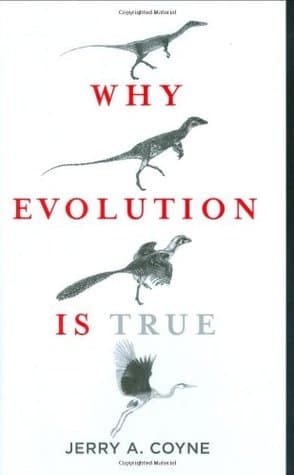
Why Evolution Is True cover
Archivist's Choice

Why Evolution Is True

Jerry A. Coyne (2009)

Genre

History / Spirituality / Science

Reading Time

6-8 hours

Key Themes

See below

Track Your Reading

Sign in to track this book

Jerry A. Coyne uses evidence from genetics, fossils, and anatomy to prove evolution is a scientific fact, clarifying common misunderstandings.

Core Idea

Jerry A. Coyne's "Why Evolution Is True" makes a clear case for evolution and natural selection. The book addresses common misunderstandings about evolution with evidence from many scientific areas, including the fossil record, comparative anatomy, embryology, biogeography, molecular biology, and direct observation. Coyne explains that the large amount of matching evidence from these different areas shows evolution is a scientific truth, not just a theory. It offers the best explanation for life's diversity and adaptation. The book shows that evolution is not just a past event but an ongoing process, visible now. Its ideas help us understand human origins and our place in the world. Coyne's main point is that when we look at the scientific evidence, life's patterns—like shared genetic codes or imperfect designs—only make sense with evolution. He wants to give readers a strong grasp of the evidence, so they can confidently discuss and support evolution's scientific basis.
Reading time
6-8 hours
Difficulty
Medium
✓ Read this if...
You are curious about the overwhelming scientific evidence supporting evolution, want a clear and concise explanation of complex biological concepts, or need to understand why evolution is considered a fact by the scientific community.
✗ Skip this if...
You are looking for a philosophical debate on the implications of evolution, a detailed history of evolutionary thought, or a reconciliation of evolution with specific religious doctrines.

Core idea

The central argument and framework that powers the entire book.

Jerry A. Coyne's "Why Evolution Is True" makes a clear case for evolution and natural selection. The book addresses common misunderstandings about evolution with evidence from many scientific areas, including the fossil record, comparative anatomy, embryology, biogeography, molecular biology, and direct observation. Coyne explains that the large amount of matching evidence from these different areas shows evolution is a scientific truth, not just a theory. It offers the best explanation for life's diversity and adaptation.

The book shows that evolution is not just a past event but an ongoing process, visible now. Its ideas help us understand human origins and our place in the world. Coyne's main point is that when we look at the scientific evidence, life's patterns—like shared genetic codes or imperfect designs—only make sense with evolution. He wants to give readers a strong grasp of the evidence, so they can confidently discuss and support evolution's scientific basis.

At a glance

Reading time

6-8 hours

Difficulty

Medium

Read this if...

You are curious about the overwhelming scientific evidence supporting evolution, want a clear and concise explanation of complex biological concepts, or need to understand why evolution is considered a fact by the scientific community.

Skip this if...

You are looking for a philosophical debate on the implications of evolution, a detailed history of evolutionary thought, or a reconciliation of evolution with specific religious doctrines.

Key Takeaways

1

Evolution: A Fact, Not Just a Theory

The overwhelming evidence elevates evolution beyond mere hypothesis to an established scientific truth.

Quote

Evolution is a fact. And facts are things that have been observed, like the sun rising in the east. It is a fact that life has evolved; that is, that organisms have descended with modification from common ancestors.

Coyne explains that the common idea of evolution as 'just a theory' misunderstands scientific language. In science, a theory is a well-supported explanation of a natural phenomenon, based on facts confirmed by observation and experiment. Evolution, as change over time, is an observable fact backed by much evidence. The 'theory' part refers to the processes, mainly natural selection, that cause evolution. The book aims to clarify this, showing the clear factual basis for evolutionary change in all life.

Supporting evidence

Coyne highlights the distinction between a 'fact' (an observation) and a 'theory' (an explanation for those observations). He states that the fact of evolution – that life has changed over time and shares common ancestors – is as well-supported as the fact of gravity.

Apply this

When discussing evolution, emphasize the distinction between the 'fact' of evolution (descent with modification) and the 'theory' of evolution (the mechanisms like natural selection). This clarifies common misunderstandings and grounds the discussion in established scientific observations.
scientific-factscientific-theorydescent-with-modification
2

The Fossil Record: Unveiling Ancient Transitions

Fossils provide a chronological roadmap of life's transformations, showcasing intermediate forms.

Quote

If evolution is true, then we should be able to find examples of species that show a mix of traits from their ancestors and their descendants. These are called transitional forms, and the fossil record provides many of them.

The fossil record is strong evidence for evolution, showing life's progress over long periods. Coyne clearly describes key fossil finds that show 'transitional forms'—species with a mix of old and new traits. These fossils are not isolated; they form a clear story, filling in gaps and showing gradual changes in lineages. The ongoing discovery of new fossils reinforces the evolutionary framework, providing clear proof of large-scale evolutionary changes, like the shift from fish to amphibians or reptiles to birds.

Supporting evidence

Coyne discusses iconic transitional fossils like *Tiktaalik*, a 'fishapod' with fins containing wrist bones, representing the transition from fish to land vertebrates. He also cites *Archaeopteryx*, a feathered dinosaur with reptilian skeletal features, demonstrating the bird-reptile link.

Apply this

When encountering claims of 'missing links' or gaps in the fossil record, reference specific examples of transitional fossils like *Tiktaalik* or early hominids to demonstrate the rich and growing evidence for evolutionary transitions.

fossil-recordtransitional-formspaleontologymacroevolution
3

Vestiges and Atavisms: Echoes of Our Ancestry

Non-functional body parts and rare ancestral reappearances reveal our evolutionary past.

Quote

Why do we have a coccyx, a tailbone, when we have no tail? Why do whales have tiny leg bones embedded in their bodies? Such vestigial traits are evolutionary hangovers, remnants of structures that were functional in our ancestors.

Coyne points to vestigial organs and atavisms as strong evidence for evolution. Vestigial structures are body parts that have lost their original use but remain in an organism, often in a smaller or changed form. These 'evolutionary leftovers' make sense with common descent, as they are inherited from ancestors where they were useful. Atavisms, which are rarer, are when an ancestral trait that was lost reappears. Both are hard to explain without evolution and show our deep evolutionary links to other species.

Supporting evidence

Examples include the human appendix and coccyx (tailbone), the pelvic bones in whales and snakes, and the non-functional wings on flightless birds like kiwis. Coyne also mentions atavisms, such as humans born with a tail or horses with extra toes, as striking examples of dormant ancestral genes being re-expressed.

Apply this

Point to human vestigial traits, like the coccyx or the muscles to wiggle ears, as simple, relatable examples that illustrate common descent and the historical nature of biological design, rather than perfect creation.

vestigial-organsatavismscommon-descentcomparative-anatomy
4

Homologies: Shared Blueprints of Life

Similarities in structure, despite different functions, betray a common evolutionary origin.

Quote

The best explanation for homologous structures is that they are modifications of an ancestral structure that was present in a common ancestor. Evolution is a tinkerer, not an engineer, and it works with what it has.

Homologies are a clear type of evidence for evolution, showing shared ancestry through similar structures. Coyne shows how different species, from humans to bats to whales, have very similar bone structures in their forelimbs, even though these limbs are used for very different things (grasping, flying, swimming). This basic anatomical plan, or homology, is what we expect if these species came from a common ancestor with that limb structure. It makes little sense if each species was designed separately, but it fits perfectly with evol...

Supporting evidence

The classic example of the pentadactyl (five-fingered) limb structure found in vertebrates, from human arms to bat wings to whale flippers, despite their vastly different uses, is a prime example. Similarities in embryonic development across diverse species also serve as strong homologous evidence.

Apply this

Use the example of the vertebrate forelimb to explain how underlying structural similarities point to common ancestry, providing a compelling visual and anatomical argument against independent creation.

homologycomparative-anatomycommon-ancestordevelopmental-biology
5

Embryology: Recapitulating Evolutionary History

Similarities in early embryonic development reflect shared ancestry before divergence.

Quote

The early stages of development in vertebrates are remarkably similar, suggesting a common ancestry. Even humans pass through stages where they possess gill slits and a tail, structures that are functional in fish but not in us.

Coyne looks into embryology, showing how the development stages of different species reveal their evolutionary relationships. The striking similarities in the early embryos of very different vertebrates—from fish to reptiles to mammals—are not random. They show a shared developmental plan inherited from a common ancestor. Features like gill slits and tails, present in early human embryos but functional only in our aquatic relatives, remind us of our evolutionary past. While Ernst Haeckel's idea that 'development repeats evolution' is ...

Supporting evidence

Coyne details how early embryos of fish, salamanders, turtles, chickens, pigs, and humans all exhibit gill slits and tails. These structures are fully developed in fish (gills) and some animals (tails) but are transient or modified in others, demonstrating a shared developmental heritage.

Apply this

When discussing developmental similarities, emphasize that these are not exact 'recapitulations' but rather conserved developmental modules that are later modified, reflecting the evolutionary principle of building upon existing genetic programs.

embryologydevelopmental-biologyontogenyphylogeny
6

Biogeography: The Geographic Tapestry of Evolution

The distribution of species across the globe mirrors their evolutionary history and dispersal.

Quote

Why are marsupials so common in Australia but virtually absent elsewhere? Why do oceanic islands have unique species found nowhere else, often related to mainland forms? The answers lie in evolution and the history of continental drift and dispersal.

Biogeography, the study of how species are distributed, provides clear evidence for evolution. Coyne explains how global patterns of plants and animals make perfect sense through evolution but are not explainable by independent creation. The unique animals of isolated places like Australia (marsupials) or oceanic islands (Darwin's finches, unique reptiles) are compelling examples. These distributions are best explained by species evolving in specific places and then spreading, or by continental drift separating populations, leading to...

Supporting evidence

The concentration of marsupials in Australia and their rarity elsewhere, the unique endemic species on oceanic islands like the Galapagos (e.g., giant tortoises, flightless cormorants), and the distinct faunal regions (e.g., Nearctic, Palearctic) all support evolutionary explanations for species distribution.

Apply this

Use the example of island biogeography to illustrate how isolation leads to speciation and unique adaptations, demonstrating evolution in action within geographically defined areas.

biogeographycontinental-driftspeciationendemic-species
7

Molecular Evidence: The Genetic Code as a History Book

DNA and protein similarities offer the most precise evidence of genetic relatedness and common ancestry.

Quote

The most powerful evidence for evolution comes from molecular biology. Our genes and proteins are not only similar to those of other species, but the pattern of those similarities forms a perfect hierarchy, exactly what we expect from common descent.

Coyne argues that molecular biology provides perhaps the strongest evidence for evolution. The universal genetic code, shared by almost all life, itself points to common ancestry. Beyond this, comparing DNA sequences and protein structures shows a hierarchy of relatedness that matches the relationships found through fossils and comparative anatomy. The presence of 'pseudogenes' (non-working gene copies) and endogenous retroviruses (viral DNA in host genomes) shared across species further strengthens the case, acting as molecular 'foss...

Supporting evidence

The nearly identical DNA sequences for critical proteins (e.g., cytochrome c) across diverse species, the presence of non-functional pseudogenes (like the GULO gene for Vitamin C synthesis in humans and other primates), and the shared patterns of endogenous retroviruses across related species are all cited.

Apply this

Explain how DNA sequencing provides a quantitative measure of relatedness, allowing us to build precise evolutionary trees that are consistent with all other forms of evidence, making it extremely difficult to refute.

molecular-biologyDNA-sequencinggenetic-codepseudogenesendogenous-retroviruses
8

Evolution in Action: Observing Change in Real Time

Evolution isn't just ancient history; it's a continuous process observable today.

Quote

Evolution is not just something that happened long ago; it is happening all around us, all the time. We can observe it in the lab and in nature.

Coyne emphasizes that evolution is not just a past event but an ongoing process. He gives clear examples of evolution happening in observable timeframes, both in labs and in natural populations. This direct observation of evolutionary change, especially in species with short lifespans, disproves the idea that evolution is too slow to be seen. From bacteria becoming resistant to antibiotics to changes in finch beaks due to environmental shifts, these examples show that evolution's basic mechanisms—mutation, selection, and adaptation—ar...

Supporting evidence

Examples include the rapid evolution of antibiotic resistance in bacteria (e.g., MRSA), pesticide resistance in insects, the evolution of new species of plants (e.g., *Tragopogon* polyploids), and the classic study of beak size changes in Galapagos finches by the Grants.

Apply this

When discussing current events related to disease or agriculture, frame them within an evolutionary context (e.g., how the flu virus evolves annually, requiring new vaccines) to highlight the practical relevance and ongoing nature of evolution.

natural-selectionadaptationspeciationantibiotic-resistance
9

The Imperfection of Design: A Signature of Evolution

Biological 'flaws' and suboptimal designs are hallmarks of evolution, not intelligent design.

Quote

If a divine creator designed organisms from scratch, we'd expect them to be perfectly engineered. But life is full of imperfections, clumsy designs, and Rube Goldberg-like contraptions that only make sense as products of a historical process of modification.

Coyne effectively discredits the 'argument from design' by pointing out the many imperfections, inefficiencies, and strange designs in nature. These 'flaws' are not signs of a perfect creator but clear indications of evolution, which works by modifying existing structures rather than designing new ones from scratch. Examples like the human eye's inverted retina or the complex path of the recurrent laryngeal nerve in mammals show that evolution is a tinkerer, limited by history, not an optimal engineer. These less-than-perfect designs,...

Supporting evidence

The human eye's 'backward' wiring (retina inverted), the needlessly long path of the recurrent laryngeal nerve in giraffes, the blind spot in the vertebrate eye, and the human appendix are all cited as examples of suboptimal design that make sense only through evolutionary history.

Apply this

Challenge arguments for 'intelligent design' by presenting specific examples of biological inefficiencies or 'bad design,' demonstrating how these features are strong evidence for evolution's historical, tinkering process.

intelligent-designsuboptimal-designevolutionary-constraintargument-from-design
10

Evolution's Unifying Power: Explaining All of Life

Evolution by natural selection is the single, coherent explanation for biodiversity and adaptation.

Quote

Evolution is the single most powerful and unifying concept in biology. It explains the diversity of life, the adaptation of organisms to their environment, and the relationships among all living things.

Ultimately, Coyne states that evolution's strength is its ability to explain things. It offers a coherent, evidence-based framework that combines findings from different scientific fields—genetics, paleontology, anatomy, embryology, biogeography, and molecular biology—into one clear story. No other scientific idea, and certainly no supernatural explanation, can account for life's vast diversity, organisms' precise adaptations, and the hierarchies of biological relationships with such consistency and accuracy. Evolution is not just a g...

Supporting evidence

The book itself serves as the evidence, weaving together all the previously mentioned lines of proof (fossils, homologies, vestigial traits, molecular data, biogeography, observed evolution) into a comprehensive and mutually reinforcing argument.

Apply this

Emphasize that evolution is not just one theory among many, but the foundational principle of modern biology, analogous to gravity in physics, without which much of our understanding of life would crumble.

unifying-theorybiodiversityadaptationscientific-consensus

Critical analysis

Notable Quotes

If evolution is true, then the Darwinian explanation for the diversity of life—natural selection—is not just a theory but a fact.

Introducing the core argument for evolution's validity and the mechanism of natural selection.

Evolution is not a theory in the everyday sense of the word, meaning a mere guess or speculation. Evolution is a theory in the scientific sense, meaning a comprehensive explanation that is well-supported by evidence.

Clarifying the scientific meaning of 'theory' in the context of evolution, contrasting it with common usage.

We are not the pinnacle of evolution, nor are we its purpose. We are simply one twig among millions on the tree of life.

Challenging anthropocentric views of evolution, emphasizing humanity's place in the broader evolutionary tree.

The fossil record, though incomplete, provides powerful evidence for evolution by showing us the gradual changes in organisms over vast spans of time.

Discussing the role of the fossil record as key evidence for macroevolutionary change.

Every species, living or extinct, is a transitional form. It is a link between what came before and what will come after.

Explaining the concept of transitional forms and how all life fits into this continuum.

The genetic code is virtually universal, meaning that the same codons specify the same amino acids in almost all organisms, from bacteria to humans. This is powerful evidence for common descent.

Highlighting molecular evidence, specifically the universality of the genetic code, for common ancestry.

Bad design is the mark of evolution, not of intelligent design.

Arguing that imperfections and suboptimal features in organisms are better explained by evolutionary constraints than by an intelligent creator.

Evolution is not a directed process, striving for perfection or increasing complexity. It is a blind, opportunistic process.

Correcting the teleological misconception that evolution has a goal or is inherently progressive.

The geographic distribution of species, with related species often found in proximity, makes sense only under the light of evolution and common descent.

Explaining biogeography as a compelling line of evidence for evolutionary theory.

If you want to understand life, you have to understand evolution. There is no other way.

Emphasizing the foundational importance of evolutionary theory for all biological understanding.

Evolution is not just about the origin of species; it's about the origin of adaptations, the origin of diversity, and the origin of complexity.

Broadening the scope of what evolutionary theory explains beyond just species formation.

Natural selection is not about individuals striving to survive; it's about differential reproduction.

Clarifying the mechanism of natural selection, focusing on reproductive success rather than individual struggle.

The evidence for evolution is not just strong; it's overwhelming. It comes from every field of biology, from paleontology to molecular genetics.

Summarizing the breadth and depth of scientific evidence supporting evolution.

To deny evolution is to deny a mountain of evidence and the very foundation of modern biology.

Underlining the scientific consensus and the consequences of rejecting evolutionary theory.

Quiz

Test Your Knowledge

Ready to see how well you understood this book? Take our interactive quiz with 10 questions.

10
Questions
~5
Minutes
?
Best Score

Key Questions (FAQ)

The book argues that evolution is not merely a theory but a scientific fact, supported by an overwhelming body of evidence from diverse fields. It aims to present this empirical proof to a broad audience, dispelling common misconceptions.

About the author