BookBrief
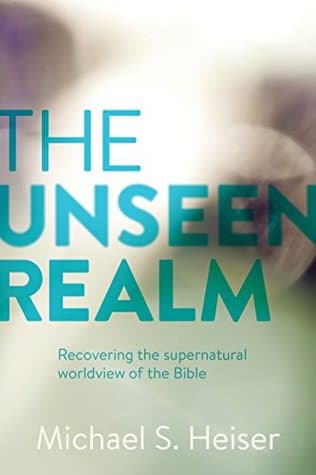
The Unseen Realm cover
Archivist's Choice

The Unseen Realm

Michael S. Heiser (2015)

Genre

History / Spirituality

Reading Time

10-12 hours

Key Themes

See below

Track Your Reading

Sign in to track this book

Heiser reveals the Bible's ancient, supernatural worldview, showing hidden divine councils, cosmic geography, and speaking serpents, which changes how you understand God's Word.

Core Idea

Michael S. Heiser's "The Unseen Realm" argues for a new look at the biblical worldview. He says ancient Israelites and biblical authors believed in a divine council of lesser 'elohim' (divine beings) who served under God, Yahweh. Heiser claims many Bible stories, like the serpent in Eden, the Nephilim, the Tower of Babel, and Christ's victory, connect through this 'Deuteronomy 32 worldview.' In this view, Yahweh gave nations to lesser divine beings after Babel, then planned to reclaim them through Israel and Jesus's victory over all cosmic powers. The book aims to explain the Bible's most unclear passages by showing this ancient supernatural context. This makes God's character, sovereignty, and redemptive plan clearer.
Reading time
10-12 hours
Difficulty
Hard
✓ Read this if...
You are a Christian or interested in biblical studies and want to understand the Bible's more mysterious and supernatural elements through an ancient Near Eastern lens, or if you've ever wondered about the 'sons of God,' the Nephilim, or God's relationship with other divine beings.
✗ Skip this if...
You prefer a purely naturalistic interpretation of the Bible, are uncomfortable with detailed discussions of divine beings beyond God and angels, or are seeking a devotional rather than an academic-theological exploration.

Core idea

The central argument and framework that powers the entire book.

Michael S. Heiser's "The Unseen Realm" argues for a new look at the biblical worldview. He says ancient Israelites and biblical authors believed in a divine council of lesser 'elohim' (divine beings) who served under God, Yahweh. Heiser claims many Bible stories, like the serpent in Eden, the Nephilim, the Tower of Babel, and Christ's victory, connect through this 'Deuteronomy 32 worldview.' In this view, Yahweh gave nations to lesser divine beings after Babel, then planned to reclaim them through Israel and Jesus's victory over all cosmic powers. The book aims to explain the Bible's most unclear passages by showing this ancient supernatural context. This makes God's character, sovereignty, and redemptive plan clearer.

At a glance

Reading time

10-12 hours

Difficulty

Hard

Read this if...

You are a Christian or interested in biblical studies and want to understand the Bible's more mysterious and supernatural elements through an ancient Near Eastern lens, or if you've ever wondered about the 'sons of God,' the Nephilim, or God's relationship with other divine beings.

Skip this if...

You prefer a purely naturalistic interpretation of the Bible, are uncomfortable with detailed discussions of divine beings beyond God and angels, or are seeking a devotional rather than an academic-theological exploration.

Key Takeaways

1

The Divine Council: God's Heavenly Administration

Understanding the ancient Near Eastern concept of a divine assembly sheds light on God's governance.

Quote

The biblical writers assumed the existence of an unseen realm inhabited by spiritual beings. This unseen world was not a fringe belief but a fundamental aspect of their worldview, integral to understanding God's interaction with humanity and the cosmos.

Heiser says the Bible consistently shows God as the supreme head of a 'divine council,' an assembly of lesser divine beings (elohim) who serve Him. This is not polytheism. It reflects ancient Near Eastern monarchies, where a king ruled with a court of nobles. These 'elohim' are not equal to Yahweh; they are created, subordinate beings with delegated authority. This framework clarifies many unclear passages, from the 'us' in Genesis 1:26 to the 'sons of God' in Job 1 and Psalm 82. It explains how God is singular but works within a heav...

Supporting evidence

Psalm 82, where God judges the 'elohim' for their corruption; Job 1 and 2, depicting the 'sons of God' presenting themselves before Yahweh; Deuteronomy 32:8-9 (LXX/DSS), which suggests God allotted nations to various 'sons of God'.

Apply this

When reading biblical narratives, consider the broader spiritual context. Ask: 'Who else might be involved in this scene beyond humans and God directly?' This perspective encourages a more robust understanding of spiritual warfare and divine providence, recognizing that God's plan unfolds through a multi-faceted spiritual administration.

divine-councilelohimsons-of-godheavenly-host
2

Yahweh's Exclusive 'Elohim' Status

While other 'elohim' exist, Yahweh's uniqueness lies in His uncreated, supreme nature.

Quote

The Bible does not deny the existence of other elohim. Instead, it asserts that Yahweh is the unique, uncreated God over all other elohim, who are themselves created beings.

Heiser carefully separates Yahweh from other 'elohim.' The term 'elohim' is a category, not a name, for spiritual beings. Yahweh is the 'elohim of elohim,' the uncreated, sovereign Creator. Other 'elohim' are created beings, powerful ones, who received delegated authority but failed or rebelled. This difference is important for understanding biblical monotheism. It is not that other gods do not exist in some way, but that only Yahweh is God in the absolute sense—self-existent, all-powerful, and deserving of exclusive worship. This fra...

Supporting evidence

Deuteronomy 10:17: 'For the Lord your God is God of gods and Lord of lords, the great, the mighty, and the awesome God.' Psalm 97:7: 'Worship him, all you gods!' (referring to divine beings).

Apply this

When encountering references to 'other gods' or 'elohim' in Scripture, always evaluate their context. Is the text acknowledging their existence as spiritual beings, or condemning their worship as rival deities to Yahweh? This nuanced reading helps to avoid misinterpreting biblical monotheism and appreciating the unique supremacy of God.

yahwehmonotheismelohim-of-elohimdivine-hierarchy
3

The Serpent: Not Just a Snake

Eve's lack of surprise at a talking serpent points to an assumed supernatural worldview.

Quote

The serpent in Genesis 3 is not merely an animal. The ancient audience would have understood it as a divine being, a member of the divine council who had rebelled.

Heiser challenges the common Sunday school idea of the Genesis 3 serpent. He says the ancient Israelite audience would have known the serpent was not a literal talking snake, but a divine being, an 'elohim' who had rebelled against Yahweh. This explains Eve's apparent lack of surprise at its ability to speak and reason. The story is not about a strange animal but about a spiritual takeover. This 'serpent' is later called Satan and the Devil in the New Testament, confirming its status as a powerful, evil spiritual entity. Understanding...

Supporting evidence

Revelation 12:9 explicitly identifies 'the ancient serpent' with 'the Devil and Satan.' The Hebrew word 'nachash' (serpent) can also carry connotations of 'divine, diviner, enchanter' in ancient Near Eastern contexts.

Apply this

Re-read the Genesis 3 account with the understanding that the serpent is a powerful, malevolent spiritual being. This deepens the gravity of the temptation and the subsequent fall, emphasizing the cosmic stakes involved. It also reinforces the idea that humanity was drawn into a pre-existing spiritual conflict.

serpentsatanfall-of-mangenesis-3nachash
4

The Nephilim and the Sons of God

The 'sons of God' in Genesis 6 are divine beings who corrupted humanity, leading to the Nephilim.

Quote

The 'sons of God' in Genesis 6 are not human beings but divine beings, members of the divine council who sinned by illicitly cohabiting with human women, producing the Nephilim.

Heiser supports the traditional, ancient idea that the 'sons of God' (bene elohim) in Genesis 6 are divine beings, not just human rulers or Seth's descendants. These divine beings came to earth, took human wives, and had hybrid offspring called the Nephilim. This act of corruption was a cosmic rebellion, a direct challenge to God's order, and a main reason for the Great Flood. This idea makes sense of the extreme divine judgment and explains why the Nephilim are called 'mighty men of old, men of renown.' It also connects to later Bibl...

Supporting evidence

The Book of Enoch (an ancient Jewish text referenced by Jude) explicitly details this event. Jude 6 and 2 Peter 2:4 refer to angels who 'did not stay within their own position of authority, but left their proper dwelling' and are now imprisoned, aligning with this interpretation.

Apply this

Understand the Flood not just as a judgment on human wickedness, but also as a divine response to a cosmic rebellion involving divine beings. This broadens the scope of God's justice and reveals the depth of spiritual corruption present before the Flood. It also provides context for later biblical references to giants and spiritual warfare.

nephilimsons-of-godgenesis-6bene-elohimflood
5

The 'Deuteronomy 32 Worldview'

God's judgment at Babel resulted in the disinheritance of nations to lesser divine beings.

Quote

At Babel, God disinherited the nations, turning them over to the rule of lesser divine beings. This act of judgment set the stage for His plan to reclaim the nations through Abraham and his descendants.

Heiser points to the 'Deuteronomy 32 Worldview' as a main framework. After the rebellion at Babel, where humanity tried to build a tower to heaven, God judged the nations by 'disinheriting' them. Instead of direct divine rule, He gave them to the oversight of lesser 'sons of God' (elohim). These divine beings, however, became corrupt, leading the nations into idolatry and false worship. This explains why Paul talks about 'principalities and powers' over regions. God's plan, started with Abraham, was to raise a new nation (Israel) thro...

Supporting evidence

Deuteronomy 32:8-9 (specifically the Septuagint and Dead Sea Scrolls readings) states that God 'fixed the borders of the peoples according to the number of the sons of God.' Paul's writings in Ephesians 6:12 about 'rulers, authorities, cosmic powers over this present darkness' also connect to this concept.

Apply this

Recognize that spiritual warfare is not just individual but also territorial and national. The 'gods' of nations are real spiritual entities, albeit fallen and subordinate. This understanding provides a deeper context for missionary work and prayer for nations, as it involves reclaiming territory from these fallen 'elohim'.

deuteronomy-32babeldisinheritanceprincipalities-and-powersterritorial-spirits
6

Divine Plurality and the Trinity

The presence of multiple divine beings in the Old Testament provides a richer backdrop for the Trinity.

Quote

The Old Testament's supernatural worldview, with its inherent plurality of divine beings, provides a more fertile soil for understanding the New Testament revelation of the Trinity than a strictly unitarian view of God.

Heiser says the Old Testament's many references to multiple 'elohim' and the 'Angel of Yahweh' (who often speaks as Yahweh) do not contradict monotheism. Instead, they prepare the reader for the New Testament's Trinitarian revelation. The 'Angel of Yahweh' often has divine qualities, accepting worship and forgiving sins, blurring the lines between messenger and God. This 'visible Yahweh' figure, along with the 'Spirit of Yahweh' and Yahweh Himself, hints at a complex divine identity. While not explicitly Trinitarian, the Old Testament...

Supporting evidence

The 'Angel of Yahweh' in Genesis 16, Exodus 3, Judges 6, who speaks as God. The 'us' in Genesis 1:26 and 11:7. The presence of the Spirit of God in creation (Genesis 1:2) and throughout the Old Testament.

Apply this

When reading Old Testament passages about the 'Angel of Yahweh' or the 'Spirit of God,' consider them as pre-incarnate manifestations or foreshadowings of the Trinitarian God. This enriches the understanding of God's complex nature and the continuity between the Old and New Testaments.

trinityangel-of-yahwehdivine-pluralitypre-incarnate-christspirit-of-god
7

Jesus's Cosmic Victory

Christ's death and resurrection are a victory over the fallen divine powers, not just sin and death.

Quote

The cross and resurrection are not merely about atonement for human sin; they represent a cosmic victory over the fallen divine powers who had usurped authority over the nations.

Heiser says the New Testament shows Jesus's mission as a direct fight against and victory over the fallen 'elohim' who rule the disinherited nations. The cross disarms these 'principalities and powers,' and the resurrection shows Christ's supreme authority over them. His ascension means He is enthroned as King over all creation, including the unseen realm. This cosmic part of salvation means Jesus's work not only saves humanity but also reclaims the nations from the corrupt divine beings assigned to them at Babel. This adds to the ato...

Supporting evidence

Colossians 2:15: 'He disarmed the rulers and authorities and put them to open shame, by triumphing over them in him.' Ephesians 1:20-21: 'He raised him from the dead and seated him at his right hand in the heavenly realms, far above all rule and authority, power and dominion.'

Apply this

View salvation and Christ's work with a broader, cosmic lens. Understand that when you pray, you are aligning with Christ's victory over these spiritual powers. This empowers believers to engage in spiritual warfare with confidence, knowing that Christ has already triumphed over the forces of darkness.

cosmic-atonementspiritual-warfareprincipalities-and-powerschrist's-victorydisinheritance-reversed
8

Believers as 'Elohim' in Training

Humans are created in God's image to rule, eventually joining His divine council.

Quote

Humanity's ultimate destiny is to share in God's rule, to be members of His divine council, fulfilling the original mandate of bearing His image and exercising dominion.

Heiser suggests a new and inspiring idea about humanity's destiny: we are made in God's image (imago Dei) to eventually work as 'elohim' in God's divine council. Psalm 82:6, where God says, 'You are gods; you are all sons of the Most High,' is not just a rebuke to fallen divine beings but also a prophetic statement about humanity's intended role. Through Christ, believers are restored to this high calling, meant to rule with Him. This view raises the importance of human life and salvation. It suggests our salvation is not just about g...

Supporting evidence

Psalm 82:6; John 10:34 (Jesus quoting Psalm 82); 1 Corinthians 6:3: 'Do you not know that we are to judge angels?' Revelation 20:6: 'They will be priests of God and of Christ, and they will reign with him for a thousand years.'

Apply this

Live with an awareness of your divine calling and future role. Every act of obedience, every step of spiritual growth, is training for a greater purpose in God's eternal kingdom. This perspective should motivate believers to pursue holiness and wisdom, understanding that they are being prepared for cosmic responsibilities.

imago-deihuman-destinyco-reigning-with-christdivine-council-membershippsalm-82
9

The Unseen Realm and Modern Belief

Re-engaging with the biblical supernatural worldview enriches contemporary faith.

Quote

Modern Christians have largely filtered out the supernatural elements of the Bible, leading to a diminished understanding of God, spiritual warfare, and our own identity. Recovering the unseen realm is not about sensationalism but about theological coherence.

Heiser says modern Western Christianity has largely removed the Bible's supernatural worldview. This simpler approach, influenced by Enlightenment rationalism, has led to a weaker understanding of God's power, the reality of spiritual conflict, and the cosmic reach of salvation. By accepting the unseen realm again—the existence of divine beings, their rebellion, and God's plan to reclaim all creation—believers can get a richer, clearer, and more amazing view of Scripture. This is not about promoting superstition but about taking the B...

Supporting evidence

The common tendency in modern commentaries to allegorize or rationalize away passages like Genesis 6, Psalm 82, or the talking serpent, rather than engaging with their supernatural implications.

Apply this

Challenge your own assumptions about the supernatural when reading the Bible. Be open to interpretations that acknowledge the reality of spiritual beings and their influence. This will lead to a deeper appreciation for the Bible's narrative and a more grounded understanding of spiritual realities.

supernatural-worldviewmodern-christianitybiblical-coherencespiritual-realityenlightenment-rationalism

Critical analysis

Notable Quotes

The Bible has an unseen realm. If we want to understand the Bible on its own terms, we have to grapple with the unseen realm.

Introducing the central thesis of the book regarding the supernatural worldview of the biblical authors.

Yahweh has a 'divine council' and this council is not merely an angelic host, but consists of other divine beings, 'gods,' whom Yahweh presides over.

Explaining the concept of the divine council, a key element of Heiser's 'unseen realm' theology.

The problem with much of modern biblical scholarship is that it has been filtered through a post-Enlightenment worldview that seeks to demythologize the supernatural elements of the Bible.

Critiquing modern academic approaches that often ignore or rationalize the supernatural.

God chose to delegate authority over the nations to lesser divine beings, and they corrupted their charge, leading to the Tower of Babel event and the disinheritance of the nations.

Describing the 'Deuteronomy 32 worldview' and the role of fallen divine beings in the governance of nations.

Jesus is not just a human Messiah; he is Yahweh incarnate, the commander of the divine council, come to reclaim what was lost.

Connecting Jesus' identity and mission to the divine council and the restoration of God's sovereignty.

The Sons of God in Genesis 6 are not merely human rulers or descendants of Seth, but divine beings, fallen members of the divine council.

Arguing for a supernatural interpretation of the 'Sons of God' in Genesis 6, a frequently debated passage.

Our default setting for reading the Bible is often influenced more by Greek philosophy and post-Enlightenment thought than by the ancient Israelite worldview.

Highlighting the pervasive influence of non-biblical worldviews on contemporary biblical interpretation.

The giants (Nephilim) were not merely tall men, but the offspring of the illicit union between the Sons of God and human women, a physical manifestation of corruption.

Elaborating on the nature of the Nephilim as a direct consequence of the Genesis 6 transgression.

The spiritual battle described in the New Testament is a continuation of the cosmic conflict that began in the unseen realm, involving territorial spirits and principalities.

Connecting the New Testament's understanding of spiritual warfare to the broader cosmic conflict outlined in the Old Testament.

The phrase 'Gods' in Psalm 82 refers to divine beings, not human judges or rulers, whom Yahweh holds accountable for their corruption.

Interpreting Psalm 82 as a divine council scene where Yahweh judges other divine beings.

The biblical authors assumed an unseen realm populated by various divine beings, both loyal and rebellious, and this assumption shaped their theology profoundly.

Summarizing the foundational premise that the supernatural was a given for the biblical writers.

Understanding the unseen realm doesn't diminish God's sovereignty; it clarifies the scope and nature of his reign over all spiritual powers.

Addressing potential concerns about how the divine council concept might impact the doctrine of God's sovereignty.

The goal is not to prove the Bible is true, but to understand what the biblical writers themselves believed and how they conceived of their world.

Defining the methodological approach of the book, focusing on internal biblical coherence rather than external validation.

The exodus from Egypt was not just a historical event, but a cosmic battle between Yahweh and the gods of Egypt, demonstrating his supremacy over all other divine powers.

Reinterpreting the Exodus narrative through the lens of a cosmic conflict in the unseen realm.

Quiz

Test Your Knowledge

Ready to see how well you understood this book? Take our interactive quiz with 10 questions.

10
Questions
~5
Minutes
?
Best Score

Key Questions (FAQ)

'The Unseen Realm' explores the ancient supernatural worldview of the Bible, suggesting that understanding this context is crucial for a deeper comprehension of God and Scripture. Heiser argues that many puzzling biblical passages become clear when viewed through the lens of the divine council and other supernatural entities.

About the author