BookBrief
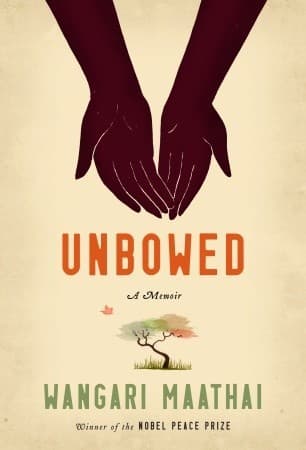
Unbowed cover
Archivist's Choice

Unbowed

Wangari Maathai (2006)

Genre

Biography / Memoir / History

Reading Time

360 min

Key Themes

See below

Track Your Reading

Sign in to track this book

Wangari Maathai's 'Unbowed' tells of her journey from a Kenyan village girl to a Nobel laureate, planting trees and democracy against tyranny.

Core Idea

Wangari Maathai's "Unbowed" shows how grassroots action can make big changes. A simple act like planting a tree can challenge bad governments, help women, and work for environmental fairness. Maathai says that freedom links a healthy environment, good government, and human rights. She shows how damaged natural resources often go with political corruption and unfairness. Her book tells of her strong commitment to these ideas, showing through her own life and the Green Belt Movement's successes and problems that steady effort, even with harsh rulers, can build independence, bring back respect, and create peace.
Reading time
360 min
Difficulty
Medium
✓ Read this if...
You are inspired by stories of resilience, want to understand the deep connections between environmentalism, human rights, and democracy, or are looking for a compelling example of how one individual can ignite significant social change.
✗ Skip this if...
You prefer highly academic or theoretical texts over personal narratives and memoirs, or are not interested in the history of environmental activism in Africa.

Core idea

The central argument and framework that powers the entire book.

Wangari Maathai's "Unbowed" shows how grassroots action can make big changes. A simple act like planting a tree can challenge bad governments, help women, and work for environmental fairness. Maathai says that freedom links a healthy environment, good government, and human rights. She shows how damaged natural resources often go with political corruption and unfairness. Her book tells of her strong commitment to these ideas, showing through her own life and the Green Belt Movement's successes and problems that steady effort, even with harsh rulers, can build independence, bring back respect, and create peace.

At a glance

Reading time

360 min

Difficulty

Medium

Read this if...

You are inspired by stories of resilience, want to understand the deep connections between environmentalism, human rights, and democracy, or are looking for a compelling example of how one individual can ignite significant social change.

Skip this if...

You prefer highly academic or theoretical texts over personal narratives and memoirs, or are not interested in the history of environmental activism in Africa.

Key Takeaways

1

The Power of a Seed

Small actions, like planting a tree, can catalyze monumental change.

Quote

When we plant trees, we plant the seeds of peace and hope.

Maathai's Green Belt Movement (GBM) started with a simple act: planting trees. This small step grew into a major force for restoring the environment, helping women, and reforming democracy in Kenya and beyond. The GBM linked environmental damage with the problems of rural women. It gave them a practical activity that also made money and helped with deforestation, soil erosion, and poverty. By helping women take charge of their environment, the movement built a sense of action and group effort that went far beyond planting trees. It sh...

Supporting evidence

The establishment of the Green Belt Movement in 1977, which paid rural women to plant trees, directly addressing deforestation and providing income, while also evolving into a platform for civic education and political activism.

Apply this

Identify a seemingly small, tangible problem in your community and devise a simple, actionable solution. Focus on empowering those directly affected, allowing the initiative to grow organically and address broader systemic issues over time.


grassroots-activismenvironmental-justicewomen-empowerment
2

Education as Liberation

Access to knowledge is a fundamental tool for individual and societal freedom.

Quote

I was educated because I was lucky enough to be in the right place at the right time. But many other girls were not.

Maathai's life shows how much education can change things. Born in a village where girls rarely went to school, her drive to learn, supported by missionaries, led her to academic success. She became the first woman in East and Central Africa to get a PhD and lead a university department. This education not only opened doors but also gave her the critical thinking, global view, and confidence to challenge bad governments and work for human rights. Her story shows how education can break cycles of poverty and control, helping people spe...

Supporting evidence

Maathai's personal academic trajectory: studying with Catholic missionaries, earning bachelor's and master's degrees in the US, and becoming the first woman in East and Central Africa to earn a PhD and head a university department in Kenya.

Apply this

Actively seek out learning opportunities, whether formal or informal. Support initiatives that expand access to education, particularly for marginalized groups, recognizing its long-term impact on empowerment and societal progress.

educational-accessintellectual-freedomsocial-mobility
3

Unbowed in the Face of Tyranny

Courage and persistence are essential in challenging authoritarian power.

Quote

Every day, I was prepared to die for what I believed in.

Maathai's book clearly describes her many harsh conflicts with Daniel Arap Moi's government. Despite being jailed, physically attacked, publicly shamed, and constantly threatened, she stayed firm in her commitment to justice, human rights, and protecting the environment. Her refusal to be scared, even by a government known for its cruelty, gave hope and inspiration to many Kenyans. This strong resolve shows that real change often needs great personal sacrifice and a clear moral guide. It proves that even against big odds, one voice of...

Supporting evidence

Her numerous run-ins with the brutal Moi government, including arrests, beatings, and public condemnation, for her activism against land grabbing and for advocating for democracy.

Apply this

Identify an injustice you feel strongly about. Even if the odds seem insurmountable, find ways to speak out and act, no matter how small. Connect with others who share your concerns to build collective resilience and impact.

political-activismhuman-rightsauthoritarianism
4

Connecting the Dots: Environment, Poverty, and Governance

Holistic solutions are required to address interconnected global challenges.

Quote

I realized that the problems of poverty and environmental degradation were inextricably linked.

Maathai realized that environmental damage in Kenya was not just an ecological problem. It was deeply connected to poverty, women not having power, and corrupt government. Deforestation led to soil erosion, which meant less food grown, making poverty worse. This especially affected women who relied on natural resources. The government's role in taking land and using resources badly further showed the link between environmental harm and political corruption. Her work with the GBM addressed these connections well. It showed that develop...

Supporting evidence

The Green Belt Movement's strategy of addressing deforestation by empowering rural women to plant trees, which provided them income, improved their livelihoods, and gave them a voice in community decisions, thereby linking environmental restoration with poverty alleviation and women's rights.

Apply this

When analyzing any complex problem, avoid siloed thinking. Map out the interconnected factors – social, economic, environmental, political – to develop solutions that address root causes rather than just symptoms. Seek interdisciplinary collaborations.

sustainable-developmentinterconnectednessgovernance
5

Women as Agents of Change

Empowering women is crucial for community development and environmental stewardship.

Quote

The women were the ones who really understood the problem, because they were the ones who had to walk further for water and firewood.

A main part of Maathai's ideas and the Green Belt Movement's success was helping rural women gain power. She knew that women, often most affected by environmental damage because they care for families and find food and water, were also the most informed and motivated to make change. By paying them to plant trees, the GBM not only helped with deforestation but also gave women financial independence, a say in community decisions, and a way to learn about civic life. This empowerment went beyond the environment, contributing to a wider m...

Supporting evidence

The Green Belt Movement's core model of employing and training rural women to establish tree nurseries and plant trees, which not only restored forests but also provided them with an income, a sense of purpose, and a platform for civic engagement.

Apply this

Actively seek opportunities to support and amplify the voices of women in your community, especially those from marginalized backgrounds. Recognize their unique perspectives and leadership potential in addressing local and global challenges.

gender-equalitycommunity-developmentfeminism
6

The Integrity of Public Service

True leadership prioritizes the public good over personal gain.

Quote

I often felt that the government was betraying its own people.

Maathai's life was very different from the widespread corruption she fought in Kenya. Her strong commitment to public service, even when it meant personal hardship and danger, shows rare honesty. She always put the needs of the environment and Kenyan people before political gain or personal wealth. Her fights against illegal land grabbing, especially the attempt to privatize Uhuru Park, showed her belief that public resources belong to the people and must be protected. This idea of selfless service is a strong challenge to corrupt gov...

Supporting evidence

Her fierce opposition to the government's plans to build a skyscraper in Uhuru Park, a public green space in Nairobi, which she successfully defended despite immense pressure and personal risk.

Apply this

Demand transparency and accountability from leaders. In your own sphere, whether professional or personal, commit to ethical decision-making and prioritize collective well-being over individual benefit. Speak out against corruption when you witness it.

political-integrityanti-corruptionpublic-good
7

From Local Roots to Global Recognition

Authentic local action can inspire and impact the world.

Quote

I never imagined that planting trees in Kenya would lead to a Nobel Peace Prize.

The Green Belt Movement, which started from a local need to fix deforestation and poverty in rural Kenya, eventually gained global recognition. This led to Maathai getting the Nobel Peace Prize. This path shows that big global impact often comes from local, real initiatives. Maathai's work was not planned as a global movement at first, but its wisdom—connecting a healthy environment with human well-being and peace—reached far beyond Kenya. Her journey shows that focusing on solving specific, local problems with honesty and persistence...

Supporting evidence

The Green Belt Movement's expansion from Kenya across Africa and Maathai's receipt of the 2004 Nobel Peace Prize for her 'contribution to sustainable development, human rights, and peace,' validating the global significance of her local work.

Apply this

Don't underestimate the potential of local actions. Invest your energy in addressing issues within your immediate community, trusting that genuine, effective solutions have the power to inspire and scale, even if their global impact isn't immediately apparent.

global-impactlocal-actionnobel-peace-prize
8

Hope Through Self-Sufficiency

Empowering communities to help themselves fosters lasting progress.

Quote

We must work together to create the kind of world we want to live in.

A main idea in Maathai's philosophy, and key to the Green Belt Movement's lasting success, was building self-sufficiency. Instead of only relying on outside help, GBM focused on giving communities, especially rural women, the knowledge, resources, and power to improve their own lives and environments. By teaching them how to plant trees, manage nurseries, and understand environmental benefits, the movement built a sense of ownership and ability. This approach grew not just trees, but also hope and strength. It showed that real develop...

Supporting evidence

The Green Belt Movement's training programs for women in tree planting and nursery management, enabling them to earn income and take ownership of environmental restoration, thereby fostering economic and ecological self-reliance.

Apply this

When trying to help others or solve problems, prioritize solutions that empower individuals and communities to help themselves. Provide tools, knowledge, and opportunities, but allow them to lead the implementation and take ownership of the outcomes.

community-empowermentsustainable-solutionsresilience
9

The Indivisibility of Peace

Environmental health, human rights, and democracy are foundational to lasting peace.

Quote

You cannot have peace without justice, and you cannot have justice without respect for human rights and the environment.

Maathai's Nobel Peace Prize was for her 'contribution to sustainable development, human rights, and peace.' This shows her full understanding of these connected ideas. She knew that environmental damage often causes conflict as resources run out, and that harsh governments often stop both environmental protection and human rights. For Maathai, planting trees was an act of peace. It dealt with the main causes of conflict by bringing back ways to live, helping marginalized groups, and challenging unfair power structures. This view gives...

Supporting evidence

Her Nobel Peace Prize citation explicitly linking her environmental work to human rights and peace, and her consistent advocacy for democratic reforms as integral to environmental protection and social justice in Kenya.

Apply this

When engaging in advocacy or problem-solving, consider the broader implications. Recognize that issues like climate change, social injustice, and political instability are deeply intertwined. Advocate for solutions that address these connections holistically to foster genuine, lasting peace.

peacebuildingenvironmental-peacesocial-justice

Critical analysis

Notable Quotes

I did not know it then, but the day I left home for boarding school, I took the first step on a journey that would take me far from the familiar world of my childhood and into the public arena.

Reflecting on her early departure for school and its long-term implications.

In the course of history, there comes a time when humanity is called to shift to a new level of consciousness, to reach a higher moral ground. A time when we have to shed our fear and give hope to the people.

A powerful statement about the need for societal change and hope.

The generation that destroys the environment is not the generation that pays the price. That is the problem.

Highlighting the intergenerational injustice of environmental destruction.

You cannot enslave a mind that knows how to think for itself.

Emphasizing the power of independent thought against oppression.

When we plant trees, we plant the seeds of peace and hope.

Connecting the act of tree planting with broader concepts of peace and hope.

It is important for us to tell our children that the world is a beautiful place, and that they must protect it.

Advocating for educating the next generation about environmental stewardship.

I would often say that the forest is the umbilical cord that connects us to our ancestors and to the future.

Describing the profound and spiritual connection to forests.

My dream was to see the whole country covered with trees.

Expressing her ultimate vision for environmental restoration in Kenya.

We are called to assist the Earth to heal her wounds and in the process heal our own – indeed, to embrace the whole of creation in all its diversity, beauty and wonder.

A holistic view of environmental healing as a means of personal and collective healing.

Nobody can do everything, but everyone can do something.

Encouraging collective action and individual responsibility, regardless of scale.

The higher you go, the more you see. The more you see, the more you understand. The more you understand, the more you are able to help.

Reflecting on the relationship between perspective, knowledge, and ability to contribute.

It’s the little things citizens do. That’s what will make the difference.

Emphasizing the cumulative impact of small, individual actions.

For me, the environment was not a luxury; it was a matter of life and death.

Highlighting the critical importance of the environment, especially for rural communities.

My courage was born of necessity.

Explaining the origins of her bravery in the face of adversity and threats.

Quiz

Test Your Knowledge

Ready to see how well you understood this book? Take our interactive quiz with 10 questions.

10
Questions
~5
Minutes
?
Best Score

Key Questions (FAQ)

"Unbowed" is the autobiography of Wangari Maathai, the 2004 Nobel Peace Prize laureate. It chronicles her extraordinary life as a pioneering Kenyan woman, detailing her journey from a rural village to becoming a political activist, feminist, environmentalist, and founder of the Green Belt Movement.

About the author