BookBrief
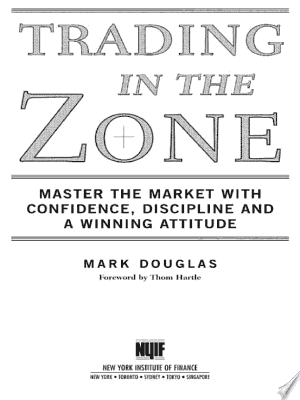
Trading in the Zone cover
Archivist's Choice

Trading in the Zone

Mark Douglas (2001)

Genre

Finance

Reading Time

240 min

Key Themes

See below

Track Your Reading

Sign in to track this book

Achieve consistent trading success by understanding market realities and developing a probabilistic mindset to overcome mental habits that hurt your profits.

Core Idea

The core idea of "Trading in the Zone" is that consistent profitability in trading depends mainly on a trader's mental state and psychological discipline, not on better market analysis or secret strategies. Douglas says successful traders think in probabilities, accept risk, and operate without emotional biases. They see the market as an objective flow of energy. The book breaks down common mental traps that lead to losses, such as fear, greed, and the need to be right. It stresses that a truly successful trader develops a 'no-fault' attitude, focuses only on executing their strategy consistently, and trusts their process more than individual trade outcomes. The book says the market offers endless opportunities, but a trader's perception and emotional responses determine their ability to use them. By understanding five basic market truths and developing a mindset that accepts uncertainty and personal responsibility, traders can reach a state of mental balance. This allows them to execute their method perfectly and get consistent results, putting them 'in the zone' where external market conditions no longer cause harmful emotional reactions.
Reading time
240 min
Difficulty
Medium
✓ Read this if...
You are a trader struggling with consistency, emotional decision-making, or self-sabotage, and believe that psychology is a key missing piece in your trading success.
✗ Skip this if...
You are looking for specific trading strategies, technical analysis methods, or a 'get rich quick' guide, as this book focuses exclusively on the psychological aspects of trading.

Core idea

The central argument and framework that powers the entire book.

The core idea of "Trading in the Zone" is that consistent profitability in trading depends mainly on a trader's mental state and psychological discipline, not on better market analysis or secret strategies. Douglas says successful traders think in probabilities, accept risk, and operate without emotional biases. They see the market as an objective flow of energy. The book breaks down common mental traps that lead to losses, such as fear, greed, and the need to be right. It stresses that a truly successful trader develops a 'no-fault' attitude, focuses only on executing their strategy consistently, and trusts their process more than individual trade outcomes.

The book says the market offers endless opportunities, but a trader's perception and emotional responses determine their ability to use them. By understanding five basic market truths and developing a mindset that accepts uncertainty and personal responsibility, traders can reach a state of mental balance. This allows them to execute their method perfectly and get consistent results, putting them 'in the zone' where external market conditions no longer cause harmful emotional reactions.

At a glance

Reading time

240 min

Difficulty

Medium

Read this if...

You are a trader struggling with consistency, emotional decision-making, or self-sabotage, and believe that psychology is a key missing piece in your trading success.

Skip this if...

You are looking for specific trading strategies, technical analysis methods, or a 'get rich quick' guide, as this book focuses exclusively on the psychological aspects of trading.

Key Takeaways

1

Think in Probabilities

Embrace the probabilistic nature of trading outcomes, rather than seeking certainty.

Quote

The market generates patterns that repeat themselves with statistical reliability, but there is no certainty that any particular pattern will produce the same outcome each time.

Most traders want certainty, believing they can predict the next market move. Douglas says this is a basic misunderstanding. The market is about probabilities. Every trade is just one event in a series of chances, each with a random outcome when seen alone. Professional traders know their advantage comes from consistently using a strategy with a positive expected return over many trades, not from predicting individual trades. This change in mindset, from 'knowing' to 'playing the odds,' is vital for emotional stability and consistent ...

Supporting evidence

Douglas frequently uses analogies of casino gambling, specifically how casinos operate on probabilities and large sample sizes to ensure profitability, despite individual bets being random. He contrasts this with the typical trader's desire for certainty on single events.

Apply this

Develop a trading system with a positive expectancy and rigorously follow its rules. Focus on trade execution and risk management for each instance, understanding that the 'win' or 'loss' of a single trade is irrelevant to the system's overall profitability. Track your trades to build a statistically significant sample size.

probabilistic-thinkingexpectancysample-size
2

Master Your Mental Environment

Your beliefs about trading and the market dictate your experience and results.

Quote

The market's behavior is neutral. It doesn't care about your beliefs, hopes, or fears. Only your interpretation of its behavior matters.

Douglas stresses that the 'zone' in trading is mainly a state of mind, marked by objectivity and freedom from fear or excitement. Our inner mental state, our beliefs, attitudes, and expectations, affects our trading results much more than external market conditions. Limiting beliefs, like needing to be right, fearing to miss out, or fearing loss, cause errors in execution, hesitation, or overtrading. By finding and replacing these harmful beliefs with helpful ones (e.g., 'anything can happen,' 'I am a consistent winner'), traders can ...

Supporting evidence

Douglas recounts numerous anecdotes of traders who sabotage themselves due to internal conflicts, despite having sound strategies. He highlights how the same market setup can yield vastly different results for two traders due to their differing mental states.

Apply this

Engage in self-reflection to uncover limiting beliefs about trading, money, and yourself. Practice affirmations and mental rehearsal to internalize empowering beliefs. Treat trading as a skill that requires mental training as much as technical analysis. Journaling your thoughts and feelings before, during, and after trades can be a powerful tool for self-awareness.

mental-disciplinelimiting-beliefsself-sabotage
3

Accept the Risk of the Unknown

Confront and accept that every trade carries an inherent, unpredictable risk.

Quote

The moment you put on a trade, you are immediately exposed to the unknown. There is no way around it.

One of the biggest psychological challenges for traders is the fear of losing. This fear often comes from not wanting to accept the uncertainty and risk in every trade. Douglas argues that professional traders fully accept that any single trade can lose, no matter how good the setup looks. This acceptance frees them from emotional paralysis and impulsive decisions driven by fear. By deciding and accepting the maximum risk on each trade before entering, traders can operate without emotion. This lets them manage the trade objectively ra...

Supporting evidence

Douglas describes how the fear of loss causes traders to move stop losses, cut winners short, or refuse to take valid setups, all because they cannot tolerate the discomfort of uncertainty. He contrasts this with professional gamblers who understand and accept the fixed risk of each bet.

Apply this

Before entering any trade, define your maximum acceptable loss (stop loss) and mentally commit to it. Understand that this capital is 'at risk' and you might lose it. Practice visualizing losses as a normal part of the trading process, akin to a business expense. Never risk more than you are comfortable losing on a single trade.

risk-acceptancefear-of-lossuncertainty-management
4

Eliminate Emotional Biases

Objectivity is paramount; emotional interference distorts perception and leads to errors.

Quote

The market is an endless stream of opportunities, but only if you can perceive them without bias.

Emotions like fear, greed, hope, and regret are the main reasons for inconsistent trading. Douglas explains how these emotions create biases that warp a trader's view of market information. For example, hope can make a trader hold a losing trade, while greed can lead to over-leveraging or taking profits too soon. To be consistent, traders must learn to watch market action from a detached, objective view, free from these powerful emotions. This does not mean being emotionless, but learning to recognize emotions without letting them con...

Supporting evidence

Douglas frequently cites examples of traders moving stop losses in hopes of a turnaround, or exiting winning trades prematurely out of fear of losing paper profits, all driven by emotional interference rather than objective analysis.

Apply this

Develop a detailed trading plan with clear entry, exit, and risk management rules. Commit to following this plan without deviation, regardless of how you feel. Use a checklist before each trade to ensure all criteria are met. Practice mindfulness to observe your emotional state without judgment, and avoid trading when in an emotionally compromised state.

emotional-controlcognitive-biasobjectivity
5

Understand Market Structure as a Flow of Energy

Perceive market movements as a continuous, dynamic interaction of forces, not isolated events.

Quote

The market is always in a state of becoming. It's a constant flow of energy, not a series of discrete events.

Douglas tells traders to change their view from seeing the market as separate trades or patterns to seeing it as a continuous flow of energy. This 'flow' is driven by the combined beliefs and actions of all participants. Every tick shows a shift in the balance of buying and selling pressure. Understanding this helps traders avoid focusing on specific outcomes or feeling personally hurt by market moves. When you see the market as a neutral, uncaring flow, you can learn to move with it, finding opportunities within its natural rhythms i...

Supporting evidence

Douglas uses the analogy of a river, where individual drops of water (trades) contribute to the overall current (trend). He argues that getting caught up in individual 'drops' distracts from the larger, more powerful flow.

Apply this

Practice observing price action without immediate judgment. Focus on the overall trend and momentum rather than getting bogged down by every minor fluctuation. Think in terms of supply and demand dynamics, and how they contribute to the market's 'energy.' Develop the ability to 'read' the market's current state and adapt your strategy accordingly, rather than imposing your will on it.

market-dynamicsprice-actionadaptability
6

Develop a 'No-Fault' Trading Attitude

Eliminate self-blame and judgment to foster a learning-oriented mindset.

Quote

There is no such thing as a 'bad' trade, only a trade that didn't work out as expected. Blaming yourself only makes it harder to learn.

A common trap for traders is self-blame and judgment after a losing trade. This 'fault-finding' attitude is bad because it causes negative emotions, reduces objectivity, and slows learning. Douglas suggests a 'no-fault' approach, where a losing trade is simply information, an outcome of a probabilistic event. By removing the emotional charge of 'right' or 'wrong,' traders can objectively analyze what happened, learn from it, and improve their system or execution without hurting their self-esteem or confidence. This mindset is vital fo...

Supporting evidence

Douglas illustrates how self-blame leads to a cycle of fear, hesitation, and further mistakes, as traders become afraid to make another 'bad' trade. He contrasts this with a scientific approach where failed experiments are simply data points for learning.

Apply this

After every trade, especially losing ones, review your process objectively. Ask: 'Did I follow my plan?' and 'What can I learn from this outcome?' instead of 'Why am I so stupid?' or 'I knew I shouldn't have done that.' Treat losses as tuition fees for your trading education. Focus on process improvement, not self-criticism.

self-compassionlearning-mindsetresilience
7

Focus on the Process, Not the Outcome

Consistent application of your edge leads to consistent results; individual outcomes are distractions.

Quote

The consistent winners are those who have learned to focus on the execution of their edge, knowing that the money will take care of itself.

Many traders focus too much on the money from each trade, which causes emotional swings and bad decisions. Douglas argues that consistent profits come from a disciplined focus on the trading process: finding good setups, managing risk, and executing trades according to a plan. If the process is good and used consistently, positive financial results will naturally follow over a series of trades. Shifting focus from 'making money' on one trade to 'executing my strategy perfectly' across many trades frees the trader from the pressure of ...

Supporting evidence

Douglas frequently points out that traders often deviate from their plan when a trade is 'winning' (taking profits too early) or 'losing' (holding on too long), precisely because they are fixated on the P&L of that single trade, rather than adhering to their process.

Apply this

Create a detailed trading plan and evaluate your performance based on how well you followed the plan, rather than solely on the P&L of individual trades. Reward yourself for disciplined execution, even on losing trades. Review your trade journal to identify deviations from your process and work to correct them. Trust that your edge, when consistently applied, will yield results.

process-orientationdisciplineexecution
8

Understand the Five Fundamental Truths

Internalize core market realities to build a resilient trading psychology.

Quote

You don't need to know what is going to happen next to make money. You only need to know what you will do next.

Douglas condenses the essence of a winning mindset into five basic truths: 1) Anything can happen. 2) You do not need to know what will happen next to make money. 3) There is a random distribution between wins and losses for any set of variables that define an advantage. 4) An advantage is simply a higher chance of one thing happening over another. 5) Every market moment is unique. Understanding these truths helps get rid of unrealistic expectations and fears. They provide a way to accept uncertainty, focus on probabilities, and under...

Supporting evidence

Douglas dedicates an entire chapter to explaining and reinforcing these five truths, demonstrating how a true understanding of each one can resolve common psychological trading problems like fear, greed, and the need to be right.

Apply this

Regularly review and meditate on these five truths. Print them out and keep them visible. When faced with uncertainty or emotional distress during trading, refer back to these principles to regain perspective and ground your decision-making in market reality. Use them as a mental checklist to ensure your mindset is aligned with successful trading.

fundamental-truthsmarket-realitypsychological-framework
9

Cultivate Self-Trust and Self-Acceptance

Believe in your ability to follow your rules and recover from mistakes.

Quote

The best traders have complete trust in themselves to do what they're supposed to do, without hesitation or internal conflict.

Many traders struggle with self-trust, often due to past mistakes or a lack of self-discipline. Douglas argues that building strong self-trust is essential. This means believing in your ability to define your edge, follow your rules, manage your risk, and recover from losses without falling into bad patterns. Lack of self-trust shows up as hesitation, second-guessing, or impulsive actions. Self-acceptance, on the other hand, means recognizing your current abilities and limits without judgment, and committing to constant improvement. T...

Supporting evidence

Douglas describes how traders often create 'rules' but then break them, leading to a cycle of self-condemnation and diminished self-worth. He emphasizes that breaking your own rules is a betrayal of self-trust.

Apply this

Start with small, manageable rules and consistently follow them to build a track record of self-discipline. Forgive yourself for past mistakes, learn from them, and commit to doing better. Practice positive self-talk and visualization to reinforce your belief in your abilities. View trading as a journey of personal growth where self-mastery is as important as market mastery.

self-trustself-acceptanceconfidence
10

Establish a Framework for Freedom

Structure your trading with rules to achieve true mental and financial freedom.

Quote

Paradoxically, the more structure you put around your trading, the more freedom you will experience.

Many new traders wrongly think freedom means no rules, believing they can do anything they want in the market. Douglas shows the paradox: real freedom in trading comes from a very structured and disciplined approach. By setting clear, objective rules for entry, exit, position size, and risk management, traders remove subjective decisions and emotional interference. This framework offers mental freedom because it removes the burden of constantly trying to predict or react to the market. With a solid system, traders can operate without ...

Supporting evidence

Douglas contrasts the 'freedom' of an undisciplined trader, which leads to chaos and losses, with the 'freedom' of a disciplined trader, who operates calmly within well-defined parameters, leading to consistent profitability.

Apply this

Develop a comprehensive trading plan that covers every aspect of your trading decisions. Automate as much of your decision-making as possible through clear rules. Review your plan regularly and update it based on market conditions or personal learning, but never deviate from it during live trading. Embrace the structure as your path to consistent profitability and mental peace.

trading-planstructuredisciplinefreedom

Critical analysis

Notable Quotes

The market doesn't 'owe' you anything.

Emphasizing personal responsibility over external blame for trading outcomes.

Any single trade is just a random outcome.

Highlighting the probabilistic nature of individual trades versus the edge over a series of trades.

The market is always right.

Stressin g that price action is the ultimate arbiter, not a trader's opinion or analysis.

There are five fundamental truths about trading: 1. Anything can happen. 2. You don't need to know what is going to happen next to make money. 3. There is a random distribution between wins and losses for any given set of variables that define an edge. 4. An edge is nothing more than an indication of a higher probability of one thing happening over another. 5. Every moment in the market is unique.

The core principles Douglas lays out for understanding the market and developing a proper trading mindset.

Your ultimate goal is to learn to think like a professional trader.

Setting the overarching objective for anyone looking to achieve consistent profitability.

The best traders think in probabilities.

Explaining the cognitive shift required to move from predicting to acting on statistical advantages.

Cut your losses short and let your winners run.

The classic trading adage, reinforced as a practical application of managing risk and reward.

You don't have to be right to make money.

Counterintuitive for many, this emphasizes that profitability comes from managing trades, not perfect predictions.

The market is a never-ending flow of opportunities.

Encouraging a perspective that removes the pressure of needing to catch every move and focuses on patience.

The market will provide you with whatever you need to demonstrate your level of skill.

Suggesting that trading outcomes reflect a trader's internal state and mastery, not just external market conditions.

The only way to avoid pain in the markets is to develop a strong sense of self-discipline and an absolute belief in your edge.

Linking emotional resilience and consistent execution to a deep understanding and trust in one's trading system.

You are trading your beliefs about the market, not the market itself.

Highlighting how internal mental frameworks and perceptions heavily influence trading decisions and results.

The market doesn't care about your opinion, your analysis, or your good intentions. It will do what it will do.

A stark reminder to remain objective and not project personal desires or biases onto market movements.

The consistent winners are the ones who have eliminated the fear of being wrong or losing money.

Identifying the key psychological hurdle that separates consistently profitable traders from others.

Quiz

Test Your Knowledge

Ready to see how well you understood this book? Take our interactive quiz with 10 questions.

10
Questions
~5
Minutes
?
Best Score

Key Questions (FAQ)

Trading in the Zone by Mark Douglas explores the psychological aspects of trading, aiming to help traders achieve consistent profitability. It focuses on overcoming mental habits and ingrained beliefs that lead to poor decision-making and financial losses.

About the author