BookBrief
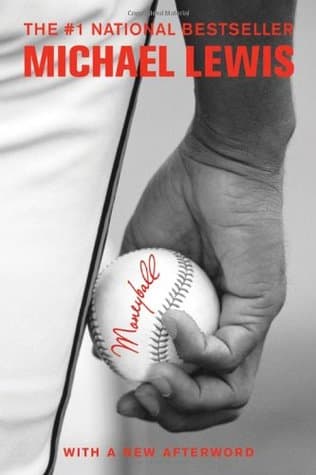
Moneyball: The Art of Winning an Unfair Game cover
Archivist's Choice

Moneyball: The Art of Winning an Unfair Game

Michael Lewis (2003)

Genre

Business / Biography / History / Economics / Finance

Reading Time

12 Minutes

Key Themes

See below

Track Your Reading

Sign in to track this book

Challenging baseball's traditions, Oakland A's general manager Billy Beane uses data and undervalued players to build a winning team on a small budget.

Core Idea

Moneyball by Michael Lewis explores how the Oakland Athletics, under General Manager Billy Beane, revolutionized professional baseball by applying sabermetrics—an empirical analysis of baseball statistics—to identify undervalued players. Facing one of the smallest budgets in MLB, Beane and his assistant Paul DePodesta built a highly competitive team by rejecting traditional scouting wisdom and instead focusing on objective data to find players whose on-base percentage and slugging percentage were disproportionately high relative to their market value. The book argues that conventional wisdom, often driven by intuition and subjective observation, can lead to significant inefficiencies and that a data-driven, analytical approach can provide a substantial competitive advantage, even against much wealthier opponents. The central thesis is that in any field where talent is evaluated and acquired, there are market inefficiencies that can be exploited by those willing to challenge established norms and rely on rigorous quantitative analysis rather than gut feelings or long-held traditions. It's a story about innovation, challenging the status quo, and the power of statistical reasoning to disrupt deeply entrenched industries, demonstrating that success isn't always about having the most resources, but about using the resources you have more intelligently.
Difficulty
Medium

Core idea

The central argument and framework that powers the entire book.

Moneyball by Michael Lewis explores how the Oakland Athletics, under General Manager Billy Beane, revolutionized professional baseball by applying sabermetrics—an empirical analysis of baseball statistics—to identify undervalued players. Facing one of the smallest budgets in MLB, Beane and his assistant Paul DePodesta built a highly competitive team by rejecting traditional scouting wisdom and instead focusing on objective data to find players whose on-base percentage and slugging percentage were disproportionately high relative to their market value. The book argues that conventional wisdom, often driven by intuition and subjective observation, can lead to significant inefficiencies and that a data-driven, analytical approach can provide a substantial competitive advantage, even against much wealthier opponents.

The central thesis is that in any field where talent is evaluated and acquired, there are market inefficiencies that can be exploited by those willing to challenge established norms and rely on rigorous quantitative analysis rather than gut feelings or long-held traditions. It's a story about innovation, challenging the status quo, and the power of statistical reasoning to disrupt deeply entrenched industries, demonstrating that success isn't always about having the most resources, but about using the resources you have more intelligently.

At a glance

Difficulty

Medium

Key Takeaways

1

The Inefficiency of Conventional Wisdom

Traditional scouting and player valuation methods are often flawed and ripe for exploitation.

Quote

The market for baseball players, like any market, was imperfect, and the imperfections were ripe for exploitation.

Moneyball's main idea is that traditional baseball beliefs, passed down by scouts and managers for generations, created problems in the player market. Teams paid too much for players based on perceived athleticism and superficial traits, rather than actual productivity. Meanwhile, players with less flashy but effective skills (like a high on-base percentage or ground-ball pitching) were not valued enough. Billy Beane and the A's saw these market failures and built a strategy to use them, acquiring players other teams ignored or dismis...

Supporting evidence

The A's strategy of drafting players like Jeremy Brown, an overweight college catcher with a high OBP, in the first round despite traditional scouts projecting him much lower, directly illustrates this market inefficiency. Other teams dismissed him based on appearance, while the A's valued his proven on-field production.

Apply this

In business, identify areas where industry-standard practices or metrics might be misleading. Seek out undervalued assets or overlooked talent by redefining what constitutes 'value' based on objective performance data rather than subjective impressions or historical biases.

2

Data-Driven Decision Making

Objective statistical analysis can outperform subjective expert opinion, especially under resource constraints.

Quote

The job of the general manager was not to collect the best talent, but to collect the best talent for the money.

The A's success came from their strong commitment to sabermetrics, which is the study of baseball statistics. Instead of relying on scouts' subjective judgments, Beane and his assistant Paul DePodesta carefully analyzed data to find key performance indicators that directly led to winning games. They focused on statistics like On-Base Percentage (OBP) for hitters and groundball rates for pitchers, which other teams often overlooked, preferring batting average or fastball speed. This allowed them to make logical, data-based decisions ab...

Supporting evidence

The A's focus on OBP led them to acquire players like Scott Hatteberg, a catcher whose career was seemingly over due to injury, and convert him into a first baseman. His high OBP, despite lacking traditional power or speed, made him an invaluable asset for the A's on a shoestring budget.

Apply this

Implement a culture of data-driven decision-making in your organization. Identify the true drivers of success in your field, quantify them, and prioritize decisions based on empirical evidence rather than gut feelings or historical precedent. Be willing to challenge established 'experts' with superior data.

3

Challenging Organizational Culture

Innovation often requires overcoming deep-seated resistance from within the organization.

Quote

Billy Beane's greatest challenge was not finding players, but changing the minds of the men who were supposed to find them.

Moneyball clearly shows the strong opposition Beane faced from his own scouting department. Scouts, with decades of experience and pride in their 'feel' for the game, openly mocked and resisted the data-driven approach. They saw it as an attack on their expertise and a threat to their jobs. Beane's ability to overcome this resistance, often through sheer determination and by showing results, is a key part of the story. This shows that adopting new strategies involves more than just good ideas; it requires leadership, conviction, and m...

Supporting evidence

The dramatic scenes of Beane clashing with his scouts during draft meetings, where he would override their unanimous recommendations based on his statistical analysis, are central to the narrative. His decision to draft Jeremy Brown over their strong objections is a prime example.

Apply this

When implementing disruptive innovation, anticipate and prepare for internal resistance. Build coalitions, communicate the rationale clearly, and be prepared to make tough decisions that challenge the status quo. Focus on demonstrating tangible results to win over skeptics.

4

The Value of Undervalued Traits

Success can be found by identifying and acquiring assets that others dismiss or fail to appreciate.

Quote

What mattered was not what a player looked like, but what he did.

The A's strategy was about finding value where others saw none. They looked for players with traits considered 'unattractive' by traditional standards, such as an awkward throwing motion, an unusual body type, or a history of injury, but who had statistically strong productive skills. Chad Bradford, a sidearm pitcher with a strange delivery, was good at getting groundouts but many teams ignored him. Scott Hatteberg's catching career ended due to nerve damage, but his high OBP made him a perfect, inexpensive first baseman. This idea ap...

Supporting evidence

The acquisition of Chad Bradford, a peculiar sidearm pitcher from a Triple-A club, is a perfect illustration. His unusual delivery made him effective, but his lack of conventional 'stuff' made him cheap and undervalued by other teams.

Apply this

Conduct an audit of your own industry or organization to identify undervalued skills, overlooked customer segments, or underutilized resources. Challenge assumptions about what constitutes 'ideal' talent or 'premium' assets, and look for those that consistently deliver results despite not fitting a traditional mold.

5

Strategy Over Resources

A superior strategy can overcome significant resource disparities.

Quote

If you don't have the money to compete, you have to find another way.

The Oakland A's operated with one of the lowest payrolls in Major League Baseball, often a fraction of what teams like the New York Yankees or Boston Red Sox spent. Moneyball shows that money is not the only factor in success. By using a different and better strategy, the A's consistently competed for playoff spots and even set an American League record for consecutive wins in 2002. This idea is especially useful for businesses or individuals with limited resources; it highlights that smart strategic thinking and execution can be more...

Supporting evidence

The A's 2002 season, where they won 103 games and set a then-AL record 20-game winning streak, all while having one of the league's lowest payrolls, is the primary evidence for this claim.

Apply this

For startups or smaller businesses, this means focusing on disruptive strategies, leveraging unique insights, and optimizing efficiency rather than trying to match larger competitors dollar-for-dollar. Identify your unique advantage and build a strategy around it.

6

The Psychological Traps of Decision Making

Human biases, especially confirmation bias and overconfidence, heavily influence traditional decision-making.

Quote

The problem was that the scouts were seeing what they wanted to see, not what was actually there.

Lewis subtly shows the psychological biases that affect traditional baseball scouting and, by extension, many other fields. Scouts often fell for confirmation bias, looking for evidence that supported their existing ideas of what a 'great player' looked like. They overvalued 'tools' that were easy to see, like a fast arm or a strong swing, but which did not always lead to on-field production. They undervalued less flashy but more effective traits. This human tendency to rely on intuition and past experience, even when data suggests ot...

Supporting evidence

The scouts' persistent focus on 'the look' of a player, their athletic build, or their perceived 'makeup,' even when their statistical output was mediocre, exemplifies these psychological traps. They dismissed Jeremy Brown because he 'didn't look like a ballplayer.'

Apply this

Implement blind reviews or objective scoring systems where possible to mitigate personal biases in hiring, project evaluation, or investment decisions. Actively seek out dissenting opinions and data that challenge your initial hypotheses. Be aware of the 'halo effect' and 'horn effect' when evaluating talent.

7

The Power of the Aggregate

Small, consistent gains from multiple overlooked sources can lead to significant overall success.

Quote

They weren't looking for superstars, but for players who could contribute in small, specific ways that added up to a lot of wins.

The A's strategy was not about finding one or two star players. It was about putting together a team of individually undervalued players whose combined efforts maximized runs scored and minimized runs allowed. They knew that a high OBP from a seemingly ordinary player was as valuable as one from a star, but much cheaper. This 'aggregation of marginal gains' approach, which improves many small parts, shows that overall success often comes from many small improvements rather than a few big breakthroughs. This is a strong idea for any or...

Supporting evidence

The A's roster was filled with players like Hatteberg, Bradford, and other 'castoffs' who each contributed specific, statistically proven value. Their collective output, rather than individual stardom, drove the team's success.

Apply this

Break down your goals into smaller, measurable components. Identify marginal improvements that can be made across various aspects of your operations, and focus on consistently optimizing each component. Recognize that small, consistent wins across many areas can outperform a singular, large, and often riskier, bet.

8

The Limitations of the Approach (and its Evolution)

While groundbreaking, the 'Moneyball' approach has its limitations and has evolved as others adapt.

Quote

The market corrects itself. What was once an inefficiency becomes common knowledge.

While Moneyball promoted a new approach, it's important to recognize its limits and how it changed later. The book mainly covers the A's success in the early 2000s. As other teams noticed and adopted similar analytical strategies, the advantages the A's used began to lessen. The market adjusted, and OBP became a more valued and thus more expensive trait. This shows that any new strategy, no matter how good, will eventually be copied and will need further innovation to stay competitive. The 'Moneyball' approach itself had to change bey...

Supporting evidence

The book itself hints at this by showing how Beane's strategies, though initially revolutionary, would eventually be copied. In the years following the book's publication, many MLB teams hired their own analytics departments, making it harder for any single team to find 'undervalued' players based solely on OBP.

Apply this

Understand that competitive advantages are rarely static. Continuously monitor your industry for emerging trends and adapt your strategies. Be prepared to innovate beyond your initial successes and seek the 'next Moneyball' to stay ahead of the curve. Don't rest on past laurels.

9

Leadership Through Conviction

Effective leaders must possess unwavering conviction to implement radical change.

Quote

He didn't care what anyone else thought. He cared about winning, and he believed his numbers would get him there.

Billy Beane's character is central to Moneyball. He was not just an analyst; he was a leader with strong conviction. He believed so deeply in the statistical approach that he was willing to upset his own scouting staff, challenge traditional thinking, and risk his career on an unproven method. This firm belief, supported by objective data, allowed him to make unpopular decisions and stick to them, even when results were not immediately clear. His leadership style shows that real innovation often requires a leader who is not afraid to ...

Supporting evidence

Beane's intense personality, his willingness to argue vociferously with scouts, and his ultimate authority in making draft and trade decisions, despite widespread skepticism, are all testaments to his conviction.

Apply this

As a leader, cultivate a strong sense of conviction in your strategic vision, especially when it deviates from the norm. Be prepared to defend your data-backed decisions and provide clear rationale to your team, even when faced with internal or external pushback. Lead by example in embracing new methodologies.

10

Beyond Sports: Universal Business Principles

The lessons of Moneyball are highly transferable to any industry facing resource constraints and entrenched practices.

Quote

This wasn't just about baseball. It was about how to win an unfair game.

Moneyball's lasting appeal comes from its wide applicability. Although it's about baseball, it offers a strong framework for strategic thinking in any competitive setting. Its main principles—finding market inefficiencies, using data over intuition, questioning traditional ideas, and optimizing limited resources—can be directly applied to business, finance, healthcare, or even personal growth. The book is a great example of how to find a competitive edge when you cannot outspend or overpower opponents, making it a compelling read beyo...

Supporting evidence

The book's widespread popularity among business leaders and its frequent citation in management literature, despite its sports setting, serves as evidence of its universal appeal and transferable lessons.

Apply this

Actively seek to apply the Moneyball mindset to your own domain. Question established metrics, look for overlooked talent or opportunities, and use data to make more rational, impactful decisions, regardless of your industry.

Critical analysis

Notable Quotes

Quiz

Test Your Knowledge

Ready to see how well you understood this book? Take our interactive quiz with 10 questions.

10
Questions
~5
Minutes
?
Best Score

Key Questions (FAQ)

Moneyball by Michael Lewis chronicles how Billy Beane, the general manager of the Oakland A's, used sabermetrics and statistical analysis to build a competitive baseball team on a shoestring budget. It explores his unconventional approach to player evaluation and team building, defying traditional scouting methods.

About the author