BookBrief
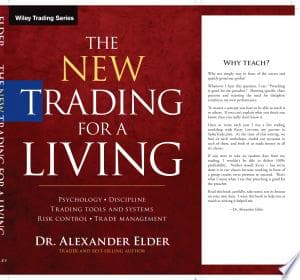
The New Trading for a Living cover
Archivist's Choice

The New Trading for a Living

Alexander Elder (2014)

Genre

Finance

Reading Time

360 min

Key Themes

See below

Track Your Reading

Sign in to track this book

This updated classic helps you master disciplined trading, with strategies, risk management, and self-assessment tools for today's markets.

Core Idea

Successful trading is a disciplined, systematic process with three parts: psychology, a trading system, and money management. This book shows how to develop these parts, stressing objective analysis over emotion, trend-following strategies like the Impulse System, and strict risk control for long-term profit. It suggests treating trading as a serious business that requires continuous learning, detailed record-keeping, and constant self-assessment.
Reading time
360 min
Difficulty
Medium
✓ Read this if...
You are a beginner or intermediate trader seeking a comprehensive, systematic approach to market analysis, trade execution, and risk management, with a strong emphasis on psychological discipline.
✗ Skip this if...
You are an advanced quantitative trader looking for highly complex algorithmic strategies, or you prefer purely fundamental analysis over technical and psychological aspects.

Core idea

The central argument and framework that powers the entire book.

Successful trading is a disciplined, systematic process with three parts: psychology, a trading system, and money management. This book shows how to develop these parts, stressing objective analysis over emotion, trend-following strategies like the Impulse System, and strict risk control for long-term profit. It suggests treating trading as a serious business that requires continuous learning, detailed record-keeping, and constant self-assessment.

At a glance

Reading time

360 min

Difficulty

Medium

Read this if...

You are a beginner or intermediate trader seeking a comprehensive, systematic approach to market analysis, trade execution, and risk management, with a strong emphasis on psychological discipline.

Skip this if...

You are an advanced quantitative trader looking for highly complex algorithmic strategies, or you prefer purely fundamental analysis over technical and psychological aspects.

Key Takeaways

1

The Three Pillars of Trading

Success in trading hinges on Mind, Method, and Money Management, each demanding equal attention.

Quote

Successful trading is based on knowledge, focus, and discipline.

Elder says that trading success is not just about finding a perfect indicator or system. Instead, it relies on three parts: a disciplined mind (psychology), a good method (trading system), and strict money management (risk control). Ignoring any part will cause problems. Many new traders focus too much on methods, missing the psychological traps and the important role of saving capital. Real skill comes from combining all three, creating a personal trading style that fits one's psychology while managing risk and following a clear syst...

Supporting evidence

Elder's framework is a foundational concept throughout the book, with dedicated sections for each pillar, emphasizing their interconnectedness. He often refers to the 'three Ms' (Mind, Method, Money) as the essential components.

Apply this

Before even considering a trade, evaluate your mental state, confirm your trading system's signals, and calculate your exact risk per trade. Regularly review your performance across all three pillars to identify weaknesses.

trading-psychologyrisk-managementtrading-system
2

Master Your Trading Psychology

Conquer fear and greed, and develop self-discipline to avoid common trading pitfalls.

Quote

Overcome barriers to success and develop stronger discipline.

Trading is a mental challenge where emotions like fear, greed, hope, and regret try to stop good decisions. Elder emphasizes that self-control is most important. Traders must be disciplined to follow their rules, cut losses quickly, and let profits grow. He warns against quick decisions made by emotion, like chasing stocks or trading for revenge after a loss. Understanding your own emotional biases and having a consistent, calm approach is more important than any technical indicator.

Supporting evidence

Elder frequently discusses the 'mass psychology' of the market and how individual traders often fall prey to herd mentality or personal emotional swings. He provides examples of how fear causes traders to exit too early and greed makes them hold onto losing positions.

Apply this

Maintain a trading journal that includes your emotional state before, during, and after each trade. This self-awareness helps identify patterns in your emotional responses and develop strategies to counteract them, such as stepping away from the screen after a significant loss.

emotional-controldisciplineself-management
3

The Impulse System for Trend Following

Combine two indicators to identify strong trends and avoid choppy markets.

Quote

The Impulse System… helps you avoid trades against the trend and trades in choppy markets.

Elder introduces his 'Impulse System' as a simple yet effective tool for finding good trades. It uses two indicators: a 13-period Exponential Moving Average (EMA) and a MACD-Histogram. When both move in the same direction (e.g., EMA rising and MACD-Histogram rising), it shows a strong trend, a good time to enter. When they conflict or are flat, it suggests a weak or choppy market, which is best avoided. This system helps filter out noise and focus on clear, trending chances, reducing bad trades.

Supporting evidence

The Impulse System is a core technical analysis tool presented in the book, with numerous chart examples illustrating its application across different timeframes and assets. Elder details its construction and interpretation.

Apply this

Only take long trades when both the 13-period EMA is rising and the MACD-Histogram is rising (green bars). Only take short trades when both are falling (red bars). Stay out of the market when the indicators diverge or are flat (blue bars).

technical-analysismacd-histogramexponential-moving-average
4

Money Management: The Ultimate Survival Tool

Protect your capital above all else by strictly limiting risk per trade.

Quote

Master money management as you set entries, targets and stops.

Money management is not just about setting stops; it is about survival. Elder strongly argues that a trader's main goal is to protect their capital, not to get rich fast. He supports a strict risk-per-trade rule, usually risking no more than 2% of total trading capital on any single trade. This ensures that a series of losses will not empty your account, allowing you to stay in the game long enough for your system to make profits. It is a basic rule for long-term success.

Supporting evidence

Elder provides calculations and examples demonstrating how even a high win rate can be undone by poor money management, while a moderate win rate with strict risk control can lead to consistent profits. He emphasizes the mathematical certainty of ruin when risk is uncontrolled.

Apply this

Before every trade, define your entry, your stop-loss, and your target. Calculate the difference between your entry and stop-loss. Then, determine your position size so that the monetary value of that difference (your potential loss) does not exceed 2% of your total trading capital.

risk-per-tradeposition-sizingcapital-preservation
5

The Importance of a Trading Journal

Learn from your past trades to become your own best teacher.

Quote

Use a record-keeping system that will make you into your own teacher.

Elder says a detailed trading journal is necessary for improving. It is not enough to just record entries and exits; a good journal includes the reasons for the trade, the setup, your emotional state, and an analysis after the trade. By reviewing your journal regularly, you can find repeating mistakes, improve your system, and understand your psychological patterns. This practice turns every trade, win or loss, into a valuable learning experience, helping with growth and discipline.

Supporting evidence

Elder dedicates a section to the components of an effective trading journal, explaining what to record and why. He frames it as the primary tool for 'self-supervision' and developing an objective perspective on one's trading.

Apply this

After each trading day, document every trade: entry/exit prices, volume, reasons for entry/exit, the market context, your emotional state, and any lessons learned. Review your journal weekly to spot trends in your performance and psychology.

trade-analysisself-reflectionperformance-tracking
6

Trading as a Business

Approach trading with the seriousness, planning, and professionalism of an entrepreneur.

Quote

Successful trading is based on knowledge, focus, and discipline.

Elder challenges the idea of trading as a quick way to get rich, instead seeing it as a serious business. Like any successful business, trading needs a strong business plan (trading plan), careful record-keeping, continuous learning, and strict rule-following. It requires a professional mindset, treating losses as business costs and profits as income, rather than personal wins or failures. This view helps with objectivity and removes the emotional stress that often affects amateur traders.

Supporting evidence

Elder provides templates for creating a comprehensive trade plan and emphasizes the need for a 'business-like' approach to market analysis, risk management, and self-assessment.

Apply this

Develop a detailed trading plan outlining your strategy, risk parameters, and daily routine. Treat your trading capital as business capital, and regularly review your 'business performance' rather than just focusing on individual trade outcomes.

trading-planprofessionalismbusiness-mindset
7

The Power of Multiple Timeframes

Gain a clearer market perspective by analyzing trends across different chart durations.

Quote

You need to look at the market through three timeframes to get a full picture.

A common mistake is focusing on one timeframe, which can give a wrong view of the market. Elder suggests using 'triple screen' analysis, looking at an asset across three different timeframes (e.g., weekly, daily, and hourly). The longest timeframe shows the main trend, the middle timeframe confirms it and shows pullbacks, and the shortest timeframe is for exact entry and exit points. This helps avoid trading against the main trend and improves the chance of successful trades.

Supporting evidence

Elder illustrates the triple screen system with multiple chart examples, showing how a stock might appear bearish on an hourly chart but bullish on a weekly chart, guiding the trader to only take long trades during pullbacks.

Apply this

First, identify the trend on a longer timeframe (e.g., weekly). Then, use an intermediate timeframe (e.g., daily) to spot corrections or entry signals within that trend. Finally, use a shorter timeframe (e.g., hourly) for precise execution.

multi-timeframe-analysistrend-identificationcharting
8

Asymmetrical Market Zones

Identify setups where potential rewards significantly outweigh potential risks.

Quote

Identify asymmetrical market zones, where rewards are higher and risks lower.

Not all trading chances are equal. Elder teaches traders to look for 'asymmetrical market zones,' where the potential profit is much greater than the potential loss. This idea is important for long-term profit, as even a system with a win rate below 50% can be profitable if the winning trades are much larger than the losing trades. It is about getting the best reward-to-risk ratio, making sure every dollar risked can return multiple dollars.

Supporting evidence

Elder discusses how to calculate reward-to-risk ratios for potential trades and illustrates setups that offer favorable asymmetries, often tied to support/resistance levels or breakout points.

Apply this

Before entering any trade, calculate your potential profit (target minus entry) and potential loss (entry minus stop-loss). Only take trades where the reward-to-risk ratio is at least 2:1 or preferably 3:1.

reward-risk-ratiotrade-selectionrisk-reward
9

The Trader's Checklist and Rating System

Systematize your decision-making and evaluate your readiness to trade.

Quote

The New Trading for a Living includes templates for rating stock picks, creating trade plans, and rating your own readiness to trade.

To fight impulsive trading and ensure consistency, Elder suggests creating personal checklists and rating systems. This means making a set of rules for judging possible trades (e.g., trend strength, support/resistance, indicator signals) and giving scores. He also suggests rating your own mental and physical readiness to trade each day, stopping you from trading when you are emotional or tired. This systematic approach removes personal bias and strengthens disciplined action.

Supporting evidence

The book provides explicit templates for 'rating stock picks' and 'rating your own readiness to trade,' demonstrating practical implementation of these checklists.

Apply this

Before placing a trade, go through your personalized checklist, assigning points to each criterion. Only execute trades that meet a minimum score. Additionally, use a daily checklist to assess your mental and physical state, deciding if you are fit to trade that day.

decision-makingtrade-planningsystematic-trading
10

Continuous Learning and Adaptation

The markets constantly evolve; so must the successful trader.

Quote

The New Trading for a Living updates a modern classic, popular worldwide among both private and institutional traders. This revised and expanded edition brings time-tested concepts in gear with today's fast-moving markets, adding new studies and techniques for the modern trader.

The fact that this updated edition exists shows an important lesson: markets change, and trading strategies must change too. What worked yesterday might not work tomorrow. Elder shows the importance of continuous learning, adapting to new market conditions, technologies, and psychological insights. Successful traders are always learning, improving their methods, understanding new tools, and constantly improving their self-awareness. Not changing is a major problem in the financial world.

Supporting evidence

The fact that Elder updated his own classic work to include 'new studies and techniques for the modern trader' is direct evidence of this principle. The book itself is a testament to the need for adaptation.

Apply this

Dedicate time each week to reviewing market news, studying new indicators or strategies, and analyzing your past performance to identify areas for improvement. Be open to modifying your trading plan based on new insights or changing market conditions.

market-adaptationlifelong-learningtrading-evolution

Critical analysis

Notable Quotes

The market is like the ocean, constantly moving, with tides and currents. You need to learn to sail, not to stop the ocean.

Emphasizing the futility of trying to control the market and the necessity of adapting to its movements.

Your most important task is to protect your capital. If you lose money, you cannot trade.

Highlighting the paramount importance of risk management and capital preservation.

The goal of a successful trader is to make the best trades. Money is secondary.

Distinguishing between the pursuit of good trading decisions and the direct pursuit of profit.

Amateurs think about how much money they can make. Professionals think about how much money they can lose.

Contrasting the focus of inexperienced traders with that of experienced ones regarding risk.

Discipline is the bridge between goals and accomplishment.

Underscoring the critical role of self-discipline in achieving trading success.

The three M's of trading are Mind, Method, and Money Management.

Introducing the foundational pillars of successful trading.

Emotional trading is losing trading.

Warning against the detrimental effects of letting emotions dictate trading decisions.

Every trade has to have an exit point before you enter it.

Stresssing the importance of pre-planning exit strategies, both for profit and loss.

The market discounts everything. It’s a voting machine in the short run and a weighing machine in the long run.

Explaining how market prices reflect all available information and its dual nature over different timeframes. (This quote is often attributed to Benjamin Graham, but Elder frequently references and interprets such concepts).

Indicators are like rearview mirrors. They show you where you've been, not where you're going.

Cautioning against over-reliance on indicators and emphasizing their lagging nature.

The biggest enemy of a trader is himself.

Pointing out that internal psychological biases and lack of discipline are often greater obstacles than external market conditions.

Trade with a plan, not with hope.

Encouraging a systematic, analytical approach to trading over wishful thinking.

The market doesn't care about your opinions, only your positions.

Reminding traders that personal biases or beliefs are irrelevant; only actual trades and their outcomes matter.

Successful trading is based on anticipation, not reaction.

Advocating for proactive analysis and strategic planning rather than impulsive responses to market movements.

Quiz

Test Your Knowledge

Ready to see how well you understood this book? Take our interactive quiz with 10 questions.

10
Questions
~5
Minutes
?
Best Score

Key Questions (FAQ)

The book emphasizes a calm and disciplined approach to the markets, focusing on the critical interplay of risk management, self-management, and developing a systematic trading strategy. It teaches traders to overcome emotional barriers and make informed decisions.

About the author

Alexander Elder is a psychiatrist and a world-renowned trading psychologist. He is the author of the bestselling book, 'The New Trading for a Living,' which has been translated into multiple languages and is considered a foundational text for traders. Dr. Elder's work focuses on the psychological aspects of trading, helping individuals develop discipline and manage risk.