BookBrief
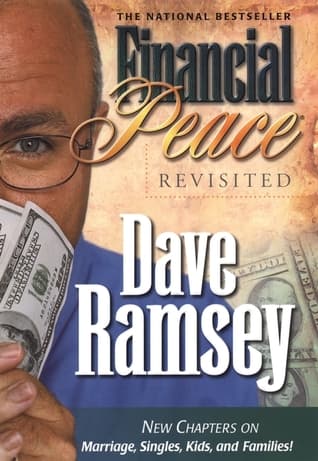
Financial Peace Revisited cover
Archivist's Choice

Financial Peace Revisited

Dave Ramsey (2003)

Genre

Business / Reference / Economics / Finance / Self-Help

Reading Time

7 hours

Key Themes

See below

Track Your Reading

Sign in to track this book

Having lost a fortune by thirty, Dave Ramsey distills his hard-won wisdom into a straightforward, step-by-step guide for escaping debt, investing simply, and finding financial peace to transform your life and relationships.

Core Idea

Financial Peace Revisited updates Dave Ramsey's principles for achieving financial freedom by eliminating debt, building wealth through saving and investing, and practicing generosity. The book argues that following a series of 'Baby Steps'—starting with a small emergency fund, tackling debt with the Debt Snowball, building a full emergency fund, and then investing wisely—helps individuals and families break free from debt, build lasting financial security, and live a life of contentment and purpose. It emphasizes that true financial peace is not just about money, but about aligning one's finances with personal values and faith.
Reading time
7 hours
Difficulty
Easy
✓ Read this if...
You are struggling with debt, need a clear, step-by-step plan to manage your money, or want to build a solid financial foundation based on proven principles of saving and investing.
✗ Skip this if...
You are already debt-free, have a sophisticated investment strategy, or prefer a more nuanced economic perspective over a straightforward, faith-based financial plan.

Core idea

The central argument and framework that powers the entire book.

Financial Peace Revisited updates Dave Ramsey's principles for achieving financial freedom by eliminating debt, building wealth through saving and investing, and practicing generosity. The book argues that following a series of 'Baby Steps'—starting with a small emergency fund, tackling debt with the Debt Snowball, building a full emergency fund, and then investing wisely—helps individuals and families break free from debt, build lasting financial security, and live a life of contentment and purpose. It emphasizes that true financial peace is not just about money, but about aligning one's finances with personal values and faith.

At a glance

Reading time

7 hours

Difficulty

Easy

Read this if...

You are struggling with debt, need a clear, step-by-step plan to manage your money, or want to build a solid financial foundation based on proven principles of saving and investing.

Skip this if...

You are already debt-free, have a sophisticated investment strategy, or prefer a more nuanced economic perspective over a straightforward, faith-based financial plan.

Key Takeaways

1

The Debt Snowball: Unleash Momentum

Attack debt strategically, building psychological wins to accelerate your progress.

Quote

The debt snowball method is where you pay off your debts in order from smallest to largest, regardless of the interest rate. Once the smallest debt is paid off, you take the money you were paying on that debt and apply it to the next smallest debt.

Ramsey says the Debt Snowball is the most effective way to become debt-free. It is not mathematically superior in minimizing interest (the avalanche method does that), but it is psychologically superior. The idea is to list all your debts from smallest balance to largest. You make minimum payments on all debts except the smallest, on which you put every extra dollar you can find. Once that smallest debt is paid off, you take the money you were paying on it (minimum payment + extra) and add it to the minimum payment of the next smalles...

Supporting evidence

Ramsey recounts countless stories from callers to his radio show and participants in his Financial Peace University classes who attest to the psychological power of the snowball. People often quit on mathematically 'optimal' plans because they lack the immediate gratification and visible progress that the snowball provides.

Apply this

List all your debts (excluding your mortgage for now) from smallest balance to largest. Commit to making only minimum payments on all but the smallest. Attack that smallest debt with intense focus, cutting expenses and finding extra income. Once it's gone, roll that payment into the next debt. Celebrate each payoff to reinforce positive behavior.

debt-snowballfinancial-peace-universitydebt-elimination
2

Emergency Fund: Your Financial Foundation

Build a cash buffer to absorb life's inevitable shocks without resorting to debt.

Quote

An emergency fund is not an investment; it is insurance. It's there to protect you from the financial storms of life.

Before tackling debt or investing, Ramsey insists on establishing an emergency fund. This is a foundational step in his 'Baby Steps' plan. He recommends starting with a 'starter' emergency fund of $1,000 during the debt snowball phase and then expanding it to 3-6 months of essential living expenses after all non-mortgage debt is paid off. This fund acts as a financial shock absorber, stopping unexpected expenses like car repairs, medical emergencies, or job loss from derailing your progress and forcing you back into debt. It provides ...

Supporting evidence

Ramsey frequently shares anecdotes of people whose lives were thrown into chaos by unexpected expenses, leading them back into debt cycles. He cites the statistic that most Americans can't cover a $400 emergency without selling something or going into debt, highlighting the widespread need for this buffer.

Apply this

Prioritize saving $1,000 in a separate, easily accessible savings account. Once your non-mortgage debts are cleared (Baby Step 3), focus intensely on growing this fund to cover 3-6 months of your essential living expenses. Keep it liquid and untouched for true emergencies only.

emergency-fundbaby-stepsfinancial-security
3

The Danger of Debt: A Slave to the Lender

Understand that debt is a tool that robs you of future income and freedom.

Quote

The borrower is slave to the lender. Debt is not a tool; it is a monument of financial bondage.

Ramsey takes an uncompromising stance against debt. He sees it not as a necessary financial tool but as a destructive force that hinders wealth building and personal freedom. He argues that the idea of 'good debt' (like student loans or car loans) is a myth, as all debt carries risk and costs interest, effectively stealing from your future earnings. He emphasizes that debt stops you from truly owning your income, as part of every paycheck goes to past purchases. This 'slavery' to lenders restricts your options, increases stress, and d...

Supporting evidence

Ramsey frequently cites the biblical proverb, 'The rich rule over the poor, and the borrower is slave to the lender,' as a core tenet. He also shares numerous personal stories of his own bankruptcy due to excessive debt and the subsequent struggles of individuals trapped in debt cycles.

Apply this

Adopt a 'no-debt' mindset. Avoid credit cards, car loans, and student loans whenever possible. If you have debt, commit to paying it off aggressively using the Debt Snowball. Before making any significant purchase, ask yourself if you can truly afford it without borrowing.

debt-free-livingcredit-cardsfinancial-bondage
4

The KISS Rule of Investing: Keep It Simple, Stupid

Avoid complex investments and focus on long-term growth through diversified mutual funds.

Quote

Investing doesn't have to be complicated. The best investors are usually the ones who keep it simple.

Ramsey's investment philosophy is simple and focused on long-term growth. He strongly suggests investing in growth stock mutual funds with a long track record, managed by professionals. He dismisses individual stock picking, day trading, and complex investment schemes as too risky and time-consuming for the average person. His 'KISS' (Keep It Simple, Stupid) rule emphasizes diversification across four types of mutual funds (growth, growth and income, international, and aggressive growth) within tax-advantaged accounts like 401(k)s and...

Supporting evidence

Ramsey points to the historical performance of the stock market over long periods, demonstrating that diversified mutual funds consistently outperform most individual investors and complex strategies. He often highlights the fees and risks associated with actively managed individual portfolios versus low-cost index-based mutual funds.

Apply this

Once your emergency fund is fully funded and non-mortgage debt is gone, start investing 15% of your gross income. Prioritize tax-advantaged accounts (401k up to employer match, then Roth IRA, then back to 401k). Invest in good quality, diversified growth stock mutual funds across the four categories Ramsey suggests.

mutual-fundscompound-interestretirement-planningroth-ira
5

Contentment: The Antidote to Consumerism

Cultivate satisfaction with what you have to break free from the cycle of endless wanting.

Quote

Contentment is not the fulfillment of what you want, but the realization of how much you already have.

Ramsey says consumerism and the 'keeping up with the Joneses' mentality cause much financial distress. He argues that true financial peace requires contentment. This means choosing to be satisfied with your current possessions and lifestyle, rather than always chasing the next new car, gadget, or bigger house. Contentment frees you from the pressure to spend beyond your means, reduces financial stress, and allows you to direct your money towards your long-term goals. It is a mindset shift that recognizes the true value of experiences ...

Supporting evidence

Ramsey shares personal anecdotes of how his own pursuit of wealth and material possessions ultimately led to bankruptcy and unhappiness. He often refers to the societal pressure created by advertising and social media to constantly acquire more, leading many into debt.

Apply this

Practice gratitude daily. Unsubscribe from marketing emails that tempt you to spend. Avoid comparing your lifestyle to others. Before making a purchase, ask if it truly adds value to your life or if it's simply fulfilling a temporary desire fueled by external pressures.

consumerismgratitudefinancial-freedomminimalism
6

The Power of the Budget: Giving Every Dollar a Job

Gain control over your money by intentionally planning where every dollar goes.

Quote

A budget is telling your money where to go instead of wondering where it went.

Ramsey considers budgeting an essential tool for financial peace. He views a budget as a liberation — a proactive plan for your money, rather than a reactive response to spending. The core principle is the 'zero-based budget,' where every dollar of your income is assigned a specific job (savings, debt payment, bills, spending) until your income minus your expenses equals zero. This intentionality eliminates financial 'leakage,' reveals wasteful spending, and ensures that your money aligns with your financial goals. It empowers you to ...

Supporting evidence

Ramsey frequently shares success stories from individuals and families who transformed their finances by diligently following a budget. He often uses the analogy of a business needing a budget to thrive, arguing that personal finances are no different.

Apply this

Create a monthly zero-based budget. Track all your income and expenses. Assign every dollar a category until your income minus your expenses equals zero. Review and adjust your budget regularly (at least monthly) to ensure it reflects your current situation and goals.

zero-based-budgetfinancial-planningmoney-management
7

Family and Money: A United Front

Align your financial goals with your spouse to strengthen your relationship and accelerate progress.

Quote

Money problems are the number one cause of divorce. If you want a strong marriage, you have to get on the same page with your money.

Ramsey says money is the leading cause of marital strife and divorce. He emphasizes that for couples, financial peace is a team sport. Both partners must be engaged, transparent, and aligned on their financial goals and spending habits. This requires open, honest communication, compromise, and a shared vision for their financial future. He advocates for joint accounts, shared budgets, and regular 'money dates' to discuss finances, make decisions together, and celebrate progress. When couples work together, their combined effort and co...

Supporting evidence

Ramsey frequently cites statistics on divorce rates linked to financial disagreements. He shares numerous stories from his counseling experience where couples' financial misalignment led to severe relationship stress, and conversely, how financial unity strengthened marriages.

Apply this

If you're married, sit down with your spouse and create a budget together. Discuss your financial dreams and fears. Hold regular 'money dates' to review your budget, make financial decisions, and ensure you're both working towards the same goals. Be transparent about all income and spending.

money-and-marriagefinancial-communicationrelationship-goals
8

Giving: The Ultimate Act of Generosity

Integrate charitable giving into your financial plan as a core principle, not an afterthought.

Quote

When you give, you are breaking the power of money over you. You are saying, 'I am not controlled by this stuff.'

Ramsey places importance on giving, calling it a key part of financial peace and personal fulfillment. He argues that generosity breaks the psychological hold money can have, creating a spirit of abundance rather than scarcity. By intentionally budgeting for charitable giving (often suggesting tithing 10% as a starting point), individuals show that they control their money, not the other way around. This act of giving, even on a tight budget, cultivates a grateful heart, reinforces contentment, and brings greater satisfaction than sim...

Supporting evidence

Ramsey frequently references biblical principles regarding tithing and generosity. He shares countless stories from his community and listeners about the profound positive impact giving has had on their lives, often citing how 'givers gain' and experience greater personal and financial blessings.

Apply this

Once your $1,000 emergency fund is saved, integrate giving into your budget. Start with a percentage you're comfortable with (Ramsey often suggests 10% as a tithe), and make it a non-negotiable line item, just like any other bill. Give to causes you believe in.

tithingcharitable-givinggenerosityfinancial-stewardship
9

Live Like No One Else: Sacrifice for Future Freedom

Embrace temporary sacrifice to achieve financial independence that others only dream of.

Quote

If you will live like no one else, later you can live like no one else.

This mantra sums up Ramsey's philosophy: the willingness to make radical, often uncomfortable, financial choices now to secure an extraordinary future. It means giving up instant gratification, cutting unnecessary expenses, and working extra hours while others spend freely and accumulate debt. This period of intense focus and sacrifice – living 'lean' – is temporary. The reward is long-term financial freedom, the ability to give generously, and the peace of mind that comes from being debt-free and wealthy. It is about choosing a diffe...

Supporting evidence

Ramsey uses his own story of losing everything and rebuilding through extreme discipline as a prime example. He also showcases numerous success stories from Financial Peace University graduates who committed to intense sacrifice and reaped significant rewards.

Apply this

Identify areas where you can cut spending drastically. Consider taking on a side hustle or working extra hours to accelerate your debt payoff or savings. Embrace a mindset of delayed gratification and constantly remind yourself of the future freedom you are working towards.

financial-independencedelayed-gratificationsacrificewealth-building
10

Insurance: Protect Your Progress

Adequately insure yourself against major risks to safeguard your financial journey.

Quote

Insurance is not an investment; it is risk transfer. You buy it to protect your stuff and your future.

Ramsey stresses the critical role of proper insurance in protecting your financial progress. He differentiates between necessary insurance (health, term life, auto, homeowner's/renter's, long-term disability) and unnecessary or 'bad' insurance (whole life, credit card protection, extended warranties). The goal is to transfer catastrophic financial risk to an insurance company, stopping unexpected events from wiping out your savings or forcing you back into debt. He advises getting enough coverage, especially for term life insurance if...

Supporting evidence

Ramsey often shares heartbreaking stories of families devastated financially by illness, accidents, or premature death due because of insufficient or incorrect insurance coverage. He provides clear examples of how term life insurance, for instance, is a far better value than whole life for most people.

Apply this

Review all your insurance policies. Ensure you have adequate health, term life (if applicable), auto, homeowner's/renter's, and long-term disability insurance. Avoid whole life insurance and other unnecessary policies. Shop around for the best rates and coverage.

insurancerisk-managementterm-life-insurancedisability-insurance

Critical analysis

Notable Quotes

We buy things we don't need, with money we don't have, to impress people we don't like.

Ramsey's core philosophy on consumerism and debt.

Debt is normal. Be weird.

Challenging the societal norm of debt as an acceptable part of life.

You must gain control over your money or the lack of it will forever control you.

Emphasizing the importance of financial literacy and control.

Live like no one else, so later you can live like no one else.

The trade-off of temporary sacrifice for long-term financial freedom.

A budget is telling your money where to go instead of wondering where it went.

Defining the purpose and power of a personal budget.

Your most powerful wealth-building tool is your income. And 70% of Americans have no idea where it went.

Highlighting the lost potential of income due to lack of financial tracking.

The paid-in-full mortgage is the only mortgage you should ever have.

Ramsey's strong stance against carrying a mortgage into retirement.

If you will live like no one else, later you can live like no one else.

The central theme of the book, promoting unconventional financial habits for extraordinary results.

Money is a tool. It's not the root of all evil. It's not the answer to all problems. It's simply a tool.

Framing money as a neutral instrument to be used wisely.

You can't get rich quick. You have to get rich slow.

Discouraging get-rich-quick schemes and promoting long-term financial discipline.

An emergency fund is not a luxury; it's a necessity.

Emphasizing the critical role of an emergency fund in financial stability.

The borrower is slave to the lender.

A biblical principle used to illustrate the oppressive nature of debt.

Your greatest asset is your income, and your greatest tool is your budget.

Summarizing two key components of financial success.

The average millionaire has seven streams of income.

Highlighting a characteristic of successful wealth builders and the importance of diversification.

You have to walk away from the herd. You have to be willing to be different.

Encouraging readers to defy conventional financial wisdom to achieve better results.

Quiz

Test Your Knowledge

Ready to see how well you understood this book? Take our interactive quiz with 10 questions.

10
Questions
~5
Minutes
?
Best Score

Key Questions (FAQ)

The book's core philosophy centers on helping individuals achieve financial stability and peace by getting out of debt, building wealth through simple investing, and aligning financial decisions with personal values like contentment, drawing from Dave Ramsey's personal experience of losing and rebuilding his wealth.

About the author

Dave Ramsey

Dave Ramsey is a nationally syndicated radio host and author. He is best known for his book 'Financial Peace Revisited,' which outlines his principles for debt-free living. Ramsey's work focuses on practical financial advice and motivational strategies for individuals seeking financial freedom.