“He knew that he was not like other boys, and he was glad.”
— Frank Cowperwood's early realization of his unique ambition and drive.

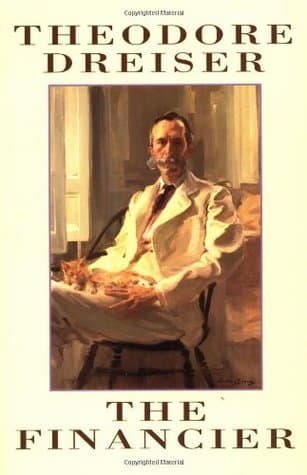
Theodore Dreiser (1912)
Genre
Business / Historical Fiction / Finance
Reading Time
15-20 hours (approx. 460 pages)
Key Themes
See below
Sign in to track this book
In the cutthroat world of post-Civil War finance, Frank Cowperwood, a ruthless broker based on C. T. Yerkes, manipulates his way to the top with the unwavering support of his mistress, exposing the corrupt underbelly of wealth acquisition.
Frank Cowperwood is introduced as a bright, ambitious boy in Philadelphia, the son of a bank teller. From a young age, he is fascinated with money and its movement. He famously observes a lobster devouring a squid, an event that shapes his view of life as a struggle for dominance. His first foray into finance involves trading soap and later, accepting small loans from his father's bank to invest in commodities. He quickly surpasses his father's understanding of the market, showing a natural intuition for buying low and selling high. These early experiences solidify his belief in the power of capital and his desire to acquire it, setting the stage for his future pursuits.
As a young man, Frank secures a position as a clerk in the firm of Henry Waterman & Company, a brokerage house in Philadelphia. He quickly learns the stock market, bond trading, and various financial instruments of the era. His intelligence and shrewdness are evident as he navigates the complex world of finance. He builds connections, observes the strategies of more experienced brokers, and begins to formulate his own aggressive investment philosophies. His ambition is clear, and he sees every transaction as an opportunity to gain an advantage, positioning himself for greater independence and control over his financial destiny.
Frank Cowperwood marries Lillian Semple, a woman from a respectable but not wealthy family, primarily for social standing and convenience. Soon after, he establishes his own brokerage firm, Cowperwood & Company, using his growing capital and reputation. He invests in street railways and government war bonds during the Civil War. His business sense is undeniable, and he quickly accumulates a fortune. He is driven by a desire for wealth and power, often using aggressive and sometimes ethically questionable tactics to achieve his financial goals, always pushing boundaries.
Driven by his ambition and desire for even greater profits, Frank Cowperwood begins to use public funds entrusted to the city treasurer, George W. Stener, for his own speculative investments. He cultivates a close relationship with Stener, convincing him to allow Cowperwood to use the city's money for short-term, high-yield investments, promising a return to the city coffers with interest. This practice, while common among financiers of the era, is legally dubious and morally questionable. Cowperwood justifies these actions by believing he can always make a profit and restore the funds, but he risks public trust and his own reputation.
While his financial empire expands, Frank's personal life changes when he meets Aileen Butler, the beautiful daughter of Edward Butler, a powerful contractor and city official with whom Cowperwood does business. Despite Frank being married to Lillian and Aileen being engaged, an intense mutual attraction develops between them. Frank, never one to deny his desires, pursues Aileen. Their affair begins, characterized by passionate encounters and a deep emotional connection that Frank has never experienced with Lillian. This illicit relationship becomes a central focus of his life, adding personal risk to his already precarious financial dealings.
The Great Chicago Fire erupts, causing widespread devastation and triggering a financial panic across the nation. The stock market plummets, and banks call in loans. Cowperwood, heavily invested and reliant on the short-term use of city funds, finds himself in a dire predicament. The panic makes it impossible for him to quickly liquidate his assets and return the public money he has been using. His intricate web of investments begins to unravel, and the secret of his unauthorized use of city funds is on the verge of being exposed. This crisis marks a turning point, as his audacious financial strategies are now directly imperiled by forces beyond his control.
The financial panic intensifies, and the city treasurer, Stener, is unable to cover the missing funds. Investigations begin, and Cowperwood's name is linked to the scandal. Edward Butler, Aileen's father, who had been an ally, turns against Cowperwood after discovering the affair with his daughter. Butler, a powerful figure, actively works to bring Cowperwood down. The public outcry is immense, and Cowperwood is indicted for embezzlement and misuse of public funds. His facade of respectability crumbles, and he faces legal and social condemnation, a stark reversal of his rise.
Frank Cowperwood's trial becomes a sensational event in Philadelphia. Despite his attempts to manipulate the legal system and leverage his remaining influence, the evidence against him is overwhelming. The prosecution highlights his audacious use of city money for personal gain, while the public and press portray him as a ruthless and corrupt financier. Edward Butler's testimony and influence prove particularly damaging. Throughout the ordeal, Aileen remains loyal, attending the trial and offering him unwavering support, further deepening their bond. Frank is found guilty and sentenced to a term in the Eastern State Penitentiary, a devastating blow to his pride and ambition.
Frank serves his prison sentence, a period of humiliation and reflection. During his incarceration, his financial empire collapses. His wife, Lillian, is left to cope with the societal shame and reduced circumstances, becoming increasingly bitter and resentful. Aileen, however, remains devoted, visiting him regularly and providing emotional support, even enduring her own family's disapproval and social ostracism. This period tests Frank's resilience, but he never loses his drive or his belief in his own abilities. He plans his eventual return to the financial world, learning from his mistakes and hardening his resolve.
After serving his time, Frank is released from prison, financially broken but not in spirit. He emerges into a world that largely shuns him. Lillian refuses to reconcile, and his children are estranged. However, Aileen Butler's loyalty remains absolute. She has sacrificed her reputation, her family, and her future for him, waiting patiently for his release. She is by his side, ready to support his efforts to rebuild his life and fortune. Her unwavering devotion provides him with an emotional anchor and a renewed sense of purpose, fueling his determination to reclaim his former status and prove his detractors wrong.
Frank, though disgraced, still possesses his sharp intellect and an unyielding will. With Aileen by his side, he assesses the financial landscape, recognizing that Philadelphia holds too many painful memories and too much lingering animosity. He turns his attention westward, to the burgeoning city of Chicago, seeing it as a new frontier with opportunities for a man of his ambition and ruthlessness. He starts with small, strategic investments, carefully rebuilding his network and his capital. His experiences in prison have sharpened his resolve and made him more cautious, yet no less daring, in his pursuit of wealth and power.
Recognizing that his marriage to Lillian is broken and a hindrance to his future, Frank initiates divorce proceedings. The divorce is acrimonious, further solidifying Lillian's bitterness. Free from the constraints of his past life in Philadelphia, Frank plans to permanently relocate to Chicago with Aileen. They leave behind the scandal and the social condemnation, looking forward to a fresh start. The novel concludes with Frank, accompanied by his devoted mistress, poised to embark on a new chapter of his life, determined to rebuild his fortune and conquer the financial world of Chicago, setting the stage for the subsequent books in the 'Trilogy of Desire'.
The Protagonist
Frank rises from humble beginnings to immense wealth, falls dramatically due to his own hubris and illicit affairs, and emerges from prison determined to rebuild, hardened but unbowed by his experiences.
The Supporting
Aileen transforms from a society girl to a social outcast through her affair with Cowperwood, ultimately becoming his loyal and unwavering companion, sacrificing everything for him.
The Supporting
Lillian starts as a hopeful wife, but her character arc is one of disillusionment and increasing bitterness as she is overshadowed and eventually abandoned by her husband.
The Supporting
Butler transforms from a business associate of Cowperwood to his most potent enemy, driven by a desire for revenge and the protection of his family's honor.
The Supporting
Stener begins as a seemingly respectable official who is gradually corrupted and ultimately destroyed by his involvement in Cowperwood's schemes.
The Supporting
Henry remains a steadfast, if somewhat bewildered, observer of his son's meteoric rise and devastating fall, unable to truly understand Frank's nature.
The Supporting
Owen's initial hostility towards Cowperwood evolves into a complex mix of disdain and a reluctant recognition of Frank's extraordinary will.
The central theme revolves around Frank Cowperwood's drive for financial accumulation and the power it confers. From his childhood observation of the lobster and squid, he perceives life as a struggle for dominance, with money as the primary weapon. His entire existence is dedicated to acquiring capital, not just for comfort, but for the inherent power and freedom it grants him. This theme shows in his aggressive investment strategies, his willingness to bend ethical rules, and his relentless pursuit of new opportunities even after ruin. The novel explores the psychological roots of this drive and its societal consequences.
“He saw that it was the law of the universe that the strong should take from the weak.”
Dreiser uses naturalism, portraying characters as products of their heredity and environment, often driven by urges beyond their full control. Frank's 'financier' nature is presented as an innate, almost biological predisposition, like the predatory instincts observed in nature. His desires for wealth and women are powerful, almost deterministic forces that guide his actions, regardless of societal norms or legal consequences. The novel suggests that while Frank makes choices, his fundamental character and ambitions are deeply ingrained, making his trajectory almost inevitable. The economic and social forces of the era also shape his opportunities and challenges.
“He was a financier by instinct, a manipulator of men and conditions by desire.”
The novel explores the fluid and often compromised nature of morality in the world of finance and politics during the Gilded Age. Cowperwood consistently operates in a moral gray area, justifying his use of public funds and his infidelity through a utilitarian worldview where results supersede conventional ethics. The story highlights the widespread corruption within city government and the financial sector, where illicit dealings are common, if not openly acknowledged. Frank's downfall is less about an absolute moral transgression and more about being caught and exposed by powerful adversaries, raising questions about the true nature of justice and the hypocrisy of society.
“What was a man to do if he was to succeed? He must take advantage of every opportunity.”
As the first in the 'Trilogy of Desire,' this book explores the multifaceted nature of human desire. Beyond the obvious desire for wealth and power, Frank is driven by an aesthetic and sensual desire, particularly for women like Aileen. His pursuit of Aileen is as relentless and calculated as his financial dealings, suggesting a deep-seated need for beauty, passion, and conquest that transcends mere physical attraction. The novel illustrates how these desires, both material and emotional, can conflict with societal expectations, leading to personal and public ruin, yet also fueling an individual's extraordinary drive and resilience.
“He wanted a woman who could understand his dreams, and share his passions.”
The novel critiques the social hypocrisy of 19th-century Philadelphia society. While Frank's actions are condemned, the narrative subtly reveals that many powerful figures engage in similar, albeit less exposed, morally dubious practices. The outrage over Cowperwood's affair and financial dealings is often fueled by class snobbery and personal vendettas, rather than pure moral indignation. The established elite, represented by figures like Edward Butler, quickly ostracize Cowperwood when he transgresses their unspoken rules, even as they benefit from a system that allows such transgressions. This highlights the arbitrary nature of social acceptance and the power dynamics inherent in class distinctions.
“Society, as he had come to understand it, was a very elaborate system of pretenses.”
A childhood observation that serves as a foundational metaphor for Cowperwood's worldview.
Early in Frank's life, he witnesses a lobster devouring a squid in an aquarium. This brutal, naturalistic scene profoundly impacts him, solidifying his understanding of life as a struggle where the strong prey on the weak. This event becomes a recurring motif and metaphor throughout the novel, symbolizing Cowperwood's own predatory approach to finance and life. It serves as a psychological anchor for his ruthless ambition, justifying his actions in a 'survival of the fittest' framework, and foreshadowing his willingness to exploit others to achieve his goals.
A real historical event used as a catalyst for Cowperwood's financial downfall.
The Great Chicago Fire of 1871 is a pivotal plot device. It is a genuine historical event that introduces a massive, unpredictable external force into the narrative, demonstrating the fragility of even the most meticulously constructed financial empires. The fire triggers a widespread financial panic, causing the stock market to collapse and banks to call in loans, which directly exposes Cowperwood's illicit use of city funds. This event serves as a powerful symbol of chaos and fate, highlighting how external circumstances, beyond individual control, can dramatically alter a character's destiny, regardless of their cunning or ambition.
A literary foil to conventional morality, demonstrating the power of unconventional love and loyalty.
Aileen Butler's unwavering loyalty to Frank Cowperwood, even through his public disgrace, imprisonment, and financial ruin, serves as a significant plot device. Her steadfast devotion stands in stark contrast to Lillian's bitter resentment and society's condemnation. This loyalty provides Frank with crucial emotional support and a reason to persevere and rebuild. It highlights a different kind of strength and commitment, one that defies social norms and expectations, suggesting that genuine connection can exist outside of traditional moral boundaries. Her presence is a constant reminder of Frank's capacity for inspiring intense devotion, despite his flaws.
A character embodying the pervasive corruption that enables Cowperwood's illicit activities.
George W. Stener, the Philadelphia City Treasurer, functions as a plot device by representing the systemic corruption prevalent in city politics and finance during the era. His weakness and susceptibility to Cowperwood's influence directly enable Frank's scheme to use public funds for private speculation. Stener's character allows Dreiser to illustrate how a seemingly respectable public servant can be drawn into illegal activities, not necessarily out of malice, but from a combination of ambition, fear, and a lack of moral fiber. His ultimate downfall underscores the dangers of such compromised ethics and provides the specific mechanism for Cowperwood's exposure.
“He knew that he was not like other boys, and he was glad.”
— Frank Cowperwood's early realization of his unique ambition and drive.
“Money was power, and he craved power.”
— Cowperwood's fundamental understanding and pursuit of wealth.
“Life was a game, and he intended to play it for all it was worth.”
— Cowperwood's philosophical approach to his business and personal life.
“The ethics of the street were often more practical than the ethics of the church.”
— Reflecting on the pragmatic, sometimes ruthless, realities of business.
“He had a great talent for making money, and he knew it.”
— Cowperwood's self-awareness of his innate financial acumen.
“To be successful, one must be willing to take risks.”
— A core principle guiding Cowperwood's aggressive investment strategies.
“There was no such thing as absolute security in the financial world.”
— Cowperwood's cynical but realistic view of market volatility.
“He was not a man to be deterred by trifles or by public opinion.”
— Highlighting Cowperwood's strong will and disregard for societal judgment.
“The desire to possess was a stronger force than any moral code.”
— Examining the primal drives that often override conventional morality in his world.
“He saw the world as a vast mechanism, and he wanted to control some part of it.”
— Cowperwood's grand vision and ambition for influence and control.
“Fortune favored the bold, and he was nothing if not bold.”
— A justification for his audacious financial maneuvers and personal choices.
“The great thing was to keep moving, to keep growing, to keep acquiring.”
— Cowperwood's relentless drive for continuous expansion and acquisition.
“He understood the subtle currents of human nature and how to manipulate them.”
— Cowperwood's keen insight into psychology, especially in business dealings.
“Wealth was not an end in itself, but a means to a larger, more satisfying life.”
— His ultimate motivation for accumulating wealth was often for experience and luxury.
Ready to see how well you understood this book? Take our interactive quiz with 10 questions.
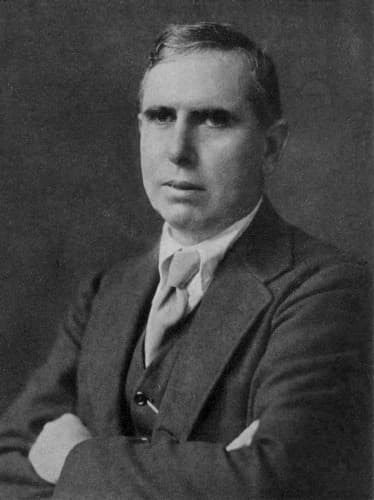
Theodore Herman Albert Dreiser was an American novelist and journalist of the naturalist school. His novels often featured main characters who succeeded at their objectives despite a lack of a firm moral code, and literary situations that more closely resemble studies of nature than tales of choice and agency. Dreiser's best known novels include Sister Carrie (1900) and An American Tragedy (1925).

John Carreyrou
4.4

Edward R. Tufte
4.4

Jeff Olson
4.4
Hans Rosling
4.4

James Clear
4.3

Walter Isaacson
4.3
Dave Ramsey
4.3
George S. Clason
4.3