BookBrief
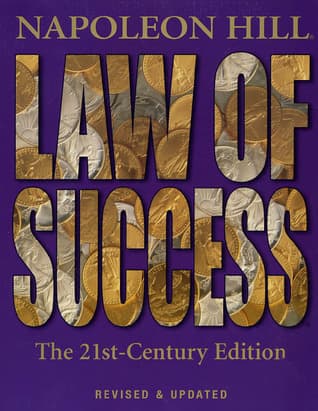
Law of Success cover
Archivist's Choice

Law of Success

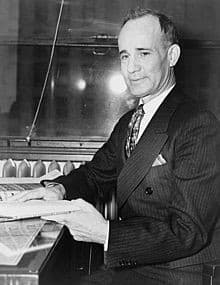
Napoleon Hill (1969)

Genre

Business / Productivity / Finance / Philosophy / Self-Help

Reading Time

1000+ min

Key Themes

See below

Track Your Reading

Sign in to track this book

Unlock the secrets to personal achievement and financial prosperity through Napoleon Hill's timeless philosophy, revealing the power of belief, harmony, and adaptability in navigating life's changes.

Core Idea

Success is not accidental but the direct result of applying specific principles, observed from the lives of over 500 successful individuals. By mastering these 16 lessons, including the Master Mind, Definiteness of Purpose, Self-Discipline, and Applied Faith, anyone can use the universal laws governing achievement to turn desires into realities. This requires persistent effort and a positive mental attitude. The book states that understanding and applying these principles unlocks one's potential for financial, personal, and professional fulfillment.
Reading time
1000+ min
Difficulty
Hard
✓ Read this if...
You are seeking a foundational, comprehensive, and highly detailed guide to personal and professional achievement, willing to invest significant time in understanding and applying timeless success principles.
✗ Skip this if...
You prefer modern, concise self-help books, are looking for quick fixes, or find the language and length of early 20th-century motivational literature too dense or dated.

Core idea

The central argument and framework that powers the entire book.

Success is not accidental but the direct result of applying specific principles, observed from the lives of over 500 successful individuals. By mastering these 16 lessons, including the Master Mind, Definiteness of Purpose, Self-Discipline, and Applied Faith, anyone can use the universal laws governing achievement to turn desires into realities. This requires persistent effort and a positive mental attitude. The book states that understanding and applying these principles unlocks one's potential for financial, personal, and professional fulfillment.

At a glance

Reading time

1000+ min

Difficulty

Hard

Read this if...

You are seeking a foundational, comprehensive, and highly detailed guide to personal and professional achievement, willing to invest significant time in understanding and applying timeless success principles.

Skip this if...

You prefer modern, concise self-help books, are looking for quick fixes, or find the language and length of early 20th-century motivational literature too dense or dated.

Key Takeaways

1

The Master Mind Principle

Leverage collective intelligence for exponential growth.

Quote

No two minds ever come together without, thereby, creating a third, invisible, intangible force which may be likened to a third mind.

Hill says that forming an alliance of two or more minds working in harmony toward a definite goal is the most powerful force for success. This 'Master Mind' creates a synergistic effect, where combined knowledge, experience, and creative energy exceed the sum of individual contributions. It is not just about brainstorming; it is about a mental fusion that unlocks new perspectives, solutions, and a greater capacity for action. The principle emphasizes shared purpose, mutual trust, and a willingness to collaborate without ego, recognizi...

Supporting evidence

Hill's own collaboration with Andrew Carnegie, which led to the creation of this very philosophy, serves as the foundational evidence. He observed that all successful individuals he studied had some form of a Master Mind alliance, whether formal or informal.

Apply this

Identify individuals whose skills and perspectives complement your own. Form a small, dedicated group with a clear, shared objective. Meet regularly to brainstorm, share insights, and hold each other accountable, ensuring harmony and mutual respect are paramount.
master-mindsynergycollaboration
2

Definiteness of Purpose

Clarity of aim is the starting point of all achievement.

Quote

The starting point of all achievement is desire. Keep this constantly in mind. Weak desires bring weak results, just as a small amount of fire makes a small amount of heat.

Hill states that a clear, concise, and unwavering 'definite chief aim' is absolutely necessary for success. Without a specific purpose, efforts are scattered, energy is wasted, and progress becomes impossible. This principle requires not just a vague wish but a burning desire, backed by a detailed plan for its achievement. It is about consciously directing all mental and physical resources towards a single, overarching objective, making it the dominant thought. This definiteness acts as a magnet, attracting necessary resources and opp...

Supporting evidence

Hill's studies of successful individuals, from Henry Ford to Thomas Edison, revealed that each possessed an unshakeable, definite purpose that guided their every action and decision, even in the face of immense adversity.

Apply this

Write down your single most important goal in vivid detail. Create a concrete plan with specific steps and deadlines. Review this goal and plan daily, visualizing its achievement and internalizing it as your primary focus.

definite-chief-aimgoal-settingclarity
3

Applied Faith

Belief in your ability transforms desire into reality.

Quote

Faith is the only known antidote for failure!

Hill defines faith not as blind hope, but as a state of mind that can be developed. It is the unwavering belief in one's ability to achieve their definite chief aim, even before any physical evidence of success exists. This 'applied faith' is important because it influences the subconscious mind, which then works to attract the circumstances and people needed to realize the desire. It is about maintaining a positive mental attitude, refusing to doubt, and consistently affirming the inevitable success of one's efforts. This mental stre...

Supporting evidence

The numerous stories of individuals who overcame seemingly insurmountable odds, such as Abraham Lincoln's persistence despite multiple failures, are cited as proof of faith's power to drive action and attract success.

Apply this

Practice daily affirmations related to your definite chief aim. Visualize your success with intense emotion. Eliminate negative self-talk and surround yourself with positive influences that reinforce your belief in your capabilities.

faithpositive-mental-attitudesubconscious-mind
4

Going the Extra Mile

Exceeding expectations builds reputation and opportunity.

Quote

The habit of rendering more service than that for which one is paid, and doing it in a positive mental attitude, is one of the most important factors of success.

This principle emphasizes the importance of consistently delivering more than what is expected. It is about voluntarily providing superior service, effort, or quality, not out of obligation, but as a deliberate strategy for personal and professional advancement. Hill argues that this habit creates goodwill, builds a valuable reputation, and naturally attracts opportunities and recognition that would otherwise remain hidden. It is a commitment to excellence that benefits in the long run, positioning an individual as essential and highl...

Supporting evidence

Hill references successful business leaders who built empires by consistently offering superior products or services, going beyond what competitors provided, thus securing customer loyalty and market dominance.

Apply this

In your work or personal projects, always look for ways to add value beyond the basic requirements. Anticipate needs, offer proactive solutions, and deliver with enthusiasm, even for tasks you aren't explicitly compensated for.

service-orientationexcellencereputation-building
5

Self-Discipline and Self-Control

Mastering impulses leads to mastery of destiny.

Quote

The man who cannot control himself can never control others.

Hill says that true success depends on the ability to control one's thoughts, emotions, and actions. Self-discipline is the capacity to choose what is right and productive, even when it is difficult or uncomfortable, over immediate gratification. Self-control involves mastering negative emotions like fear, doubt, anger, and procrastination, stopping them from derailing one's definite chief aim. This mastery allows individuals to direct their mental and physical energy effectively, resist distractions, and persist through challenges. I...

Supporting evidence

Hill frequently highlights the disciplined routines and emotional resilience of figures like Theodore Roosevelt, who trained himself to overcome physical weaknesses and mental fears through sheer force of will.

Apply this

Identify one area where you lack discipline (e.g., procrastination, unhealthy habits). Develop a strict, non-negotiable routine to address it. Practice mindfulness to observe and control your emotional reactions, especially in stressful situations.

self-masterydisciplineemotional-intelligence
6

Personal Initiative

Act without being told; seize opportunities proactively.

Quote

The world has a habit of making room for the man whose words and actions show that he knows where he is going.

This principle emphasizes the importance of taking action without waiting for external prompting. Personal initiative is about being proactive, identifying needs, and moving forward with a plan, rather than passively waiting for opportunities. Hill argues that employers and the world reward those who show this quality, as it signals leadership potential, resourcefulness, and a strong sense of purpose. It is about being a self-starter, anticipating future needs, and taking the lead in creating one's desired reality rather than reacting...

Supporting evidence

Hill's observations of successful entrepreneurs reveal that they consistently initiated projects, took calculated risks, and created opportunities rather than waiting for them to be presented.

Apply this

Don't wait for permission or instruction. Identify a problem or opportunity in your work or personal life and proactively develop and execute a plan to address it. Offer solutions before being asked.

proactivenessleadershipresourcefulness
7

Enthusiasm

Infectious passion fuels action and attracts allies.

Quote

Enthusiasm is the most contagious of all emotions, and it is the most effective salesmanship you can ever employ.

Hill identifies enthusiasm as a vital mental attitude that energizes an individual and inspires others. It is not just being happy, but a deep, burning passion for one's definite chief aim that shows in vibrant energy, conviction, and positive expression. This contagious quality attracts people, makes ideas more compelling, and motivates others to support your vision. Enthusiasm overcomes resistance, makes difficult tasks seem lighter, and sustains momentum, acting as a powerful force for persuasion and influence. It is a direct refle...

Supporting evidence

Hill notes how charismatic leaders and successful salespeople consistently demonstrate high levels of enthusiasm, effectively influencing and inspiring their audiences or clients.

Apply this

Before engaging in any important task or interaction, consciously cultivate a feeling of excitement and passion for your objective. Express this energy through your voice, body language, and words. Focus on the positive aspects and potential outcomes.

passioncharismamotivation
8

Concentration of Effort

Focused attention multiplies power and accelerates results.

Quote

The ability to concentrate one's mind upon a given subject until one has thoroughly mastered it is one of the most important lessons to be learned in the school of life.

This principle highlights the power of directing all mental and physical energy towards a single task or objective at a time. In an age of increasing distractions, Hill's emphasis on concentration is more relevant than ever. He argues that scattered efforts yield mediocre results, while focused, sustained attention on a definite goal multiplies one's power and accelerates achievement. It is about developing the mental discipline to block out irrelevant thoughts and activities, dedicating oneself fully to the task at hand until it is c...

Supporting evidence

Hill points to the dedicated focus of inventors like Thomas Edison, who would immerse themselves completely in a single problem for extended periods, leading to breakthroughs.

Apply this

Schedule dedicated blocks of time for your most important tasks, free from distractions (phones, emails, notifications). Practice single-tasking, committing to one item until it's done before moving to the next. Use techniques like the Pomodoro method to train your focus.

focusdeep-workproductivity
9

Accurate Thinking

Distinguish fact from fiction for informed decisions.

Quote

Accurate thinking is the ability to separate facts from fiction, and to use those facts intelligently in the solution of problems.

Hill states that critical thinking, or 'accurate thinking,' is essential for success. This involves the ability to objectively analyze information, distinguish between facts, opinions, and propaganda, and base decisions on sound reasoning. It is about developing healthy skepticism, questioning assumptions, and seeking reliable sources of information. By thinking accurately, individuals can avoid poor judgments, identify opportunities disguised as problems, and develop effective strategies based on reality rather than wishful thinking ...

Supporting evidence

Hill implicitly references the scientific method and the analytical skills of successful industrialists who based their decisions on market data and objective assessments, rather than emotion or hearsay.

Apply this

Before making any significant decision, gather all relevant facts. Challenge your own biases and assumptions. Seek out diverse perspectives and critically evaluate the information, asking 'Is this a fact, or an opinion/belief?'

critical-thinkingproblem-solvingobjectivity
10

Cosmic Habitforce

Align daily habits with your definite chief aim.

Quote

Nature knows no such thing as neutrality. She will use you, or you will use her.

This less-known but important principle from Hill suggests that the universe (or 'Cosmic Habitforce') responds to our dominant thoughts and actions, reinforcing patterns, whether positive or negative. It implies that our daily habits, consciously or unconsciously, dictate our trajectory. If we consistently align our habits with our definite chief aim, the 'Cosmic Habitforce' will work in our favor, attracting circumstances and opportunities that support our goals. Conversely, negative or aimless habits will lead to undesirable outcome...

Supporting evidence

While not a specific study, Hill's entire philosophy is built on the observation that individuals who consistently practiced certain habits (like definiteness of purpose, faith, persistence) achieved success, suggesting a universal principle at play.

Apply this

Audit your daily habits: do they move you closer to or further from your definite chief aim? Deliberately cultivate positive habits (e.g., daily planning, learning, exercise) that support your goals. Eliminate or replace habits that hinder your progress.

habit-formationintentional-livingmanifestation

Critical analysis

Notable Quotes

Your only limitation is the one you set up in your own mind!

A foundational principle emphasized throughout the book regarding self-imposed mental barriers.

Whatever the mind can conceive and believe, it can achieve.

A powerful statement on the importance of belief and imagination in achieving goals.

The starting point of all achievement is desire.

Highlighting the crucial role of a strong, burning desire as the initial step towards any success.

The man who does more than he is paid for will soon be paid for more than he does.

An underappreciated principle emphasizing the value of going the extra mile and its eventual reward.

Concentration is the act of focusing the mind upon a given desire until ways and means for its realization have been worked out.

Defining concentration not just as focus, but as a deliberate mental process for problem-solving and planning.

Lack of persistence is one of the major causes of failure.

A direct statement on the necessity of perseverance in overcoming obstacles.

Success does not require an apology, failure permits no alibi.

A concise and impactful statement on accountability for one's outcomes.

The Law of Attraction draws to you whatever you need, according to the nature of your dominant thoughts.

Introducing the concept of the Law of Attraction and its connection to one's prevailing mental attitude.

Organized effort is the harmonized effort of two or more people toward a definite objective.

Defining the concept of a 'Master Mind' alliance and the power of collaborative effort.

Self-discipline is the ability to make yourself do what you should do, when you should do it, whether you feel like it or not.

A clear and practical definition of self-discipline, emphasizing consistent action.

Knowledge is only potential power. It becomes power only when, and if, it is organized into definite plans of action, and directed to a definite end.

Distinguishing between mere knowledge and applied knowledge, stressing action over passive learning.

Every adversity, every failure, every heartache carries with it the seed of an equal or greater benefit.

A famous quote about finding opportunity and growth even in difficult experiences.

No man can become a permanent success without learning to use the power of a 'Master Mind' alliance.

Underlining the critical importance of forming alliances with others for mutual benefit and achievement.

The power of the mind is the only power which can conquer the power of the mind.

A profound statement on the internal battle and mastery of one's own thoughts and beliefs.

Quiz

Test Your Knowledge

Ready to see how well you understood this book? Take our interactive quiz with 10 questions.

10
Questions
~5
Minutes
?
Best Score

Key Questions (FAQ)

The core philosophy of "The Law of Success" posits that personal success is built upon a true, fundamental philosophy, emphasizing the power of belief and harmonious adjustment to life's changing environments. Hill argues that success is attainable through understanding and applying specific principles, which he outlines in detail.

About the author