“All progress is the substitution of a better inconvenience for a worse.”
— A general observation on human advancement and the nature of improvement.


Samuel Butler (2021)
Genre
History / Historical Fiction
Reading Time
15-20 hours
Key Themes
See below
Sign in to track this book
Through the multi-generational story of the Pontifex family, Samuel Butler dissects the suffocating hypocrisy and moral failings beneath Victorian respectability.
The story begins by tracing the Pontifex family's history, starting with the hardworking but rigid carpenter, John Pontifex, and his son George. George Pontifex, driven by ambition, becomes a successful publisher of religious books, showing the Victorian ideal of respectability. He marries and has several children, including Theobald Pontifex, the protagonist's future father. Edward Overton, a family friend who narrates the story, often adds his cynical thoughts on inherited traits and societal expectations. This first part sets up the generational patterns of control, religious zeal, and suppressed individuality that will define Ernest's struggles.
The story then focuses on Theobald Pontifex, George's son, who his father pressures into becoming a clergyman despite having no real calling. Theobald marries Christina, a similarly pious and somewhat hypocritical woman, and they have Ernest Pontifex. Ernest's childhood is marked by extreme parental strictness and a suffocating religious atmosphere. His parents, especially Theobald, use harsh discipline and moral lectures, believing they are shaping him into a good person. This repressive environment stifles Ernest's natural curiosity and individuality, leading to a deep sense of fear and guilt that will stay with him for years.
Ernest is sent to a preparatory school and later to public school, where he continues to deal with his upbringing. He is awkward and socially inept, often bullied and misunderstood. His attempts to be pious are often met with ridicule or exploitation by his peers. He begins to notice the difference between the religious teachings he received and the actual behavior of those around him, including his teachers and students. These early school experiences plant seeds of doubt about the sincerity of the Victorian moral code, though Ernest cannot yet express these feelings.
At Cambridge University, Ernest first tries to keep his parents' strict religious principles, but his intellect starts to awaken. He studies theology, but his close examination of religious texts and ideas, along with exposure to new thoughts, begins to weaken his unquestioning faith. He becomes increasingly bothered by inconsistencies and logical flaws in Christian dogma. This period is marked by strong internal conflict as Ernest tries to make sense of his ingrained beliefs and his growing rationalism. His theological studies, meant to strengthen his faith, instead lead him to deep skepticism and a growing feeling of separation from his family's values.
Despite his doubts, Ernest, under family pressure, becomes a curate in a London parish. His inexperience makes him vulnerable. He tries to help a young woman named Ellen, whom he believes is a repentant fallen woman, and impulsively marries her, hoping to 'save' her. However, Ellen turns out to be an alcoholic and former prostitute who quickly returns to her old habits, creating scandal and misery for Ernest. This terrible marriage shows Ernest's impractical idealism and his inability to handle the complexities of the real world outside his sheltered upbringing.
The scandalous discovery of Ellen's past, along with her continued bad behavior, leads to a public fight where Ernest, in a moment of extreme frustration, physically assaults Ellen. He is arrested and sentenced to six months in prison. During his imprisonment, Ernest is completely disowned by his family, who see him as a disgrace. He loses all his money and leaves prison destitute and socially ruined. This time of intense suffering and isolation, however, becomes a key turning point, forcing Ernest to face the illusions of his past and begin to create an independent identity.
After his release, Ernest, now using the name 'Mr. Pontifex,' deliberately cuts ties with his past life and family. He takes on humble work and starts to educate himself, reading widely and critically. He develops an interest in science, particularly Darwinian evolution, and begins to form his own philosophy of life, rejecting the rigid moral and religious frameworks of his upbringing. This period marks a deep intellectual and personal freedom. He learns to value practical skills and self-reliance, finding satisfaction in his new, independent life, free from society's expectations.
Through a series of unexpected deaths in his family, particularly that of his aunt, Ernest inherits a large fortune. This inheritance gives him complete financial independence, freeing him from the need to work and allowing him to pursue his intellectual interests without limits. The money, which arrives after he has already learned to live simply and independently, secures his new life. It allows him to plan his future without compromising his hard-won philosophical beliefs or dealing with the hypocritical society he has rejected. This financial freedom is the ultimate symbol of his escape from the 'way of all flesh' that trapped his ancestors.
With his new wealth, Ernest continues to live a modest and independent life. He writes and pursues intellectual interests, developing his theories on inherited traits, education, and societal hypocrisy. He lives a quiet life, avoiding the social circles that once troubled him. The narrator, Edward Overton, observes Ernest's change with approval, noting his calm manner and clear thinking. Ernest's journey ends in a state of philosophical maturity, where he has shed the false values of his youth and found a true sense of self and purpose, living authentically by his own rules.
The novel ends with Edward Overton, the narrator, reflecting on Ernest's life and the book's themes. Overton highlights life's cyclical nature, the importance of breaking free from harmful generational patterns, and the dangers of strict adherence to conventional morality. He points out Ernest's ultimate success in finding personal freedom and intellectual honesty, contrasting it with the wasted lives of his parents and grandparents. The ending reinforces the novel's criticism of Victorian society and its focus on the individual's journey toward self-discovery and authenticity, even if it means defying societal expectations.
The Protagonist
Ernest transforms from a repressed, guilt-ridden youth into an independent, self-reliant, and intellectually free man who rejects his family's values.
The Narrator/Supporting
Overton largely remains consistent, serving as a stable, wise, and critical observer throughout the narrative.
The Antagonist
Theobald remains largely unchanged, a static symbol of unyielding, misguided authority.
The Antagonist
Christina remains consistent in her manipulative and self-pitying nature.
The Supporting/Mentioned
George's character is established early as the patriarch who initiates the family's trajectory of piety and repression.
The Supporting
Ellen remains largely static, serving as a catalyst for Ernest's downfall and subsequent self-discovery.
The Supporting/Mentioned
Alethea's significance lies in her eventual death and the financial freedom it grants Ernest.
The novel exposes the widespread hypocrisy of Victorian England, especially in religious institutions and family life. Characters like Theobald and Christina Pontifex appear outwardly pious, but their actions are driven by self-interest, social climbing, and a wish for control. Their 'love' for Ernest is stifling and damaging, hidden as moral guidance. The church itself is shown as an institution more concerned with rules and appearances than true spirituality. For example, Theobald, forced into the clergy, preaches sermons he does not believe, while his wife uses illness to get her way. This theme is central to Ernest's disappointment and his eventual rejection of his upbringing.
“Parents are the last people on earth who ought to have the bringing up of children.”
Ernest's life is a constant struggle against the oppressive authority of his parents, the Church, and social rules. From his childhood punishments to his forced entry into the clergy and his bad marriage, Ernest constantly battles the 'way' set out for him by tradition. His ultimate success comes from rejecting these imposed norms, breaking free from his family, changing his name, and creating his own independent path. His intellectual journey at Cambridge and his later acceptance of scientific thought are acts of rebellion against inherited dogma. This theme shows the individual's need to find personal truth and freedom, even at great cost.
“It is not the eye that sees the eye, but the mind that sees the eye.”
A main theme shown through the Pontifex family's generations is how inherited traits and environment interact. The narrator, Edward Overton, often considers how certain traits—like the family's artistic talent, stubbornness, or self-deception—are passed down. However, the novel also shows how a repressive environment, especially in childhood, can harm a person's development. Ernest's struggle is to overcome the negative environmental conditioning of his youth and assert his unique personality, suggesting that while heredity might provide a tendency, environment and individual will ultimately shape one's future. His ability to break the cycle shows the power of self-determination.
“It is all very well to say that a man is what he is because he is what he is; but a man is what he is because of what he has been.”
The novel criticizes formal Victorian education, which often taught rote learning and conformity, and promotes a more practical, self-directed form of learning. Ernest's early schooling and theological studies do not truly educate him; instead, they deepen his confusion and stifle his natural intellect. His real education begins after his imprisonment, when he must rely on himself, read widely, and critically engage with ideas outside the established curriculum. This self-discovery through independent study and experience leads him to a more authentic understanding of himself and the world, contrasting sharply with the 'education' provided by his parents and institutions.
“The truest education is that which is least noticed by the pupil.”
A family friend who tells the story with frequent interjections of personal philosophy and cynicism.
Edward Overton serves as the primary narrator, offering a detailed account of the Pontifex family's history and Ernest's life. He is not merely a storyteller but an active commentator, frequently pausing the narrative to offer his own philosophical insights, satirical remarks, and criticisms of Victorian society. This device allows Butler to directly convey his own views on heredity, education, religion, and hypocrisy, giving the novel a strong authorial voice and shaping the reader's interpretation of events and characters.
The novel draws heavily from Samuel Butler's own experiences and critiques of his Victorian upbringing.
Many aspects of Ernest Pontifex's life, particularly his oppressive clerical upbringing, his struggles with religious doubt, his experiences at Cambridge, and his eventual rejection of conventional paths, mirror Samuel Butler's own biography. This device lends a powerful sense of authenticity and personal conviction to the novel's critique of Victorian values, making the narrative resonate with Butler's lived experience and deep-seated grievances against the societal norms of his time.
The narrative traces the psychological and moral development of the protagonist from childhood to maturity.
The novel is structured as a Bildungsroman, chronicling Ernest Pontifex's journey from a repressed and naive child to an independent, self-aware adult. It meticulously details his intellectual, emotional, and social development, focusing on his internal struggles, his education (both formal and informal), and his gradual realization of self. This structure allows the novel to demonstrate how early experiences and societal pressures shape an individual, and how one can ultimately break free to achieve personal autonomy.
The use of humor and exaggeration to criticize Victorian social and religious norms.
Butler employs biting irony and satire throughout the novel to underscore the absurdities and hypocrisies of Victorian society. The piety of characters like Theobald and Christina is often presented with a detached, almost mocking tone, highlighting the disconnect between their professed beliefs and their actual behavior. The narrator's cynical observations frequently expose the illogical nature of conventional thinking. This device allows the novel to deliver its social critique with both intellectual sharpness and comedic effect, making its points memorable and impactful.
“All progress is the substitution of a better inconvenience for a worse.”
— A general observation on human advancement and the nature of improvement.
“Life is the art of drawing sufficient conclusions from insufficient premises.”
— A reflection on the human condition and the need to make decisions with incomplete information.
“An honest God is the noblest work of man.”
— A somewhat satirical and provocative statement on the human creation and perception of divinity.
“To be good is to be in harmony with oneself.”
— A simple yet profound definition of goodness, emphasizing inner peace.
“The greatest pleasure of life is love.”
— A straightforward declaration about the ultimate source of human happiness.
“Don't learn to do, but learn to be.”
— A piece of advice emphasizing character and intrinsic being over mere action or skill.
“A man's got to know his limitations.”
— A practical piece of wisdom about self-awareness and not overestimating one's abilities.
“The public is an old woman. Let her alone, and she will get over it.”
— A cynical view on public opinion and the transient nature of outrage or concern.
“The truest wisdom is a resolute determination.”
— Connecting wisdom not just with knowledge, but with the will to act.
“It is not the eye that sees, but the soul.”
— A poetic and philosophical statement on perception, suggesting deeper understanding comes from within.
“There are some things which cannot be learned quickly, and time, which is all we have, must be paid.”
— Emphasizing the necessity of patience and the investment of time for true learning and mastery.
“Every man's work, whether it be literature or music or pictures or architecture or anything else, is always a portrait of himself.”
— A reflection on the personal and autobiographical nature of all creative endeavors.
“The world is not a stage, but a school.”
— A contrasting view to Shakespeare's famous line, suggesting life is for learning and development.
“If a man does not go to the root of a thing, he will never understand it.”
— Highlighting the importance of thorough investigation and understanding the fundamentals.
Ready to see how well you understood this book? Take our interactive quiz with 10 questions.
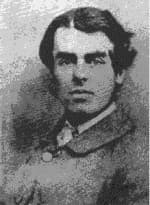
Samuel Butler may refer to:Samuel Butler (poet) (1613–1680), English poet and satirist Samuel Butler (schoolmaster) (1774–1839), English classical scholar Samuel Butler (politician) (1825–1891), American politician Samuel Butler (novelist) (1835–1902), English author of Erewhon Samuel Butler (cricketer) (1850–1903), English cricketer Sam Butler, Australian rules footballer Sam Butler, Australian rules footballer Bo Weavil Jackson, blues singer and guitarist also known as Sam Butler
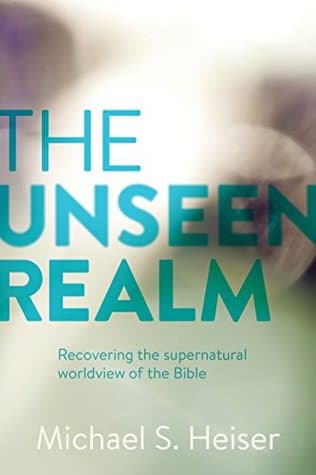
Michael S. Heiser
4.5

Winston S. Churchill
4.5
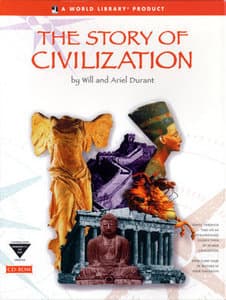
Will Durant
4.4
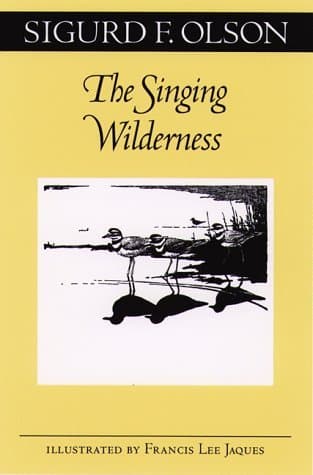
Sigurd F. Olson
4.4
Thomas Sowell
4.4

Emmanuel Guibert
4.3
W.E.B. Du Bois
4.3
Joseph Campbell
4.3