BookBrief
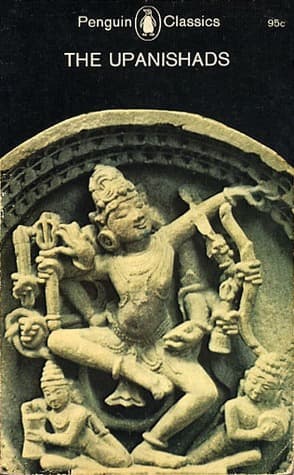
The Upanishads cover
Archivist's Choice

The Upanishads

Anonymous (1957)

Genre

History / Spirituality / Philosophy

Reading Time

180-240 min

Key Themes

See below

Track Your Reading

Sign in to track this book

Explore ancient Sanskrit wisdom as sages reveal that divine truth lives within each person's eternal spirit, not in dogma.

Core Idea

The Upanishads state that the universe's ultimate reality, Brahman, is the same as the self within each person, Atman. Through self-reflection, meditation, and a guru's guidance, one can understand this non-dual truth. This process helps transcend the material world's illusions (Maya) and the rebirth cycle (samsara), leading to liberation (moksha). The texts examine consciousness, the meaning of sacred sounds like Om, and the path of knowledge (Jnana Yoga) as the main way to achieve self-realization and lasting joy.
Reading time
180-240 min
Difficulty
Hard
✓ Read this if...
You are interested in the foundational spiritual and philosophical texts of Hinduism, seek a deeper understanding of consciousness and self, or are exploring ancient wisdom traditions that emphasize inner realization.
✗ Skip this if...
You prefer a modern, Western philosophical approach, are looking for a practical self-help guide, or are uncomfortable with abstract, poetic, and sometimes contradictory ancient spiritual discourse.

Core idea

The central argument and framework that powers the entire book.

The Upanishads state that the universe's ultimate reality, Brahman, is the same as the self within each person, Atman. Through self-reflection, meditation, and a guru's guidance, one can understand this non-dual truth. This process helps transcend the material world's illusions (Maya) and the rebirth cycle (samsara), leading to liberation (moksha). The texts examine consciousness, the meaning of sacred sounds like Om, and the path of knowledge (Jnana Yoga) as the main way to achieve self-realization and lasting joy.

At a glance

Reading time

180-240 min

Difficulty

Hard

Read this if...

You are interested in the foundational spiritual and philosophical texts of Hinduism, seek a deeper understanding of consciousness and self, or are exploring ancient wisdom traditions that emphasize inner realization.

Skip this if...

You prefer a modern, Western philosophical approach, are looking for a practical self-help guide, or are uncomfortable with abstract, poetic, and sometimes contradictory ancient spiritual discourse.

Key Takeaways

1

Brahman is Atman

The ultimate reality of the universe is identical to the deepest self within each individual.

Quote

That art thou, Svetaketu.

This central teaching is the philosophical foundation of the Upanishads. Brahman, the uncreated, all-pervading, unchanging reality that underlies all existence, is not separate from Atman, the individual soul or self. This is not just a poetic idea; it is a deep statement of identity. The external, objective reality of the cosmos is linked with the internal, subjective reality of consciousness. Realizing this identity, often called 'Tat Tvam Asi' (That art thou), is considered the ultimate liberation. It dissolves the illusion of sepa...

Supporting evidence

The Chandogya Upanishad, particularly the dialogue between Uddalaka Aruni and his son Svetaketu, where Uddalaka repeatedly illustrates the principle through analogies like the essence of a banyan seed or salt dissolved in water, concluding with 'Tat Tvam Asi'.

Apply this

Practice introspection and meditation to look beyond superficial identities (body, mind, ego) and connect with the deeper, unchanging essence within. Recognize the divine in others, fostering empathy and reducing conflict by understanding our shared fundamental nature.

brahmanatmantat-tvam-asinon-duality
2

The Three States of Consciousness

Beyond waking and dreaming, a profound state of pure consciousness reveals the true self.

Quote

There are three states of being, the waking state, the dreaming state, and the state of deep sleep. The fourth state is Turiya, which is pure consciousness, the Atman.

The Upanishads carefully analyze consciousness, moving past daily experiences of waking (jagrat) and dreaming (svapna) to deep sleep (sushupti), which lacks dreams and desires. However, deep sleep is not the final state. The Mandukya Upanishad introduces Turiya, the 'fourth' state, which transcends and underlies all other states. Turiya is pure, undifferentiated consciousness, free from subject-object duality, beyond thought, and completely peaceful. In Turiya, the Atman is directly experienced, not as something perceived, but as the ...

Supporting evidence

The Mandukya Upanishad, which is entirely dedicated to the analysis of the four states of consciousness, using the syllables of the sacred sound 'Om' to represent them.

Apply this

Engage in meditation practices that aim to quiet the mind and transcend the ordinary states of awareness. Observe the transitions between waking, dreaming, and deep sleep without judgment, seeking to understand the underlying continuum of consciousness. Explore practices like Yoga Nidra to access deeper states of relaxation and awareness.

turiyaconsciousnessmandukya-upanishadmeditation
3

Karma and Rebirth

Actions dictate future existences, emphasizing ethical living and personal responsibility.

Quote

As a man acts, so does he become. As is his desire, so is his destiny.

The Upanishads introduce and explain the concepts of Karma (action) and Samsara (the cycle of rebirth). Every action, thought, and word has consequences that shape one's future, both in this life and in future existences. Good deeds lead to favorable births, while negative actions result in less desirable situations. This belief instills a strong sense of personal responsibility for one's choices. The ultimate goal is to end this cycle of birth and death (Moksha) by realizing the unity of Atman and Brahman, thereby escaping endless ka...

Supporting evidence

Various Upanishads, including the Brihadaranyaka and Chandogya, discuss the transmigration of the soul and the accumulation of karma. For instance, the Brihadaranyaka Upanishad states, 'According as one acts, according as one behaves, so does he become.'

Apply this

Cultivate ethical behavior, mindfulness of intentions, and selfless action (karma yoga). Reflect on the long-term consequences of your choices, not just for immediate gratification but for spiritual growth and future well-being. Practice forgiveness and compassion, understanding that all beings are navigating their own karmic paths.

karmasamsaramoksharebirthethics
4

The Path of Knowledge (Jnana Yoga)

Liberation is achieved through wisdom and direct realization, not mere ritual or dogma.

Quote

Not by rituals, nor by progeny, nor by wealth, but by renunciation alone is immortality attained.

While the earlier Vedic period focused on elaborate rituals and sacrifices to please deities, the Upanishads mark a significant shift toward an internal, introspective path to spiritual realization—Jnana Yoga, the path of knowledge. They argue that true liberation (Moksha) cannot be bought with offerings, achieved through social status, or even through good deeds alone. Instead, it requires a deep, intuitive understanding and direct experience of the ultimate truth: the identity of Atman and Brahman. This knowledge is not intellectual...

Supporting evidence

The Mundaka Upanishad distinguishes between 'lower knowledge' (apara vidya) which includes the Vedas and rituals, and 'higher knowledge' (para vidya) which leads to the realization of the imperishable Brahman. The Isha Upanishad also stresses the importance of knowledge alongside action.

Apply this

Engage in deep study of spiritual texts, philosophical inquiry, and self-reflection. Seek guidance from enlightened teachers (gurus) who can illuminate the path to self-knowledge. Practice discerning between the real and the unreal, the eternal and the transient, in all aspects of life.

jnana-yogamokshaknowledgewisdomrenunciation
5

The Significance of Om

The sacred syllable embodies the entirety of existence and the states of consciousness.

Quote

The past, the present, and the future—all that is has been and will be—is Om. And whatsoever else transcends the three divisions of time, that also is Om.

The syllable 'Om' (Aum) is more than just a sound; it is considered the original vibration from which the universe came, the sound representation of Brahman itself. The Mandukya Upanishad explains Om's deep meaning, linking its three sounds (A, U, M) with the three states of consciousness—waking, dreaming, and deep sleep—and the silence that follows with Turiya, the fourth state of pure consciousness. Chanting Om is a powerful meditation practice, meant to align individual consciousness with cosmic consciousness, leading to a direct e...

Supporting evidence

The Mandukya Upanishad meticulously breaks down the syllable 'Om' and correlates its components (A, U, M, and the silent fourth part) with the four states of consciousness and the ultimate reality.

Apply this

Incorporate mindful chanting of 'Om' into daily meditation practices. Focus on the sound, its vibration, and the silence that follows, using it as a tool to quiet the mind and connect with deeper states of awareness. Understand its symbolism as a representation of the whole of existence.

omaummantramandukya-upanishadcosmic-sound
6

The Nature of Joy (Ananda)

True bliss is not fleeting pleasure but the inherent nature of the Self, beyond worldly desires.

Quote

From bliss indeed all these beings are born, by bliss they live, and to bliss they return.

The Upanishads clearly distinguish between temporary worldly pleasures and true spiritual joy (Ananda). While sensory pleasures are fleeting and depend on external objects, Ananda is described as the inherent nature of Brahman and Atman—an eternal, boundless state of contentment and peace that is independent of external circumstances. Realizing the Self means realizing this inherent bliss. The Taittiriya Upanishad, in particular, describes a hierarchy of joys, ending in the infinite bliss of Brahman, suggesting that all earthly joys a...

Supporting evidence

The Taittiriya Upanishad's 'Ananda Mimamsa' (Inquiry into Bliss) section systematically compares and scales different levels of joy, from human joy to the joy of Brahma, ultimately stating that the bliss of Brahman is infinite and the source of all other joys.

Apply this

Shift your pursuit from external sources of happiness to cultivating inner contentment. Practice gratitude, mindfulness, and detachment from outcomes. Understand that true joy is an inherent state that can be accessed by connecting with your deepest self, rather than something to be acquired.

anandablissjoyself-realizationtaittiriya-upanishad
7

The Guru-Disciple Tradition

Spiritual knowledge is often transmitted directly from an enlightened teacher to a sincere student.

Quote

Arise, awake, and learn from the great ones. For the path is sharp as a razor's edge, hard to tread and difficult to cross.

The Upanishads often present their teachings through conversations between a guru (teacher) and a shishya (disciple). This shows the important role of a living teacher in guiding a student through complex philosophical ideas and personal spiritual practices. The guru is not just an instructor but a spiritual mentor who has already walked the path and can clarify doubts and offer personalized guidance. This tradition emphasizes that true spiritual understanding is often experiential and requires more than just reading texts; it needs d...

Supporting evidence

Numerous dialogues, such as Nachiketa's quest for knowledge from Yama in the Katha Upanishad, Uddalaka Aruni teaching Svetaketu in the Chandogya Upanishad, and Pippalada instructing six students in the Prashna Upanishad, exemplify this tradition.

Apply this

Seek out knowledgeable and ethical mentors or teachers in areas where you wish to grow, particularly in spiritual or complex intellectual pursuits. Approach learning with humility and a willingness to listen, question, and apply the teachings. Recognize the value of direct guidance over purely self-study for profound subjects.

gurudisciplespiritual-guidancetransmission-of-knowledgekatha-upanishad
8

Renunciation and Detachment

Freedom from worldly attachments is essential for realizing the ultimate truth.

Quote

By renouncing the world, you find joy. Do not covet the possessions of others.

A recurring theme in the Upanishads is the importance of Vairagya, or detachment from worldly desires, possessions, and even the results of one's actions. This is not about asceticism for its own sake, but rather a recognition that attachment creates bondage and suffering. When the mind constantly grasps for external objects, it cannot turn inward to realize the Atman. Renunciation here means letting go of possessiveness and the ego's identification with external roles and achievements, allowing for a clearer perception of reality. It...

Supporting evidence

The Isha Upanishad begins with a powerful verse advocating living a full life while simultaneously practicing detachment: 'Enjoy through renunciation.' The Katha Upanishad also emphasizes choosing the good (shreyas) over the pleasant (preyas), requiring detachment from immediate gratification.

Apply this

Practice mindfulness to observe your attachments without judgment. Consciously reduce material accumulation and focus on experiences and relationships. Engage in actions without being overly concerned with their outcomes, cultivating a sense of selfless service and non-attachment to results.

renunciationdetachmentvairagyanon-attachmentisha-upanishad
9

The Veil of Maya

The perceived world is an illusion that obscures the ultimate reality of Brahman.

Quote

The one God, hidden in all beings, all-pervading, the inmost soul of all, the controller of all actions, dwelling in all beings, the witness, the sole perceiver, free from qualities.

While not explicitly called 'Maya' in the earliest Upanishads, the idea of an illusory, phenomenal world that hides ultimate reality is strongly implied. The Upanishads suggest that our everyday perception, limited by senses and intellect, only grasps a superficial layer of existence. The true, unchanging reality (Brahman) is hidden behind the ever-changing forms and names of the material world. This 'veil' is not necessarily evil, but a cosmic power that creates the diversity we experience, preventing us from seeing the underlying un...

Supporting evidence

The Chandogya Upanishad's analogy of clay, copper, and iron, where all forms are merely names and modifications of the underlying substance, points to this idea. The Svetasvatara Upanishad explicitly uses the term 'Maya' and describes Brahman as the 'Mayin' (wielder of Maya).

Apply this

Question your assumptions about reality and perceive beyond superficial appearances. Understand that sensory experiences are transient and relative. Practice discernment to distinguish between the permanent and the impermanent, the real and the illusory, in your daily life.

mayaillusionphenomenal-worldrealitydualism
10

The Breath as Prana

The vital life force, Prana, is fundamental to existence and a key to spiritual practice.

Quote

For as long as the breath remains in this body, so long there is life.

The Upanishads frequently discuss 'Prana,' which is more than just physiological breath; it is the vital life force or cosmic energy that animates all beings and fills the universe. It is considered the essence of life, the 'breath of Brahman.' Various Upanishads describe Prana's different forms within the body (e.g., prana, apana, samana, udana, vyana) and its central role in maintaining bodily functions, consciousness, and even speech. Controlling Prana through breath regulation (Pranayama) is presented as a powerful way to stabiliz...

Supporting evidence

The Prashna Upanishad is largely dedicated to the nature and function of Prana, describing its origin from Atman and its fivefold division. The Chandogya and Brihadaranyaka Upanishads also contain dialogues emphasizing Prana's supremacy among the senses and life functions.

Apply this

Incorporate breath-awareness exercises and Pranayama techniques (e.g., deep breathing, alternate nostril breathing) into your daily routine. Observe the subtle connection between your breath, your emotions, and your mental state. Understand breath as a fundamental link to your vital energy and a tool for self-regulation.

pranapranayamalife-forcebreathvital-energy

Critical analysis

Notable Quotes

That Self is not to be gained by speech, nor by the mind, nor by sight.

Describing the elusive nature of the Atman.

Lead me from the unreal to the real; Lead me from darkness to light; Lead me from death to immortality.

A famous prayer for spiritual enlightenment and liberation.

Thou art That.

The Mahavakya 'Tat Tvam Asi,' asserting the identity of the individual soul with Brahman.

When all desires that cling to the heart are unloosed, then a mortal becomes immortal, and even in this life attains to Brahman.

Explaining the path to moksha through detachment from worldly desires.

As a spider spins and withdraws its web, so too does the universe emanate from and return to Brahman.

Using an analogy to describe the cosmic creation and dissolution.

The Self, smaller than the small, greater than the great, is hidden in the heart of every creature.

Highlighting the pervasive and subtle nature of the Atman.

He who knows Brahman reaches the highest.

Stating the ultimate goal and reward of spiritual knowledge.

The wise, who perceive Him as abiding in their own self, to them belongs eternal happiness, not to others.

Emphasizing inner realization as the source of lasting joy.

The eye does not go thither, nor speech, nor the mind. We know not, we understand not, how one can teach it.

Describing the ineffable nature of Brahman, beyond sensory and intellectual grasp.

Verily, a husband is not dear for the sake of the husband, but for the sake of the Self is a husband dear.

Yajnavalkya teaching Maitreyi that all love ultimately stems from love of the Self.

By knowing the Self, everything else is known.

Asserting the foundational importance of self-knowledge.

Arise, awake, and stop not till the goal is reached.

An exhortation to persistent spiritual striving.

That which is the finest essence—this whole world has that as its Self. That is the Real. That is the Atman. Thou art That.

Uddalaka Aruni instructing his son Shvetaketu on the nature of Brahman and its identity with the individual self.

When a man finds no difference in the world, and sees the one Self everywhere, he attains to Brahman.

Describing the state of realizing unity and non-duality.

Quiz

Test Your Knowledge

Ready to see how well you understood this book? Take our interactive quiz with 10 questions.

10
Questions
~5
Minutes
?
Best Score

Key Questions (FAQ)

The Upanishads are ancient Sanskrit scriptures, composed by sages and poets between 800 and 400 BCE. They are foundational texts within the Vedas, forming a cornerstone of Hindu philosophy and spirituality.

About the author

Anonymous

Anonymous may refer to:Anonymity, the state of an individual's identity, or personally identifiable information, being publicly unknown Anonymous work, a work of art or literature that has an unnamed or unknown creator or author Anonymity, a property of a voting rule, saying that it does not discriminate apriori between voters