BookBrief
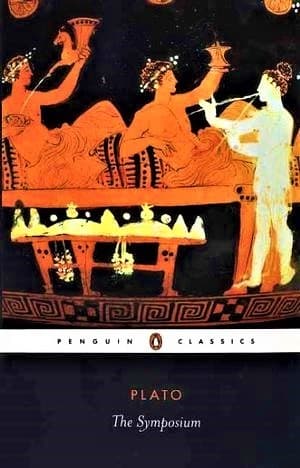
The Symposium cover
Archivist's Choice

The Symposium

Plato

Genre

History / Philosophy

Reading Time

180 min

Key Themes

See below

Track Your Reading

Sign in to track this book

At an Athenian drinking party, intellectuals discuss 'eros,' its social effects, gender roles, and how love might lead to spiritual growth.

Core Idea

Plato's Symposium explores 'Eros,' showing it as more than just physical desire. It is a powerful, divine force that guides people toward beauty, goodness, and ultimately, immortality and truth. Through speeches by prominent Athenians at a dinner party, the book shows how love connects the mortal and immortal, inspiring individuals to move past physical attraction and climb a 'ladder of love' toward the Form of Beauty itself. The book suggests that the highest form of love is the search for wisdom and eternal understanding.
Reading time
180 min
Difficulty
Medium
✓ Read this if...
You are interested in the philosophical foundations of love, beauty, and desire, and want to explore ancient Greek perspectives on these profound human experiences through a lively, dialogical format.
✗ Skip this if...
You are looking for a modern, empirical analysis of relationships or a light, romantic narrative. This book requires engagement with complex philosophical concepts and a tolerance for classical argumentation.

Core idea

The central argument and framework that powers the entire book.

Plato's Symposium explores 'Eros,' showing it as more than just physical desire. It is a powerful, divine force that guides people toward beauty, goodness, and ultimately, immortality and truth. Through speeches by prominent Athenians at a dinner party, the book shows how love connects the mortal and immortal, inspiring individuals to move past physical attraction and climb a 'ladder of love' toward the Form of Beauty itself. The book suggests that the highest form of love is the search for wisdom and eternal understanding.

At a glance

Reading time

180 min

Difficulty

Medium

Read this if...

You are interested in the philosophical foundations of love, beauty, and desire, and want to explore ancient Greek perspectives on these profound human experiences through a lively, dialogical format.

Skip this if...

You are looking for a modern, empirical analysis of relationships or a light, romantic narrative. This book requires engagement with complex philosophical concepts and a tolerance for classical argumentation.

Key Takeaways

1

Eros: A Spectrum of Desire

Love is not singular but manifests in diverse forms, from the physical to the divine.

Quote

For in itself love is not beautiful or good, but is a desire for what is beautiful and good.

Plato, through the voices of the speakers, presents a varied view of 'eros,' or desire. 'Eros' here means more than just romantic love; it includes a broader drive toward beauty, goodness, and immortality. The discussion shows that love can be basic and physical, as Phaedrus implies by focusing on courage inspired by lovers, or it can be a deep intellectual and spiritual pursuit. This range highlights the human tension between bodily desires and aspirations for higher truths. The Symposium argues that understanding these different for...

Supporting evidence

Phaedrus extols the virtues of love inspiring bravery in soldiers, while Pausanias differentiates between 'Common Love' (vulgar, purely physical) and 'Heavenly Love' (noble, focused on the soul).

Apply this

Reflect on your own motivations and desires, identifying whether they stem from a pursuit of fleeting physical pleasure or a deeper yearning for lasting beauty, knowledge, or personal growth. Recognize that different forms of 'love' can coexist and serve various purposes in life.
erosplatonic-lovedesire
2

The Quest for Immortality

Love is fundamentally a drive to perpetuate oneself, whether through offspring, fame, or lasting ideas.

Quote

Love is of generation and of birth in beauty.

Socrates, through Diotima's wisdom, suggests that love's ultimate goal is not just to possess beauty, but to create and give birth in beauty, leading to a type of immortality. This means more than just biological reproduction; it extends to creating lasting works, ideas, and virtues that outlive the individual. Poets, artists, lawmakers, and philosophers all seek this kind of immortality by leaving a lasting legacy. This view redefines love as a creative force, linking it directly to human ambition and the desire to go beyond death. I...

Supporting evidence

Diotima's ladder of love culminates in the idea that men who are 'pregnant in soul' create wisdom and virtue, which are more beautiful and immortal than mortal offspring.

Apply this

Consider how your actions and relationships contribute to something lasting. Are you creating, inspiring, or nurturing ideas and projects that will have an impact beyond your immediate self? Focus on leaving a meaningful legacy, not just biological one.

immortalitylegacycreation
3

The Ladder of Love: Ascent to the Absolute

True love progresses from physical attraction to the contemplation of universal beauty itself.

Quote

He who has learned to see the beautiful in due order and succession, when he comes to the end of his toils, will suddenly perceive a nature of wondrous beauty.

Socrates's account of Diotima's 'ladder of love' is perhaps the most important idea in The Symposium. It describes a journey of desire, starting with love for a single beautiful body, moving to all beautiful bodies, then to beautiful souls, beautiful laws and institutions, beautiful sciences, and finally, to the understanding of Beauty itself—the unchanging, eternal Form of Beauty. This intellectual and spiritual ascent is not about leaving earlier loves but moving past them, recognizing that physical beauty is a faint reflection of a...

Supporting evidence

Diotima's speech details the steps: from one beautiful body to all beautiful bodies, then to beautiful souls, institutions, knowledge, and finally, the Form of Beauty itself.

Apply this

Actively seek to understand the underlying principles and universal truths behind individual instances of beauty or goodness. Don't stop at superficial attraction; strive to delve deeper into the essence of what you admire, allowing it to guide you towards more profound insights.

ladder-of-loveformsabsolute-beautytranscendence
4

Love as a Divine Mediator

Eros is not a god but a 'daimon,' bridging the gap between mortals and the divine.

Quote

He is a great daimon, Socrates; and everything that is daemonic is intermediate between god and mortal.

Diotima's idea that Eros is not a god but a 'daimon' (a spirit or divine being) is a key reinterpretation. As a daimon, Eros acts as a messenger between human and divine realms, delivering prayers and sacrifices to the gods and conveying their commands and gifts to humans. This intermediary status explains why love is always striving and never fully satisfied; it is always seeking what it lacks, specifically beauty and goodness, which exist in the divine. This concept positions love as the essential force that connects humanity to hig...

Supporting evidence

Diotima explains that daimons, including Love, are born of Poverty and Resource, perpetually desiring what they lack, and serve as intermediaries between gods and men.

Apply this

Recognize that your own desires and longings for what is good and beautiful are not weaknesses, but fundamental aspects of your humanity that connect you to higher purposes. Embrace the journey of striving, rather than expecting immediate, complete satisfaction.

daimondivineintermediaryspirit
5

The Androgynous Myth: A Search for Wholeness

Humanity's original state was complete, and love is the yearning to restore that lost unity.

Quote

Each of us, then, is but a tally-half of a human being, cut in two like a flatfish, and each of us is always seeking for his corresponding half.

Aristophanes's funny yet deep myth of the original spherical, androgynous beings is a powerful metaphor for human longing. These beings, once whole and powerful, were split in two by Zeus, and since then, each half has desperately sought its other. This myth explains the intensity of romantic love, the feeling of 'finding one's soulmate,' as a reuniting of a lost unity. While presented comically, it touches on a deep human truth: the desire for completeness, for a perfect match. This idea connects with our innate sense of incompletene...

Supporting evidence

Aristophanes's speech recounts the myth of three original sexes (male, female, and androgynous), split by Zeus, leading to humans perpetually seeking their 'other half.'

Apply this

Understand the deep-seated yearning for connection and wholeness in yourself and others. While the myth is literal, the underlying truth is that seeking meaningful connections is a fundamental human drive to feel complete, whether with a partner, community, or even through self-integration.

androgynywholenessunitysoulmate
6

Love and Social Order

Different forms of love underpin and shape the moral and political fabric of society.

Quote

For of what value is a city or an army, if they are not bound together by love?

The Symposium explores how different ideas of love influence social norms and political structures. Phaedrus argues that a city or army united by the love between lovers would be unbeatable, highlighting the civic and military virtues inspired by eros. Pausanias's difference between 'Common' and 'Heavenly' Love directly addresses the moral implications of different sexual practices in Athenian society, suggesting that some forms of love lead to virtue and societal good more than others. This shows that love is not just a private emoti...

Supporting evidence

Phaedrus discusses how an army of lovers would be the most courageous, and Pausanias's speech details the social acceptance and moral implications of different types of pederasty in Athens.

Apply this

Consider how different expressions of love and connection contribute to the strength and morality of your own communities. Actively foster relationships that promote virtue, courage, and collective well-being, recognizing their impact beyond individual happiness.

civic-virtuesocial-normsethicscommunity
7

The Paradox of Socrates: Ugliness and Inner Beauty

True beauty resides not in outward appearance but in the soul and wisdom within.

Quote

He is like the busts of Silenus which are to be found in the image-makers' shops... but when you open them, they are full of the figures of gods.

Alcibiades's drunken praise of Socrates is a key moment, showing that physical attractiveness can be misleading. Socrates, known for being ugly, is the opposite of conventional beauty. Yet, Alcibiades describes him as having unmatched inner beauty, full of divine wisdom and virtue. This paradox directly challenges the earlier speakers' focus on physical beauty as the first object of love. It supports the Socratic (and Diotiman) idea that the love of beautiful souls and ideas is much better than mere physical attraction. This takeaway ...

Supporting evidence

Alcibiades compares Socrates to Silenus statues, ugly on the outside but containing golden images of gods within, praising Socrates's unparalleled wisdom and moral strength despite his physical appearance.

Apply this

Practice looking beyond superficial appearances in others and yourself. Seek to appreciate and cultivate inner qualities like wisdom, kindness, and integrity, recognizing that these are the true sources of lasting beauty and attraction.

inner-beautysocratesappearance-vs-realitywisdom
8

Philosophy as the Highest Form of Love

The ultimate expression of eros is the pursuit of wisdom and eternal truths.

Quote

Love is a philosopher, and a philosopher is a lover of wisdom.

For Socrates, the highest form of love is philosophical love—the passionate search for wisdom and truth. This fits with Diotima's ladder, which ends with the understanding of the Form of Beauty. A true philosopher is always 'pregnant in soul,' giving birth to beautiful thoughts, virtues, and insights. This kind of love is not about possessing an object but about constantly striving for understanding and producing new knowledge. It elevates intellectual pursuit to a divine calling, suggesting that the drive to learn and understand the ...

Supporting evidence

Diotima states that Love is a philosopher because he always desires wisdom, being between ignorant and wise. Socrates himself embodies this, always seeking knowledge and questioning.

Apply this

Embrace intellectual curiosity and lifelong learning as a profound act of love. Seek to understand the world, question assumptions, and contribute to the collective body of knowledge, recognizing this as a path to higher fulfillment.

philosophywisdomtruthknowledge
9

The Dialogical Nature of Truth

Truth about complex concepts like love emerges through diverse perspectives and critical discussion.

Quote

Each of us is to speak in praise of Love, making the best speech he can.

The Symposium itself demonstrates the value of dialectic and diverse perspectives. Instead of presenting a single view, Plato creates a dialogue where each character offers a distinct, often opposing, interpretation of love. From Phaedrus's focus on courage to Aristophanes's myth, and Agathon's poetic praise, these different viewpoints gradually build a more complete understanding. Socrates then combines and elevates these ideas, eventually presenting Diotima's deeper philosophy. This structure shows Plato's belief that truth is not s...

Supporting evidence

The entire structure of the book, where multiple characters (Phaedrus, Pausanias, Eryximachus, Aristophanes, Agathon, Socrates, Alcibiades) present their unique speeches on love before Socrates synthesizes and expands upon them.

Apply this

Actively seek out and genuinely listen to diverse viewpoints on complex topics. Engage in respectful debate, understanding that a richer truth often emerges from the synthesis of differing perspectives, rather than rigid adherence to a single one.

dialecticdialogueperspectivetruth-seeking

Critical analysis

Notable Quotes

For neither does God love wisdom, nor desire to become wise, since he is wise; and no other being, if it is wise, loves wisdom.

Socrates recounting Diotima's lesson on the nature of love.

Love does not seek what is beautiful, but what it lacks.

Socrates explaining the nature of love, drawing from Diotima's teachings.

For of all the gods, Love is the most ancient, the most honorable, and the most potent in helping men gain virtue and happiness.

Phaedrus's speech, arguing for the antiquity and power of Love.

The soul of every man, in its own nature, has been a spectator of true being, or it would not have entered into this human form.

Socrates discussing the pre-existence of the soul and its connection to the Forms.

For love is a desire for the perpetual possession of the good.

Diotima's definition of love, as recounted by Socrates.

When anyone loves, he is not merely loving the beautiful, but is desiring to generate and procreate in the beautiful.

Socrates explaining the procreative aspect of love, physical and spiritual.

For when a man, ascending from these particulars, begins to apprehend that beauty, he is not far from the end.

Socrates describing the ascent to the Form of Beauty, step by step.

The greatest blessing a man can have is a worthy lover, and the greatest blessing a lover can have is a worthy beloved.

Phaedrus's speech, emphasizing the mutual benefits of a loving relationship for virtue.

For the true lover of beauty, rising step by step from beautiful forms to beautiful practices, and from beautiful practices to beautiful sciences, will at last apprehend the nature of absolute beauty.

Socrates, through Diotima, outlining the ladder of love.

And he who has been initiated into these mysteries and has beheld the beautiful in due order and succession, when he comes to the end, will suddenly perceive a nature of wondrous beauty.

Socrates describing the ultimate vision of the Form of Beauty.

Every man has a daemon, and this daemon is Love. And Love is neither mortal nor immortal, but a great daemon.

Socrates recounting Diotima's explanation of Love as an intermediary spirit.

For the good are beautiful, and the bad are ugly.

Agathon's speech, connecting goodness with beauty.

The greatest proof of love is a willingness to die for the beloved.

Phaedrus's speech, citing examples of lovers' sacrifices.

For when a man is filled with the divine madness, he becomes a prophet, a poet, or a lover.

Socrates discussing the different forms of divine inspiration.

Quiz

Test Your Knowledge

Ready to see how well you understood this book? Take our interactive quiz with 10 questions.

10
Questions
~5
Minutes
?
Best Score

Key Questions (FAQ)

Plato's Symposium is a philosophical dialogue set at a drinking party where Athenian intellectuals discuss the nature of 'eros,' or desire. It explores various perspectives on love, its role in society, gender dynamics, and the sublimation of human instincts.

About the author

Plato

Biography coming soon.