BookBrief
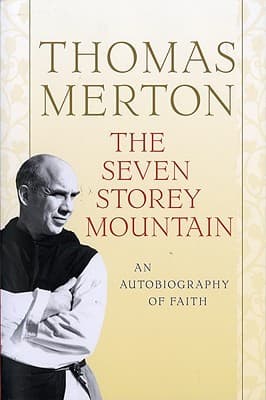
The Seven Storey Mountain cover
Archivist's Choice

The Seven Storey Mountain

Thomas Merton (1948)

Genre

Biography / Memoir / Spirituality

Reading Time

12-15 hours

Key Themes

See below

Track Your Reading

Sign in to track this book

Thomas Merton's autobiography tells of his journey from a life of intellectual pursuits to the quiet vows of a Trappist monk, tracing a young man's search for spiritual peace at Gethsemani Abbey.

Core Idea

Thomas Merton's "The Seven Storey Mountain" tells of his spiritual journey from a secular, intellectual youth to a Trappist monk. It explores the human search for meaning, purpose, and God amid modern chaos. Merton argues that true freedom and peace come not from worldly things or intellectual pride, but from self-surrender, contemplative prayer, and a deep commitment to spiritual discipline, often in unexpected places.
Reading time
12-15 hours
Difficulty
Medium
✓ Read this if...
You are interested in spiritual autobiography, the journey of conversion, or a deep dive into contemplative Christian spirituality.
✗ Skip this if...
You prefer secular narratives, are averse to detailed religious introspection, or seek a light, fast-paced read.

Core idea

The central argument and framework that powers the entire book.

Thomas Merton's "The Seven Storey Mountain" tells of his spiritual journey from a secular, intellectual youth to a Trappist monk. It explores the human search for meaning, purpose, and God amid modern chaos. Merton argues that true freedom and peace come not from worldly things or intellectual pride, but from self-surrender, contemplative prayer, and a deep commitment to spiritual discipline, often in unexpected places.

At a glance

Reading time

12-15 hours

Difficulty

Medium

Read this if...

You are interested in spiritual autobiography, the journey of conversion, or a deep dive into contemplative Christian spirituality.

Skip this if...

You prefer secular narratives, are averse to detailed religious introspection, or seek a light, fast-paced read.

Key Takeaways

1

The Allure of the Void

Merton's early life was a frantic search for meaning in superficiality.

Quote

My life had been a quest for pleasure and knowledge, but it was all turning to ashes in my mouth.

Merton's early life, marked by intellectual pursuits, bohemian living, and a search for worldly experiences, left him feeling empty. Despite doing well academically at Cambridge and Columbia, having various relationships, and exploring different ideas, he found no lasting happiness. This period shows a common human experience: the more one tries to fill an inner void with outside things, the bigger that void becomes. His story shows that even the most stimulating worldly life can lack spiritual fulfillment, leading to a deep sense of ...

Supporting evidence

Merton's detailed accounts of his time at Cambridge, his involvement with communist groups, his relationships, and his general intellectual and hedonistic pursuits before his conversion.

Apply this

Reflect on areas where you might be seeking external validation or pleasure to fill an internal void. Consider detaching from these temporary fixes and exploring deeper, more intrinsic sources of contentment, even if uncomfortable at first.

existential-crisissecular-disillusionmenthedonism-trap
2

Grace in Unlikely Places

Spiritual awakening often begins in unexpected moments of quiet introspection.

Quote

It was as if a voice had spoken to me out of the sky, saying, 'Why are you so busy with these things?'

Merton's conversion was not a sudden event but a slow process, often started by ordinary moments or quiet reflection. His experiences with art, especially Byzantine mosaics, and his reading of spiritual texts, such as Etienne Gilson's 'The Spirit of Medieval Philosophy,' provided intellectual and aesthetic entry points. These experiences, at first approached with academic curiosity, slowly broke down his skepticism, revealing a deeper reality. This shows that divine grace can appear subtly, through beauty, intellect, and quiet thought...

Supporting evidence

His description of visiting art museums, his reading of Gilson, and his initial, almost accidental, attendance at Catholic services during his time in New York.

Apply this

Pay attention to moments of unexpected beauty, intellectual insight, or quiet reflection in your daily life. These might be subtle invitations to a deeper spiritual understanding. Don't dismiss them as mere coincidences.

divine-gracespiritual-epiphanyintellectual-conversion
3

The Irony of Freedom

True freedom is found not in boundless choice, but in radical self-limitation.

Quote

The four walls of my new freedom.

Merton’s choice to enter the Trappist Abbey of Gethsemani, a life of strict discipline, silence, and obedience, contrasts sharply with modern ideas of freedom. Yet, he often describes this confinement as liberation. By letting go of the endless choices and distractions of the world, he found a deeper inner freedom to seek God without hindrance. This paradox suggests that true liberation is not the absence of limits but the intentional acceptance of limits that match one's main purpose. The discipline of monastic life, instead of restr...

Supporting evidence

His descriptions of the monastic vows (poverty, chastity, obedience), the rigorous daily schedule, and the silence of the Trappist order, which he embraced as a path to inner peace.

Apply this

Identify an area in your life where too many choices or external pressures are causing anxiety or distraction. Consider implementing intentional limitations or disciplines to free up mental and spiritual space for what truly matters.

asceticismspiritual-disciplinefreedom-through-limitation
4

The Struggle with the Self

Monastic life is not an escape from self, but an intense confrontation with it.

Quote

I had left the world, but I had not left myself.

Merton's expectation that monastic life would instantly remove his worldly desires and ego was quickly broken. The silence and solitude of the monastery made his internal struggles stronger, showing his pride, vanity, and lingering ties to his past. He fought with the 'old man,' the self-centered ego that stayed even within the abbey. This intense internal battle shows that spiritual growth is not about escaping one's flaws but facing them directly, through self-awareness and discipline. The monastery became a mirror reflecting his de...

Supporting evidence

His candid descriptions of temptations, distractions during prayer, and his ongoing battle with pride and intellectual vanity even after entering the monastery.

Apply this

Don't expect spiritual or personal growth to be a linear, easy process. Embrace self-awareness, even when it reveals uncomfortable truths. See internal struggles as opportunities for deeper understanding and transformation.

spiritual-warfareego-deathself-confrontation
5

The Universal Call to Contemplation

Deep spiritual connection is accessible to all, not just cloistered monks.

Quote

Contemplation is not a matter of thinking a great deal, but of loving a great deal.

While Merton's path led him to an extreme form of contemplative life, his writings imply the universal human need for inner life. He argues that a contemplative dimension is necessary for a full human existence, no matter one's outward circumstances. This is not about adopting monastic practices, but about creating an inner space for silence, reflection, and connection with the divine. His later work, beyond this memoir, further highlights that contemplation is not an escape from the world but a way to engage with it more genuinely an...

Supporting evidence

Merton's evolving understanding of contemplation, moving from an exclusive monastic practice to a more universal human experience, hinted at even in this early work through his reflections on the inherent human longing for God.

Apply this

Integrate small moments of silence and reflection into your daily routine. Practice mindful awareness in everyday activities, seeking to connect with a deeper reality beyond the surface. This could be a few minutes of quiet prayer, meditation, or simply conscious breathing.

contemplative-lifemindfulnessspiritual-interiority
6

The Danger of False Piety

Authentic faith is not about outward displays, but inward sincerity.

Quote

I had come to the monastery to escape the world, but the world was still in my heart.

Merton's memoir shows his struggle against the desire for spiritual pride and recognition, even within the monastery. He tells of times when he cared more about appearing religious or intellectual than about true humility and spiritual progress. This points to a key danger in any spiritual path: the tendency to turn the pursuit of God into another way to satisfy the ego. His journey shows that true holiness is not in outward acts or self-praise, but in radical inner honesty and a continuous surrender of self-will, often a painful proc...

Supporting evidence

His self-critical reflections on his own intellectual arrogance, his initial desire to be a 'great monk,' and his realization that even in the monastery, he was still capable of vanity and self-deception.

Apply this

Regularly examine your motivations for spiritual practices or acts of service. Are they truly for a higher purpose, or are they subtly fueled by a desire for recognition, self-righteousness, or control? Cultivate humility by focusing on the act itself, rather than the perceived outcome or validation.

spiritual-pridehumilityauthenticity
7

The Cost of Conversion

A genuine spiritual transformation demands profound sacrifices and renunciations.

Quote

To say 'yes' to God means to say 'no' to everything that is not God.

Merton's conversion was not just an intellectual agreement but a complete change of his life, involving significant losses. He gave up a promising academic career, his possessions, relationships, and the freedom of movement and expression he once valued. This deep renunciation shows that real spiritual commitment often means letting go of parts of life that, while not bad, can block a deeper relationship with the divine. His story makes it clear that the path to spiritual fulfillment is demanding, requiring a willingness to sacrifice ...

Supporting evidence

His detailed accounts of leaving his friends, his rejection of a teaching position at Columbia, and his ultimate decision to enter a strict monastic order, cutting ties with his former life.

Apply this

Reflect on what 'sacrifices' or renunciations might be necessary in your own life to align more fully with your deepest values or spiritual aspirations. This doesn't have to be as extreme as Merton's, but could involve letting go of habits, relationships, or material attachments that hinder your growth.

renunciationspiritual-sacrificedetachment
8

Finding God in Community

Spiritual growth is profoundly shaped and supported by shared communal life.

Quote

We were all called to be one in Christ, and this unity was manifest in our common life.

While Merton's journey is very personal, he finds his ultimate spiritual home within the communal structure of the Trappist order. The shared prayer, work, and structured life with other monks offer both challenges and deep support. The community acts as a refining force, shaping individual egos through obedience and mutual service, and as a source of strength through shared purpose and spiritual fellowship. This shows that even the most contemplative path is rarely walked alone; community provides accountability, inspiration, and a t...

Supporting evidence

His descriptions of the daily schedule of communal prayer (Divine Office), shared work in the fields, and the silent, yet deeply connected, relationships with his fellow monks and the Abbot.

Apply this

Seek out and actively participate in communities that align with your spiritual or personal growth goals. This could be a religious community, a meditation group, a book club focused on meaningful literature, or a volunteer organization. Embrace the give-and-take of communal life.

communal-lifespiritual-fellowshipmonasticism
9

The Art of Listening

Silence is not an absence of sound, but an invitation to deeper perception.

Quote

The silence of the monastery was not an emptiness, but a fullness, a presence.

A main part of Trappist life is silence, which Merton at first struggled with but later came to value. He found that true silence is not just the absence of outside noise, but an inner state of attention that allows one to 'hear' God's presence and the deeper truths of existence. In the world, we are constantly bombarded by distractions, making it hard to listen to our inner selves or to the divine. Monastic silence, therefore, becomes a discipline for cultivating deep inner listening, allowing a more direct experience of reality and ...

Supporting evidence

His detailed reflections on the impact of the monastic silence on his mind and spirit, and how it gradually transformed his perception and prayer life.

Apply this

Regularly incorporate periods of intentional silence into your day. This could be a few minutes of quiet reflection, a silent walk, or turning off all electronic devices. Use this time to practice deep listening, both to your inner self and to your surroundings, without judgment.

contemplative-silencemindful-listeninginteriority
10

The Enduring Quest

Spiritual journey is a continuous unfolding, not a static arrival.

Quote

There is no end to the discovery of God, for He is infinite.

Even after entering the monastery and taking his vows, Merton's spiritual journey was far from over. The book ends with a sense of ongoing exploration and deeper surrender, rather than a final arrival at perfect peace. He understands that the search for God is an unending process of growth, purification, and ever-deepening understanding. This shows that faith is a dynamic relationship, not a fixed destination. The 'Seven Storey Mountain' is not climbed once and for all, but represents a continuous ascent, with new views and challenges...

Supporting evidence

The concluding chapters of the book, where Merton reflects on his early years in the monastery, reveal continued struggles and a growing, but still evolving, understanding of his vocation and relationship with God.

Apply this

View your own personal and spiritual growth as an ongoing journey rather than a series of checkpoints. Embrace the continuous learning, challenges, and evolving understanding that come with a dynamic path. Cultivate an attitude of perpetual curiosity and openness to new insights.

spiritual-evolutionperpetual-pilgrimagedivine-mystery

Critical analysis

Notable Quotes

No man is an island, entire of itself; every man is a piece of the continent, a part of the main.

Merton reflects on the interconnectedness of humanity, a theme he returns to often in his contemplation of community and solitude.

The greatest need of our time is to clean out the enormous mass of spiritual rubbish that has accumulated in men's minds since the fourteenth century.

Merton critiques modern thought and the accumulation of ideas that he believes obscure genuine spiritual truth.

For me, the world was a stage on which I was continually playing a part.

Merton describes his earlier life, marked by a sense of performance and a lack of authentic self-discovery.

In the spiritual life, the only thing that counts is the movement of God in your soul.

Merton emphasizes the primacy of divine grace and inner experience over external religious practices.

The very fact that I was a Catholic, that I had a faith, was a burden to me.

Merton expresses his initial struggles with the demands and implications of his conversion to Catholicism.

To be a saint means to be myself. Therefore the problem of sanctity and salvation is in fact the problem of finding out who I am and of discovering my true self.

Merton links sanctity not to conformity but to radical self-discovery and authenticity in God's eyes.

Every moment and every event of every man's life on earth plants something in his soul.

Merton reflects on the formative power of all life experiences, even the seemingly mundane or difficult ones.

The only way to save the world is to make it a better place.

A simple yet profound statement on the practical implications of spiritual transformation and social responsibility.

The contemplative life is a life of solitude, but not a life of isolation.

Merton clarifies the nature of monastic solitude, distinguishing it from mere loneliness or detachment from humanity.

It is a terrible thing to have to be a saint for others.

Merton expresses the pressure and potential inauthenticity of living up to external expectations of sanctity rather than genuine inner transformation.

We are not at peace with others because we are not at peace with ourselves.

Merton connects inner turmoil and lack of self-acceptance to external conflicts and difficulties in relationships.

The world and my own soul were full of a divine presence, and the fact that I could not always feel it did not mean that it was not there.

Merton describes a moment of profound spiritual realization, a sense of God's immanence despite fluctuating feelings.

The will of God is not a prison, but a liberation.

Merton reinterprets the concept of divine will, seeing it as a path to true freedom rather than constraint.

Our life is a journey of discovery, not a destination.

Merton emphasizes the ongoing process of spiritual growth and learning throughout one's life.

Quiz

Test Your Knowledge

Ready to see how well you understood this book? Take our interactive quiz with 10 questions.

10
Questions
~5
Minutes
?
Best Score

Key Questions (FAQ)

'The Seven Storey Mountain' is a spiritual autobiography by Thomas Merton, detailing his journey from a restless, intellectual young man to becoming a Trappist monk at the Abbey of Gethsemani. It chronicles his search for faith, peace, and meaning, culminating in his conversion to Catholicism and entry into monastic life.

About the author