BookBrief
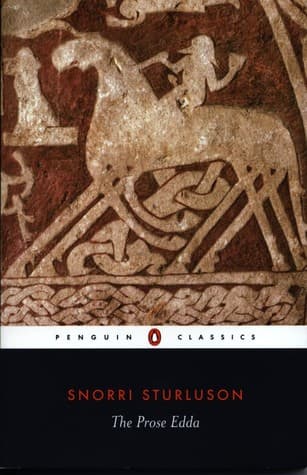
The Prose Edda cover
Archivist's Choice

The Prose Edda

Snorri Sturluson (1665)

Genre

History / Spirituality

Reading Time

180 min

Key Themes

See below

Track Your Reading

Sign in to track this book

Explore the ancient Norse cosmos, from its mythical creation and the struggles of gods, giants, dwarves, and elves, to the predicted twilight of Ragnarok, all preserved in Snorri Sturluson's saga.

Core Idea

The Prose Edda is a collection of Norse mythology, compiled by Snorri Sturluson to preserve the poetic tradition (skaldic art) and its mythological stories. It outlines the Norse cosmos from creation to Ragnarök, detailing the lives of gods, giants, and other mythical beings. The Edda explores themes of cosmic duality, the cyclical nature of existence, the impermanence of divine power, and the value of wisdom (often gained through sacrifice) and storytelling as a way to understand a fated, yet heroic, existence.
Reading time
180 min
Difficulty
Medium
✓ Read this if...
You are interested in the foundational myths of Norse paganism, the origins of many modern fantasy tropes, or how ancient oral traditions were codified into written form. Essential for understanding Viking Age culture and literature.
✗ Skip this if...
You prefer modern, character-driven narratives without a strong mythological or historical framework, or if you are looking for a light, easy read without dense allegorical content.

Core idea

The central argument and framework that powers the entire book.

The Prose Edda is a collection of Norse mythology, compiled by Snorri Sturluson to preserve the poetic tradition (skaldic art) and its mythological stories. It outlines the Norse cosmos from creation to Ragnarök, detailing the lives of gods, giants, and other mythical beings. The Edda explores themes of cosmic duality, the cyclical nature of existence, the impermanence of divine power, and the value of wisdom (often gained through sacrifice) and storytelling as a way to understand a fated, yet heroic, existence.

At a glance

Reading time

180 min

Difficulty

Medium

Read this if...

You are interested in the foundational myths of Norse paganism, the origins of many modern fantasy tropes, or how ancient oral traditions were codified into written form. Essential for understanding Viking Age culture and literature.

Skip this if...

You prefer modern, character-driven narratives without a strong mythological or historical framework, or if you are looking for a light, easy read without dense allegorical content.

Key Takeaways

1

Cosmic Duality and Creation

Before creation, a void of opposing forces birthed the cosmos.

Quote

Before the earth was made, there was Niflheim, and Muspellheim. And between them was Ginnungagap, the yawning void.

The Norse creation myth in the Prose Edda describes a beginning not from nothing, but from tension between primordial extremes. Niflheim, the realm of ice and mist, and Muspellheim, the realm of fire and heat, existed first. Their opposing forces met in the empty chasm of Ginnungagap. The interaction of these elements—melting ice and fiery sparks—created the first being, the giant Ymir, and the cosmic cow Audhumla. This idea highlights a universe born from conflict and balance, a metaphor for life's struggles and the creative power of...

Supporting evidence

The initial chapters of Gylfaginning, describing the pre-creation realms of Niflheim and Muspellheim and their collision in Ginnungagap, leading to the birth of Ymir and Audhumla.

Apply this

Recognize that innovation and growth often stem from the friction between contrasting ideas or elements. Instead of shying away from opposition, seek to understand how diverse perspectives or challenges can coalesce into something new and productive.

ginnungagapniflheimmuspellheimymir
2

The Impermanence of the Divine

Even gods are subject to fate and a prophesied end.

Quote

The gods know that a great destruction awaits them, a final battle when the world will be destroyed.

Unlike many pantheons where gods are immortal, the Norse gods know their eventual doom: Ragnarök. This knowledge shapes their existence, giving their actions a tragic, heroic quality. They are not all-powerful beings immune to fate, but powerful figures who fight against a predetermined end. This theme emphasizes the cyclical nature of existence—creation, destruction, and rebirth—and gives urgency and meaning to the gods' efforts. Their struggle against the inevitable, despite knowing the outcome, defines their heroism and comments on...

Supporting evidence

The prophecies of Ragnarök, particularly in the Völuspá (referenced in the Edda), and the gods' efforts to postpone or prepare for it, such as Odin's relentless pursuit of knowledge and his gathering of einherjar in Valhalla.

Apply this

Embrace the transient nature of life and projects. Understand that even the most successful endeavors will have an end. This awareness can motivate us to live more fully, create more purposefully, and find meaning in the journey rather than solely in an impossible, permanent outcome.

ragnarokfatevalhallaodin
3

The World Tree as Cosmic Axis

Yggdrasil connects and sustains all realms of existence.

Quote

An ash tree stands there, called Yggdrasil. This tree is the greatest and best of all trees. Its branches spread out over the whole world and reach up over heaven.

Yggdrasil, the World Tree, is the central axis of the Norse cosmos, a living map of existence. Its roots go into different realms—Niflheim, Jotunheim—while its branches reach into Asgard. This connection shows the interdependence of all things. The well-being of the cosmos depends on Yggdrasil's health, constantly threatened by creatures like the serpent Níðhöggr and the goat Heiðrún. This ecosystem, with its constant struggle between creation and destruction, represents a holistic view of the universe where every part is essential an...

Supporting evidence

Descriptions in Gylfaginning of Yggdrasil's roots extending to different worlds, the creatures that dwell within it (e.g., the squirrel Ratatosk, the eagle, the serpent Níðhöggr), and the wells beneath its roots (e.g., Urd's Well, Mimir's Well).

Apply this

View your own life, projects, or organizations as interconnected systems. Understand that neglect in one area can have ripple effects throughout the whole. Nurture foundational elements and be aware of internal and external forces that might threaten stability.

yggdrasilnine-worldscosmic-axisnidhoggr
4

The Power of Poetry and Skaldic Art

Poetry is the very essence of knowledge and a gift from the gods.

Quote

The mead of poetry was made from the blood of Kvasir, the wisest of all beings. It is the source of all poetic inspiration.

The Prose Edda shows the importance of poetry in Norse culture. Snorri Sturluson wrote it not just as a mythological collection, but as a guide for skalds (poets), preserving the complex kennings and poetic meters of their tradition. The myth of the Mead of Poetry, from the blood of the wise Kvasir, shows that poetic inspiration is a divine gift. It gives poets a special status, as they share profound truths and preserve history and mythology. This means that language and artistic expression are powerful forces that shape understandin...

Supporting evidence

Skáldskaparmál, the second part of the Edda, explicitly functions as a handbook for skaldic poetry, explaining kennings and poetic meters. The myth of Kvasir and the Mead of Poetry is recounted in detail, explaining the origin of poetic inspiration.

Apply this

Cultivate your own forms of creative expression, recognizing their power to convey complex ideas and emotions. Whether writing, speaking, or any other art, understand that mastering your 'language' can be a path to deeper understanding and influence.

skaldic-poetrykenningsmead-of-poetrykvasir
5

Sacrifice for Wisdom and Power

True wisdom often demands a personal price.

Quote

Odin gave one of his eyes in pledge for a drink from Mimir's Well, that he might gain wisdom and knowledge.

Odin, the Allfather, shows the theme of sacrifice for greater insight. His willingness to pluck out his own eye to drink from Mimir's Well, or to hang himself on Yggdrasil for nine nights to learn the runes, shows that profound wisdom and power are not given freely. They require a personal cost, giving up something valued. This is about the transformative power of suffering and self-denial in the pursuit of higher knowledge. It suggests that true understanding often comes through hardship and a willingness to go beyond personal comfor...

Supporting evidence

Odin's sacrifice of his eye at Mimir's Well (Gylfaginning) and his self-sacrifice on Yggdrasil to gain knowledge of the runes (Hávamál, often referenced in Eddic commentary).

Apply this

Identify what you are truly willing to 'sacrifice' (time, comfort, pride) in pursuit of your most important goals or knowledge. Understand that significant growth often requires stepping outside your comfort zone and enduring temporary discomfort for long-term gain.

odinsacrificemimir's-wellwisdomrunes
6

The Trickster's Essential Role

Loki's chaos is a necessary catalyst for change and plot progression.

Quote

Loki is of the Æsir, but he is also the father of monsters. He is handsome and fair in appearance, but evil in character.

Loki, the complex trickster god, is important to the Prose Edda's narrative. While his actions often cause disaster—Baldr's death is the most catastrophic—he also accidentally causes many events and the acquisition of valuable treasures, such as Thor's hammer Mjölnir. His chaotic nature disrupts the established order, forcing the gods to adapt and confront their vulnerabilities. Loki shows the necessary role of disruption in any system; sometimes, things must change for new solutions to appear. He represents the unpredictable force th...

Supporting evidence

Numerous tales involving Loki's mischief: his role in the building of Asgard's wall, the theft of Idunn's apples, the binding of Fenrir, and most critically, the death of Baldr, which sets in motion the events leading to Ragnarök.

Apply this

Recognize that 'problems' or 'disruptions' are not always purely negative. Sometimes, a chaotic element can force necessary re-evaluation, innovation, and stronger solutions. Learn to identify when disruption is a destructive force versus a catalyst for positive change.

lokitrickster-godbaldrs-deathchaosmjolnir
7

The Heroic Code in the Face of Doom

Courage and honor are paramount, even when defeat is certain.

Quote

It is better to die with honor than to live with shame.

The Norse sagas and the Edda are full of a heroic spirit where personal honor, courage in battle, and loyalty are most important, especially when facing inevitable destruction. The gods, knowing Ragnarök awaits, do not despair but prepare for the final battle with resolve. This shows a cultural emphasis on 'doing your best' even when the odds are against you, and finding meaning in the struggle itself rather than just the outcome. It is a stoic acceptance of fate combined with a fierce determination to meet it head-on, inspiring a sen...

Supporting evidence

Odin's consistent gathering of fallen warriors (einherjar) in Valhalla to fight at Ragnarök. The descriptions of the gods' final stands against their monstrous foes, despite the prophecy of their demise.

Apply this

Cultivate a mindset of resilience and integrity. Focus on fulfilling your responsibilities and maintaining your values, even when facing difficult or seemingly insurmountable challenges. Understand that your character is defined by how you respond to adversity, not just by your successes.

heroic-ethoshonorcourageragnarokvalhalla
8

Giants as Primordial Forces

The giants represent untamed nature and chaotic opposition.

Quote

The giants were the first beings, born from the frost-rime. They are the enemies of the gods, though sometimes their kin.

In Norse mythology, the giants (Jötnar) are not just large beings, but primordial forces of nature, often representing chaos, frost, fire, and the untamed wilderness. They are the original inhabitants of the cosmos, from whom even the gods themselves have lineage (Odin's mother was a giantess). This complex relationship—both ancestral and antagonistic—highlights a universe where the forces of order (gods) are constantly battling, yet also linked to, the forces of chaos (giants). The giants represent the raw, elemental power that exist...

Supporting evidence

The birth of Ymir, the first giant, from the ice and fire. The constant battles between Thor and the giants. The fact that many gods, including Odin, have giantess mothers or wives, showing a complex, intertwined lineage.

Apply this

Acknowledge the powerful, 'untamed' forces within yourself and in the world around you. Instead of always seeking to suppress or conquer them, understand their origins and how they contribute to the overall balance, even if challenging. Learn to navigate and channel these forces effectively.

jotnargiantschaosprimordial-forcesthor
9

The Resilience of Storytelling

Myths endure and adapt, shaping new narratives across millennia.

Quote

These tales from the pagan era have proved to be among the most influential of all myths and legends, inspiring modern works as diverse as Wagner's Ring Cycle and Tolkien's The Lord of the Rings.

The Prose Edda, written centuries after the Viking Age, shows the lasting power of storytelling. Snorri Sturluson, a Christian Icelander, recorded these pagan myths, ensuring their survival. This preservation, along with the myths' influence on modern works like Wagner's operas and Tolkien's Middle-earth saga, shows the human need for narrative. These stories, with their archetypal figures and themes of creation, conflict, sacrifice, and doom, resonate across cultures and time, proving that powerful narratives are not static relics bu...

Supporting evidence

The historical context of Snorri Sturluson's writing the Edda in the 13th century, long after the pagan era, specifically to preserve poetic tradition. The explicit mention in the book's introduction of its influence on Wagner and Tolkien.

Apply this

Recognize the lasting impact of the stories you tell, whether personally, professionally, or creatively. Craft narratives that are authentic, compelling, and rich in meaning, understanding that they have the potential to resonate far beyond their immediate context and inspire future generations.

storytellingmythologycultural-preservationj.r.r.-tolkienrichard-wagner
10

The Cyclical Nature of Existence

Destruction is not an end, but a prelude to rebirth.

Quote

Then the earth will rise a second time out of the sea, fresh and green.

While Ragnarök means the catastrophic end of the current world and most of the gods, it is not an absolute, final annihilation. The Edda describes a rebirth: a new earth emerging from the sea, fertile and green, populated by a few surviving gods and two human survivors, Líf and Lífthrasir. This cyclical worldview, common in many ancient mythologies, offers a message of hope and renewal. It suggests that even the most catastrophic events are part of a larger, ongoing cycle, and that destruction carries the seeds of new creation. This p...

Supporting evidence

The vivid descriptions of the post-Ragnarök world in Gylfaginning, detailing the survival of certain gods (e.g., Baldr's return, Víðarr, Váli, Móði, Magni) and the emergence of a new human pair, Líf and Lífþrasir, to repopulate the earth.

Apply this

Adopt a long-term, cyclical perspective on challenges and failures. Understand that setbacks or 'endings' are often opportunities for fresh starts and new growth. Embrace the concept of continuous renewal and resilience, knowing that even after significant loss, new possibilities can emerge.

ragnarokrebirthcyclical-timelif-and-lifthrasirrenewal

Critical analysis

Notable Quotes

The first thing to be known is that the world was created from the flesh of Ymir: the earth from his flesh, the sea from his blood, the mountains from his bones, and the sky from his skull.

From the Gylfaginning section, describing the Norse creation myth.

Odin is the highest and oldest of the gods. He rules all things, and although the other gods are powerful, they all serve him as children do their father.

Introduction to Odin in Gylfaginning, explaining his supreme role.

Better to fight and fall than to live without hope.

A saying attributed to the hero Sigurd, reflecting Norse heroic ideals.

The ash Yggdrasil is the best and greatest of all trees; its branches spread over all the world and reach up over heaven.

Description of the world-tree in Gylfaginning, central to Norse cosmology.

From his throne Hlidskjalf, Odin can see over all worlds.

Describing Odin's all-seeing power from his high seat.

A man should be a friend to his friend and repay gift with gift.

A piece of wisdom from the Havamal, included in the Edda's poetic lore.

The wolf Fenrir will break free at Ragnarok, and the gods will fall.

Prophecy of the end times from the Gylfaginning section.

Thor is the strongest of all gods and men.

Introduction to Thor in Gylfaginning, highlighting his might.

The mead of poetry was made from the blood of Kvasir, the wisest of beings.

Explaining the origin of poetic inspiration in the Skaldskaparmal section.

No one is so wise that he does not err, nor so foolish that he cannot learn.

A proverbial saying from the Havamal, emphasizing humility and growth.

The gods made Midgard as a protection against the giants.

Describing the creation of the human world in Gylfaginning.

Baldr the beautiful is loved by all, but his death will bring great sorrow.

Introduction to Baldr and the prophecy of his demise.

A ship made from the nails of the dead will sail at Ragnarok.

A lesser-known detail from the prophecies of the end times.

The dwarf Alvis was turned to stone by the dawn's light, outwitted by Thor.

A story from the Alvissmal, showing Thor's cunning.

Quiz

Test Your Knowledge

Ready to see how well you understood this book? Take our interactive quiz with 10 questions.

10
Questions
~5
Minutes
?
Best Score

Key Questions (FAQ)

The Prose Edda is the most renowned work of Scandinavian literature and the most extensive source for Norse mythology. Written in Iceland by Snorri Sturluson in the 13th century, it preserves ancient stories of creation, gods, giants, and heroes in a mix of prose and verse.

About the author