BookBrief
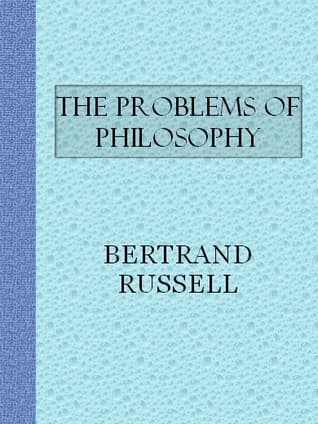
The Problems of Philosophy cover
Archivist's Choice

The Problems of Philosophy

Bertrand Russell (1900)

Genre

History / Science / Philosophy

Reading Time

12 Minutes

Key Themes

See below

Track Your Reading

Sign in to track this book

Bertrand Russell guides readers through fundamental philosophical questions, from the nature of knowledge to the ethics of war, in a clear and accessible way.

Core Idea

Bertrand Russell's "The Problems of Philosophy" serves as an accessible introduction to core philosophical questions, primarily focusing on epistemology (the theory of knowledge) and metaphysics (the nature of reality). Russell guides readers through the fundamental problem of how we can be certain of anything, especially the existence of the external world, given that our knowledge is mediated by our senses. He explores the distinction between appearance and reality, the nature of matter, the existence of a priori knowledge (knowledge independent of experience), and the role of intuition and induction in our understanding. The book ultimately aims to illustrate the value of philosophical inquiry not for providing definitive answers, but for broadening our perspective, challenging dogmatism, and enriching our intellectual life through the contemplation of profound and often unsettling questions.
Difficulty
Medium

Core idea

The central argument and framework that powers the entire book.

Bertrand Russell's "The Problems of Philosophy" serves as an accessible introduction to core philosophical questions, primarily focusing on epistemology (the theory of knowledge) and metaphysics (the nature of reality). Russell guides readers through the fundamental problem of how we can be certain of anything, especially the existence of the external world, given that our knowledge is mediated by our senses. He explores the distinction between appearance and reality, the nature of matter, the existence of a priori knowledge (knowledge independent of experience), and the role of intuition and induction in our understanding. The book ultimately aims to illustrate the value of philosophical inquiry not for providing definitive answers, but for broadening our perspective, challenging dogmatism, and enriching our intellectual life through the contemplation of profound and often unsettling questions.

At a glance

Difficulty

Medium

Key Takeaways

1

Appearance vs. Reality

The immediate data of our senses are not identical with the objects themselves.

Quote

Is there any knowledge in the world which is so certain that no reasonable man could doubt it?

Russell challenges our basic ideas about the external world. He shows that what we see and feel – like the color or shape of a table – isn't part of the table itself. Instead, it depends on who is looking, the light, and even their body. This leads to the difference between 'sense-data' (what we sense directly) and 'physical objects' (the actual things outside us). This idea is the book's clearest and most powerful. It makes readers question how they experience things and sets the stage for later philosophical questions about knowledg...

Supporting evidence

Russell uses the example of a table, whose apparent color, shape, and texture change depending on the observer's viewpoint, lighting, and even the material of the table itself, to illustrate the subjective nature of sense-data.

Apply this

Cultivate a healthy skepticism towards immediate sensory experience, recognizing that perception is an interpretation, not a direct window to reality. This can inform critical thinking in areas from art appreciation to scientific observation.
2

The Role of Universal Ideas

Knowledge of truths often depends on our acquaintance with universals, not just particulars.

Quote

All knowledge of truths depends upon knowledge of universals.

Beyond individual sensations, Russell argues that our understanding relies on 'universals' – abstract ideas like 'whiteness' or 'justice.' These aren't physical objects we can touch. Instead, they are shared qualities or relationships that many things can show. For example, we recognize many white objects because we understand the general idea of 'whiteness.' Russell believes that without knowing universals, we couldn't make judgments or gain knowledge. This distinction is key to understanding how we sort, generalize, and think about ...

Supporting evidence

Russell distinguishes between 'knowledge by acquaintance' (direct experience of sense-data or universals) and 'knowledge by description' (knowledge derived from propositions involving universals). He uses the example of knowing 'the present King of France' (a description) versus being acquainted with an individual person.

Apply this

When analyzing complex concepts, break them down into their universal components. This can aid in clearer communication and more rigorous logical reasoning, especially in fields like law, mathematics, or ethics.

3

A Priori Knowledge

Some knowledge is independent of experience, grounded in reason alone.

Quote

It is obvious that if there is any knowledge at all concerning universals, it must be a priori knowledge.

Russell discusses 'a priori' knowledge, which we know purely through reason, without needing experience. Examples are math facts (like 2+2=4) or logic rules. He suggests that our understanding of universals and their relationships often falls into this category. This differs from 'a posteriori' knowledge, which comes from sensory experience. This distinction is central to understanding knowledge, showing that not all knowledge comes from experience. While Russell values empirical data, he maintains that rational, a priori truths are n...

Supporting evidence

Russell discusses mathematical propositions like '2+2=4' as examples of a priori knowledge, which are true regardless of any specific empirical observation, and logical principles such as 'all men are mortal' being derived from the universal 'man' and 'mortal'.

Apply this

Recognize the foundational role of logical reasoning and mathematical principles in various disciplines. When evaluating arguments, discern between empirical claims and those based on logical necessity, strengthening analytical capabilities.

4

The Inductive Principle

Our belief in future events relies on an unprovable assumption about the uniformity of nature.

Quote

The general principles of science, such as the belief in the reign of law, and the belief that every event has a cause, are as completely dependent upon the inductive principle as are the beliefs of daily life.

Russell addresses the problem of induction, a challenge raised by Hume. We constantly use induction – predicting future events from past ones (e.g., the sun will rise tomorrow because it always has). However, Russell points out that this principle itself cannot be logically proven; it assumes the future will be like the past. This is a significant limit, meaning our scientific laws and daily expectations rest on an unprovable belief. While essential for practical life and science, this argument shows a deep uncertainty in our knowledg...

Supporting evidence

Russell cites Hume's problem of induction, illustrating how our expectation that the sun will rise tomorrow is based on past observations, but there's no logical necessity guaranteeing this future event.

Apply this

Approach scientific conclusions and personal predictions with a degree of humility. While induction is practical, acknowledge its philosophical limitations and the possibility of unexpected outcomes, fostering intellectual flexibility.

5

The Nature of Matter

Physics describes matter through structural properties, not intrinsic qualities.

Quote

The physical world, so far as science can show, is only known as regards its abstract properties: its intrinsic nature remains mysterious.

Russell explores 'matter' as physics understands it, comparing it to our everyday ideas. He argues that physics doesn't tell us what matter is inherently, but rather describes its structure, relationships, and behavior (e.g., mass, charge, position). The qualities we experience (color, sound) are sense-data, not properties of matter itself. This means science, while powerful, gives an abstract, relational view of the physical world, leaving its true nature unknown. While modern physics has evolved, Russell's point about the abstract...

Supporting evidence

Russell emphasizes that physics describes the mathematical properties and relations of matter (e.g., spatial arrangement, momentum) but not its intrinsic qualities, which remain unknown, akin to how we know an object's position relative to others but not its 'essence'.

Apply this

Distinguish between scientific models and direct sensory experience. Appreciate that scientific explanations, while robust, are often abstract representations, not direct reproductions of reality, fostering a nuanced view of scientific knowledge.

6

The Value of Philosophy

Philosophy expands the mind, challenges dogma, and fosters intellectual freedom.

Quote

The value of philosophy is, in fact, to be sought largely in its very uncertainty.

This is perhaps the book's most lasting idea. Russell says philosophy's value isn't in providing firm answers, like science, but in the questions it asks and the critical thinking it encourages. It frees us from habit and fixed beliefs, expanding our idea of what's possible. By exploring uncertainties, philosophy keeps us from becoming rigid or narrow-minded, and maintains our sense of wonder. It challenges our old ideas, broadens our thinking, and improves our ability to question ourselves. This view of philosophy's use is always rel...

Supporting evidence

Russell states that philosophy 'enlarges our thoughts and frees them from the tyranny of custom,' by making us aware of the 'unfamiliar but not incredible' possibilities beyond our immediate experience.

Apply this

Engage with philosophical questions to cultivate intellectual humility, critical thinking, and open-mindedness. Use philosophical inquiry to challenge assumptions in your personal and professional life, fostering innovation and deeper understanding.

7

Knowledge by Acquaintance vs. Description

We know some things directly and others indirectly through propositions.

Quote

All our knowledge, both of things and of truths, rests upon acquaintance as its foundation.

Russell introduces a key difference between 'knowledge by acquaintance' and 'knowledge by description.' We have acquaintance with things we are directly aware of, like our own sensations, memories, or certain universals. This is direct knowledge. 'Knowledge by description,' however, is indirect; it's knowledge about something based on ideas involving universals, often without direct experience of the thing itself. For example, we are acquainted with the color 'red,' but we know 'the longest river in the world' by description. This dis...

Supporting evidence

Russell uses the example of knowing 'the author of Waverley' (knowledge by description) versus being acquainted with Sir Walter Scott himself (knowledge by acquaintance, if one had met him).

Apply this

When evaluating information, discern whether you have direct acquaintance with the subject or are relying on descriptions. This helps identify potential biases, gaps in understanding, and the reliability of your knowledge base.

8

The Problem of Other Minds

We infer the existence of other minds, but cannot directly experience them.

Quote

It is obvious that we can never, by any process of pure reason, arrive at the existence of other minds.

Russell addresses the classic philosophical problem of 'other minds.' We assume other people have consciousness, thoughts, and feelings like our own, but we can only directly experience our own mind. Our belief in other minds comes from an analogy: because others' bodies and behaviors resemble ours, and we know our own body is linked to a mind, we infer they also have minds. Russell admits this isn't logically certain but is necessary for social interaction. This shows a basic limit in our knowledge, proving that even seemingly obviou...

Supporting evidence

Russell discusses how we infer other minds from observable behavior and physical resemblance, drawing an analogy from our own experience where our body and mind are connected.

Apply this

Cultivate empathy by recognizing that others' internal experiences, while inferred, are likely as rich and complex as your own. Be mindful of the assumptions you make about others' thoughts and feelings, fostering more thoughtful communication.

9

Intuitive Knowledge of Truths

Some truths are known directly and immediately, without inference.

Quote

Some truths, such as '2 + 2 = 4' or 'two things cannot be in the same place at the same time,' seem to be known directly, without any need for inference.

Russell discusses 'intuitive knowledge of truths,' which are self-evident ideas we grasp immediately without needing proof. These are often basic rules of logic, math, or ethics. For example, the truth that '2+2=4' or 'a thing cannot both be and not be' seems directly known by anyone who understands the terms. This type of knowledge is essential as a starting point for all reasoning. Without such intuitively known truths, all knowledge would lead to endless explanations or circular arguments. This concept is central to rationalism, st...

Supporting evidence

Russell cites simple mathematical truths (e.g., 2+2=4) and logical principles (e.g., the law of non-contradiction) as examples of truths known intuitively.

Apply this

Identify the core, self-evident principles within any field of study or argument. Building upon these intuitive truths can lead to more robust and defensible conclusions, improving problem-solving and logical argumentation.

10

Philosophy's Liberation from Dogma

Philosophy frees us from narrow perspectives and the tyranny of the 'practical man.'

Quote

The man who has no tincture of philosophy goes through life imprisoned in the prejudices derived from common sense, from the habitual beliefs of his age or his nation, and from convictions which have grown up in his mind without the co-operation or consent of his deliberate reason.

Russell concludes that philosophy's greatest contribution is its liberating effect on the mind. It challenges the 'practical man' who is often limited by narrow interests and unexamined assumptions. By making us question common sense, social norms, and deep-seated beliefs, philosophy expands our thinking. It helps us move beyond our individual experiences and see a larger, more connected world. This freedom isn't about finding final answers, but about encouraging intellectual humility, curiosity, and a willingness to explore views bey...

Supporting evidence

Russell contrasts the 'practical man' who is concerned only with material needs and immediate utility, with the philosopher who seeks to understand the broader universe and humanity's place within it.

Apply this

Actively seek out diverse perspectives and challenge your own deeply held beliefs. Engage in philosophical reflection to broaden your understanding of the world and overcome intellectual complacency in both personal and professional contexts.

Critical analysis

Notable Quotes

Quiz

Test Your Knowledge

Ready to see how well you understood this book? Take our interactive quiz with 10 questions.

10
Questions
~5
Minutes
?
Best Score

Key Questions (FAQ)

Bertrand Russell's "The Problems of Philosophy" is a foundational text that introduces readers to some of the most enduring questions in philosophy. It covers key areas like knowledge, the external world, and the nature of matter and mind.

About the author

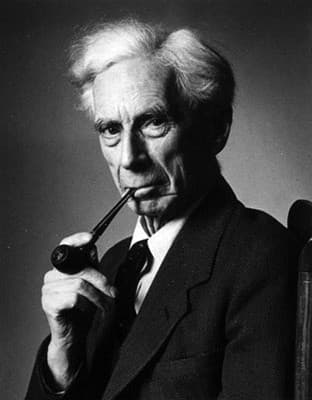
Bertrand Russell

Bertrand Russell was a Nobel Prize-winning philosopher, logician, and social critic. A prolific writer, his works spanned logic, epistemology, metaphysics, ethics, and political philosophy. Notable books include 'The Problems of Philosophy,' 'A History of Western Philosophy,' and 'The Conquest of Happiness.' His contributions significantly influenced analytic philosophy and mathematics.