BookBrief
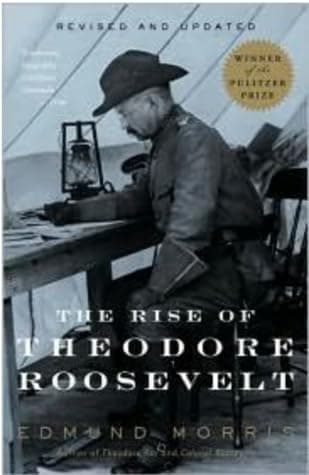
The Rise of Theodore Roosevelt cover
Archivist's Choice

The Rise of Theodore Roosevelt

Edmund Morris (1979)

Genre

Politics / Biography / History

Reading Time

18-25 hours

Key Themes

See below

Track Your Reading

Sign in to track this book

This book follows a privileged, asthmatic boy's journey to becoming the charismatic, trust-busting President who changed American power at the turn of the 20th century.

Core Idea

Edmund Morris's "The Rise of Theodore Roosevelt" details the early years of a dynamic American president. Morris argues that Roosevelt's constant pursuit of physical and intellectual challenges, his personal tragedies and experiences on the American frontier, and his belief in the 'strenuous life' created his strong will and unique political style. This biography shows how Roosevelt, through self-promotion, curiosity, and drive, changed from a sickly, privileged youth into a powerful reformer, war hero, and eventually, an accidental president. His early life was a deliberate preparation for national leadership. The book suggests that Roosevelt's character was not just a product of his time but a deliberate creation, shaped by his embrace of diverse experiences and his conviction that action and struggle were vital for individual and national health. His path from a New York assemblyman to the vice presidency shows his ability to use every setback and opportunity to gain influence, driven by his belief in American exceptionalism and his own destiny.
Reading time
18-25 hours
Difficulty
Medium
✓ Read this if...
You are fascinated by turn-of-the-century American history, enjoy detailed political biographies, or want to understand the origins of a truly unique presidential persona.
✗ Skip this if...
You prefer concise narratives, are not interested in extensive historical detail, or find long biographical works daunting.

Core idea

The central argument and framework that powers the entire book.

Edmund Morris's "The Rise of Theodore Roosevelt" details the early years of a dynamic American president. Morris argues that Roosevelt's constant pursuit of physical and intellectual challenges, his personal tragedies and experiences on the American frontier, and his belief in the 'strenuous life' created his strong will and unique political style. This biography shows how Roosevelt, through self-promotion, curiosity, and drive, changed from a sickly, privileged youth into a powerful reformer, war hero, and eventually, an accidental president. His early life was a deliberate preparation for national leadership.

The book suggests that Roosevelt's character was not just a product of his time but a deliberate creation, shaped by his embrace of diverse experiences and his conviction that action and struggle were vital for individual and national health. His path from a New York assemblyman to the vice presidency shows his ability to use every setback and opportunity to gain influence, driven by his belief in American exceptionalism and his own destiny.

At a glance

Reading time

18-25 hours

Difficulty

Medium

Read this if...

You are fascinated by turn-of-the-century American history, enjoy detailed political biographies, or want to understand the origins of a truly unique presidential persona.

Skip this if...

You prefer concise narratives, are not interested in extensive historical detail, or find long biographical works daunting.

Key Takeaways

1

The Strenuous Life

Embracing challenge and action as the path to personal and national vitality.

Quote

Far better it is to dare mighty things, to win glorious triumphs, even though checkered by failure, than to take rank with those poor spirits who neither enjoy much nor suffer much, because they live in a gray twilight that knows neither victory nor defeat.

Morris details how Roosevelt's philosophy of 'the strenuous life' was not just words but the core of his character and career. From his asthmatic childhood, which he overcame through sheer will and exercise, to his pursuit of adventure and public service, Roosevelt believed in constantly facing challenges. This was not just about physical fitness; it was a complete worldview that rejected complacency. He advocated for a life of purpose, struggle, and impact. He saw active engagement as essential for individual growth and national heal...

Supporting evidence

Roosevelt's transformation from a sickly, asthmatic boy to a robust rancher, police commissioner, and Rough Rider, all driven by a deliberate cultivation of physical and mental resilience. His famous 'Strenuous Life' speech articulates this philosophy directly.

Apply this

Actively seek out and embrace challenges, both physical and intellectual. Don't shy away from discomfort or potential failure; view them as opportunities for growth and meaningful experience. Cultivate a bias for action over passive observation.

strenuous-lifegritresilience
2

Grief as a Catalyst

Profound personal tragedy fueled an unparalleled drive for purpose and escape.

Quote

The light has gone out of my life.

Morris shows how the simultaneous deaths of Roosevelt's wife, Alice, and his mother, Mittie, in February 1884, fundamentally changed him. This tragedy, which he rarely spoke of directly, did not break him. Instead, it created an almost manic energy and a strong desire to immerse himself in demanding physical and intellectual activities. His retreat to the Dakota Badlands was not just an escape; it was a period where he shed his 'dandy' image and formed a new identity, based on self-reliance, hardship, and a connection to the American ...

Supporting evidence

Roosevelt's immediate flight to the Dakota Territory after the deaths, where he spent two years ranching, hunting, and writing, pushing himself to physical and mental extremes, and rarely mentioning his deceased loved ones in his diary entries from that period, signaling deep repression and sublimation.

Apply this

Recognize how profound personal setbacks or grief, while devastating, can sometimes be channeled into powerful motivators for growth, change, and the pursuit of meaningful work. Find constructive outlets for intense emotions rather than succumbing to despair.

grief-processingresiliencepersonal-transformation
3

The Power of the Frontier Myth

Roosevelt's embrace of the West shaped his identity and political vision.

Quote

I have always been fond of the West; I have always been fond of our people there.

Morris details Roosevelt's deep involvement in the American West, especially his two years ranching in the Dakota Territory. This period was more than a personal escape; it was a profound experience that built his character and ideology. Roosevelt, an East Coast patrician, intentionally left behind his privileged background to embody the rugged individualism and self-reliance he believed were key American virtues. He embraced the harsh realities of frontier life, hunting, ranching, and even working as a deputy sheriff. This created a ...

Supporting evidence

His detailed accounts of hunting big game, confronting cattle rustlers, and enduring harsh winters in the Badlands, documented in his own writings like 'Hunting Trips of a Ranchman' and 'The Wilderness Hunter.'

Apply this

Seek out experiences that challenge your preconceived notions and immerse you in unfamiliar environments. Understand how deeply held cultural narratives and myths can shape individual identity and political appeal.

frontier-mythamerican-identityrugged-individualism
4

The Reformer's Zeal

A relentless drive to combat corruption and improve public service.

Quote

I have always been a fighter.

Morris portrays Roosevelt as a tireless, almost obsessive reformer throughout his early career. From his time as a New York State Assemblyman to his roles as Civil Service Commissioner and later as New York City Police Commissioner, Roosevelt attacked corruption and inefficiency with great zeal. He was not content with small changes; he sought to fundamentally transform institutions, often clashing with established political systems and powerful interests. His methods were direct, often confrontational, and always public. This belief ...

Supporting evidence

His battles against Tammany Hall, his reforms within the Civil Service Commission (implementing merit-based hiring), and his dramatic overhaul of the notoriously corrupt New York City Police Department, including his famous late-night patrols to catch officers shirking duty.

Apply this

Identify areas where systems or institutions are failing and advocate for fundamental, rather than superficial, reforms. Be willing to challenge established norms and powerful interests in pursuit of ethical and efficient governance.

political-reformanti-corruptionpublic-service
5

Master of Self-Promotion

Roosevelt expertly cultivated his public image and leveraged the media.

Quote

I have always been a believer in publicity.

Morris shows Roosevelt as a surprisingly clever media strategist and an early master of public relations. Before the modern era of political branding, Roosevelt understood the power of storytelling and display. He actively built his image as a rugged frontiersman, a brave soldier, and an honest reformer, carefully documenting his adventures and ensuring their widespread publication. He formed close relationships with journalists, giving them compelling stories and direct access, effectively using the growing newspaper industry to buil...

Supporting evidence

His prolific writing (books, articles, letters to editors), his cultivation of journalists like Jacob Riis, and the widespread coverage of his exploits with the Rough Riders, which he actively encouraged and shaped.

Apply this

Understand the importance of narrative and public perception in achieving goals. Learn to effectively communicate your message and build a public profile that aligns with your objectives, utilizing available media channels strategically.

public-relationsmedia-strategypolitical-branding
6

The Intellectual Activist

A scholar and author who applied academic rigor to public life.

Quote

I have always been fond of history.

Morris emphasizes that Roosevelt was not just a man of action but also a formidable intellectual. A Harvard graduate, he was a prolific reader, writer, and historian, publishing multi-volume works like 'The Naval War of 1812' and 'The Winning of the West.' This intellectual curiosity and academic discipline shaped his approach to public service. He did not rely only on instinct; he studied history, economics, and political science to understand complex issues, forming policies based on research and analysis. This combination of schola...

Supporting evidence

His extensive personal library, his numerous published books and articles on history and naturalism, and his ability to quote extensively from classical and contemporary texts in his speeches and correspondence.

Apply this

Cultivate a deep intellectual curiosity and commit to lifelong learning. Apply academic rigor and critical thinking to practical problems, using research and analysis to inform decisions and actions.

intellectualismlifelong-learninginformed-governance
7

The Accidental President

Roosevelt's ascent to the presidency was an unforeseen twist of fate.

Quote

It is a dreadful thing to become President.

Morris details the political steps that led to Roosevelt becoming Vice President, a role he initially resisted and saw as a political dead end. Republican leaders, especially Senator Mark Hanna, tried to sideline the unpredictable and reform-minded Roosevelt by pushing him into the powerless VP position. They believed it would neutralize his influence and prevent him from disrupting their conservative agenda. However, President William McKinley's assassination in September 1901 dramatically changed American history. Roosevelt, at just...

Supporting evidence

The behind-the-scenes machinations at the 1900 Republican National Convention to force Roosevelt onto the ticket, despite his initial reluctance and his allies' efforts to keep him as Governor of New York.

Apply this

Recognize that career paths are rarely linear and that unexpected opportunities or setbacks can profoundly alter your trajectory. Be prepared to adapt and step into unforeseen leadership roles.

political-destinyunforeseen-eventsleadership-transition
8

The Cultivation of Willpower

Roosevelt's life was a testament to the transformative power of self-discipline.

Quote

I determined to make my body.

Morris vividly portrays Roosevelt's lifelong commitment to self-mastery and developing willpower. From his early childhood struggles with severe asthma, which he overcame through a strict regimen of exercise and outdoor activity, to his disciplined approach to intellectual and political work, Roosevelt consistently pushed himself beyond perceived limits. This was not just about physical strength; it was a mental and moral discipline that allowed him to endure hardship, stay focused, and relentlessly pursue his goals. He believed that ...

Supporting evidence

His detailed exercise routines, his boxing and wrestling, his rigorous study habits, and his ability to endure extreme physical conditions during his ranching days and military service, all driven by a conscious decision to strengthen himself.

Apply this

Identify areas of personal weakness and systematically work to overcome them through consistent effort and self-discipline. Develop routines and habits that build mental and physical resilience.

self-disciplinewillpowerpersonal-growth
9

The Moral Imperative of War

Roosevelt's belief in righteous conflict as a test of national character.

Quote

I have always been an advocate of a strong navy.

Morris explores Roosevelt's aggressive tendencies and his belief in the moral justification of certain conflicts, particularly the Spanish-American War. For Roosevelt, war was not just a political tool but a test for national character, a way to show strength, courage, and a commitment to justice on the world stage. He actively supported American intervention in Cuba, resigned his post as Assistant Secretary of the Navy to lead the Rough Riders, and viewed the conflict as a necessary step for America to become a global power. This vie...

Supporting evidence

His fervent advocacy for the Spanish-American War, his personal leadership of the Rough Riders at San Juan Hill, and his consistent calls for a strong American navy.

Apply this

Critically analyze the justifications for conflict and the role of military strength in foreign policy. Understand how deeply personal philosophies about courage and struggle can translate into national policy.

american-imperialismmilitary-interventionnational-character
10

The Value of Diverse Experiences

Roosevelt's varied career built a uniquely broad perspective.

Quote

I have been in many different kinds of work.

Morris highlights how Roosevelt's varied career path—from naturalist and author to rancher, police commissioner, civil service reformer, Assistant Secretary of the Navy, governor, and Vice President—was, in fact, his greatest asset. Each role exposed him to different parts of American society, different challenges, and different leadership styles. He gained practical experience in law enforcement, executive administration, military strategy, and legislative politics, all while building a deep understanding of natural science and histo...

Supporting evidence

The chronological progression of his career, detailing how each role, from the New York Assembly to the governorship, provided distinct and valuable lessons that informed his later leadership.

Apply this

Actively seek out diverse experiences and roles, even if they seem unrelated, as they can build a broader skill set and a more comprehensive understanding of complex systems. Value interdisciplinary learning and cross-functional exposure.

interdisciplinary-learningcareer-diversityholistic-perspective

Critical analysis

Notable Quotes

Black care rarely sits behind a rider whose pace is swift enough.

A reflection on Roosevelt's relentless energy and drive, often used to outrun personal grief or political setbacks.

I have always been a great believer in the doctrine of 'speak softly and carry a big stick.'

While not explicitly stated in this first volume (more prominent later), the *spirit* of this doctrine is evident in his early political and police commissioner career, where he advocated for strong action backed by moral authority.

I wish to preach, not the doctrine of ignoble ease, but the doctrine of strenuous life.

From his speech 'The Strenuous Life,' encapsulating his belief in hard work, struggle, and civic duty as essential for individual and national greatness.

No man is worth his salt who is not ready at all times to risk his body, to risk his well-being, to risk his life, in a great cause.

Reflecting his adventurous spirit and belief in the importance of courage and sacrifice for a greater good, evident in his ranching and military aspirations.

I am an American, and I like to see the American people as a whole understand that there are duties as well as rights.

A central theme of his public service, emphasizing the responsibilities that come with citizenship.

It is not the critic who counts; not the man who points out how the strong man stumbles, or where the doer of deeds could have done them better.

From 'Citizenship in a Republic' (though a later speech, the sentiment is deeply rooted in his character described in this book), championing those who actively engage rather than merely observe.

There were all kinds of things I was afraid of at first, ranging from bears to mad bulls and gunfighters; but by acting as if I was not afraid I gradually ceased to be afraid.

His experience as a rancher in the Badlands, describing his process of overcoming fear through action and willpower.

I have always been fond of the West African proverb: 'The child of a frog does not object to water.'

Used to convey his natural inclination towards challenges and strenuous activity, as if it were in his very nature.

Much of the success of any battle is due to the fact that the men are so interested in doing their best that they have little time to be frightened.

Reflecting on his experience with the Rough Riders during the Spanish-American War, highlighting the power of focused effort over fear.

I had a great time; I don't believe I have ever had a better time.

His enthusiastic summary of his time with the Rough Riders, despite the dangers and hardships, showcasing his love for adventure and challenge.

The only way to make a man trustworthy is to trust him.

A principle he applied in various roles, from police commissioner to governor, believing in giving people responsibility.

It is not what we have that makes us happy, but what we enjoy.

A personal reflection on contentment and the importance of engagement and appreciation over material possessions.

I believe in the Square Deal.

While more famously articulated during his presidency, the underlying principle of fairness and equal opportunity for all citizens is evident in his earlier reform efforts.

Get action; do things; be sane; don't fritter away your time; create; act; take a place wherever you are and be somebody: get action.

An encapsulation of his energetic and active approach to life, urging direct engagement and productivity.

Quiz

Test Your Knowledge

Ready to see how well you understood this book? Take our interactive quiz with 10 questions.

10
Questions
~5
Minutes
?
Best Score

Key Questions (FAQ)

This acclaimed biography by Edmund Morris meticulously details Theodore Roosevelt's early life, from his birth in 1858 through his formative years, his political ascent as a New York State Assemblyman, Civil Service Commissioner, and Assistant Secretary of the Navy, culminating in his dramatic rise to the presidency in 1901.

About the author

Edmund Morris

Edmund Morris was a Pulitzer Prize-winning author renowned for his biographies of Theodore Roosevelt. His seminal works, "The Rise of Theodore Roosevelt" and "Theodore Rex," offered vivid portraits of the 26th U.S. President. Morris's meticulous research and engaging narrative style cemented his reputation as a leading historical biographer.