BookBrief
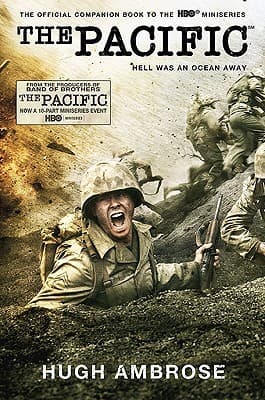
The Pacific cover
Archivist's Choice

The Pacific

Hugh Ambrose (2010)

Genre

Biography / History

Reading Time

1223 min

Key Themes

See below

Track Your Reading

Sign in to track this book

Through the real stories of five ordinary men, "The Pacific" takes readers into the brutal island battles of World War II's Pacific Theater, from the retreat at Bataan to the bloody fields of Okinawa, showing the high price of courage against an unyielding enemy.

Core Idea

Hugh Ambrose's "The Pacific" carefully reconstructs the difficult experiences of five Marines during World War II's Pacific theater. It argues that the true cost of island warfare went far beyond battle numbers, leaving deep psychological scars and changing how they viewed heroism, humanity, and home. The book states that the unique brutality of this racially charged conflict created an unbreakable, though often unspoken, bond among those who survived it. It reveals a grim reality of survival and sacrifice that defied traditional ideas of glory, making the return to civilian life an equally challenging, often isolating, battle.
Reading time
1223 min
Difficulty
Medium
✓ Read this if...
You want an intimate, unvarnished, and deeply human perspective on the day-to-day horrors and long-term psychological impact of fighting in the Pacific Theater, focusing on individual experiences rather than grand strategy.
✗ Skip this if...
You are looking for a high-level strategic overview of the Pacific War, prefer sanitized accounts of heroism, or are sensitive to graphic descriptions of combat and its aftermath.

Core idea

The central argument and framework that powers the entire book.

Hugh Ambrose's "The Pacific" carefully reconstructs the difficult experiences of five Marines during World War II's Pacific theater. It argues that the true cost of island warfare went far beyond battle numbers, leaving deep psychological scars and changing how they viewed heroism, humanity, and home. The book states that the unique brutality of this racially charged conflict created an unbreakable, though often unspoken, bond among those who survived it. It reveals a grim reality of survival and sacrifice that defied traditional ideas of glory, making the return to civilian life an equally challenging, often isolating, battle.

At a glance

Reading time

1223 min

Difficulty

Medium

Read this if...

You want an intimate, unvarnished, and deeply human perspective on the day-to-day horrors and long-term psychological impact of fighting in the Pacific Theater, focusing on individual experiences rather than grand strategy.

Skip this if...

You are looking for a high-level strategic overview of the Pacific War, prefer sanitized accounts of heroism, or are sensitive to graphic descriptions of combat and its aftermath.

Key Takeaways

1

The Unseen Toll of Island Warfare

The Pacific front presented a unique, brutal psychological challenge.

Quote

The Japanese fight to the last man, which means we have to kill every last man. It changes you.

Unlike the European theater, the Pacific war involved isolated, intensely brutal island-hopping campaigns against an enemy with a 'no surrender' philosophy. This led to an unprecedented level of close-quarters combat and a constant sense of dread. Soldiers were not just fighting an army; they were fighting a fanatical ideology in an alien, unforgiving environment. The Japanese will to die rather than surrender forced American Marines and soldiers into a war of attrition that damaged not only their bodies but their minds, leading to wi...

Supporting evidence

The book details the experiences on Guadalcanal and Peleliu, where the relentless, almost suicidal resistance of the Japanese, even in the face of overwhelming odds, pushed American forces to their psychological limits. The horrific conditions, including disease, heat, and the constant presence of death, compounded the trauma.

Apply this

Modern military and psychological support systems must recognize the unique stressors of specific combat environments and provide tailored, long-term care for veterans, acknowledging that the 'enemy' can be as much the environment and ideology as the opposing force itself.


psychological-traumaisland-hoppingguadalcanal
2

The Indelible Bond of Shared Suffering

Comradeship forged in the crucible of combat became an unbreakable, lifelong tether.

Quote

You never forget the men you fought with, not really. They're a part of you, always.

The extreme conditions and shared threat in the Pacific created a strong sense of camaraderie among the Marines and soldiers. Facing death daily, relying on each other for survival, and witnessing unspeakable horrors together formed bonds that went beyond friendship and family. This brotherhood was a vital coping mechanism during the war, offering emotional support and a sense of shared purpose. However, it also became a source of deep isolation upon returning home, as these veterans often found it impossible to explain their experien...

Supporting evidence

The narrative frequently returns to the deep connections between the featured Marines—Eugene Sledge, Robert Leckie, and John Basilone—and their respective platoons. Their letters and later reflections emphasize that the only people who truly understood what they went through were those who were there with them.

Apply this

Society must foster and support veteran communities and peer-support networks, understanding that the most effective healing often comes from those who have walked a similar path, rather than solely from external therapeutic interventions.

comradeshipveteran-supportcombat-stress
3

The Unromantic Reality of Heroism

Valor in the Pacific was often born of desperation, not grandiosity, and came at a shocking cost.

Quote

Medals were pinned on men who often felt anything but heroic, men who had simply done what they had to do to survive, or to protect their buddies.

The book removes the romanticism often linked with war, showing that heroism in the Pacific was rarely a conscious act of seeking glory. Instead, it came from moments of pure desperation, the instinct to protect comrades, or the grim determination to survive another day. The men portrayed, even those awarded the Medal of Honor like John Basilone, were often humble, haunted, and deeply affected by the violence they witnessed and committed. Their acts of bravery came from the raw, brutal necessity of combat. This perspective challenges ...

Supporting evidence

John Basilone's story, particularly his actions on Guadalcanal and his later return to combat on Iwo Jima, exemplifies this. Despite his fame, he remained grounded and dedicated to his fellow Marines, ultimately paying the ultimate price. The descriptions of Eugene Sledge's internal struggles with the brutality he witnessed also highlight this unromantic reality.

Apply this

When commemorating military service, focus on the sacrifices, the human cost, and the realities of combat rather than solely glorifying individual acts. Emphasize the collective effort and the deep personal toll on those who serve.

heroismmedal-of-honorwar-reality
4

The Brutality of a Racially Charged War

Racial dehumanization fueled the extreme violence and 'no quarter' mentality.

Quote

The propaganda on both sides dehumanized the enemy to such an extent that it became easier to commit unspeakable acts.

The Pacific War was marked by intense racial animosity, fueled by propaganda from both sides that depicted the enemy as subhuman. For American forces, the Japanese were often portrayed as fanatical, insect-like, and deserving of total annihilation. This dehumanization contributed significantly to the 'no quarter given or taken' mentality, where concepts like surrender were often ignored or met with extreme prejudice. This racial component distinguished the Pacific theater from the European one, making the conflict exceptionally brutal...

Supporting evidence

The book mentions instances of trophy taking (e.g., teeth, ears) by some American soldiers and the Japanese refusal to take prisoners, often killing wounded Americans. This reciprocal brutality underscores the racial dimension of the conflict, particularly as seen in the experiences recounted by Sledge and Leckie.

Apply this

Recognize how dehumanization, especially when fueled by racial or ideological hatred, can escalate conflict into extreme barbarism. Promote empathy and understanding across cultural divides to prevent similar atrocities in future conflicts.

dehumanizationracial-animositywar-atrocities
5

The Uneasy Return of the Victor

For many, the transition from warrior to civilian was a silent, isolating battle.

Quote

The war ended, but for many of them, the fighting didn't stop. It just moved inside.

The triumphant return home for Pacific veterans was often difficult and brought a deep sense of alienation. Society, eager to celebrate victory and move on, struggled to understand the horrors these men had endured. Veterans themselves, often suffering from what we now recognize as PTSD, found it nearly impossible to explain their experiences to loved ones who had not shared their reality. This created a gap between the soldier and the civilian world, leading to isolation, substance abuse, and strained relationships. The book highligh...

Supporting evidence

The struggles of Robert Leckie and Eugene Sledge upon returning home are prominent. Leckie's difficulty holding down a job and his restless nature, and Sledge's quiet suffering and inability to connect with his family about his experiences, illustrate the pervasive challenges of post-war adjustment.

Apply this

Implement comprehensive and sustained reintegration programs for veterans that address psychological needs, facilitate communication with families, and provide avenues for meaningful civilian life, understanding that healing is a lifelong process.

veteran-reintegrationptsdpost-war-trauma

Critical analysis

Notable Quotes

War is nothing more than a series of catastrophes, a succession of disasters for the vanquished and a series of near disasters for the victor.

Reflecting on the nature of warfare in the Pacific.

The Marines were a breed apart, men who faced death with a grim determination, often with a joke on their lips.

Describing the resilience and spirit of the Marine Corps.

On Peleliu, the coral was not just rock; it was a fortress, a tomb, and a monument to the futility of frontal assault.

Highlighting the brutal terrain and high cost of the Battle of Peleliu.

The jungle didn't care who you were, what you fought for, or how brave you were. It just took.

Emphasizing the unforgiving nature of the jungle environment in combat.

Fear was a constant companion, a cold knot in the stomach that never truly went away.

Illustrating the pervasive psychological toll of combat on soldiers.

They were young men, barely out of boyhood, thrust into a hell they could never have imagined.

Describing the youth and inexperience of many soldiers.

Every island was a new nightmare, a new variation on the theme of death and destruction.

Summarizing the relentless and repetitive nature of island hopping campaigns.

The bonds forged in combat were thicker than blood, stronger than any peace.

Discussing the enduring camaraderie among soldiers.

The Japanese fought with a fanaticism that defied logic, a willingness to die that baffled and terrified their opponents.

Analyzing the fighting spirit and tactics of the Japanese forces.

After the war, the silence was almost as deafening as the explosions had been.

Reflecting on the post-war adjustment and trauma experienced by veterans.

History does not judge; it merely records. But the men who lived it, they judged every single day.

Contrasting the objective view of history with the subjective experience of soldiers.

The true cost of victory was not just measured in territory gained, but in the shattered lives and haunted minds left behind.

Examining the human cost beyond strategic gains.

They fought not for glory, but for each other, for the man beside them, for the simple hope of seeing home again.

Explaining the primary motivations of soldiers in combat.

The Pacific was a vast, indifferent ocean, yet on its tiny islands, the fate of empires was decided.

Highlighting the paradox of small battlefields having huge strategic importance.

Quiz

Test Your Knowledge

Ready to see how well you understood this book? Take our interactive quiz with 10 questions.

10
Questions
~5
Minutes
?
Best Score

Key Questions (FAQ)

'The Pacific' by Hugh Ambrose chronicles the real-life experiences of five American servicemen who fought in the Pacific Theater during World War II, from America's retreat from China in 1941 to MacArthur's arrival in Japan in 1945. It delves into their individual journeys through key battles and the profound personal costs of the war.

About the author